
Coinbase and Hyperliquid are teaming up. Here is why it actually matters for on-chain trading
The crypto world loves a partnership announcement, but most are just marketing fluff. This one is different. Coinbase, the largest regulated exchange in the US, is integrating with Hyperliquid, a high-performance L1 designed specifically for perpetuals. If you are looking for the best on chain perpetual exchange 2026, this partnership is a massive signal that the gap between centralized exchanges (CEX) and decentralized finance (DeFi) is finally closing. We previously covered USDT Risk Explained for more background.
What happened
Coinbase is deploying its USDC treasury into Hyperliquid. For those who aren't deep into the plumbing of DeFi, this means Coinbase is putting real, institutional-grade liquidity into a decentralized environment. They aren't just "exploring" the tech; they are moving capital.
Hyperliquid has already built a reputation for being incredibly fast and having a user experience that doesn't feel like you're fighting a clunky website from 2012. By bringing USDC liquidity from Coinbase, the platform gets a boost in depth, while Coinbase gets a direct bridge to one of the most efficient trading engines in the space.
Why this matters for the market
In my experience, the biggest hurdle for on-chain trading has always been liquidity. If you try to trade a large position on a small DEX, you get slippage that eats your profits. By pairing Coinbase's treasury with Hyperliquid's tech, we are seeing a hybrid model. It's the regulatory "seal of approval" from Coinbase meeting the raw performance of a specialized L1.
We previously covered how Hyperliquid perpetual trading is attracting institutional interest through Bitwise. Now, with Coinbase in the mix, it's no longer just a niche play for "degens." This is about making on-chain perps viable for the big players who usually stay inside the walls of a CEX.
The data shows why this is happening now. Total market volume is hovering around $105.9B, but derivatives activity is absolutely dwarfing spot trading. People want leverage, and they want it to be fast. Hyperliquid is built for exactly that, and Coinbase knows that if they don't integrate with these high-performance chains, they risk losing the next generation of traders to native on-chain protocols.
My take on the risks
I'm genuinely excited about the tech, but I have a few concerns. First, the concentration of USDC. While USDC is the gold standard for stability, having a huge chunk of the ecosystem tied to one issuer always makes me a bit nervous. I've seen enough market crashes to know that "too big to fail" usually just means "fails more spectacularly."
Second, there is the question of centralization. The whole point of DeFi is to remove the middleman. When a giant like Coinbase steps in, does the protocol stay truly decentralized, or does it just become a "wrapped" version of a CEX? I'll be watching the governance of the HYPE token closely to see if the community still has a say or if the big treasury holders call all the shots.
How to play this shift
If you're moving your trading on-chain, you need to stop leaving your funds on exchanges. Whether you're using Hyperliquid or a CEX, the risk of a platform hack is real. I personally use the Ledger Nano Gen5 because it's the most affordable way to get a secure touchscreen and NFC recovery without spending hundreds of dollars. It's a generational leap over the older models and keeps your keys offline, which is the only way to sleep soundly in this market.
The move toward on-chain perpetuals is inevitable. The speed is there, the liquidity is arriving, and the institutional players are finally stopping their complaining and starting their deploying. I think we are moving toward a world where you won't even know if your trade is happening on a CEX or a DEX; it will just be the fastest, cheapest route for your capital.
Trade the news at our editorial-picked exchange: MEXC
Some links in this article may be affiliate links. We may earn a commission at no extra cost to you — this never influences our analysis or coverage.

Sigrid Voss
Crypto analyst and writer covering market trends, trading strategies, and blockchain technology.
More Articles
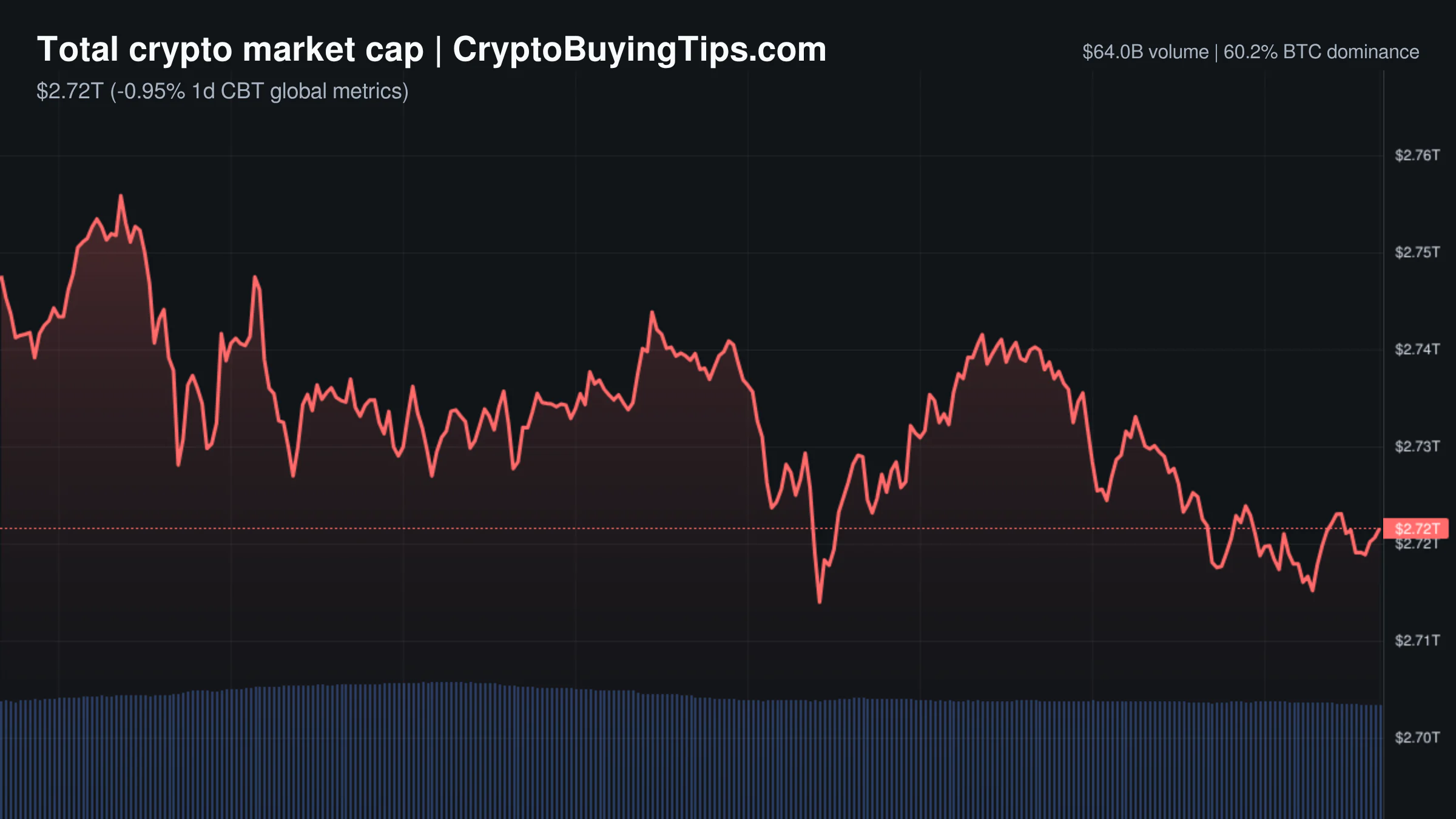
Crypto Market Overview | Derivatives volume dwarfs spot activity amid institutional rails expansion | October 20, 2026
Derivatives volume dwarfs spot activity as crypto navigates institutional rails expansion; see our market overview data…
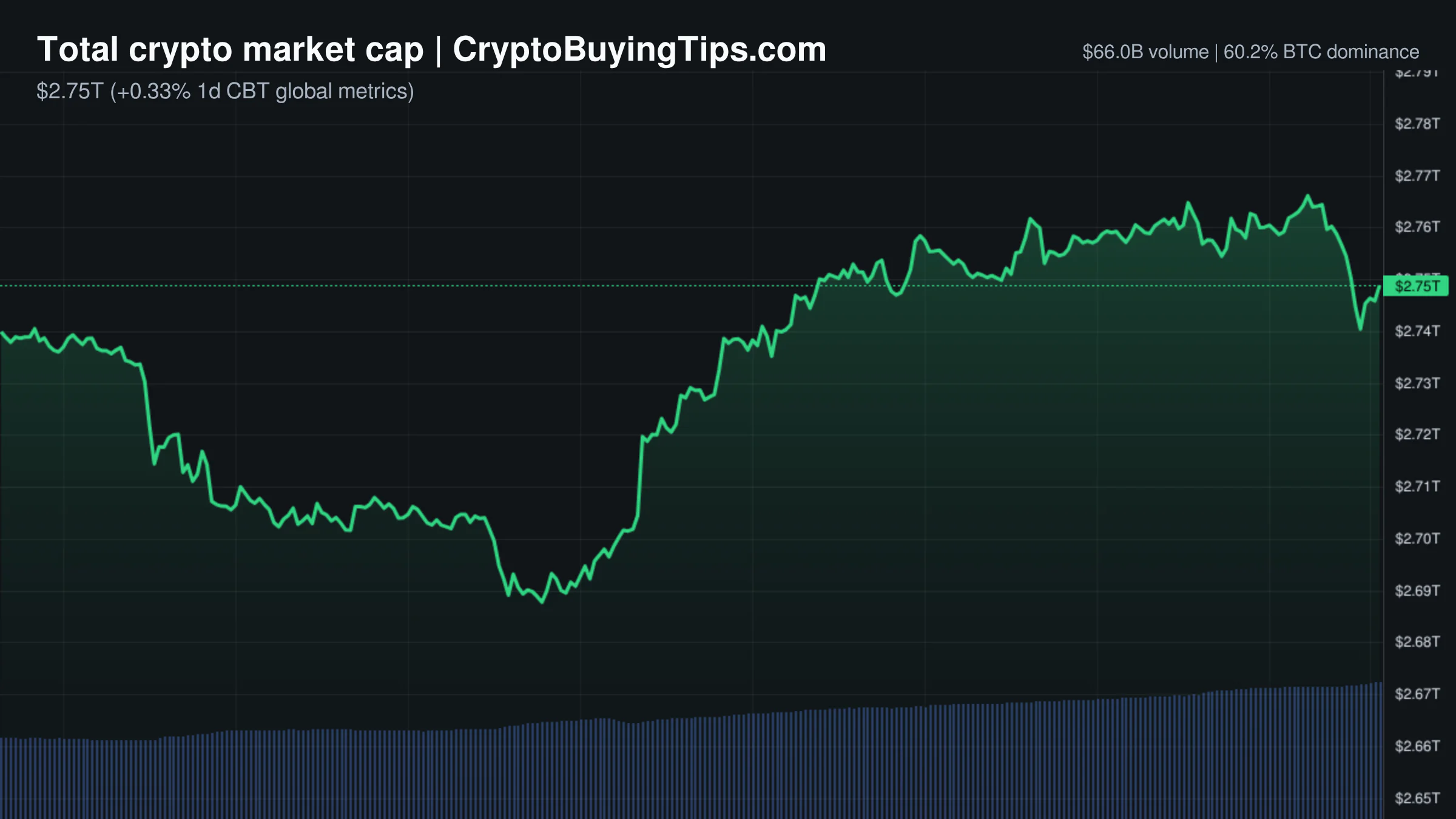
Crypto Market Overview | Leveraged bets surge as institutional rails expand despite ETF outflows | October 19, 2026
Leveraged bets surge as institutional rails expand despite ETF outflows; see our market overview on BTC dominance and…

Why 0.04 Gwei gas is a red flag for Ethereum
The quiet gas fees suggest nothing about underlying utility demand; meanwhile, $566B in derivatives volume points…
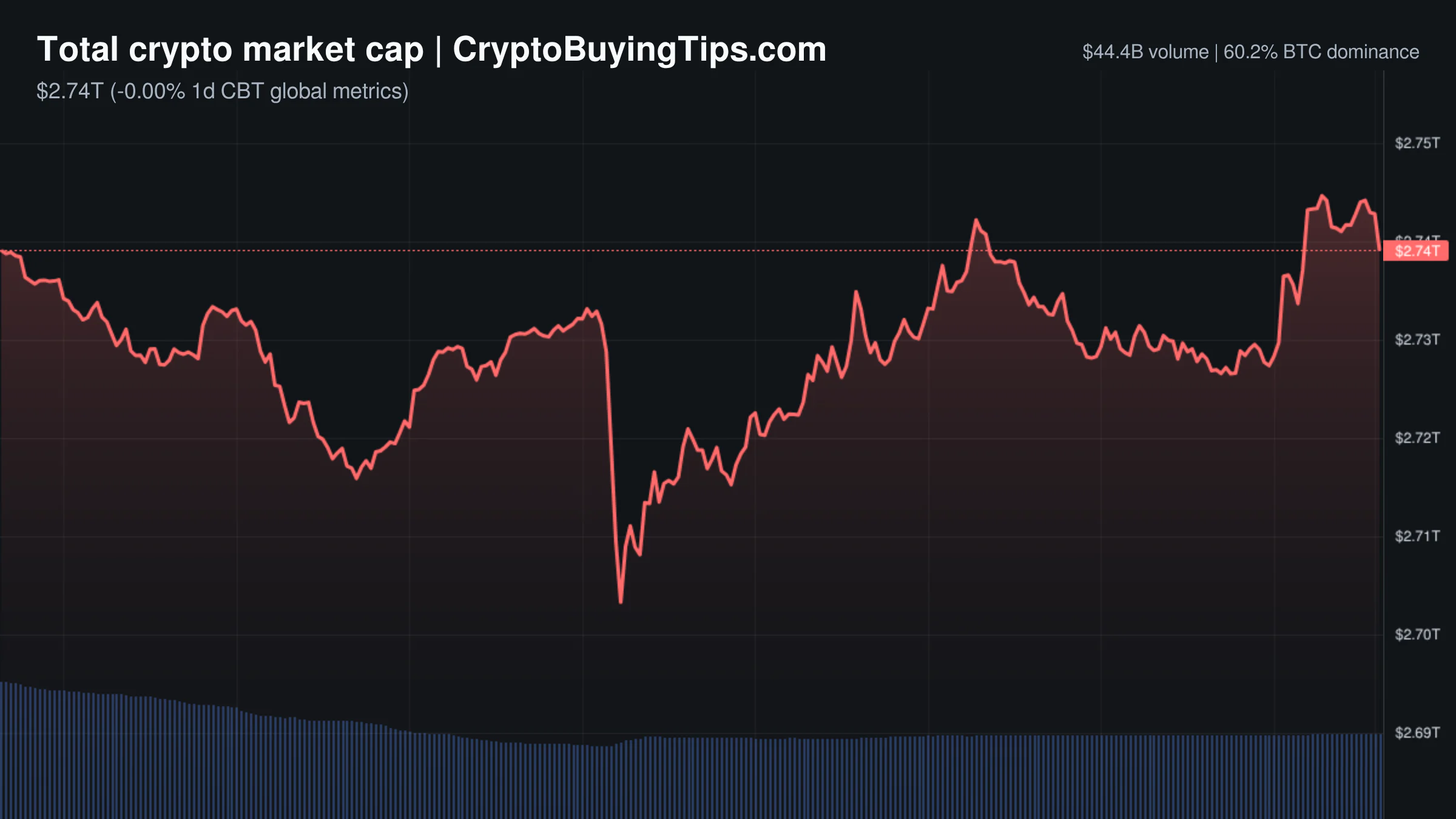
Crypto Market Overview | Bitcoin dominance climbs while altcoins struggle amid institutional friction | October 18, 2026
Bitcoin dominance climbs to 60.1% while altcoins struggle amid institutional friction; see our market overview for…