Market Overviews

Daily crypto market overviews, trend analysis, and key updates from our editorial team.

Crypto Market Overview | Greed index high amid cooling derivatives volume and stablecoin dominance at 8.94% | September 26, 2026
Sigrid Voss·

Crypto Market Overview | Greed index high amid cooling derivatives volume and stablecoin dominance at 8.94% | September 26, 2026

Market overview

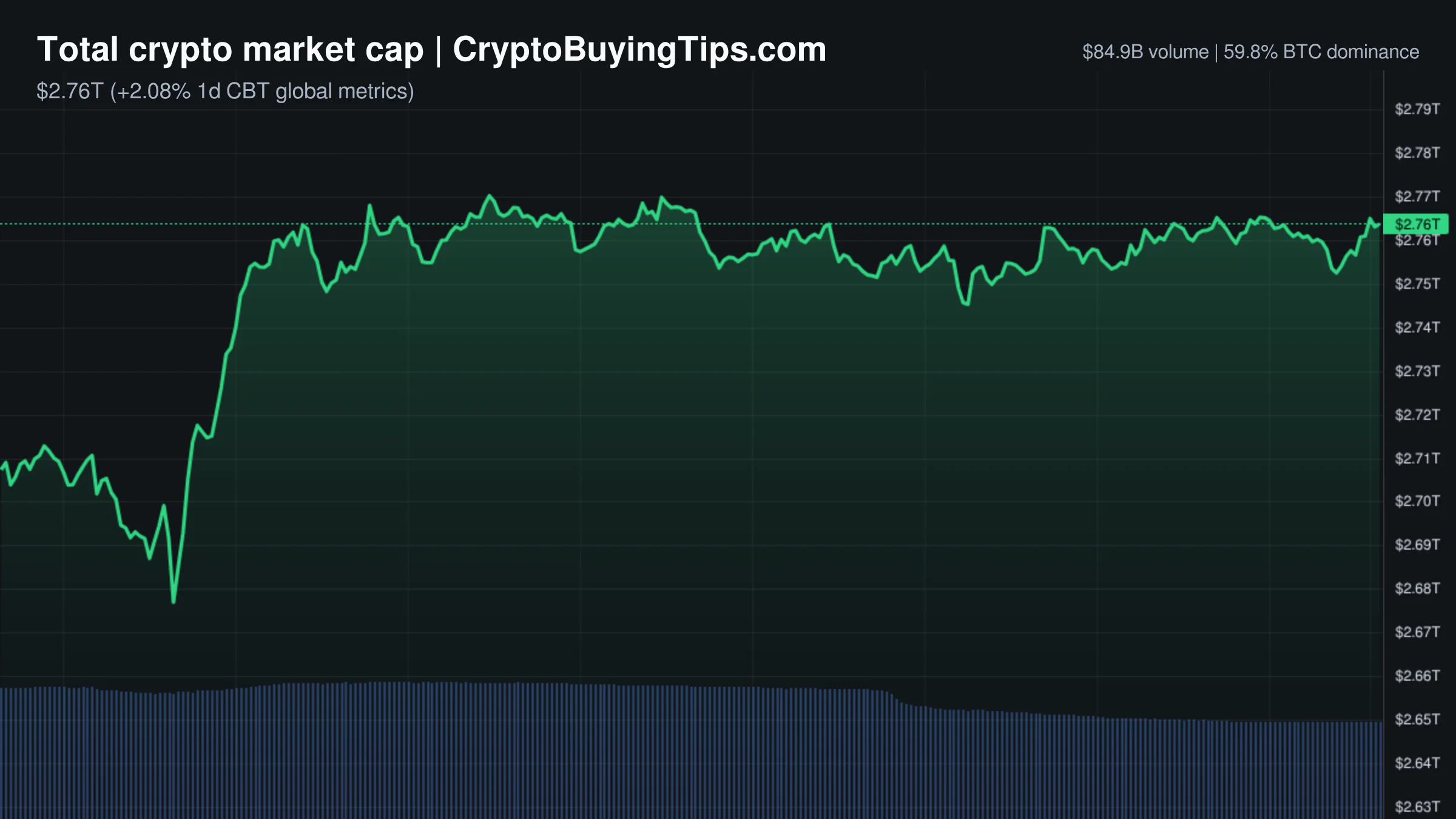
The total crypto market cap sits at $2.90T, down 2.17% over the last 24 hours. On the surface, the numbers suggest a mild correction, but the underlying data reveals a market in a strange state of contradiction. The Fear and Greed Index remains high at 73, yet trading activity is contracting. Derivatives volume has fallen by 15.75% to $851.19B, and stablecoin volume is down nearly 10%. We are seeing a scenario where sentiment is bullish, but the actual appetite for risk is cooling.

This divergence is particularly odd when compared to traditional markets. The S&P 500 and NASDAQ both posted gains of roughly 0.5%, suggesting a risk-on mood in equities that has not translated to crypto today. Bitcoin dominance is holding steady at 58.30%, which tells us there is no immediate rotation into altcoins despite the neutral Altcoin Season Index of 63. Capital is not moving into the periphery; it is simply sitting still.

The stability of dominance combined with falling volume suggests a liquidity pause. Traders are not aggressively selling, but they are not chasing the current levels either. With stablecoin dominance at 8.94%, there is a decent amount of dry powder on the sidelines, but the lack of volume indicates a collective wait-and-see approach.

Bitcoin and Ethereum

Bitcoin is trading at $84,168.29, a slight dip of 0.64%. The price action is currently sideways, but technical development continues. Recent research into "shielded" privacy transfers suggests that Bitcoin could implement Zcash-style privacy without requiring a hard fork. While this is a long-term fundamental improvement, it does little to solve the immediate problem of a shrinking bid-side in the short term.

Ethereum has fared slightly worse, dropping 1.02% to $2,686.98. The most striking metric here is the network activity. ETH gas fees have plummeted to 0.06 Gwei. While low fees are usually a win for the user, fees this low typically indicate a ghost town on-chain. The lack of congestion suggests that the DeFi activity is not currently strong enough to support a price breakout.

The relationship between the two remains tight. Both are struggling to find a catalyst that can overcome the current volume drop. The institutional rails are being built, but the retail engine is currently idling.

Top crypto prices

The broader market is mostly red, with a few exceptions. Solana is the notable outlier among the majors, gaining 1.12% to reach $120.57. This suggests a specific preference for the SOL ecosystem while the rest of the market consolidates.

BNB is down 0.41% at $773.68, and XRP has slipped 0.51% to $1.54. Hyperliquid saw a sharper decline of 2.34%, currently priced at $91.99. The general trend is one of mild attrition across the top ten.

News driving today's market

The narrative is split between institutional progress and systemic shocks. On the positive side, BlackRock is deepening its relationship with Ondo to create tokenized portfolio strategies. These tokens wrap a mix of assets that rebalance on-chain, which is a significant step beyond simple single-asset tokenization. We previously covered the tokenizing stocks trap, and this move by BlackRock further pushes the industry toward centralized receipts on a blockchain.

Similarly, Aave V4 on Base is now allowing non-U.S. users to use tokenized stocks, such as Nvidia and Tesla, as collateral for USDC loans. This is a genuine expansion of DeFi utility. When you can borrow stablecoins against your equity portfolio in a permissionless manner, the line between TradFi and DeFi disappears.

Regulatory clarity is also emerging. The SEC recently clarified that promoting a network's current uses does not automatically create an expectation of profit. This reduces the risk for projects communicating their utility. We have discussed the SEC safe harbor implications before, and this FAQ is a small but welcome addition to that clarity.

However, the market is balancing this with some grim news. Bitget suffered a massive hack, with losses climbing to $387.5 million. The attackers allegedly faked internal transfer requests to drain hot wallets. In a move that highlights the limits of centralized control, Circle and Tether attempted to freeze the funds. They only managed to lock $318,000 because the attacker had already swapped the majority of the loot into Ethereum.

Adding to the stress, the CFTC has sued Cash FX over a $950 million crypto-linked forex scheme. Simultaneously, U.S. prosecutors are targeting a bank tied to Tether for moving money without a license. These events serve as a reminder that while the front end of the industry is becoming more institutional, the back end is still prone to old-fashioned fraud and regulatory hammers.

Social intelligence

The sentiment on social media is a mix of institutional optimism and systemic paranoia. On-chain data shows a strong trend for ETFs. Bitcoin, Ethereum, Solana, and XRP have all seen net inflows for at least three consecutive months. XRP is the standout here, with six months of positive inflows. This suggests a very slow but steady accumulation by institutional players.

However, the "Tether fud" is back. Reports of the DOJ seizing millions from accounts linked to Tether have sparked the usual anxiety. While the market has become numb to Tether concerns over the years, the timing is poor given the Bitget hack and the CFTC lawsuit.

There is also a strange undercurrent of macro fear. Polymarket bets on the collapse of JPMorgan, Wells Fargo, and Bank of America are reportedly causing concern at the FDIC. If the market starts pricing in a traditional banking crisis, the "digital gold" narrative for Bitcoin usually kicks in, but for now, it is just noise on a betting platform. Geopolitical tension is also rising, with reports that the U.S. may resume bombing in Iran after the midterms, which typically pushes traders toward safer assets.

Altcoin Spotlight

Solana deserves attention today. While the rest of the top ten is bleeding, SOL is up 1.12%. This strength is not accidental. The sustained ETF inflows mentioned in the social intelligence data are providing a floor for the asset. When the broader market is in a liquidity pause, assets with strong, consistent institutional buying tend to decouple from the general drift. If the market manages to stabilize, Solana is positioned to lead the next leg up.

Trading ideas worth watching

Sei is currently challenging its May 2026 resistance. The setup is bullish, supported by high volume and a recovery above the February 2026 lows. The first hurdle is the $0.125 to $0.14 range. If it clears that, targets are set at $0.18 and $0.26. The analysis suggests a prolonged rising wave rather than a vertical spike, which would be a healthier move for the asset.

Redrawn ETHUSDT 30 trading idea chart for Ethereum: The Setup Is Building, But $2,780–$2,800 Is the KeyRedrawn SEIUSDT 2D trading idea chart for Sei: Bull-market vs altcoins (1,200% profits potential)

Ethereum is in a more precarious position. A potential Head and Shoulders pattern is forming on the 30-minute chart. The key neckline to watch is between $2,640 and $2,660. If this area holds, ETH could attempt a move toward the $2,775 to $2,785 target zone. However, a break below the neckline would invalidate the bullish setup and likely lead to a retest of the $2,600 flip zone.

Polygon is showing a strong recovery on the weekly timeframe. The asset has broken out of a long descending channel and is trading at its highest level since January 2026. The immediate resistance sits at $0.152. A clean break above this level would confirm that the bear market for POL is over and a new bullish phase has begun.

What to watch next

The market is currently a tug-of-war between two forces. On one side, we have the "institutionalization" of crypto, where BlackRock and Aave are turning the blockchain into a high-speed ledger for stocks and treasuries. On the other side, we have the "wild west" reality of $387 million hacks and DOJ seizures.

The immediate focus should be on the derivatives volume. If volume continues to drop while prices stay flat, we are looking at a period of boredom that could last weeks. However, if volume spikes while the Fear and Greed index remains high, it usually signals a volatility event.

Keep a close eye on the Tether situation. The market has ignored Tether risks for a decade, but a coordinated DOJ move against its banking partners could create a liquidity shock that no amount of "tokenized stocks" can offset. For now, the institutional inflows into ETFs provide a safety net, but the net is only as strong as the stablecoins supporting the on-ramps.

Crypto Market Overview | low volume rally meets high leverage and fed stablecoin rules | September 25, 2026
Sigrid Voss·

Crypto Market Overview | low volume rally meets high leverage and fed stablecoin rules | September 25, 2026

Market overview

The market is currently exhibiting a peculiar contradiction. Prices are drifting higher, with the total market cap sitting at $2.90T, but the conviction behind this move is suspiciously thin. While the CMC100 index rose 2.35%, spot trading volume and stablecoin volume both crashed by over 20%. We usually see prices and volume move in tandem during a healthy rally. When price climbs while volume vanishes, it suggests the move is being driven by a small number of participants or, more likely, by the derivatives market.

The derivatives data supports this read. Open interest in perpetuals is sitting at a staggering $378.69B. This is nearly four times the 24h spot volume of $95.73B. We are effectively looking at a market where the tail is wagging the dog. High leverage creates a fragile environment. If a sudden catalyst triggers a cascade, the lack of spot liquidity means the move down will be far more violent than the move up.

Sentiment remains in the "Greed" zone with a Fear and Greed Index of 74. This aligns with the price action but ignores the volume divergence. The Altcoin Season Index is neutral at 57, meaning we are in a holding pattern where neither Bitcoin nor alts are decisively leading. It is a quiet day for macro indices, with the S&P 500 and NASDAQ essentially flat, leaving the crypto market to trade on its own internal, highly leveraged dynamics.

Bitcoin and Ethereum

Bitcoin is trading at $84,710.62, up 1.49% over the last 24 hours. The current price action is a test of whether the $82,500 level has truly flipped from resistance to support. If this level holds, the path toward $87,000 opens up. However, the reliance on perpetuals for this move is a concern. We are seeing a market that is bullish in price but cautious in actual capital commitment.

Ethereum is showing more relative strength, up 2.54% to $2,714.18. The most interesting data point here is on-chain. Exchange supply for ETH has hit a record low of 3.49% of the total supply. When tokens leave exchanges, it generally suggests long-term accumulation and a reduction in immediate selling pressure. This supply shock provides a fundamental floor for ETH, even as on-chain activity remains sleepy. Gas fees are exceptionally low, with fast transactions costing only 0.34 Gwei. The network is essentially empty, which is a strange contrast to the record low exchange balances.

Top crypto prices

Bitcoin remains the dominant force at $84,710.62. Ethereum follows at $2,714.18. In the mid-cap space, BNB is holding steady at $776.85.

We are seeing significant momentum in XRP, which jumped 6.20% to $1.55, and Solana, which rose 5.20% to $119.23. Hyperliquid continues its climb, trading at $94.23. TRON is the notable laggard among the top ten, slipping 0.77% to $0.3370.

News driving today's market

The primary driver is the U.S. Federal Reserve's move to implement the GENIUS Act. The Fed has proposed new capital and redemption rules for stablecoin issuers, including a requirement to process redemptions within two business days and a tiered capital charge based on the amount of stablecoins outstanding. This is a massive signal of institutional acceptance. By creating a legal safety net and a clear application process for banks to issue stablecoins, the Fed is effectively integrating digital dollars into the regulated banking system.

This regulatory shift is part of a broader trend of tokenization that we have been following. UK banks, including Barclays and HSBC, have completed the first interbank transactions using tokenized deposits for remortgages. Similarly, IBM has opened a beta link for 24/7 tokenized deposits via SWIFT. We previously covered the tokenized deposits concept and its role in preventing bank drains. These developments move tokenization from a theoretical "future of finance" to a current operational reality.

The CFTC is also providing more clarity, noting that U.S. commodities firms can now use blockchain records and invest in tokenized assets. This, combined with an SEC commissioner's call to end the KYC "panopticon," suggests a softening of the regulatory tone. We have seen similar patterns before where regulatory clarity precedes a structural shift in liquidity. We previously analyzed stablecoin dominance in crypto as a gauge for capital waiting on the sidelines. The current Fed proposals may be the catalyst that finally pushes that capital into the market.

Social intelligence

On-chain data is providing a bullish counter-narrative to the low volume. Spot ETFs for BTC, ETH, SOL, and XRP all saw net inflows on September 24. Bitcoin led the way with $190.65M in inflows. This suggests that while retail spot volume is crashing, institutional appetite remains steady.

However, the social mood is tempered by reports of a $351.6M loss at Bitget. The exchange's CEO has been quick to insist that user funds are backed 1:1 and that the industry has learned from the FTX collapse. It is a comforting sentiment, but the timing is awkward. The gap between an exchange's public assurances of solvency and a massive loss is always where the risk lives.

Trading ideas worth watching

Bitcoin is currently in a breakout-retest phase. After clearing a heavy resistance zone, it is pulling back to test that same area as support. The key zone to watch is between $82,300 and $83,220. If buyers defend this area, the next target is the $87,000 range, with a more ambitious target in the potential reversal zone between $88,760 and $91,860. The setup is invalidated if the price closes below $81,770.

Redrawn BTCUSDT 240 trading idea chart for Bitcoin Breakout Retest — Is $90K the Next Target?

Zcash is trading within a rising wedge pattern. It has recently rejected the upper boundary and is now correcting toward the lower trendline. As long as ZEC stays above its major recent low, the bullish structure remains intact. A break below that red zone would invalidate the trend and suggest a deeper correction.

Redrawn ZECUSDT 60 trading idea chart for ZEC – Bulls Defending the Trend?

Ondo Finance has confirmed a new uptrend, hitting its highest price since December 2025. The chart shows a series of higher lows since February 2026, and the recent break above previous highs confirms the shift from accumulation to a bullish phase. Given the current focus on tokenized assets and Fed stablecoin rules, ONDO is well-positioned to benefit from the narrative.

Altcoin Spotlight

Solana and XRP are the clear outperformers of the day. XRP has gained 6.20%, likely reacting to the broader regulatory clarity provided by the CFTC and the Fed's stablecoin proposals. Solana is up 5.20%, supported by continued spot ETF inflows. Both assets are decoupling from the general market lethargy, suggesting a rotation into assets with clear institutional use cases or regulatory tailwinds.

What to watch next

The immediate focus is the 60-day public comment period for the Fed's GENIUS Act proposals. Any significant pushback from major stablecoin issuers could introduce volatility into the USDT and USDC markets.

For Bitcoin, the $87,000 level is the critical hurdle. If the market can break that level on increasing volume, the current low-conviction rally becomes a legitimate trend. Until then, the massive amount of open interest in perpetuals remains the biggest risk. A sudden flush of leverage could easily wipe out the gains of the last few days.

Crypto Market Overview | leveraged flushes and institutional tokenization rails collide | September 24, 2026
Sigrid Voss·

Crypto Market Overview | leveraged flushes and institutional tokenization rails collide | September 24, 2026

Market overview

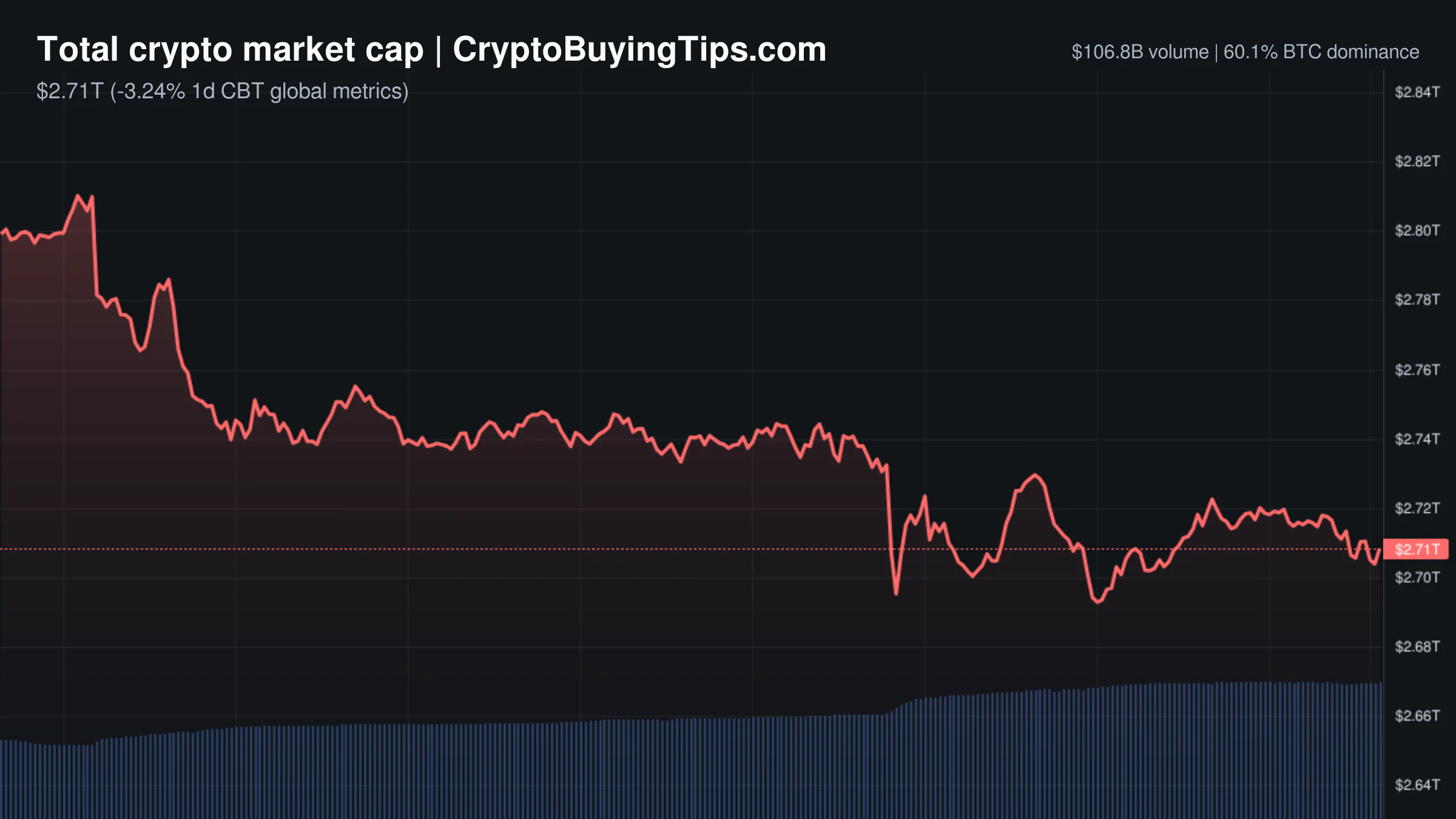
The crypto market is currently enduring a correction that looks more like a technical flush than a fundamental collapse. Total market capitalization has dipped to $2.83T, a decline of 6.31% over the last 24 hours. This price action is accompanied by a stark divergence in volume. While spot trading volume sits at $119.4B, derivatives volume has surged to $1.18T. When derivatives volume is nearly ten times higher than spot activity, the market is no longer trading assets. It is trading bets on those assets.

This imbalance suggests the current downturn is driven by the liquidation of leveraged positions rather than a mass exodus of spot holders. The Fear and Greed Index remains at 72, which is a polite way of saying traders are still greedy despite the red candles. This gap between sentiment and price often precedes a period of higher volatility as the market forces a reconciliation.

Bitcoin dominance has edged up to 59.24%, while the Altcoin Season Index sits at 51, leaving the market in a neutral state. Capital is not necessarily flowing into Bitcoin out of conviction, but rather consolidating there as smaller assets bleed faster. This trend is mirrored in traditional finance, with the S&P 500 and NASDAQ both closing in the red. The correlation between risk assets remains tight.

Bitcoin and Ethereum

Bitcoin is trading at $83,465.4, down 2.76% in 24 hours. The short-term price decline is a curious contrast to institutional demand. Spot Bitcoin ETFs recorded $1.7B in net inflows over the previous two days, suggesting that while the "paper" market is flushing, the "real" money is still accumulating. This creates a floor that is likely stronger than the current price action suggests.

Ethereum has performed slightly worse, dropping 3.11% to $2,646.24. The network is currently a ghost town. Gas fees are sitting at 0.4 Gwei for slow transactions and 0.6 Gwei for fast ones. This level of inactivity suggests a total lack of on-chain urgency. When gas is this cheap, it usually means the DeFi ecosystem is in a holding pattern, waiting for a catalyst that actually justifies the cost of a transaction.

The relationship between the two remains skewed toward the larger asset. We have seen a persistent rotation where institutional players favor the relative safety of the flagship token over the smart contract platform. This is a trend where the dominance data agrees with a broader shift toward risk aversion within the crypto space.

Top crypto prices

Bitcoin leads the market at $83,465.4, followed by Ethereum at $2,646.24. BNB is holding at $768.21, down 2.07%. XRP has seen a more significant drop of 7.71%, now trading at $1.46. Solana is at $113.39, down 3.43%. TRON remains relatively stable at $0.3394, with a minor 1.06% decline. Hyperliquid is trading at $90.89, down 5.15%.

News driving today's market

The primary narrative is the aggressive push toward tokenization of real-world assets. The SEC has introduced an Innovation Exemption that allows certain venues to trade tokenized stocks on-chain. This is a significant shift in regulatory posture. It is further supported by an agreement between the NYSE and Blockchain.com to explore tokenized stocks and ETFs. When the world's largest stock exchange begins exploring on-chain rails, the conversation moves from theoretical to structural.

IBM has also connected its Digital Asset Haven to the Swift blockchain ledger for tokenized deposit transactions. This integration connects the legacy plumbing of global finance with modern ledger technology. It suggests that the "institutional adoption" narrative is finally moving past the ETF stage and into the actual operation of financial markets.

However, this optimism is tempered by regulatory friction. The European Banking Authority is calling for crypto lending to be brought under the MiCA framework. This would introduce suitability tests and leverage limits for DeFi lending. It is a clear attempt to bring the "wild west" of lending into a regulated pen.

In the US, the Trump administration is reportedly considering a plan to promote dollar-backed stablecoins overseas. The goal is to use these tokens to cement the U.S. dollar's global dominance. It is a bold strategy to use decentralized technology to ensure the most centralized currency in history remains the global reserve. Such a move could increase stablecoin dominance in crypto, as government backing would likely drive massive adoption among corporate treasuries.

Social intelligence

On-chain data from @lookonchain indicates that TRON has surpassed $30 trillion in total transaction volume, with daily volume exceeding $30 billion. This confirms that while the market focuses on the "tech" of Ethereum, the actual utility for moving large sums of money often happens on more efficient, less prestigious chains.

Sentiment regarding Bitcoin remains cautiously optimistic. @Cointelegraph reports that holders have locked in $5.1B in net profit over the past week. This is a modest level compared to previous market tops, suggesting that we are not yet in a blow-off top phase where everyone is exiting at once.

The institutional appetite is further evidenced by recent ETF flows. On September 23, Bitcoin ETFs saw $346.98M in net inflows, while Ethereum saw $104.63M. Even Solana and XRP saw modest inflows of $13.77M and $18.04M respectively.

Finally, the performance of altcoins relative to Bitcoin remains bleak. @glassnode notes that only 9 of the top 50 altcoins have beaten Bitcoin since its all-time high. This confirms that the "altcoin season" is currently a myth for the vast majority of the market.

Trading ideas worth watching

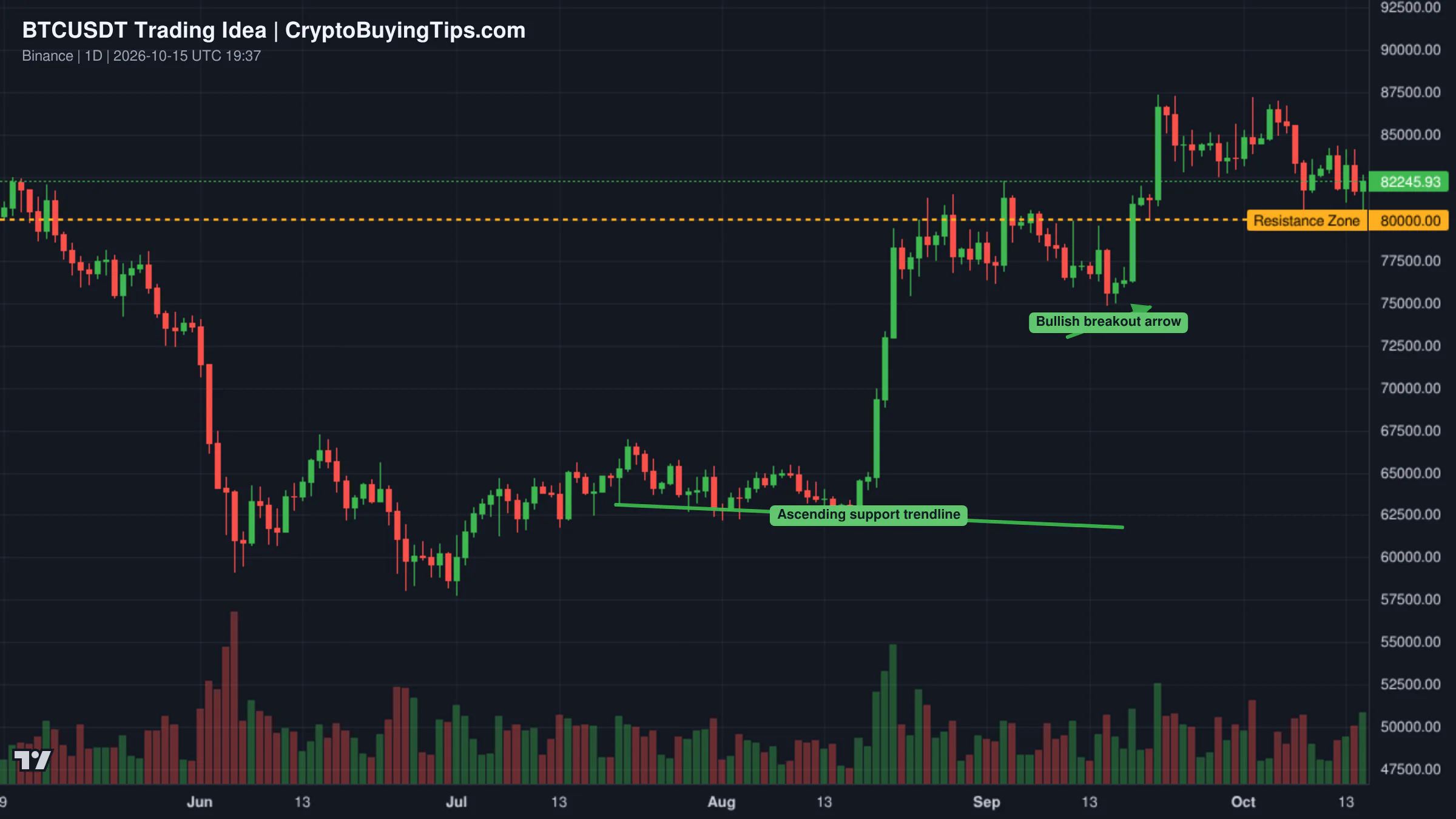
Bitcoin is currently fighting a major resistance zone between $86,500 and $87,000. On the daily timeframe, price has been moving in a rising structure since June. However, the daily RSI has moved above 70 and looks stretched. A clean close above $87,000 would open the door to $88,000. But if this zone holds, we can expect a pullback to the lower trendline before the next attempt.

Redrawn BTCUSDT 15 trading idea chart for BTC/USDT - Double Top Breakdown SetupRedrawn BTCUSDT 1D trading idea chart for BTC Is at a Critical $87K Decision Zone!!

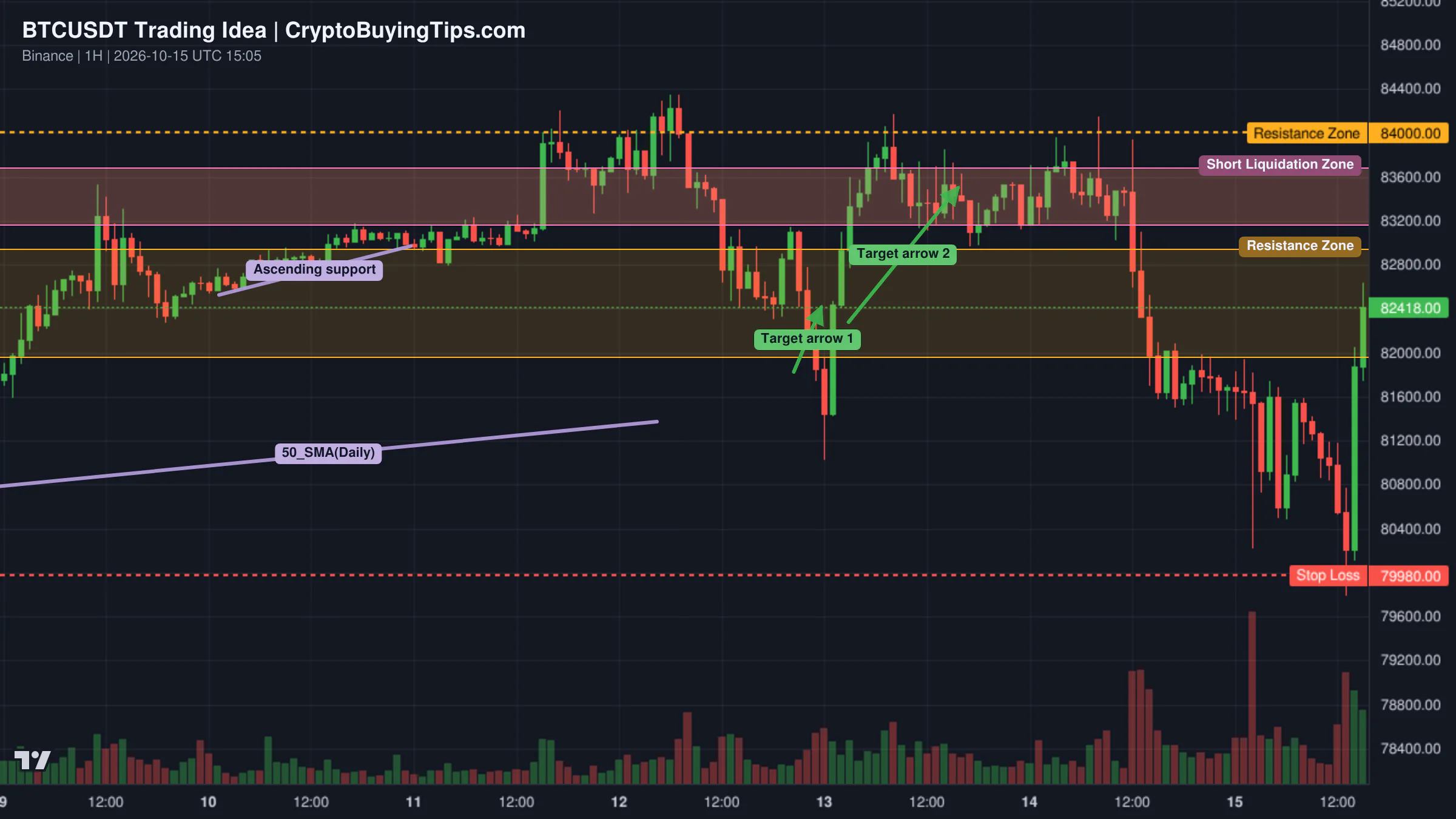
On a shorter timeframe, a double-top structure has formed after a rejection from the $87,200 area. Bitcoin is now testing support between $84,800 and $85,200. If this support fails, the measured move of the double top points toward $83,800 to $84,000. This is a key area where buyers might step in. For a bullish recovery to be valid, the price must reclaim the broken support and establish acceptance above it.

There are also signs of a market structure break on the 4-hour chart, with some analysts suggesting a head-and-shoulders setup. This would point toward a return to the local lows of the month. The tension between the strong ETF inflows and the bearish technical structure on the 15-minute and 4-hour charts is the main story for short-term traders.

Altcoin Spotlight

Hyperliquid is the asset to watch after news that Binance will list HYPE for spot trading. While the token is down 5.15% today to $90.89, a Binance listing is usually a liquidity event that outweighs short-term price drops.

The protocol has managed to carve out a niche in the perpetuals space, and the listing provides a massive bridge to retail liquidity. Given that the broader market is currently flushing leverage, an asset with a genuine product and a major exchange catalyst often finds itself as a relative strength play.

What to watch next

The market is in a tug-of-war between short-term leverage and long-term structural adoption. The surge in derivatives volume suggests that the current dip is a necessary cleansing of over-leveraged longs. If the $83,800 to $84,000 support zone holds, the dip will be viewed as a healthy correction. If it fails, the market may enter a more prolonged period of consolidation.

The real story is the tokenization of the financial system. The coordinated movement by the SEC, NYSE, and IBM suggests that the infrastructure for on-chain stocks and deposits is being built regardless of the daily price of Bitcoin. Traders should watch the $87,000 resistance level for Bitcoin and the reaction to the EU's MiCA lending proposals. The latter could trigger a broader sell-off in DeFi assets if the compliance burden becomes too heavy for decentralized protocols to bear.