

NYSE and Securitize: What Tokenized Stocks Mean for Everyday Investors
The crypto press loves doom. Scroll through any feed right now and you'll see FBI crackdowns, exchange exploits, and enough fear to make you question why you ever bought Bitcoin. But here's what the headlines miss. While everyone argues about regulation, traditional finance is quietly building the infrastructure to bring stocks onchain. The NYSE partnership with Securitize is exactly that, and if you're wondering what is Securitize crypto platform, it's a company that has spent years building compliant rails for tokenizing real world assets. This matters more than another SEC enforcement action.
Market context: Fear sells, infrastructure builds
The Fear & Greed Index sits at 28, firmly in fear territory. I've seen this movie before. When sentiment bottoms out, people stop paying attention to anything that isn't immediately terrifying. But the builders keep building.
Total market cap sits at $2.51 trillion with $98.3 billion in 24-hour volume. The Altcoin Season Index reads 51, basically neutral. Money isn't rotating aggressively anywhere. It's waiting. And when money waits, that's when smart institutions make their moves.
This NYSE-Securitize news hit while everyone was distracted by enforcement actions. That's not a coincidence. Traditional finance doesn't issue press releases for PR. They issue them when they've made actual progress.
What Securitize actually does
Securitize is not some DeFi protocol that launched last month. The company has been around since 2017, working within SEC regulations to tokenize private market assets. They've processed billions in tokenized securities. We're talking real estate funds, private equity, even corporate bonds issued on blockchain rails.
The platform handles the entire lifecycle. KYC and accreditation checks. Compliance monitoring. Cap table management. Secondary trading through their ATS (Alternative Trading System). Everything a traditional transfer agent does, but onchain and faster.
For crypto natives, this might sound boring. Where's the 100x leverage? Where's the meme coin narrative? But for the $100 trillion traditional securities market, this is the on-ramp. And the NYSE just validated it.
Why the NYSE partnership matters
The New York Stock Exchange isn't partnering with crypto companies for clout. They're doing it because the infrastructure works.
This partnership creates a direct path for traditional equities to trade onchain. Not wrapped synthetic tokens sitting in a legal gray area. Actual, compliant tokenized stocks with regulatory backing.
Think about what this unlocks. 24/7 trading for stocks that currently only trade during market hours. Fractional ownership that actually works without custodial gymnastics. Instant settlement instead of T+1. Global access for investors who currently can't access US markets.
I remember covering the shift from T+3 to T+2 settlement in traditional markets. It took years of coordination between clearing houses, brokers, and regulators. Blockchain does this by default.
What this means for everyday investors
Here's the uncomfortable truth. Most retail investors won't access tokenized stocks through a crypto wallet anytime soon. The regulatory framework isn't there yet. But the infrastructure being built now determines what's possible in five years.
When I first started using DeFi in 2020, the user experience was genuinely painful. Four years later, I can swap tokens on Bybit with a clean interface and reasonable fees. The same evolution will happen with tokenized equities.
The institutional groundwork matters. Brokers need custody solutions. Regulators need comfort. Tax authorities need reporting. Securitize has been building all of this. The NYSE partnership accelerates adoption by bringing institutional credibility.
For now, watch how this develops. Tokenized equities will likely start with private markets, where accredited investor rules already limit access. Public equities will follow, but probably through regulated intermediaries rather than direct wallet access.
Looking ahead
The S&P 500 sits at $655.83, essentially flat. Traditional markets are in wait-and-see mode. But behind the scenes, the infrastructure for tokenized stocks advances.
I expect more traditional institutions to announce similar partnerships over the next 18 months. The question isn't whether stocks will trade onchain. It's who controls the rails when they do.
Securitize just positioned themselves as the early leader. The NYSE gave them the institutional stamp of approval. And most crypto Twitter hasn't noticed because they're arguing about which influencer is getting paid to shill what token.
When I covered the 2008 crash, I watched traditional finance resist every innovation until the innovations became unavoidable. Tokenized equities are following the same pattern. The builders are winning. The headlines just haven't caught up yet.
Some links in this article may be affiliate links. We may earn a commission at no extra cost to you — this never influences our analysis or coverage.

Sigrid Voss
Crypto analyst and writer covering market trends, trading strategies, and blockchain technology.
More Articles
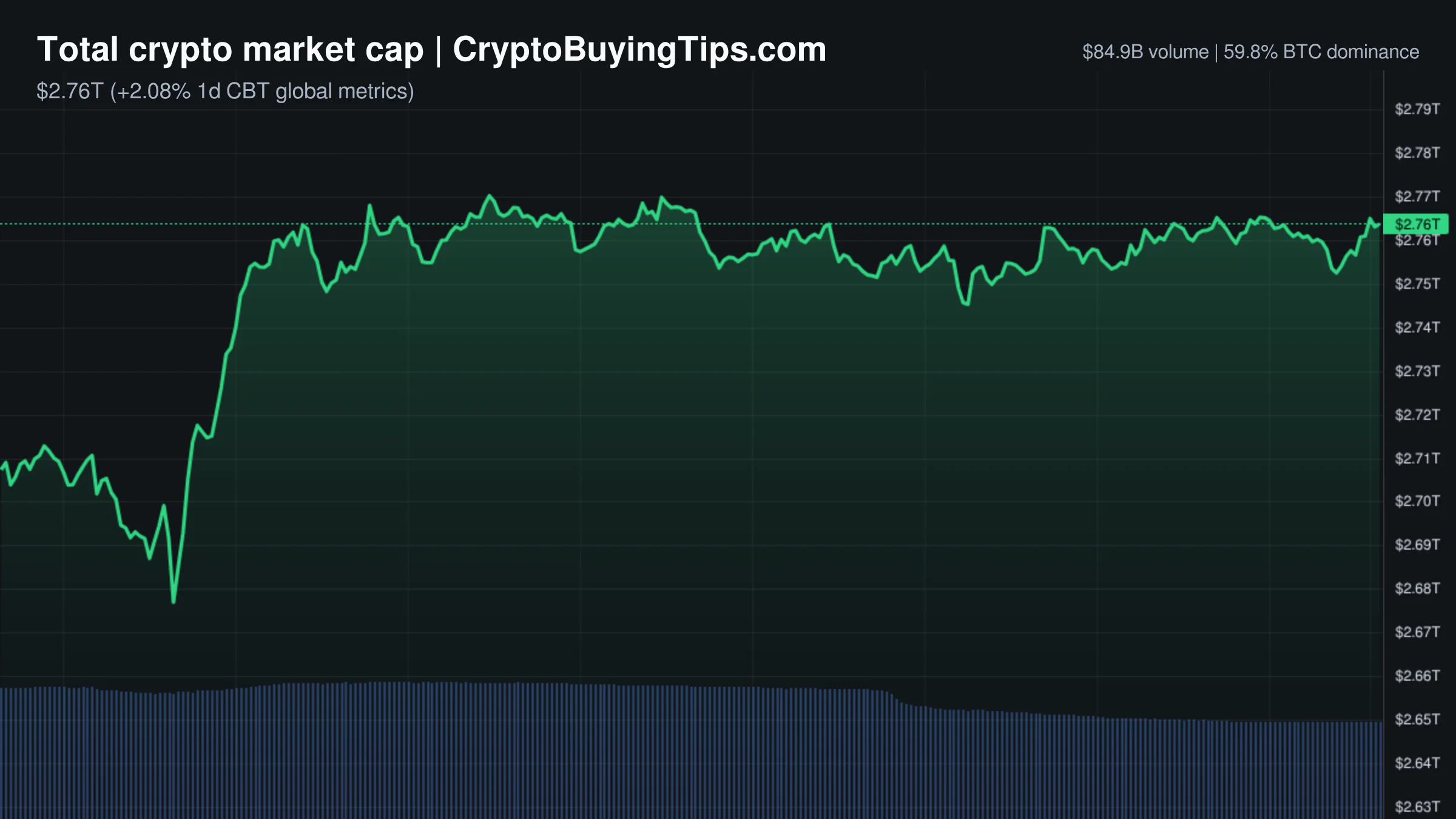
Crypto Market Overview | prices climb despite falling trading volume and stablecoin activity | October 16, 2026
Prices climb despite falling trading volume and stablecoin activity; see our market overview for context.

Wall Street is building its own rules while Congress argues
Wall Street seems to have decided waiting for Congress isn't worth the time. Major players like Mastercard are building…
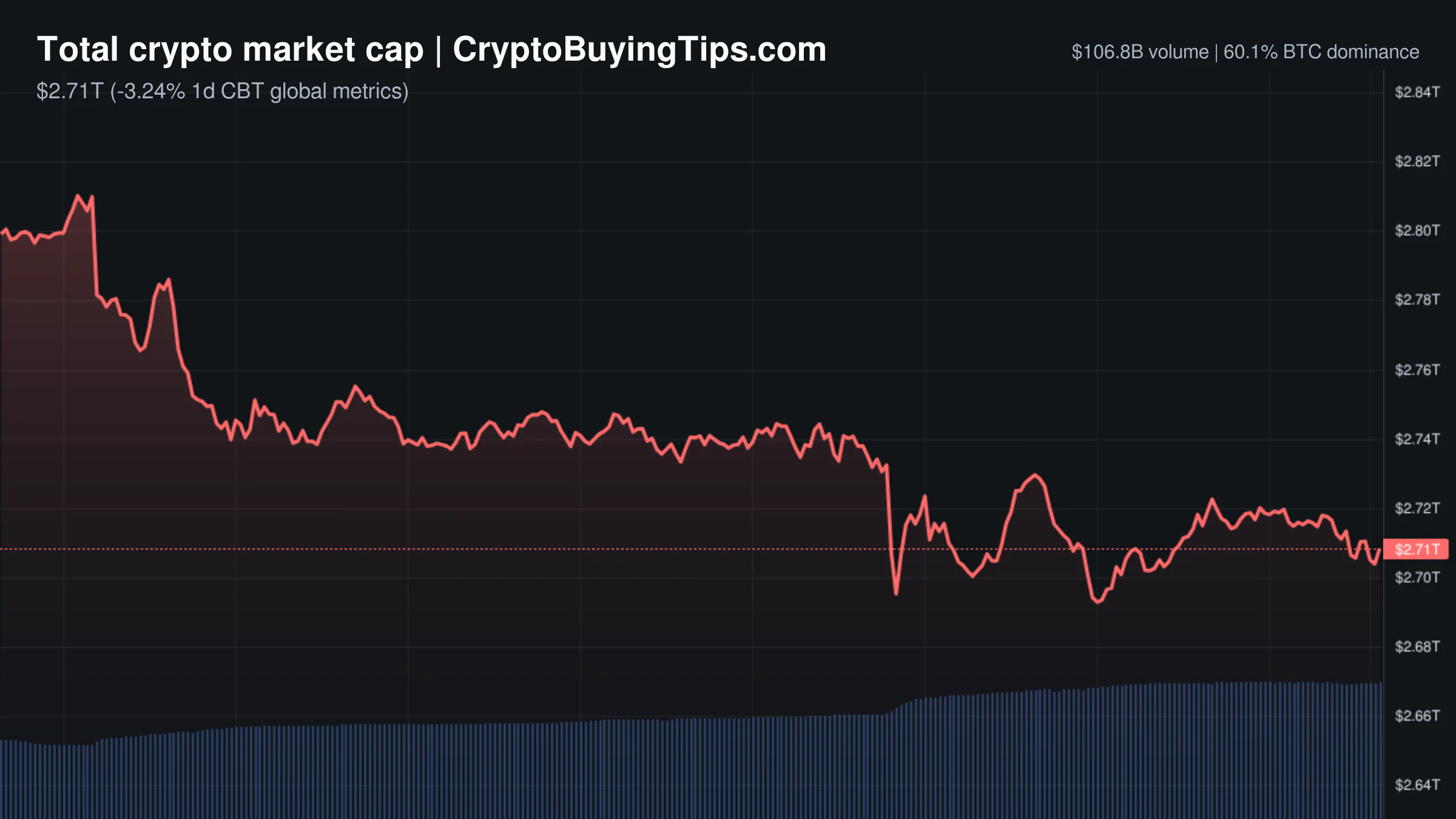
Crypto Market Overview | leveraged flush amid macro headwinds and institutional rails buildout | October 15, 2026
The crypto market sees leveraged flushing amid macro headwinds; see our read on institutional rails building out now.

Price is down but volume is ripping. This is a high-conviction flush
The market dropped nearly four percent while volume surged by over forty-four percent; this suggests the usual bleed is…