
How to buy Ethereum (ETH)
This guide shows verified market-pair data, exchange listings, and related buying information for ETH. Always confirm fees, country availability, and withdrawal support directly with the exchange before depositing funds.
Buying checks for Ethereum (ETH)
Buying routes
Some links may be affiliate links. Route data is shown only when it was found in our market-pair or route data.
| Exchange/route | Pair | Type | Volume/liquidity | Action |
|---|---|---|---|---|
 Gate | ETH/USDT | CEX | $193.04M | Check route |
 MEXC0% trading fee | ETH/USDT | CEX | $213.81M | Check route |
 Bitget | ETH/USDT | CEX | $80.12M | Check route |
 Binance | ETH/USDT | CEX | $336.82M | Check route |
BitMart25% trading fee | ETH/USDT | CEX | $80.21M | Check route |
Crypto.com Exchange | ETH/USD | CEX | $203.48M | Check route |
 XT.COM | ETH/USDT | CEX | $161.04M | Check route |
 Coinbase Exchange | ETH/USD | CEX | $158.77M | Check route |
OKX | ETH/USDT | CEX | $147.53M | Check route |
 KuCoin | ETH/USDT | CEX | $125.94M | Check route |
Risk checks
Token contract data is present for ETH; users should verify the exact address and network through official sources before transferring funds.
Exchange availability, KYC requirements, and account features can vary by country.
Deposit and withdrawal support is not verified unless a route source explicitly provides it.
CoinMarketCap page information is used only as low-confidence background context, not as proof of listings, fees, liquidity, or contract safety.
Large-cap buying queries are often exchange-dominated, so the guide should emphasize durable verification, custody, ecosystem, and risk context.
How this guide is checked
- Last verified
Last updated:
How to buy and use Ethereum (ETH) responsibly
Buying a large-cap asset like Ethereum often seems straightforward, but the risks usually hide in the details of custody and network selection. Because ETH exists across multiple blockchain environments, a simple mistake during a transfer can lead to a total loss of funds. Responsible use requires verifying the network and the contract address before any assets move.
Verified ways to access ETH
Ethereum is available on a wide range of centralized and decentralized platforms.
Centralized exchanges with verified ETH market pairs include:
- Binance (ETH/USDT)
- MEXC (ETH/USDT)
- Crypto.com Exchange (ETH/USD)
- Gate (ETH/USDT)
- XT.COM (ETH/USDT)
- Coinbase Exchange (ETH/USD)
- OKX (ETH/USDT)
- KuCoin (ETH/USDT)
- Bybit (ETH/USDT)
- BitMart (ETH/USDT)
- Bitget (ETH/USDT)
- LBank (ETH/USDC)
- Kraken (ETH/USD)
- BingX (ETH/USDT)
- HTX (ETH/USDT)
- Upbit (ETH/KRW)
- Bitstamp by Robinhood (ETH/USD)
- Bithumb (ETH/KRW)
- Bitfinex (ETH/USDT)
- bitFlyer (ETH/JPY)
- Gemini (ETH/USD)
- Aster (ETH/USDT)
- Binance.US (ETH/USD)
- Tokocrypto (ETH/USDT)
Decentralized options include Uniswap v4, PancakeSwap v3, and Curve.
KYC requirements are mandatory for Bybit, MEXC, and BitMart.
What Ethereum is used for
Ethereum is a decentralized open-source blockchain system. Its native cryptocurrency is Ether (ETH). Unlike simple payment networks, Ethereum is a platform for the execution of decentralized smart contracts. This allows other developers to build their own cryptocurrencies and decentralized applications on top of it.
The network is used for several specific functions:
- Staking: The Ethereum Foundation has used the Lido liquid staking protocol to stake ETH.
- Tokenization: Projects like Ondo Finance use the network to integrate tokenized U.S. stocks and ETFs into the Uniswap ecosystem.
- Governance and Infrastructure: It supports a wide range of decentralized apps that are designed to be resistant to downtime and fraud.
Wallet, network, and custody checks
ETH is primarily associated with the Ethereum network. The main contract address is 0xeeeeeeeeeeeeeeeeeeeeeeeeeeeeeeeeeeeeeeee. However, ETH also exists on other platforms, including:
- BNB Smart Chain (BEP20)
- Arbitrum
- Optimism
- Avalanche C-Chain
- Viction
- HECO
- KAIA
Users must verify which network their exchange or wallet supports before initiating a transfer. Using the wrong network can result in the loss of funds. For transaction and address verification, the official explorer is Etherscan. Further technical details are available via the official website and the whitepaper.
Common mistakes before buying ETH
The most frequent errors involve a lack of verification. Users often use a lookalike contract address or send funds via the wrong network.
Another common mistake is assuming that all exchanges support the same deposit and withdrawal networks. An exchange might allow you to buy ETH but may not support withdrawals to a specific layer-2 network.
Finally, many users ignore country availability and KYC requirements. For example, MEXC is banned in the US, UK, Canada, and Singapore. Opening an account without checking these restrictions can lead to frozen funds or account closure.
Route, liquidity, and availability caveats
Deposit and withdrawal support is not verified for most of the listed routes unless the exchange explicitly states it in their current terms.
Liquidity is generally high for major pairs like ETH/USDT and ETH/USD, but it varies across different platforms. Availability is also subject to regional laws. KYC requirements and account features change based on the user's country of residence.
Sources and methodology
The routes listed in this guide come only from verified market-pair rows in our database. We use web research and news from sources like CoinMarketCap and BSC News for background and risk context. Information from CoinMarketCap page scrapes is treated as low-confidence context and is not used as proof of fees or contract safety. Live market values, such as current price and 24h volume, are omitted because they change too frequently to remain accurate in a static guide.
Related Articles
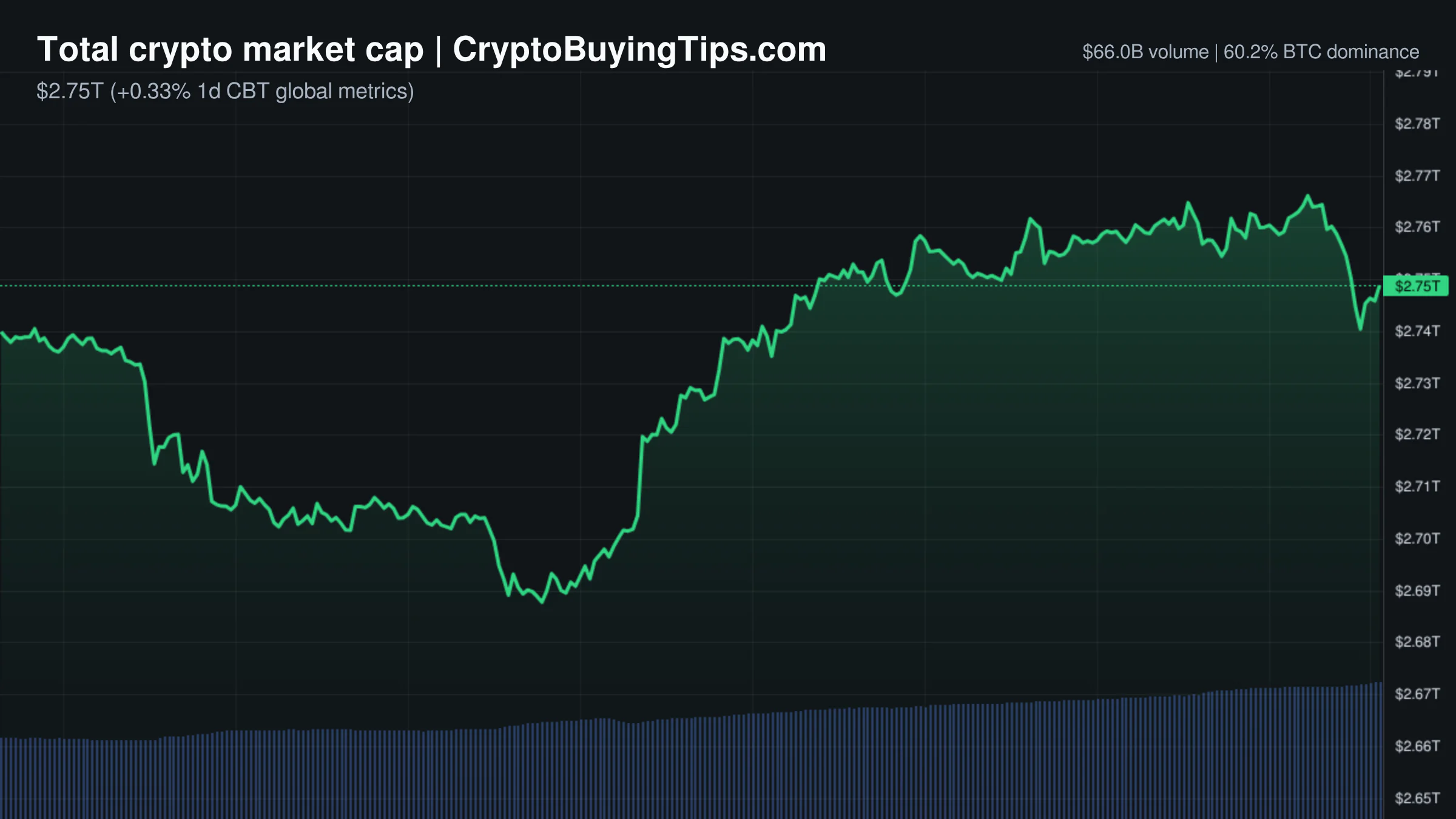
Crypto Market Overview | Leveraged bets surge as institutional rails expand despite ETF outflows | October 19, 2026
Leveraged bets surge as institutional rails expand despite ETF outflows; see our market overview on BTC dominance and…

Why 0.04 Gwei gas is a red flag for Ethereum
The quiet gas fees suggest nothing about underlying utility demand; meanwhile, $566B in derivatives volume points…
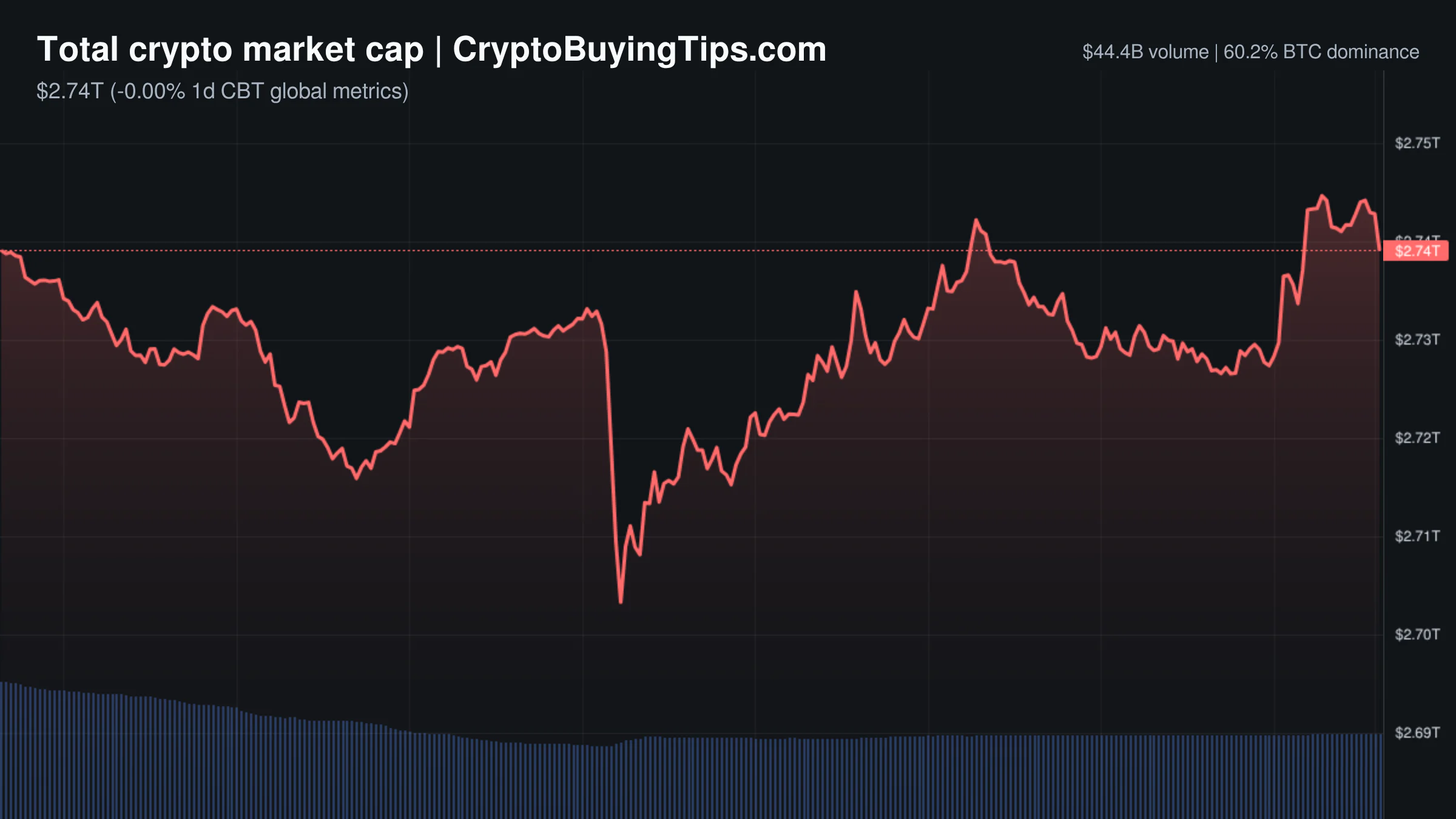
Crypto Market Overview | Bitcoin dominance climbs while altcoins struggle amid institutional friction | October 18, 2026
Bitcoin dominance climbs to 60.1% while altcoins struggle amid institutional friction; see our market overview for…
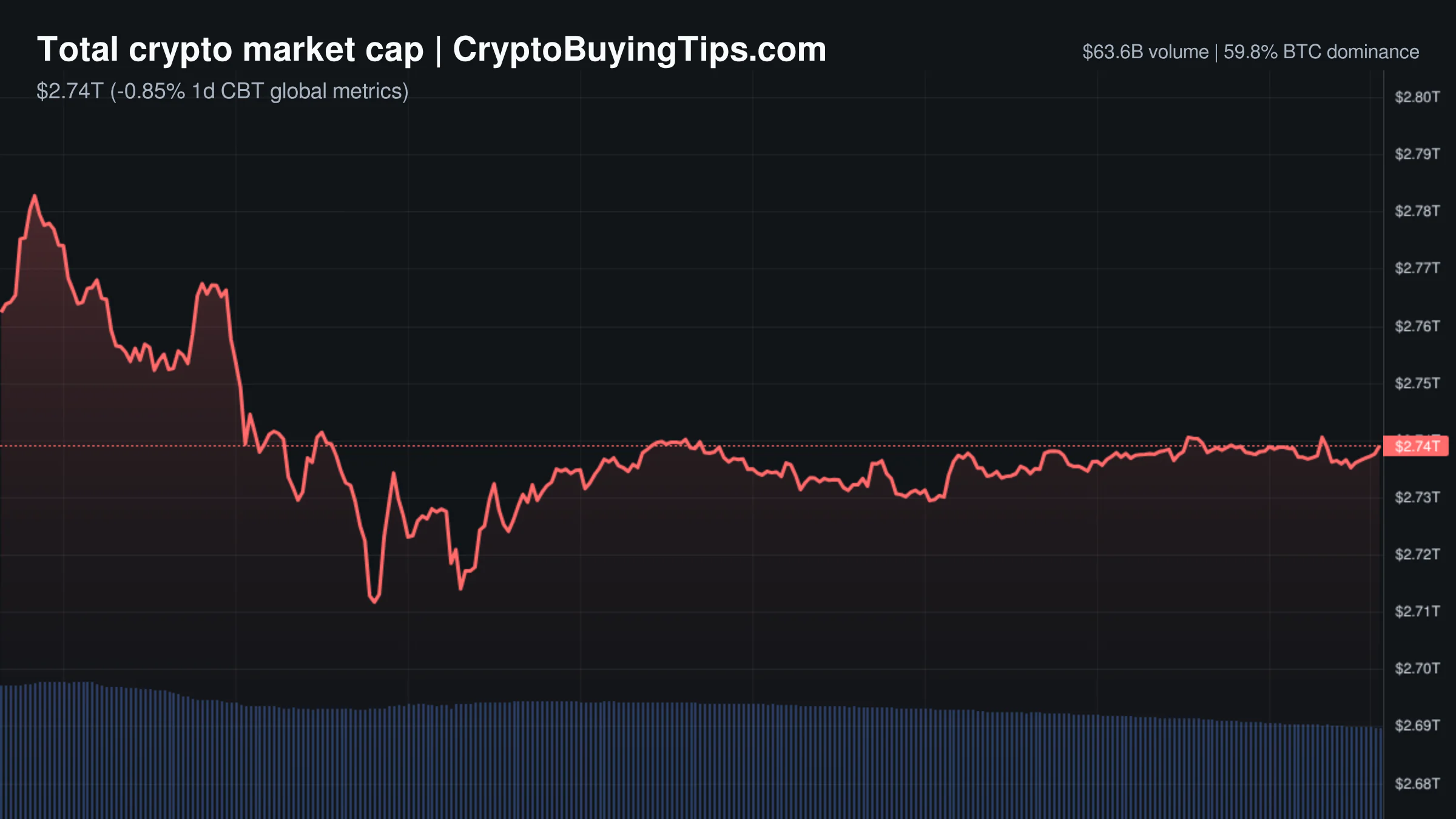
Crypto Market Overview | volume collapse amid macro pressure weighs on institutional flows | October 17, 2026
Market overview shows volume collapse amid macro pressure weighing on institutional flows; see how crypto is reacting to…
Recent Articles
See moreWhy 0.04 Gwei gas is a red flag for Ethereum
The quiet gas fees suggest nothing about underlying utility demand; meanwhile, $566B in derivatives volume points…
6 million Bitcoin are quantum-exposed. Here is what that actually means
Six million Bitcoin are sitting in addresses that could be vulnerable to quantum attacks. The risk isn't theoretical; it…
Speculators are ditching altcoins for tokenized Tesla stocks
Another day, another reason to question where all the money goes these days. Our signal scanner flagged a clear…
Wall Street is building its own rules while Congress argues
Wall Street seems to have decided waiting for Congress isn't worth the time. Major players like Mastercard are building…
Ethereum Market Sentiment
Source: CoinMarketCap. Updated Oct 19, 2026, 7:24 PM
ETH to USD Converter

Ethereum
ETH
Rank
#2
$2.40K