
How to buy Solana (SOL)
This guide shows verified market-pair data, exchange listings, and related buying information for SOL. Always confirm fees, country availability, and withdrawal support directly with the exchange before depositing funds.
Buying checks for Solana (SOL)
Buying routes
Some links may be affiliate links. Route data is shown only when it was found in our market-pair or route data.
| Exchange/route | Pair | Type | Volume/liquidity | Action |
|---|---|---|---|---|
 Gate | SOL/USDT | CEX | $103.77M | Check route |
 MEXC0% trading fee | SOL/USDT | CEX | $78.1M | Check route |
 Bitget | SOL/USDT | CEX | $63.42M | Check route |
 Binance | SOL/USDT | CEX | $206.15M | Check route |
 BitMart25% trading fee | SOL/USDT | CEX | $86.13M | Check route |
 Coinbase Exchange | SOL/USD | CEX | $78.82M | Check route |
 XT.COM | SOL/USDT | CEX | $72.16M | Check route |
 OKX | SOL/USDT | CEX | $61.81M | Check route |
 LBank | SOL/USDT | CEX | $46.38M | Check route |
 Bybit10% trading fee | SOL/USDT | CEX | $42.68M | Check route |
Risk checks
Token contract data is present for SOL; users should verify the exact address and network through official sources before transferring funds.
Exchange availability, KYC requirements, and account features can vary by country.
Deposit and withdrawal support is not verified unless a route source explicitly provides it.
CoinMarketCap page information is used only as low-confidence background context, not as proof of listings, fees, liquidity, or contract safety.
Large-cap buying queries are often exchange-dominated, so the guide should emphasize durable verification, custody, ecosystem, and risk context.
How this guide is checked
- Last verified
Last updated:
How to buy and use Solana (SOL) responsibly
Solana is a blockchain launched in 2020 that focuses on high-capacity performance. It uses a proof-of-history (PoH) consensus mechanism developed by Anatoly Yakovenko. This approach allows the network to process transactions with shorter validation times than many other layer-1 platforms.
The network is designed for both individual users and enterprise customers. It aims to keep transaction costs low while maintaining scalability. While it has attracted institutional interest, the network has a history of repeated outages that have affected its reliability.
Verified ways to access SOL
You can access SOL through several verified exchange routes. Some of these include Binance, Gate, BitMart, Coinbase Exchange, MEXC, XT.COM, Bitget, OKX, LBank, Bybit, KuCoin, Kraken, Crypto.com Exchange, Upbit, Bitstamp by Robinhood, BingX, Bithumb, Bitfinex, Gemini, HTX, Binance TR, Binance.US, Tokocrypto, and Aster.
Trading fees vary by platform. MEXC lists a 0% trading fee for the SOL/USDT pair. Bybit charges 0.1%, and BitMart charges 0.25%.
What Solana is used for
Solana is a layer-1 platform used to host smart contracts and decentralized applications. Its primary utility is providing a high-throughput environment for developers. Grayscale reports that the network has evolved to support large-scale applications with 100 million daily transactions.
The project is also expanding into physical infrastructure. Solana signed an agreement to support blockchain infrastructure for Alatau City, a planned digital megacity in Kazakhstan. This deal involves consulting and a crypto pilot zone.
Wallet, network, and custody checks
SOL exists on its own native network. The verified contract address is So11111111111111111111111111111111111111111. You can verify this address and check transactions using the Solscan explorer.
For those who want to inspect the implementation activity, the source code is available on GitHub. Official project information is hosted at solana.com.
Common mistakes before buying SOL
Many users make errors during the transfer or account setup process. These include:
- Using a lookalike contract address or the wrong network.
- Assuming every exchange supports the same deposit and withdrawal networks.
- Ignoring KYC requirements or country restrictions. For example, MEXC and Bybit ban users from the United States.
- Treating a live price snapshot as a permanent data point.
Route, liquidity, and availability caveats
Deposit and withdrawal support for the listed exchanges is not verified. You must check the specific exchange for current support.
KYC requirements and account features change based on your country of residence. Some exchanges have strict banned lists. Bybit and MEXC, for instance, restrict access for users in several jurisdictions, including the US and Canada.
Sources and methodology
The exchange routes in this guide come only from verified market-pair rows in our database. We use web research and news for background and risk context. Information from CoinMarketCap page scrapes is treated as low-confidence context. Live market values like price and volume are omitted because they change too frequently for a static guide.
Related Articles
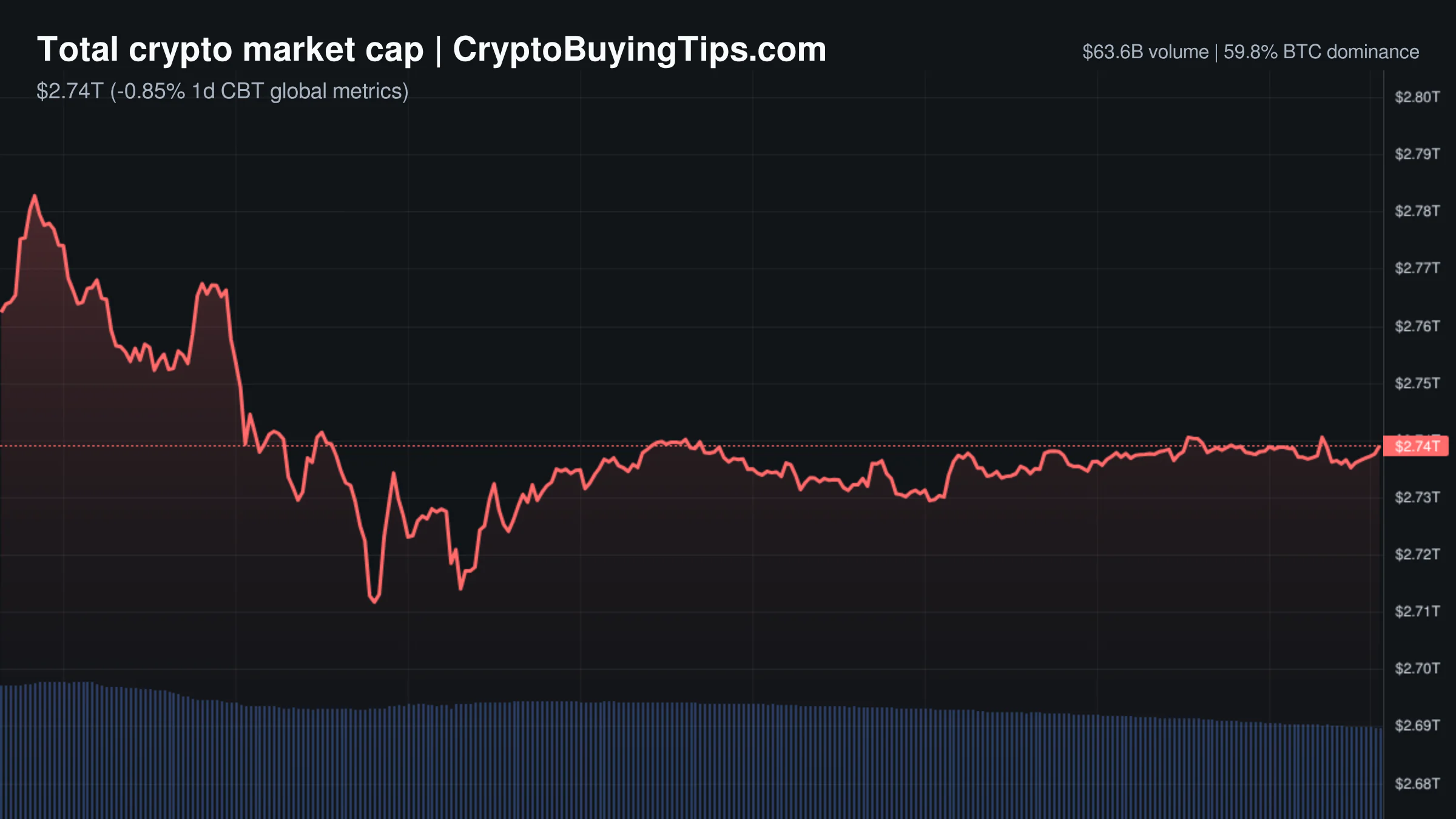
Crypto Market Overview | volume collapse amid macro pressure weighs on institutional flows | October 17, 2026
Market overview shows volume collapse amid macro pressure weighing on institutional flows; see how crypto is reacting to…
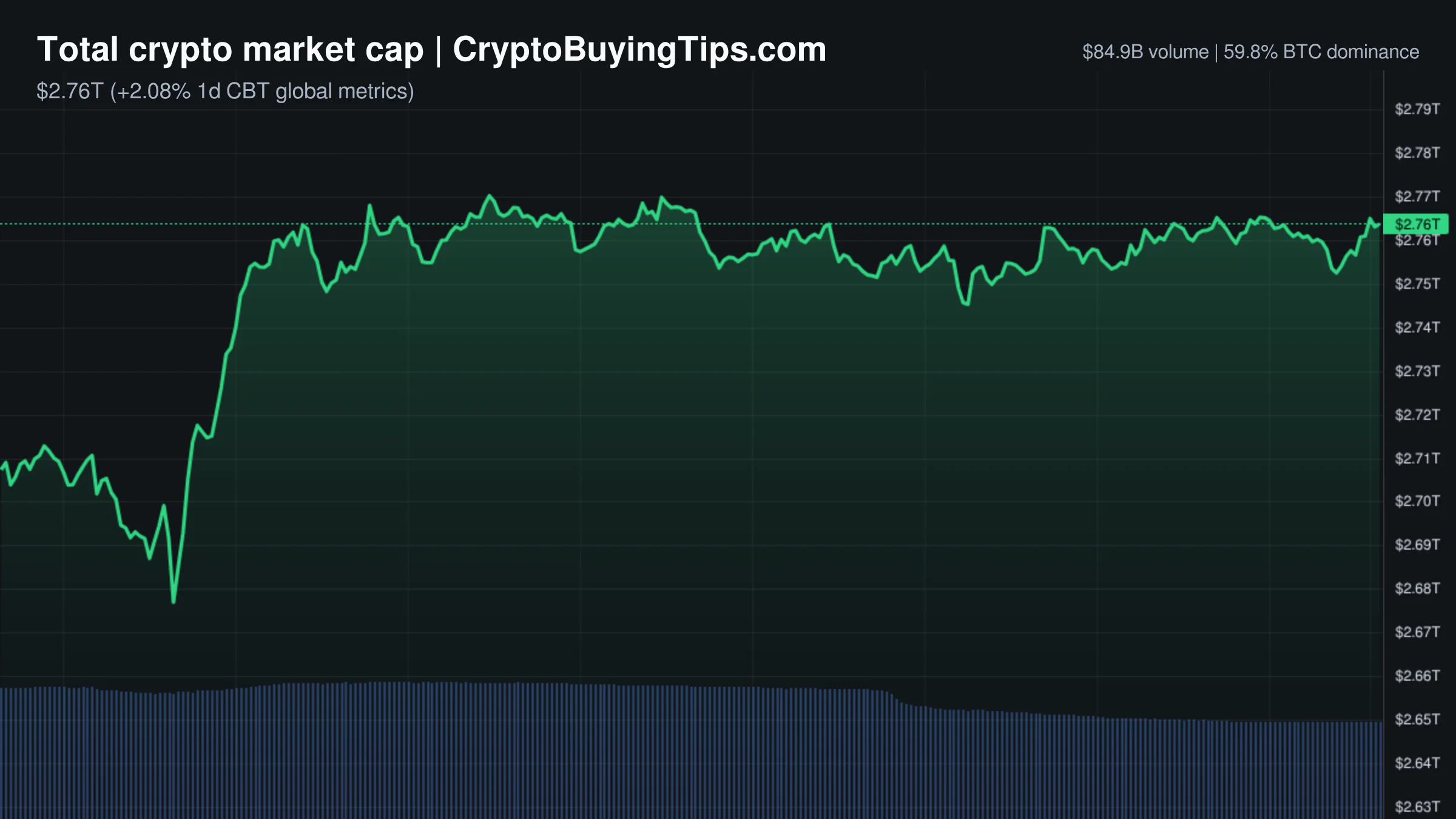
Crypto Market Overview | prices climb despite falling trading volume and stablecoin activity | October 16, 2026
Prices climb despite falling trading volume and stablecoin activity; see our market overview for context.
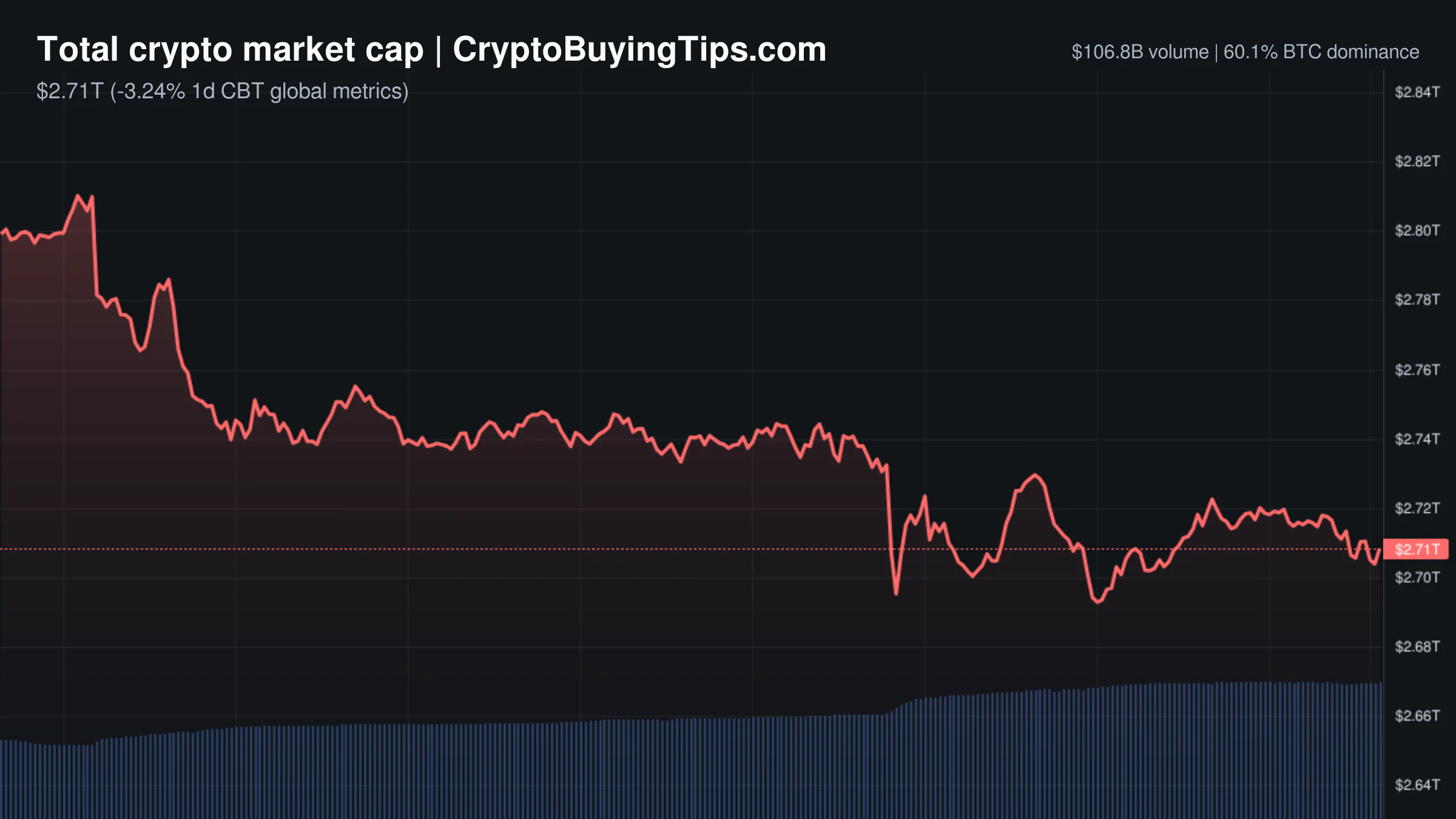
Crypto Market Overview | leveraged flush amid macro headwinds and institutional rails buildout | October 15, 2026
The crypto market sees leveraged flushing amid macro headwinds; see our read on institutional rails building out now.
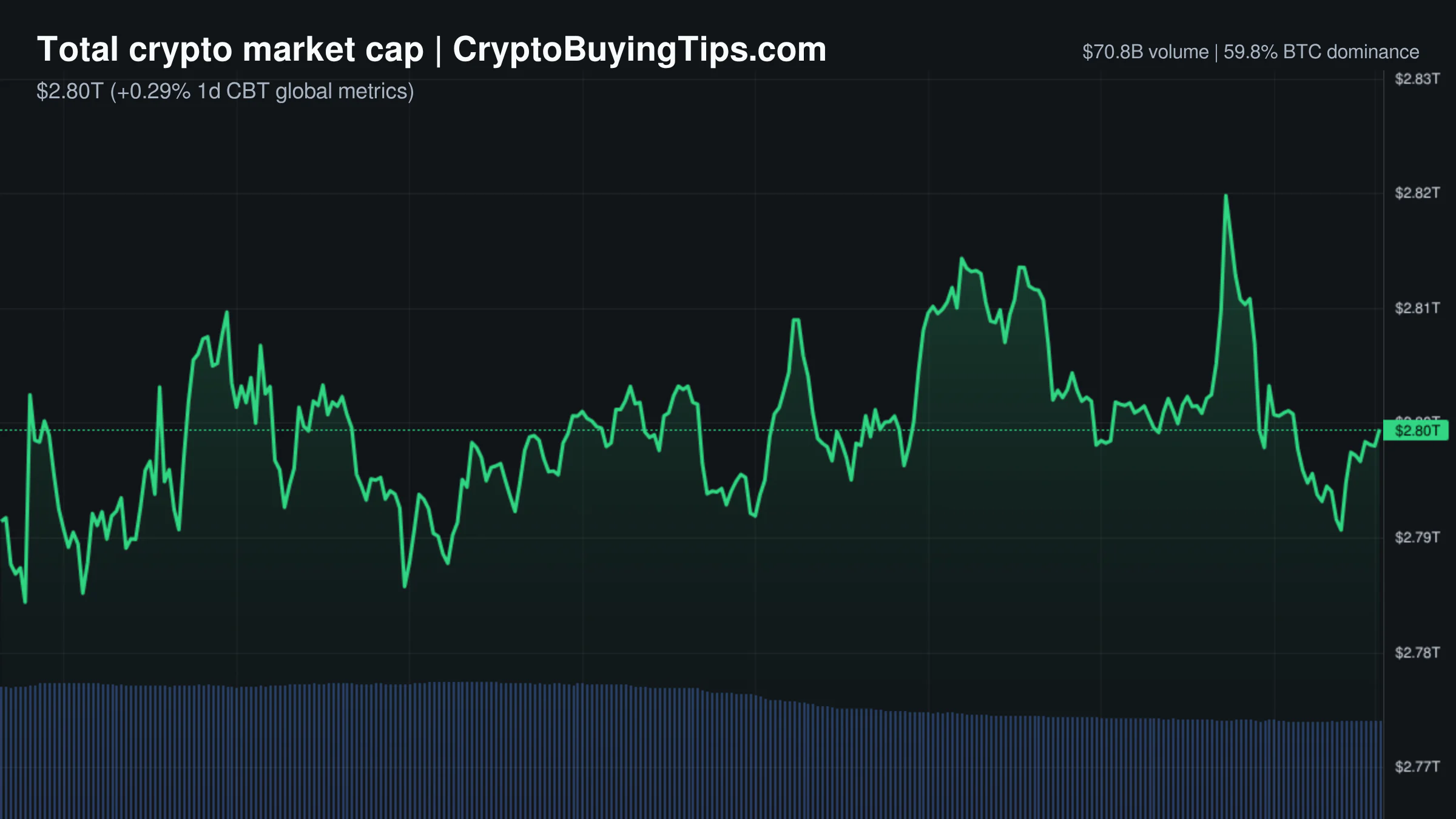
Crypto Market Overview | Leveraged derivatives volume dwarfs spot activity amid institutional rails expansion | October 14, 2026
Derivatives volume dwarfs spot activity in crypto markets as institutional rails expand; see our overview of BTC and ETH…
Recent Articles
See moreSpeculators are ditching altcoins for tokenized Tesla stocks
Another day, another reason to question where all the money goes these days. Our signal scanner flagged a clear…
Wall Street is building its own rules while Congress argues
Wall Street seems to have decided waiting for Congress isn't worth the time. Major players like Mastercard are building…
Price is down but volume is ripping. This is a high-conviction flush
The market dropped nearly four percent while volume surged by over forty-four percent; this suggests the usual bleed is…
The volume collapse is hiding a massive Bitcoin setup
Volume has dropped significantly across crypto markets, which usually signals apathy. Our read suggests this quiet…
Solana Market Sentiment
Source: CoinMarketCap. Updated Oct 18, 2026, 3:23 AM
SOL to USD Converter

Solana
SOL
Rank
#7
$103.82