

Washington is arguing about the midterms while Wall Street tokenizes the world
The political narrative is moving in one direction. The midterms passed with a Democratic sweep, and the usual voices are already drafting their threads on why this is a bearish signal for the industry. But they are looking at the wrong map. While Washington argues over semantics, the actual plumbing of global finance is moving on-chain in a parallel process that seems entirely divorced from the election cycle. If you are wondering what is security tokenization explained simply, it is the process of converting a traditional financial asset, like a government bond or a share of a company, into a digital token on a blockchain. We previously covered SEC crypto portfolio barriers for more background.
How does what is security tokenization explained work?
The core concept is a wrapper. Instead of a physical certificate or a line in a legacy database, the asset is wrapped into a blockchain-native token. This makes the asset programmable and instantly transferable. You aren't creating a new asset out of thin air; you are just changing the way the ownership is recorded and moved.
Our news scoring system rated the 'Wall Street’s Plumbing Goes Onchain' story with a novelty score of 9/10 because it marks a shift from theory to actual deployment. We are seeing firms like Morgan Stanley move beyond the "pilot" phase. They are tokenizing US Treasurys and equities through the DTCC, which is the central nervous system of the US markets.
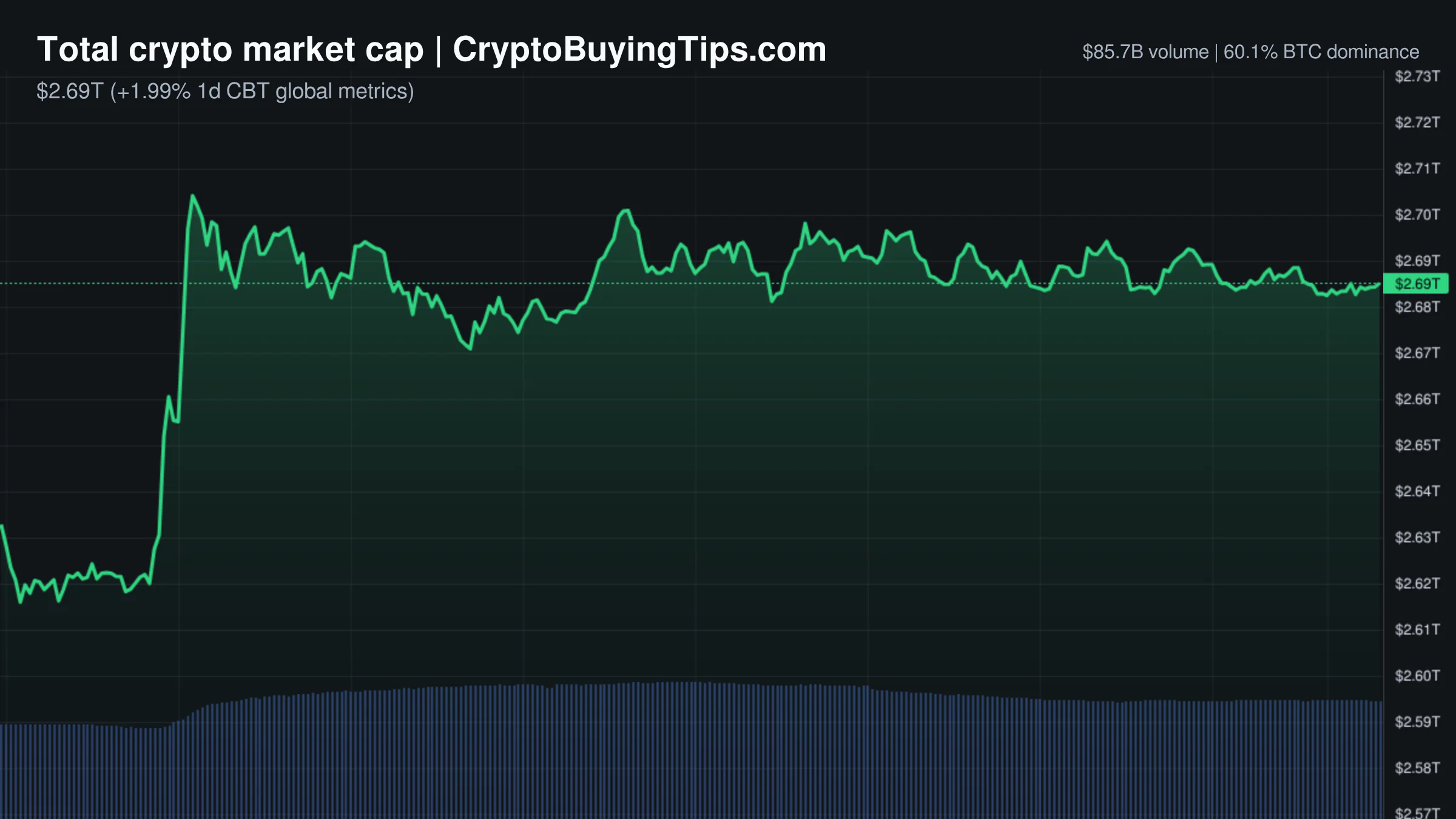
This isn't a retail play. It is an infrastructure play. The total crypto market cap currently sits at $2.69T, but that figure is largely driven by speculative assets. The real story is the movement of the trillions of dollars in traditional assets that are currently trapped in slow, archaic systems.
Why the big banks are moving now
The drive toward tokenization isn't about the "magic of blockchain" or a sudden love for decentralization. Banks don't love decentralization; they love control. Their interest is purely pragmatic. They want to solve friction points like settlement times and the absurd cost of cross-border transfers.
In the current legacy system, settling a trade can take days. Tokenization allows for "atomic settlement," where the asset and the payment change hands at the exact same moment. This removes the need for a middleman to guarantee the trade, which in turn lowers risk.
The regulatory wind is shifting, too. Our news scoring system rated the 'Canton Coin Gets SEC Nod' story with a liquidity impact score of 8/10. When the SEC gives a nod to infrastructure like Canton, it tells the big players that they can build these systems without the fear of a sudden, retroactive lawsuit. It suggests that institutional adoption is proceeding via established plumbing rather than the wild-west retail activity we see on DEXs. We previously covered how Wall Street rules on payments are being set by the firms themselves because waiting for Congress is a losing strategy.
The impact on capital efficiency
By creating digital, fractionalized representations of assets on-chain, banks can unlock value that is currently illiquid. Think of a massive commercial building or a private equity fund. Normally, you need millions of dollars to get a piece of those. Tokenization allows those assets to be split into smaller, programmable pieces.
This creates a new kind of liquidity. If a bank can tokenize a portion of its balance sheet, it can move that capital more efficiently. The market is already feeling this shift. We saw 24h volume hit $86.16B recently, and while much of that is leverage, the underlying interest in RWA (Real World Assets) is growing.
The gap between the political noise and the institutional reality is where the real insight lives. The pundits are worried about who holds the gavel in DC, but the people who actually move the money are building a new system. They are digitizing the world's assets while the politicians are still debating the dictionary.
Our read is that the "plumbing" has decoupled from the political cycle. Whether the Democrats or Republicans hold power, the efficiency gains of tokenization are too large for Wall Street to ignore. The transition to on-chain finance isn't a political choice; it is a technical inevitability. The banks have decided that the legacy system is too slow, and they are no longer asking for permission to replace it.
Some links in this article may be affiliate links. We may earn a commission at no extra cost to you — this never influences our analysis or coverage.

Sigrid Voss
Crypto analyst and writer covering market trends, trading strategies, and blockchain technology.
More Articles
Crypto Market Overview | leverage dominates as institutional inflows meet political uncertainty | November 5, 2026
Crypto market overview shows leverage driving activity as institutional inflows meet political uncertainty; see our read…
Crypto Market Overview | Leveraged bets dominate volume amid fear and institutional regulatory shifts | November 4, 2026
Leveraged bets dominate volume amid fear and institutional regulatory shifts; see our market overview on BTC, ETH, and…

The SEC just gave DeFi a pass on governance. Now watch the rotation
Turns out voting on DAO proposals isn't quite as illegal as we thought. The SEC guidance shift means capital might…
Crypto Market Overview | speculative leverage surges amid exchange security failures and institutional caution | November 3, 2026
Speculative leverage surges amid exchange security failures and institutional caution; see our market overview of…