

Wall Street is building its own rules while Congress argues
Mastercard is currently bringing stablecoin balances into traditional banking and card payments, yet the US government remains in a state of legislative paralysis. This contradiction is the new reality for institutional finance. While retail traders spend their time arguing on social media about why is crypto regulation taking so long, the biggest players on the street have simply stopped waiting for a permission slip from Washington. We previously covered SEC crypto custody rules for more background.
Why the regulatory vacuum persists
The current slow pace of legislation suggests that established financial players are finding alternative, non-governmental pathways to integrate crypto rails. We aren't seeing a lack of interest, but rather a strategic pivot. Our news scoring system rated the "Crypto for Advisors" report 9/10 for novelty because it highlights a shift toward regulatory capture. Instead of waiting for a federal law, firms are creating their own internal compliance frameworks that they hope the government will eventually adopt as the standard.
This is happening against a backdrop of massive scale. The total market cap sits at $2.75T, with Bitcoin dominance at 59.81%. When the numbers get this large, the risk of waiting for a slow-moving Congress becomes a competitive disadvantage. Wall Street prefers a predictable internal standard over an unpredictable federal one. We've seen this before in other sectors of finance; the industry builds the plumbing first and asks for the blueprints to be legalized later.
How does why is crypto regulation taking so long work?
The delay in federal law is not just about political gridlock. It is often a result of the "enforcement first" strategy that has defined the last few years. While the SEC stalls everything else, the private sector is filling the gap with operational adoption.
We are seeing institutional actions that bypass the need for immediate federal crypto law. Mastercard's integration of stablecoins and the EBA's designation of USDC as a significant e-money token are prime examples. Our news scoring system rated the latter 8/10 for liquidity impact. These aren't just "tests." They are the deployment of infrastructure.
To do this, firms are relying on private standards for digital asset compliance. This involves embedding AML and KYC logic directly into smart contracts to ensure that only verified participants can interact with institutional tokens. By setting their own risk appetite and connectivity levels, these firms create a "walled garden" that satisfies their internal legal teams, regardless of whether Congress has passed a bill.
The data suggests a cautious appetite
The public narrative is that institutional adoption is a runaway train. The data tells a more nuanced story. While Ethereum dominance is 10.82% and stablecoin 24h volume is $91.99B, the actual trading activity is cooling.
We've noticed a sharp divergence in the metrics. The 24h volume across the board dropped by -16.71%, and derivatives 24h volume fell to $824.22B. This suggests that while the infrastructure is being built, the actual appetite for aggressive trading among large players is waning. They are building the pipes, but they aren't necessarily flooding them with capital yet.
This is the "institutional paradox." They want the technology and the efficiency of on-chain settlement, but they are terrified of a sudden regulatory hammer. The result is a slow, methodical build-out of private compliance standards. They aren't bullish on the "crypto dream" of permissionless finance. They are bullish on a highly regulated, permissioned version of it that they control.
What we're watching next
Our read is that we are moving toward a two-tier market. One tier will be the permissionless, wild-west crypto that retail loves. The other will be a sanitized, institutional version where every token is KYC-verified and every trade is logged in a private database.
We are watching for two specific triggers:
- The adoption of these private KYC standards by other G7 financial hubs. If London and Tokyo follow the US lead in self-regulation, the need for a formal US federal law diminishes.
- A recovery in derivatives volume. If the $824.22B figure starts to climb back up while volume remains thin on spot markets, it suggests institutions are hedging their bets rather than committing to long-term holdings.
Wall Street isn't waiting for the law to change. They are changing the reality on the ground so that when the law finally arrives, it looks exactly like what they've already built.
Some links in this article may be affiliate links. We may earn a commission at no extra cost to you — this never influences our analysis or coverage.

Sigrid Voss
Crypto analyst and writer covering market trends, trading strategies, and blockchain technology.
More Articles
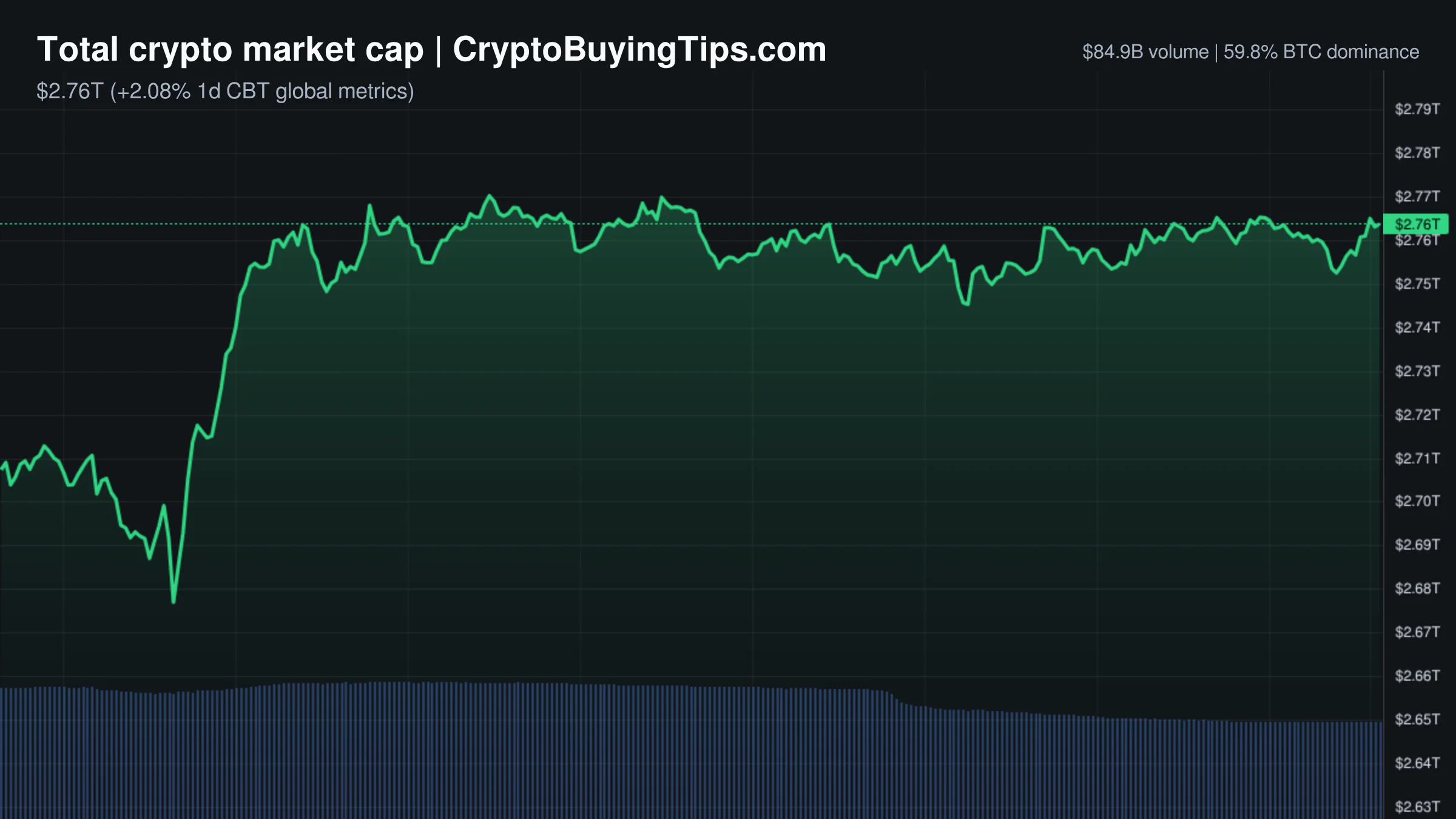
Crypto Market Overview | prices climb despite falling trading volume and stablecoin activity | October 16, 2026
Prices climb despite falling trading volume and stablecoin activity; see our market overview for context.
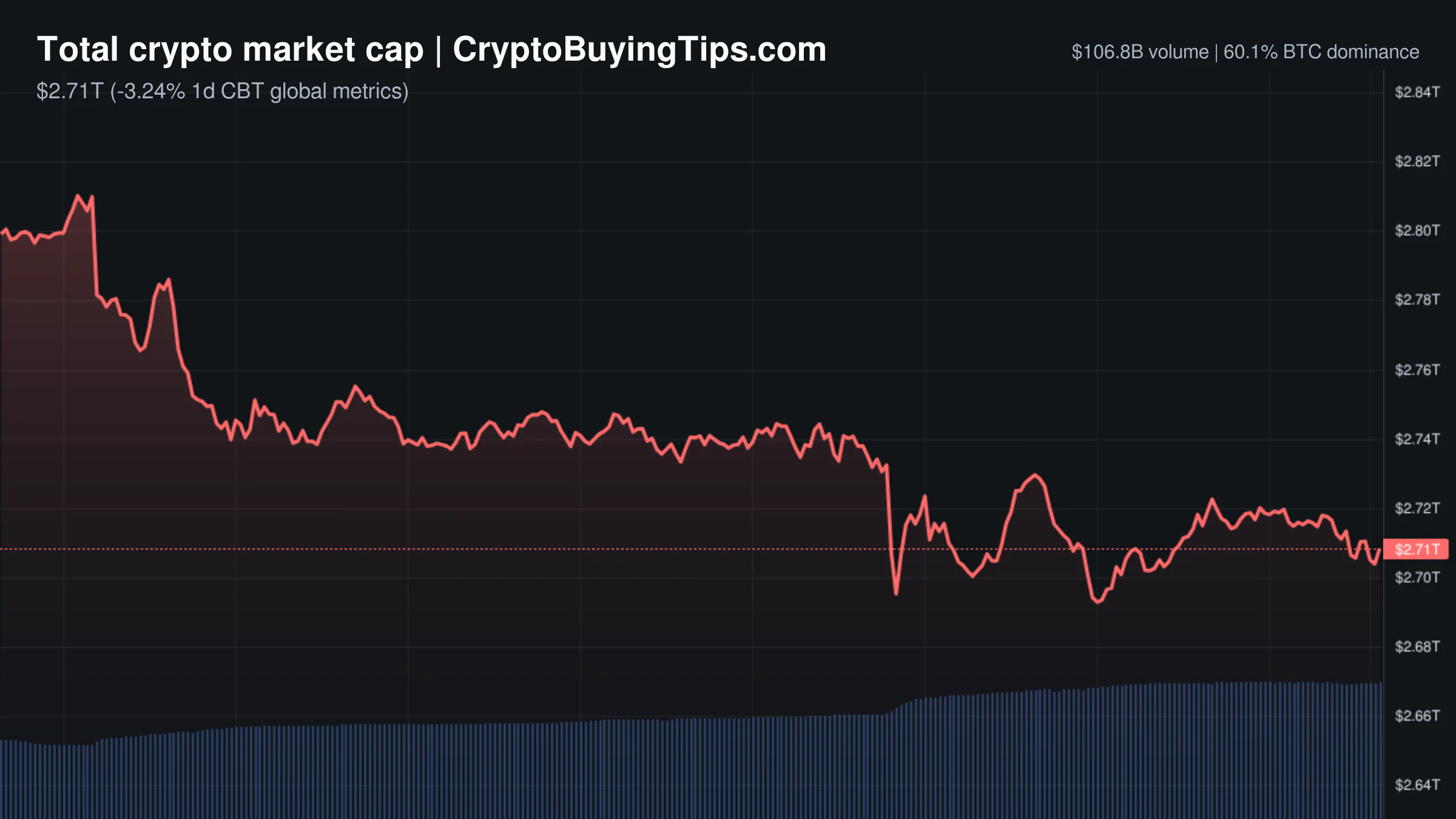
Crypto Market Overview | leveraged flush amid macro headwinds and institutional rails buildout | October 15, 2026
The crypto market sees leveraged flushing amid macro headwinds; see our read on institutional rails building out now.

Price is down but volume is ripping. This is a high-conviction flush
The market dropped nearly four percent while volume surged by over forty-four percent; this suggests the usual bleed is…
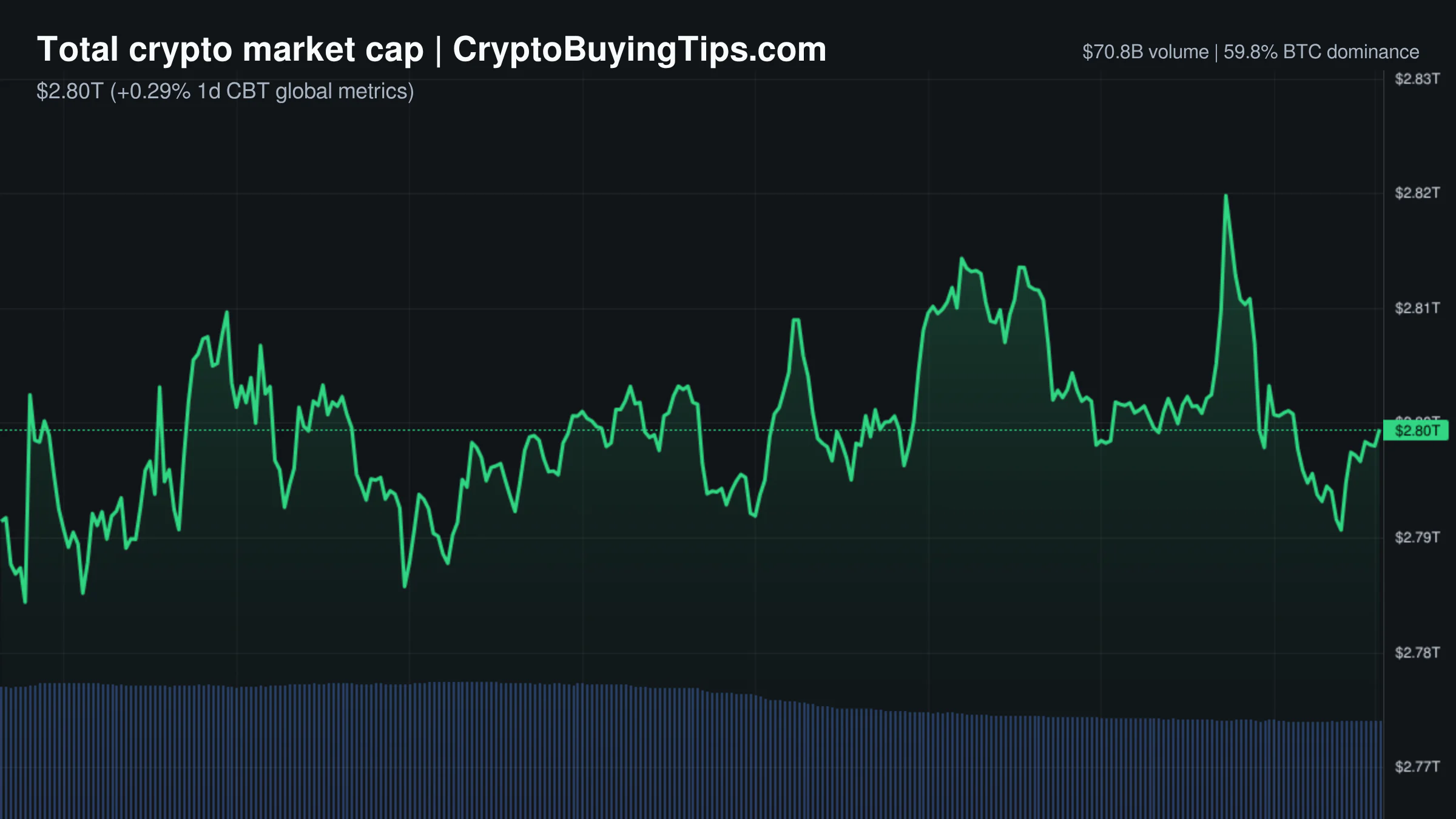
Crypto Market Overview | Leveraged derivatives volume dwarfs spot activity amid institutional rails expansion | October 14, 2026
Derivatives volume dwarfs spot activity in crypto markets as institutional rails expand; see our overview of BTC and ETH…