

Price is down but volume is ripping. This is a high-conviction flush
The total market cap dropped 3.53% over 24 hours, yet the overall volume surged by a massive 44.52%, which raises questions about what's actually driving this price action. Usually, when prices slide on low volume, we call it a bleed. It is a slow, boring death. But when volume spikes while price drops, the mechanics change. We are seeing a high-activity flush, likely triggered by hot CPI data that caught too many leveraged traders on the wrong side of the trade. This brings us to a fundamental question for anyone watching the charts: what is a crypto long squeeze? We previously covered The for more background.
How does what is a crypto long squeeze work?
The short answer is that a long squeeze happens when a price drop forces traders who bet on the market going up (longs) to sell their positions to avoid total liquidation. This creates a self-reinforcing loop. The initial price drop triggers stop-losses and liquidations, which adds more selling pressure, which in turn drops the price further, triggering even more liquidations.
In practice, the divergence we are seeing between the -3.53% market cap drop and the +44.52% volume surge is a classic signature of this process. Organic selling usually looks like a steady decline. Forced liquidations look like a vertical cliff accompanied by a wall of volume. As noted by finst.com, this extra selling pressure can push the price down much further than the original catalyst would have on its own. It is the market's way of violently removing excess leverage.
How BTC dominance behaves during high-volume flushes
When the market flushes, not all assets react the same way. We track Bitcoin dominance to see where the remaining capital is hiding. Right now, BTC dominance sits at 60.07%. During these periods of extreme volatility, Bitcoin often acts as a relative floor. While altcoins are being liquidated in droves, Bitcoin tends to hold its value better, which actually pushes its dominance higher even as its own price dips.
Our signal scanner flagged BTCUSDT as bullish, noting that repeated supply rejections have put Bitcoin’s local support in focus. This suggests that while the broader market is panicking, the bid for Bitcoin is more resilient. It is a common pattern: the "smart money" uses the altcoin flush to consolidate into the flagship asset. We previously covered how volume exploding price falls can signal distribution, but in this specific instance, the dominance data suggests a rotation into safety rather than a total exit from the asset class.
Where people get tripped up by volume and price
The biggest mistake retail traders make is assuming that high volume during a price drop is always a sign of a "strong" move down. It depends on where that volume is coming from. If the volume is coming from spot markets, it means people are genuinely abandoning the asset. If it is coming from derivatives, it often means the market is just clearing out the gamblers.
The current data shows a massive spike in derivatives activity that is completely disproportionate to the spot price movement. Derivatives volume hit $985.26B, a jump of +44.17%. This confirms our read that we are dealing with leveraged positioning being aggressively unwound. Our news scoring system rated this story 9/10 for novelty because of how stark the gap is between the price move and the volume surge.
When you see a 3% price drop paired with a 40% volume spike, you aren't looking at a fundamental shift in value. You are looking at a margin call event. According to mexc.com, a volume spike paired with a sharp drop can signal sellers overwhelming buyers, but in a leveraged market, those "sellers" are often just automated liquidation engines.
Putting it into practice
To tell the difference between a healthy dip and a dangerous distribution, look at the relationship between volume and price.
If price is falling and volume is dead, the market is apathetic. This is a bleed.
If price is falling and volume is ripping (as it is now), the market is flushing. This is often a more positive sign in the long run because it removes the "overcrowded" trades that prevent a price recovery.
The current macro context adds a layer of irony. The S&P 500 is down 1.08% and the NASDAQ is down 1.97%, meaning the tradfi side of the house is also feeling the CPI heat. However, the crypto market's reaction is more about the internal plumbing of leverage than a sudden hatred for blockchain.
The takeaway is simple. Don't mistake a forced liquidation event for a fundamental collapse. When the volume is this high and the price move is this modest, the market is simply cleaning its room. Once the leverage is gone, the path of least resistance often shifts back to the upside.
Some links in this article may be affiliate links. We may earn a commission at no extra cost to you — this never influences our analysis or coverage.

Sigrid Voss
Crypto analyst and writer covering market trends, trading strategies, and blockchain technology.
More Articles
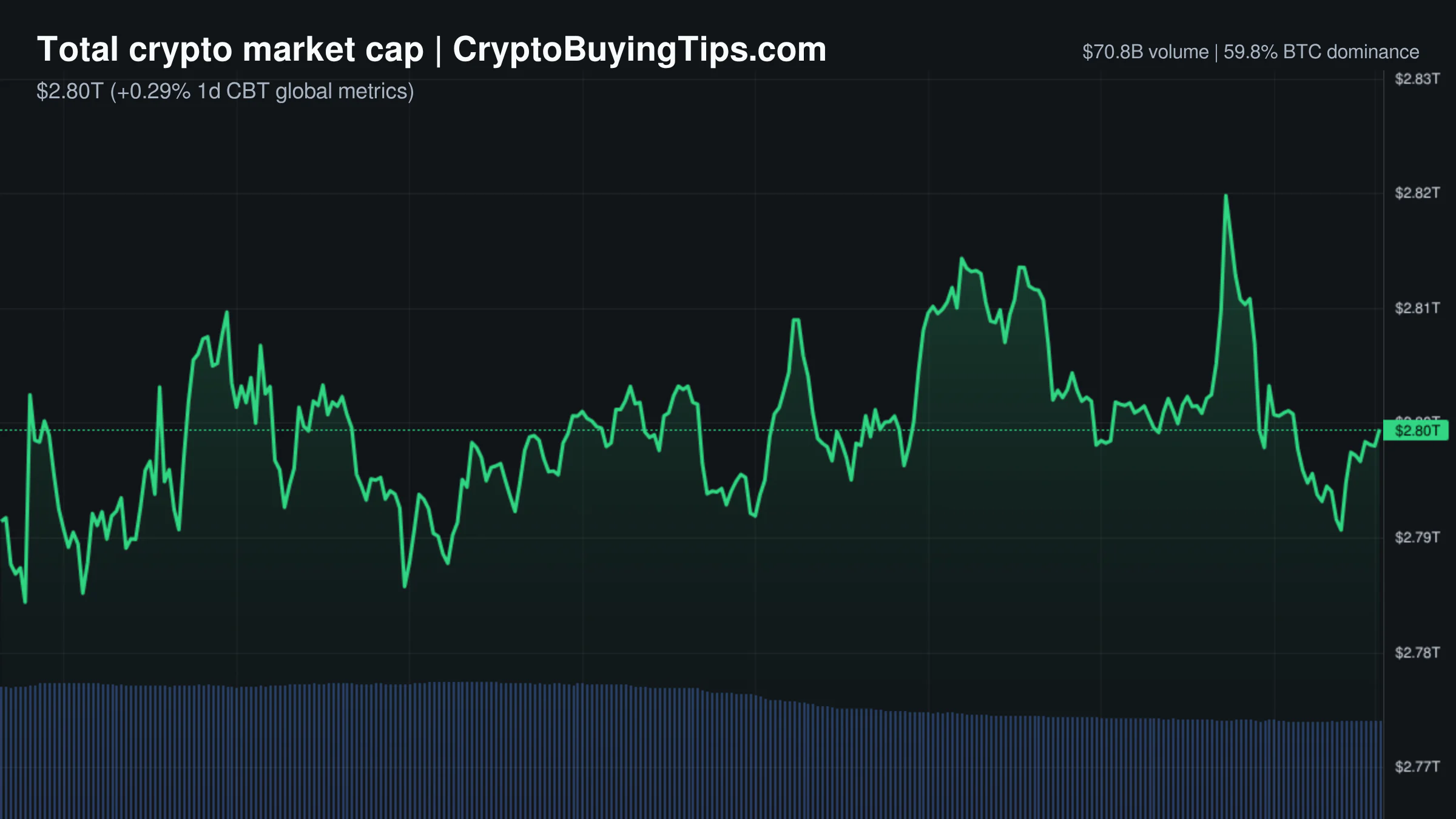
Crypto Market Overview | Leveraged derivatives volume dwarfs spot activity amid institutional rails expansion | October 14, 2026
Derivatives volume dwarfs spot activity in crypto markets as institutional rails expand; see our overview of BTC and ETH…

The volume collapse is hiding a massive Bitcoin setup
Volume has dropped significantly across crypto markets, which usually signals apathy. Our read suggests this quiet…

South Korea is letting firms borrow against Bitcoin while blocking their exchanges
South Korea is letting corporations borrow against Bitcoin while simultaneously clearing out retail exchanges; a curious…
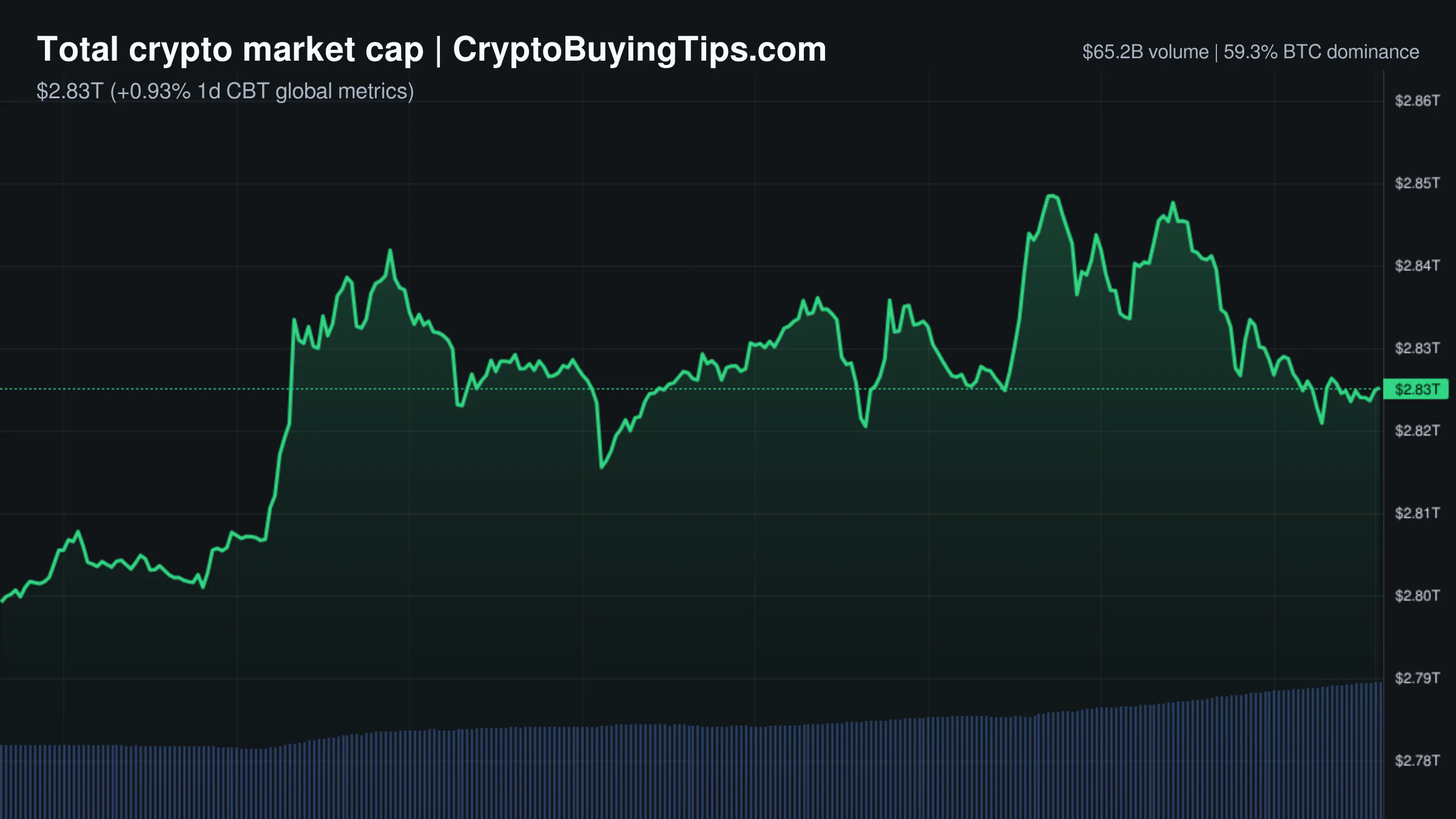
Crypto Market Overview | Derivatives volume surges amid banking integration and regulatory tension | October 12, 2026
Derivatives volume surges amid banking integration and regulatory tension, showing high activity but muted price action…