
How to buy Bitcoin (BTC)
This guide shows verified market-pair data, exchange listings, and related buying information for BTC. Always confirm fees, country availability, and withdrawal support directly with the exchange before depositing funds.
Buying checks for Bitcoin (BTC)
Buying routes
Some links may be affiliate links. Route data is shown only when it was found in our market-pair or route data.
| Exchange/route | Pair | Type | Volume/liquidity | Action |
|---|---|---|---|---|
 Gate | BTC/USDT | CEX | $272.92M | Check route |
 MEXC0% trading fee | BTC/USDT | CEX | $270.21M | Check route |
 Bitget | BTC/USDT | CEX | $220.61M | Check route |
 Binance | BTC/USDT | CEX | $526.14M | Check route |
BitMart25% trading fee | BTC/USDT | CEX | $452.03M | Check route |
 Bybit10% trading fee | BTC/USDT | CEX | $442.81M | Check route |
OKX | BTC/USDT | CEX | $273.17M | Check route |
 XT.COM | BTC/USDT | CEX | $251.32M | Check route |
Crypto.com Exchange | BTC/USD | CEX | $239.48M | Check route |
 Coinbase Exchange | BTC/USD | CEX | $239.44M | Check route |
Risk checks
Exchange availability, KYC requirements, and account features can vary by country.
Deposit and withdrawal support is not verified unless a route source explicitly provides it.
CoinMarketCap page information is used only as low-confidence background context, not as proof of listings, fees, liquidity, or contract safety.
Large-cap buying queries are often exchange-dominated, so the guide should emphasize durable verification, custody, ecosystem, and risk context.
How this guide is checked
- Last verified
Last updated:
How to buy and use Bitcoin (BTC) responsibly
Bitcoin is a decentralized cryptocurrency that launched in 2010. It was originally described in a 2008 whitepaper by a person or group using the alias Satoshi Nakamoto. The system is designed as a peer-to-peer online currency, which means transactions happen directly between independent network participants. This removes the need for a financial institution to facilitate the payment.
Users generate BTC through a process called mining. The network uses a decentralized ledger of transactions packaged in blocks and secured by cryptographic algorithms, a system known as blockchain.
Verified ways to access BTC
You can access Bitcoin through several centralized exchanges. Based on verified market pairs, the following options are available:
- Binance (BTC/USDT)
- Bybit (BTC/USDT)
- MEXC (BTC/USDT)
- BitMart (BTC/USDT)
- OKX (BTC/USDT)
- Gate (BTC/USDT)
- Coinbase Exchange (BTC/USD)
- Kraken (XBT/USD)
Fees vary by platform. For example, MEXC has 0% trading fees for this pair, while Bybit charges 0.1% and BitMart charges 0.25%.
What Bitcoin is used for
Bitcoin is primarily categorized as a store of value. Beyond simple transfers, the ecosystem has expanded into several areas:
- Layer 2 and Finance: Projects like Stacks are developing roadmaps to enable Bitcoin-native finance, targeting native BTC yield and DeFi.
- Token Ecosystems: The BRC-20 ecosystem allows for token innovations and cross-chain solutions on the Bitcoin network.
- Regulated Derivatives: The U.S. Commodity Futures Trading Commission (CFTC) has approved Bitcoin perpetual futures on regulated exchanges.
Wallet, network, and custody checks
Because Bitcoin is not a token hosted on another platform, you are interacting with its own native network. However, you must verify the specific withdrawal network supported by your exchange or wallet to avoid loss of funds.
For those who prefer self-custody, hardware wallets like Ledger provide an option to move assets off exchanges. You can verify your transactions and addresses using a Bitcoin explorer such as blockchain.info.
If you want to inspect the actual implementation of the network, the source code is available on GitHub.
Common mistakes before buying BTC
I have seen many people rush into a purchase and overlook the logistics. Avoid these common errors:
- Assuming universal support: Do not assume every exchange supports deposits and withdrawals for the same network. Always check the specific network requirements.
- Ignoring regional restrictions: KYC requirements and account features vary by country. For instance, Bybit and MEXC have different banned and supported country lists.
- Relying on static data: Do not treat a price or volume snapshot from a guide as permanent information.
Route, liquidity, and availability caveats
While many exchanges list BTC, availability is not universal. Some platforms require KYC, while others have not verified their deposit and withdrawal status in our database.
Liquidity is generally high for BTC/USDT and BTC/USD pairs across the major exchanges listed above, but you should always check the order book on the specific exchange you choose.
Sources and methodology
The routes in this guide are derived exclusively from verified market-pair rows in our database. Background and risk context are gathered from web research and news sources, including Cointelegraph and Business Insider. Information from CoinMarketCap pages is treated as low-confidence context. Live market values are omitted because they change too frequently to remain accurate in a static guide.
Related Articles
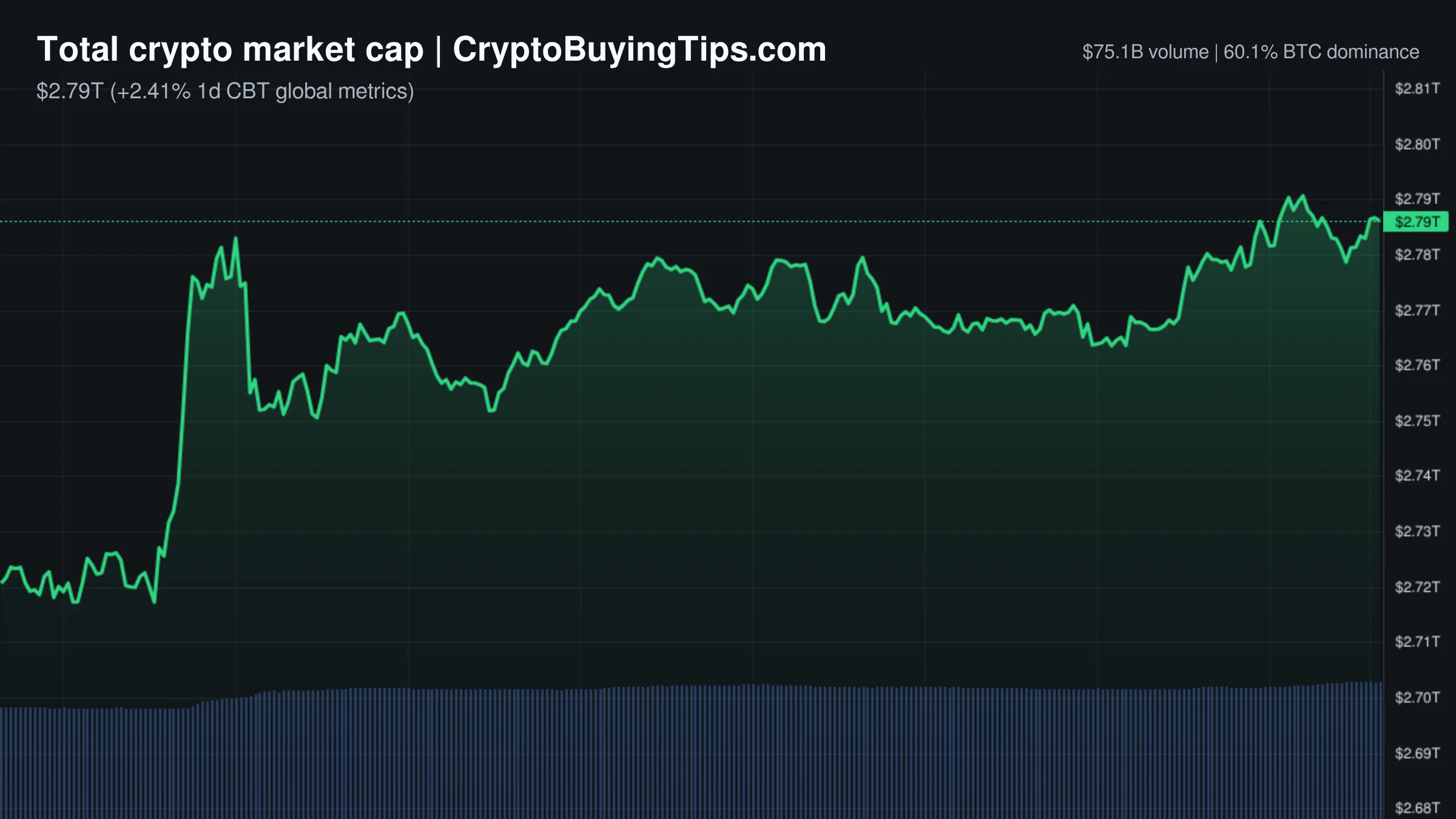
Crypto Market Overview | Leveraged speculation drives gains amid European regulatory uncertainty | October 21, 2026
Leveraged speculation drives crypto gains amid European regulatory uncertainty; see our market overview on BTC and ETH…

Compound is up 21% and DeFi volume is surging. The rotation is here
The market is behaving with all the excitement of an accountant's quarterly report, but DeFi primitives are showing…
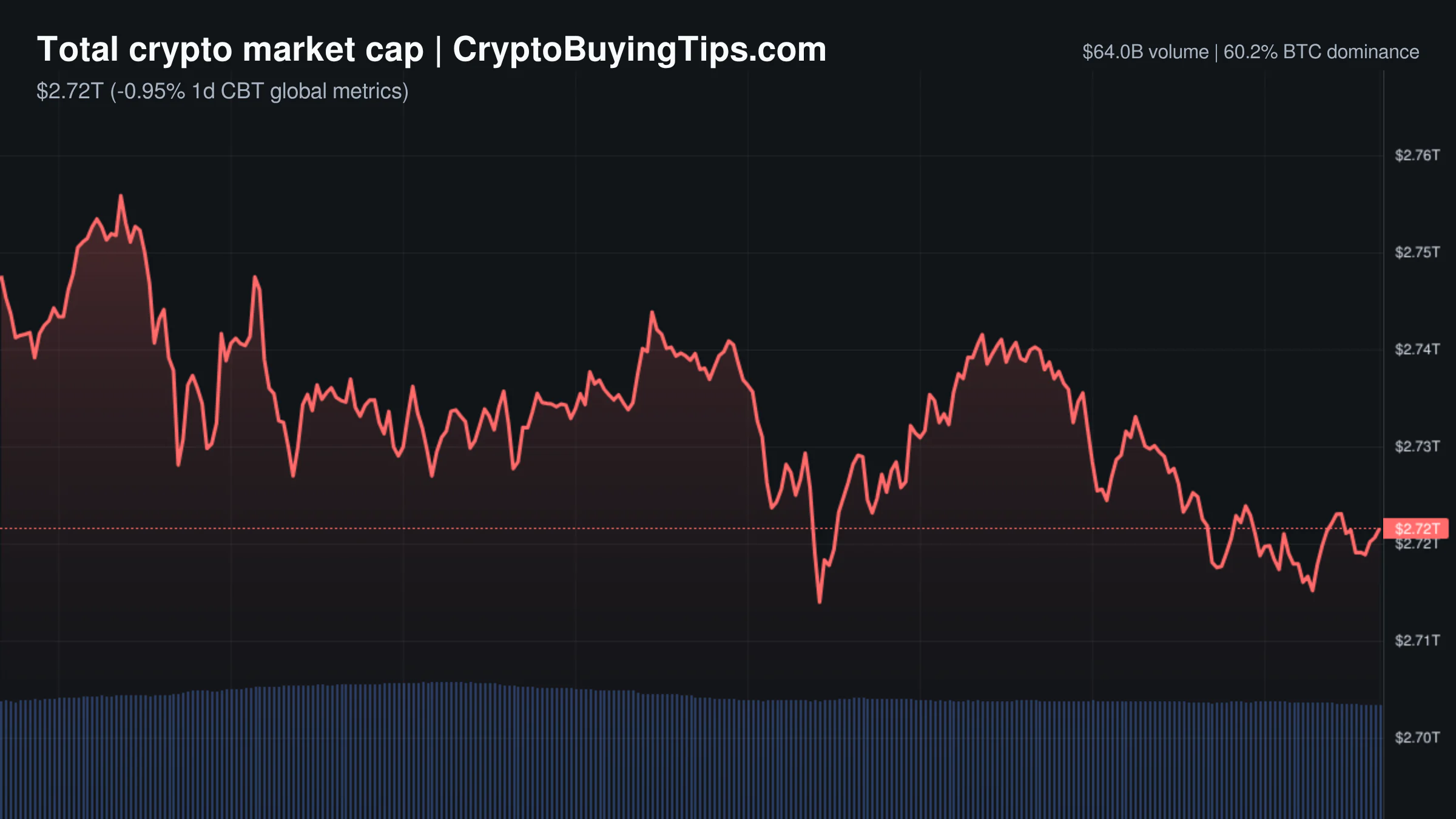
Crypto Market Overview | Derivatives volume dwarfs spot activity amid institutional rails expansion | October 20, 2026
Derivatives volume dwarfs spot activity as crypto navigates institutional rails expansion; see our market overview data…
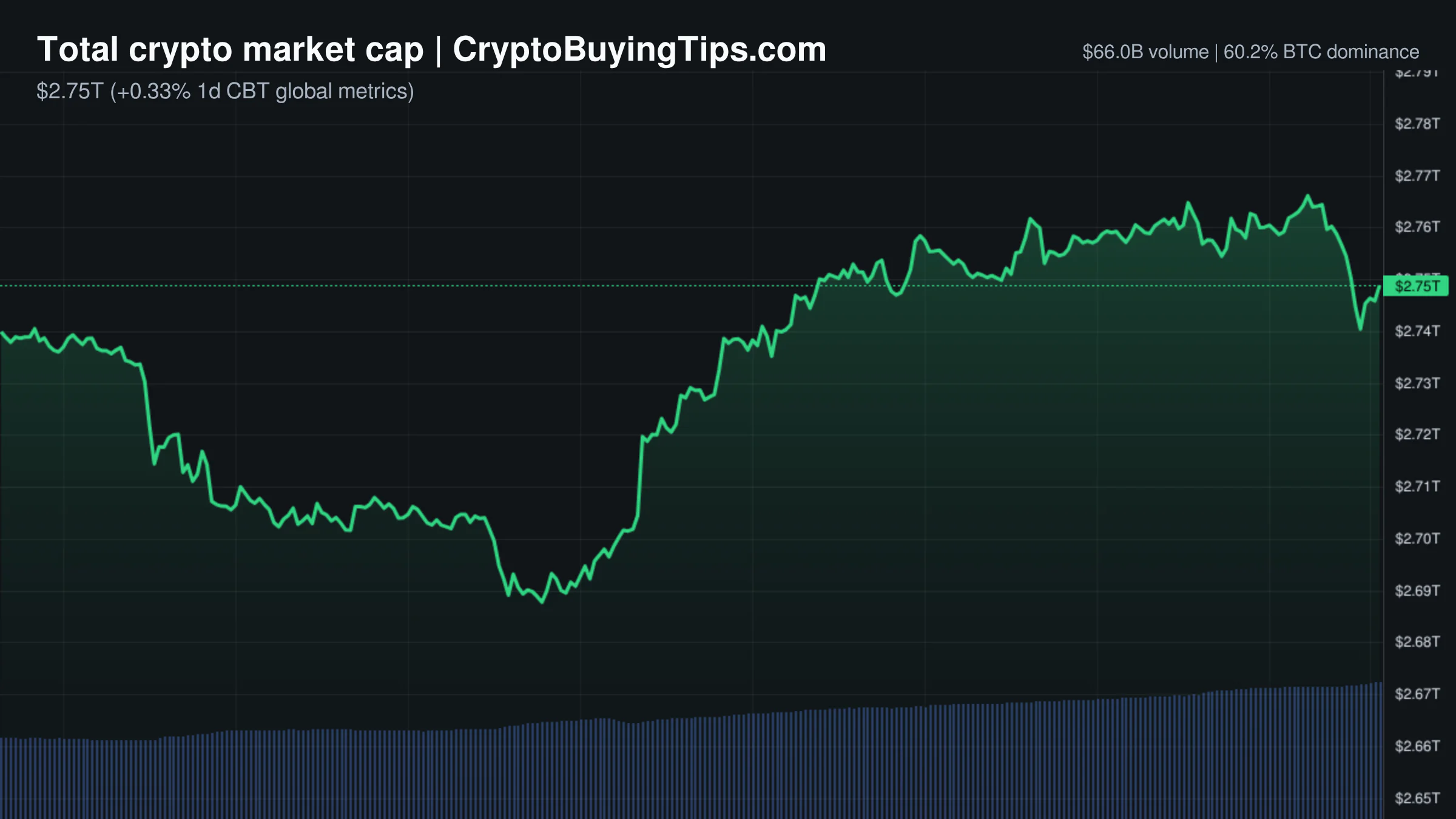
Crypto Market Overview | Leveraged bets surge as institutional rails expand despite ETF outflows | October 19, 2026
Leveraged bets surge as institutional rails expand despite ETF outflows; see our market overview on BTC dominance and…
Recent Articles
See moreCompound is up 21% and DeFi volume is surging. The rotation is here
The market is behaving with all the excitement of an accountant's quarterly report, but DeFi primitives are showing…
Why 0.04 Gwei gas is a red flag for Ethereum
The quiet gas fees suggest nothing about underlying utility demand; meanwhile, $566B in derivatives volume points…
6 million Bitcoin are quantum-exposed. Here is what that actually means
Six million Bitcoin are sitting in addresses that could be vulnerable to quantum attacks. The risk isn't theoretical; it…
Speculators are ditching altcoins for tokenized Tesla stocks
Another day, another reason to question where all the money goes these days. Our signal scanner flagged a clear…
Bitcoin Market Sentiment
Source: CoinMarketCap. Updated Oct 21, 2026, 2:09 PM
BTC to USD Converter

Bitcoin
BTC
Rank
#1
$83.53K