

The $4 billion ETF exodus is a warning, but the derivatives data tells a different story
The sight of a record $4 billion outflow from US spot bitcoin ETFs, juxtaposed against massive derivatives volume, begs the question: what does this signal about institutional conviction? For most traders, a headline about billions leaving the market looks like a death knell. But when we look at the broader market structure, the story is less about a total exit and more about a change in how people are gambling on the price. To understand the current volatility, we have to look at the actual bitcoin etf outflows meaning within the context of total market liquidity. We previously covered Bitcoin supply drain matters for more background.
What is bitcoin etf outflows meaning?
In the simplest terms, an ETF outflow occurs when investors sell their shares of the fund. To meet those redemptions, the fund manager must sell the underlying bitcoin and send the cash back to the investor. This is the reverse of an inflow, where new cash enters the fund and the manager buys more bitcoin to back the new shares.
Our news scoring system rated this story 9/10 for novelty because of the sheer scale. We are seeing $4 billion leave US-listed spot bitcoin ETFs in June. This is the highest outflow on record. While the public narrative suggests that institutions are simply giving up, we think it is more likely a rotation. Investors may be taking profits or moving capital into other assets, as we have seen in recent reports of money rotating into equities. We previously covered Bitcoin ETF outflows data and noted that this shift often reflects a strategic adjustment rather than a total collapse of confidence.
How the flow shift actually works
The $4 billion exit is a large number, but it looks small when placed next to the derivatives market. This is where the real information gain lives. While spot ETF investors are exiting, speculative traders are doubling down.
Our market data tools show that 24h derivatives volume hit $554.18B. Compare that to the 24h spot volume of just $53.20B. The derivatives market is more than ten times larger than the spot market. This tells us that the "smart money" or the high-frequency speculators are not leaving. Instead, they are using leverage to bet on the volatility that the ETF outflows are creating.
When you see a record outflow from ETFs alongside a surge in derivatives volume, it means the market is shifting from long-term institutional accumulation to short-term speculative positioning. The "wall of money" has not vanished; it has just moved from a boring custody account into a high-leverage perpetual swap.
Where the narrative gets tripped up
Most traders see a price drop and a "Fear & Greed Index" reading of 16/100 and assume the bottom is still far off. Our market data tools show the Fear & Greed Index at 16, which is classified as extreme fear. Usually, this is where retail traders panic and sell their bags.
However, there is a glaring divergence here. Total market cap remains high at $2.31T, and trading volume is actually increasing. In a healthy bear market, volume usually dries up as people lose interest. In a capitulation event, volume spikes because the "weak hands" are being flushed out by the "strong hands."
The fact that we have extreme fear while derivatives volume is exploding suggests we are in a period of high-stress redistribution. The $4 billion in ETF outflows provided the liquidity that speculative traders are now using to fight over the price. It is a chaotic environment, but the high volume suggests there is still a massive amount of interest in the asset.
Putting the data into practice
If you are staring at the $4 billion outflow figure and feeling the urge to panic, stop. Look at the ratio of derivatives to spot volume instead. When derivatives volume dwarfs spot volume by this margin, the price is no longer driven by who is "buying and holding," but by who is getting liquidated.
The key takeaway is that the institutional retreat from ETFs is a liquidity event, not necessarily a fundamental failure of Bitcoin. The real risk is not the outflow itself, but the extreme leverage currently sitting in the derivatives market. If the market continues to move against these leveraged positions, we could see a cascade of liquidations that pushes the price lower, regardless of what the ETF flows are doing.
Our read is that the market is currently a battleground between institutional profit-taking and speculative leverage. Until the derivatives volume cools down or the Fear & Greed Index climbs out of the basement, expect the price to remain erratic. The data shows the interest is still there; it is just no longer polite.
Related Tickers
Some links in this article may be affiliate links. We may earn a commission at no extra cost to you — this never influences our analysis or coverage.

Sigrid Voss
Crypto analyst and writer covering market trends, trading strategies, and blockchain technology.
More Articles

6 million Bitcoin are quantum-exposed. Here is what that actually means
Six million Bitcoin are sitting in addresses that could be vulnerable to quantum attacks. The risk isn't theoretical; it…
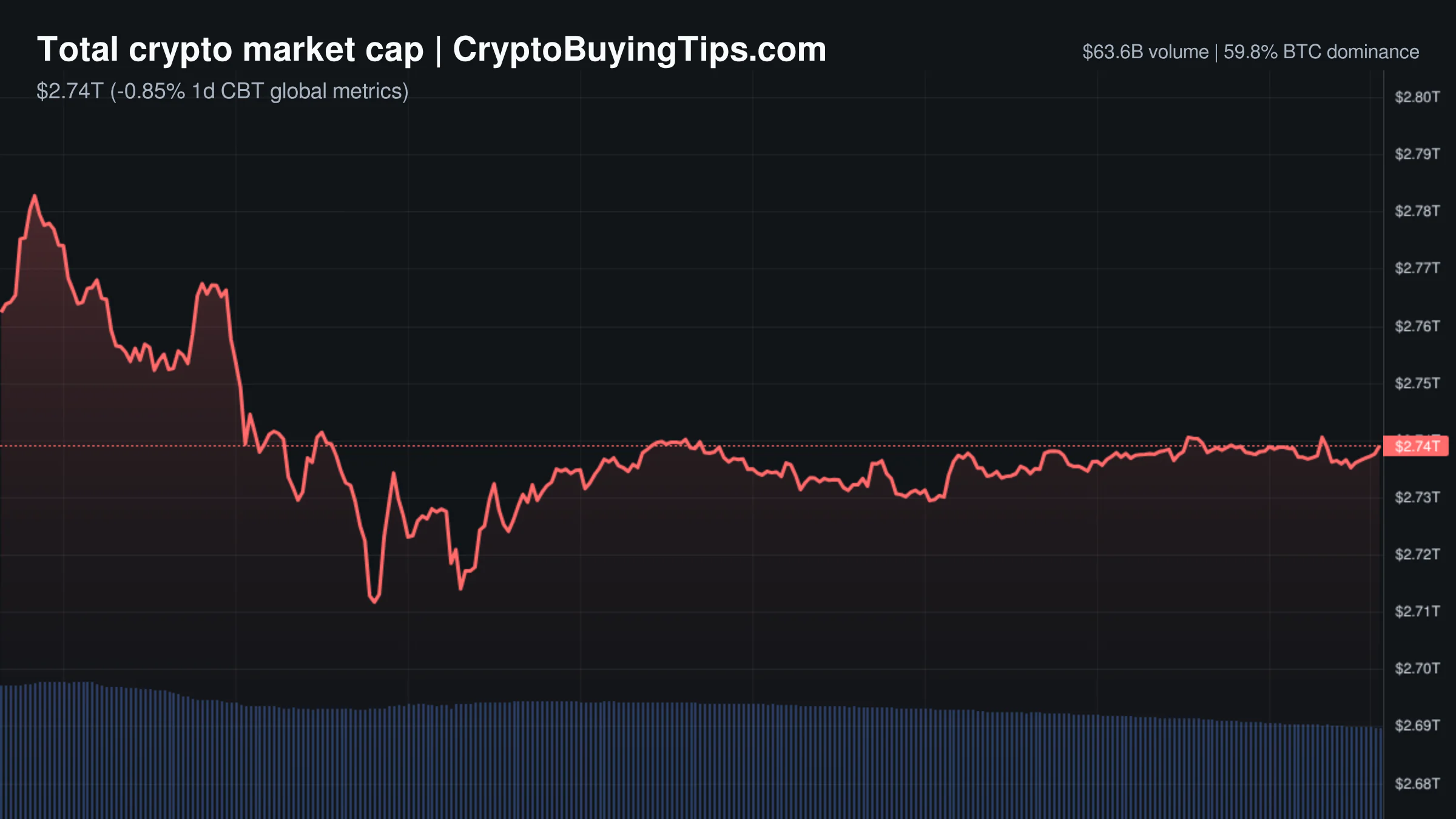
Crypto Market Overview | volume collapse amid macro pressure weighs on institutional flows | October 17, 2026
Market overview shows volume collapse amid macro pressure weighing on institutional flows; see how crypto is reacting to…

Speculators are ditching altcoins for tokenized Tesla stocks
Another day, another reason to question where all the money goes these days. Our signal scanner flagged a clear…
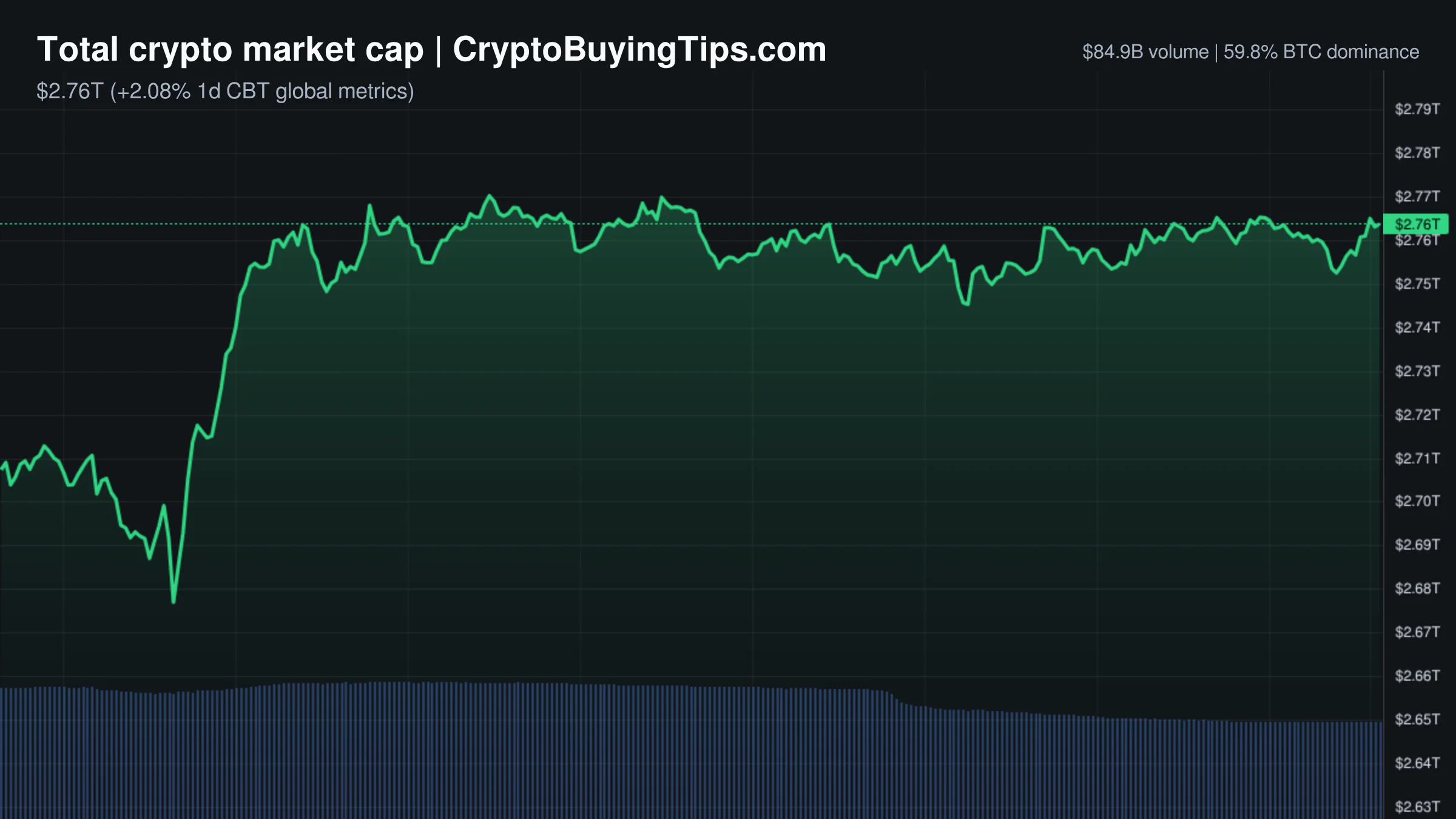
Crypto Market Overview | prices climb despite falling trading volume and stablecoin activity | October 16, 2026
Prices climb despite falling trading volume and stablecoin activity; see our market overview for context.