

The market just went silent. Here is how to trade a volume vacuum
The market's total volume dropped by -40.94% over 24 hours, which is a significant indicator that we need to talk about what is a crypto volume vacuum. Most traders see a flat price chart and assume the market is simply consolidating in a healthy way. In reality, when volume vanishes this quickly, the market isn't resting; it is ghosting. It is the difference between a room full of people whispering and a room that is completely empty. We previously covered related angles in liquidity vacuum means and collapsed trading volume analysis.
What is a crypto volume vacuum?
A volume vacuum is not just a period of low trading activity. It is a state where participation dries up across all major sectors simultaneously. We are seeing this right now: spot volume is down -40.94%, derivatives volume has collapsed by -53.37%, and stablecoin volume is down -41.95%.
When these three metrics crash together, it suggests that capital is not rotating from one asset to another. Instead, it is sitting on the sidelines.
The danger of a vacuum is that it creates a false sense of stability. Because there are so few orders in the book, the price might not move for hours. But because liquidity is thin, the moment a single large player decides to enter or exit, the price can jump or dive violently. Traders often mistake these sudden moves for strong trends, but they are often just the result of an empty order book. As noted by research on tradingview.com, these moves happen because there is no resistance, not because there is strong conviction.
Diagnosing the silence: gas fees and dominance
To tell the difference between a healthy lull and a genuine vacuum, we look at the "heartbeat" of the network. On-chain activity is the most honest metric we have.
Right now, ETH gas fees are sitting at 0.04 Gwei. For those who remember the days of paying $50 to move a token, this is an absurdly low number. It tells us that people aren't just avoiding big trades; they aren't even doing the small, habitual things that keep a network humming. When gas fees hit these levels, it is a sign of total on-chain stagnation.
We also track the relationship between Bitcoin and the rest of the market. BTC dominance currently sits at 58.41%. When volume collapses but BTC dominance rises, it usually means that the few people still trading are fleeing altcoins for the perceived safety of Bitcoin. Our news scoring system rated this story 9/10 for novelty because this level of synchronized silence across spot, derivatives, and on-chain metrics is rare. It suggests the market is not just bored, but actively waiting for a specific catalyst before it dares to move.
How to trade when the volume disappears
Standard technical analysis is mostly useless in a volume vacuum. Indicators like the RSI or MACD rely on the assumption that price action is backed by volume. In a vacuum, a price spike on low volume is often a trap. It is a "paper move" that can be erased in seconds because there is no depth to support the new price level.
If you must trade in these conditions, we suggest two specific shifts in approach:
- Focus on range boundaries. In a vacuum, the market often settles into a tight, horizontal box. Instead of betting on a breakout, look at the edges of that box. These boundaries often hold until a major news event occurs.
- Watch macro correlations. When internal crypto volume dies, the market becomes more sensitive to external triggers. We look at the S&P 500 and NASDAQ to see if the broader risk-on appetite is shifting.
Our signal scanner flagged a notable shift in BTC dominance recently. This suggests that the "smart money" is not betting on a rally, but is instead positioning for a period of high uncertainty. In these moments, the goal is not to find the perfect entry, but to avoid being the only person providing liquidity when the vacuum finally snaps.
Putting it into practice
If you are looking at your portfolio and wondering why nothing is moving, stop looking for a "signal" in the price. The signal is the silence itself.
The most important takeaway is to recognize that low volume equals high risk, not low risk. A market with no one in it is a market where a single sell order can trigger a cascade of liquidations simply because there are no bids to catch the fall.
We recommend checking the 24h volume across spot and derivatives before placing any large orders. If you see a synchronized drop of 30% or more, tighten your stops or, better yet, wait. The market will eventually wake up. It is usually better to miss the first 2% of a move than to be the liquidity that fuels someone else's exit during a vacuum.
Some links in this article may be affiliate links. We may earn a commission at no extra cost to you — this never influences our analysis or coverage.

Sigrid Voss
Crypto analyst and writer covering market trends, trading strategies, and blockchain technology.
More Articles
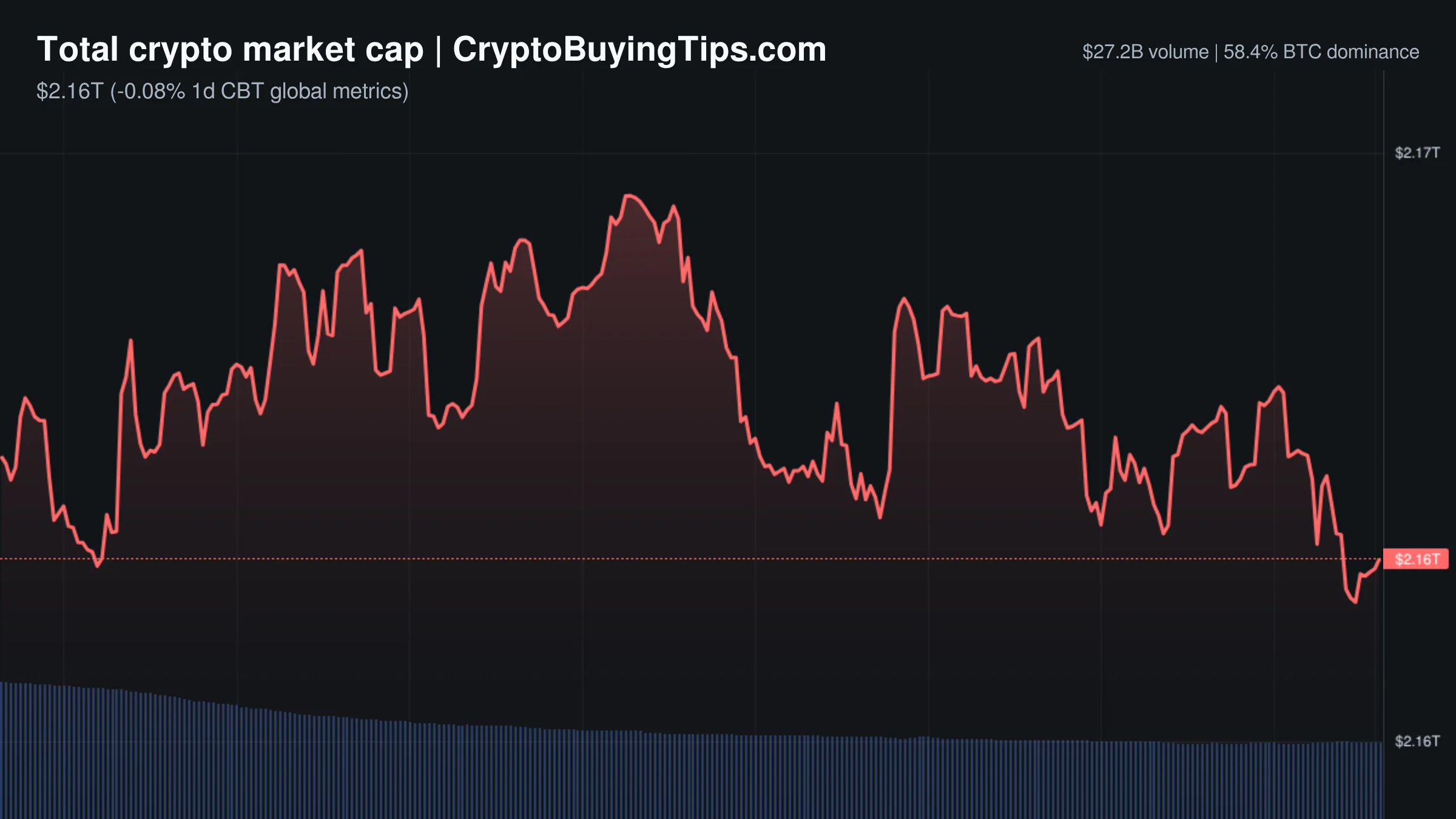
Crypto Market Overview | liquidity evaporates amid high dominance and negative coinbase premium | August 16, 2026
Liquidity evaporates amid high dominance and negative coinbase premium; see our market overview on current crypto…
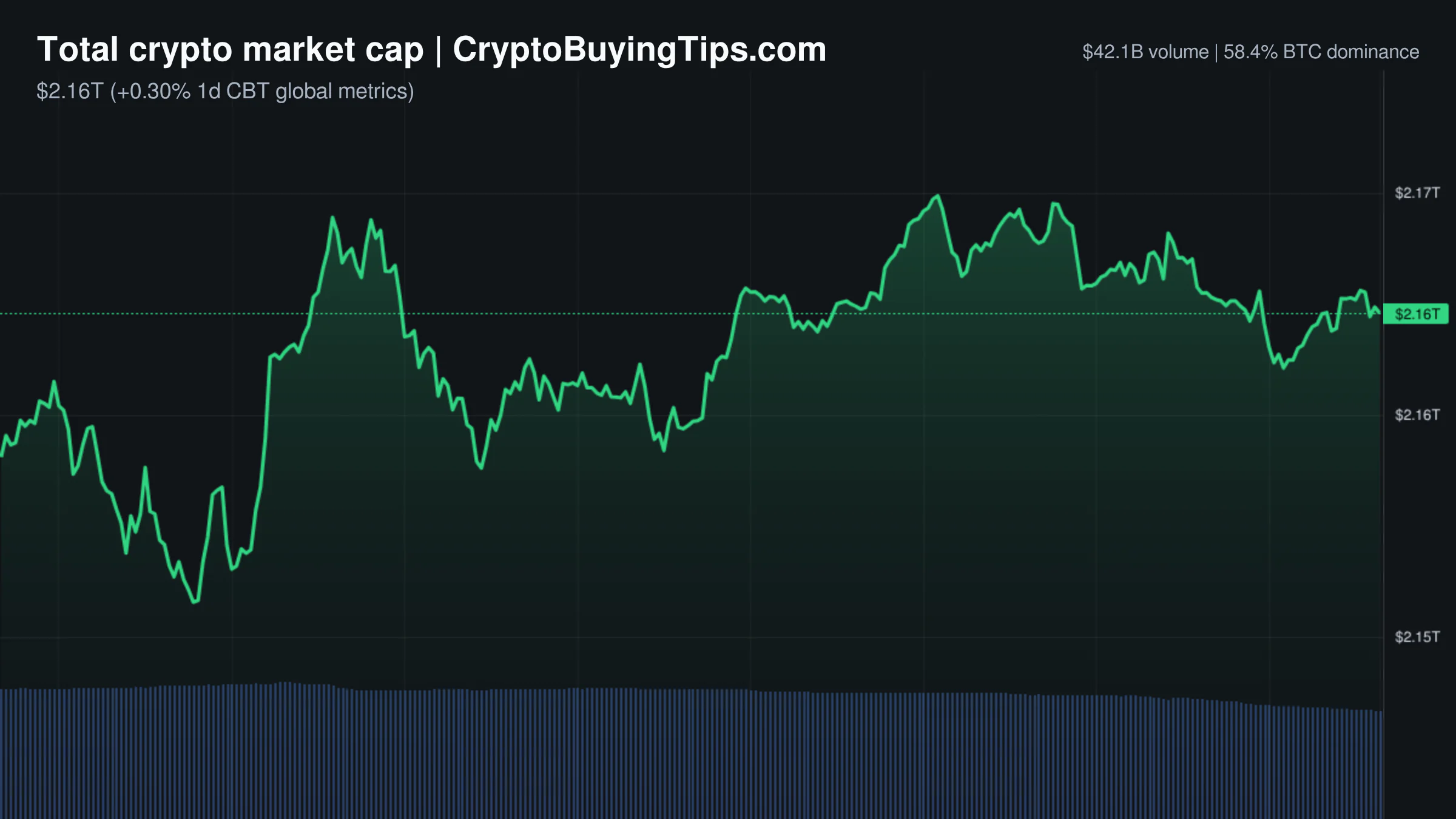
Crypto Market Overview | volume crashes amid institutional accumulation and low altcoin rotation | August 15, 2026
Crypto market overview shows volume crashes amid institutional accumulation and low altcoin rotation, suggesting…

The OCC just gave Trump a bank charter while the SEC stalls everything else
The regulatory split between banking charters and securities law remains confusing for crypto players. While one body…
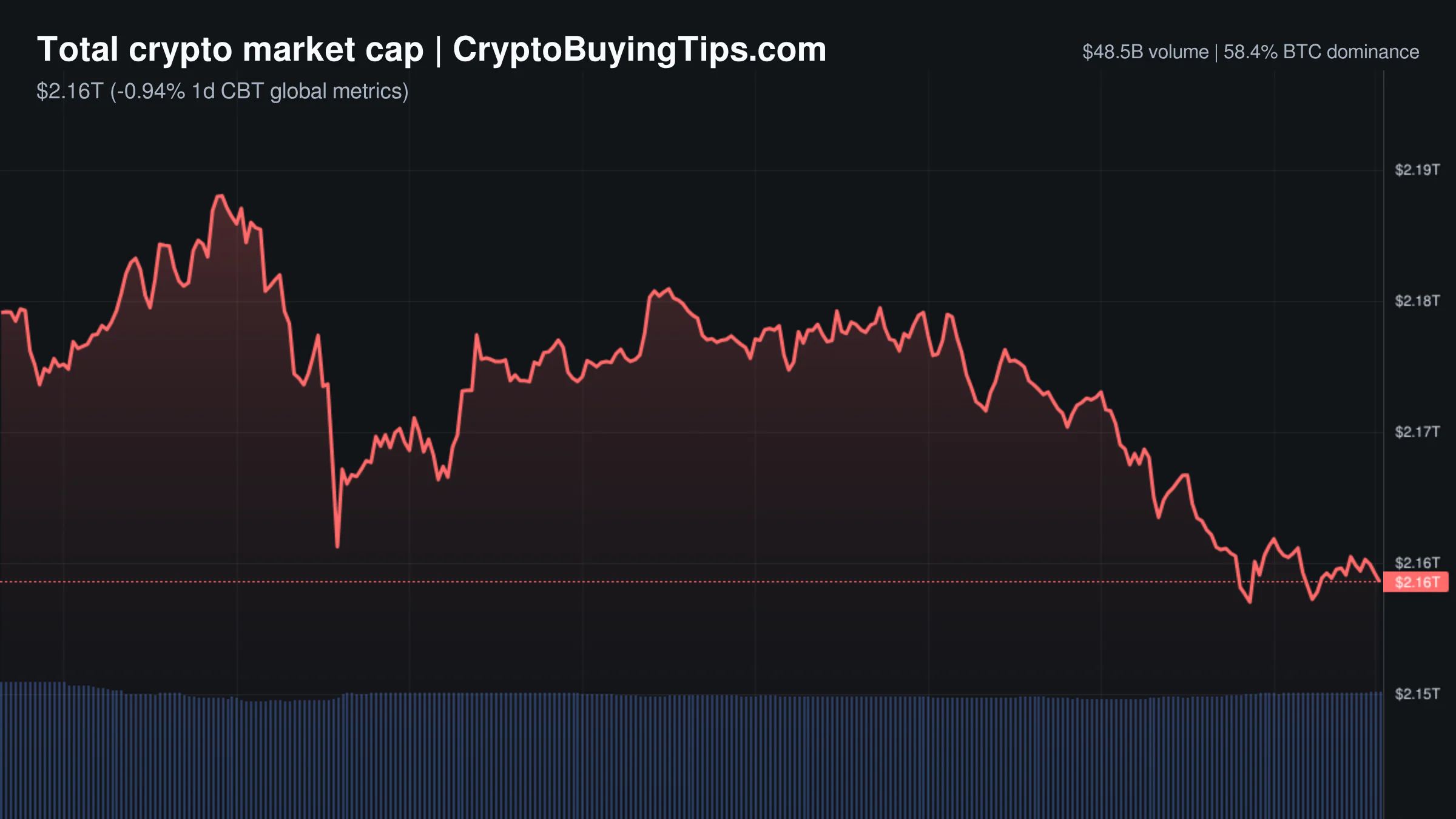
Crypto Market Overview | Derivatives volume explodes while regulatory delays stall tokenization efforts | August 14, 2026
Derivatives volume explodes while regulatory delays stall tokenization efforts in this market overview analysis for…