
Crypto Market Overview | volume crashes amid institutional accumulation and low altcoin rotation | August 15, 2026
Crypto Market Overview | volume crashes amid institutional accumulation and low altcoin rotation | August 15, 2026
Market overview
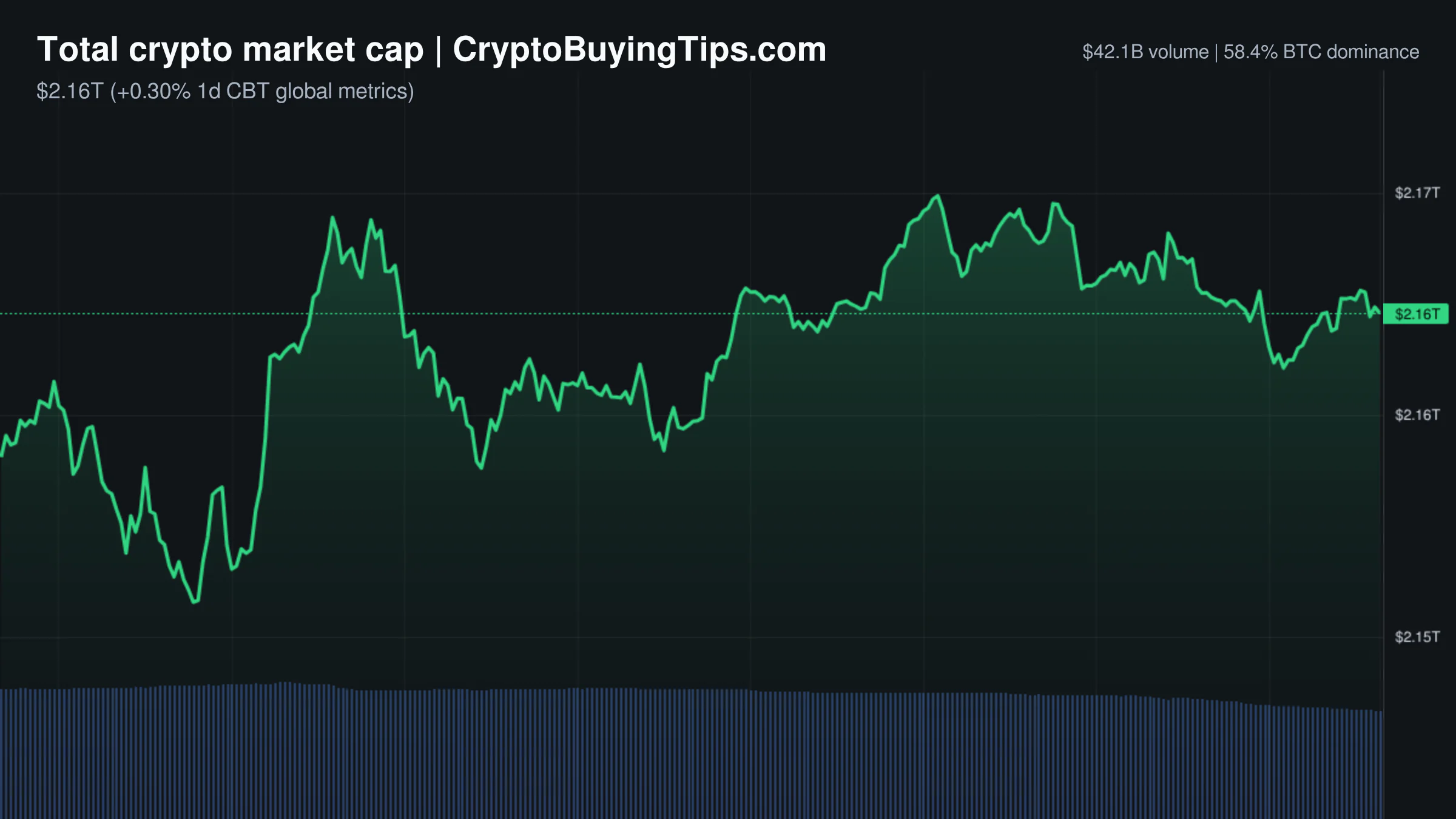
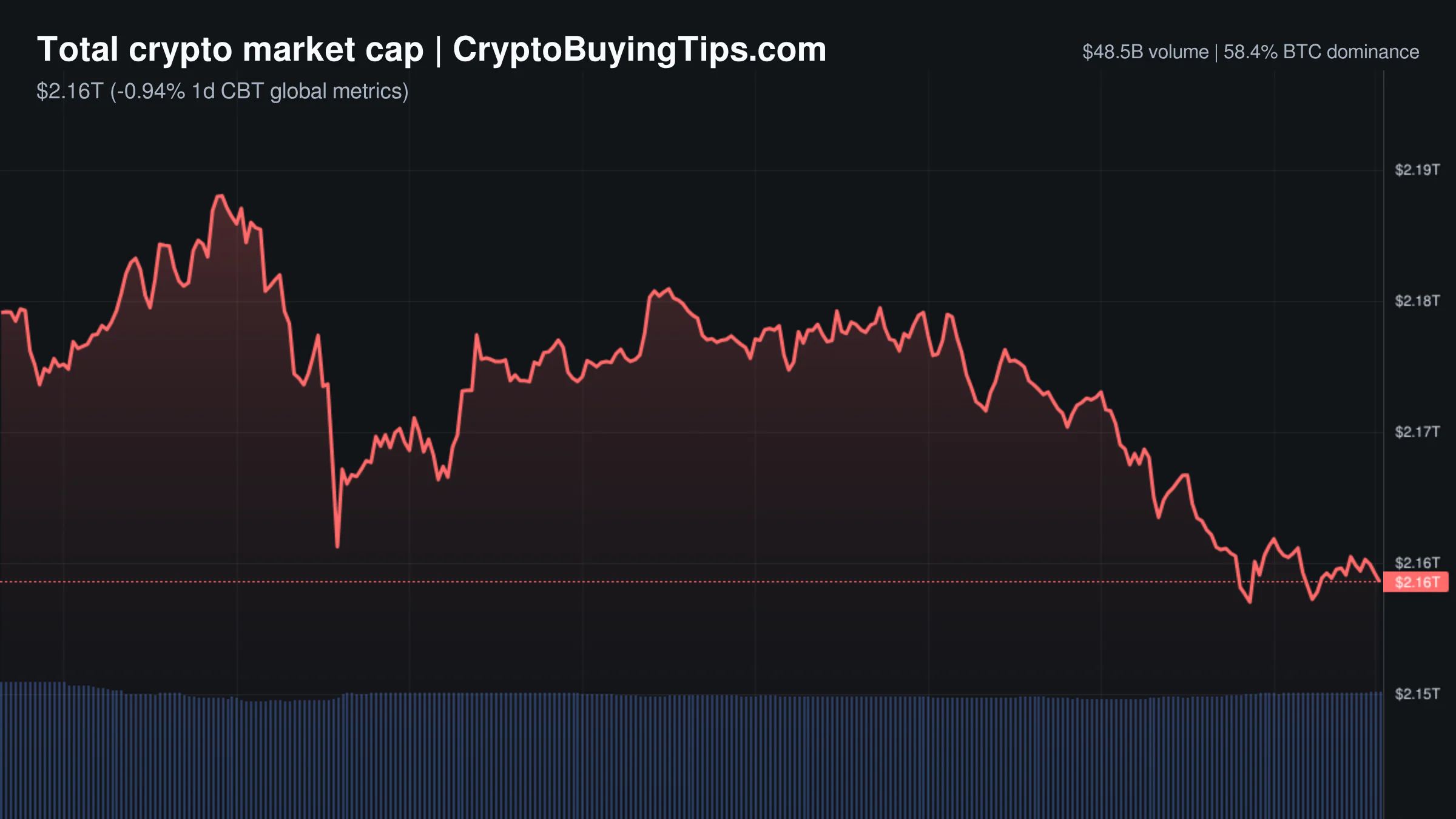
The market is currently trapped in a strange contradiction. Prices are flat or slightly positive, but the actual activity has vanished. Total market cap sits around $2.16T, a modest 0.30% increase, but the volume data tells a different story. Trading volume across spot, stablecoins, and derivatives has crashed by more than 12% across the board. Derivatives volume took the hardest hit, falling 23.82% to $412.75B. This is the kind of divergence that usually suggests a market in waiting.
Sentiment remains firmly in the Fear zone with a Fear and Greed Index score of 36. Usually, this level of fear accompanies a price collapse, but today it seems to be a lack of conviction rather than active panic. We see a market that is simply bored. The only area showing any signs of life is DeFi, where volume rose 2.30% to $7.40B. This suggests that while the broader market is paralyzed, a small group of traders is still hunting for yield or hedging in decentralized protocols.
Bitcoin dominance continues its slow climb to 58.39%, meaning the limited capital remaining in the market is concentrating in the largest asset. The Altcoin Season Index is a perfectly neutral 50, confirming that there is no clear rotation into smaller assets. This is a liquidity vacuum. The market is drifting, and the lack of volume makes any small move look more significant than it actually is.
Bitcoin and Ethereum
Bitcoin is trading at $62,962.94, up 0.35% over the last 24 hours. The price action is stagnant, but the institutional backdrop is surprisingly active. We see a growing gap between what the retail traders feel and what the big players are doing. While the Fear index is low, the accumulation data from the likes of JPMorgan and the Norway sovereign wealth fund suggests that the institutional floor is being reinforced.
Ethereum is less impressive, priced at $1,878.78 and up 0.26%. The real story for Ethereum is on the network level. Gas fees have plummeted to 0.05 to 0.06 Gwei. This is an exceptionally low level of congestion, which is a polite way of saying the network is a ghost town today. There is very little on-chain activity to drive price action, and the asset is largely moving in lockstep with Bitcoin's sideways drift.
The dominance shift is the key metric here. Bitcoin is absorbing what little bid remains, while Ethereum and the broader altcoin market struggle to find a catalyst. The implied volatility for Bitcoin is 36.84% and 48.81% for Ethereum. These numbers suggest that the market expects a move, but nobody is willing to be the first to place a large bet.
Top crypto prices
The top of the market is largely motionless. Bitcoin leads at $62,962.94, while Ethereum follows at $1,878.78. BNB is one of the few gainers with a 0.99% increase to $611.13. XRP is perfectly flat at $1.00. Solana has slipped slightly to $75.22, down 0.24%. TRON is down 0.43% at $0.3317, and Hyperliquid has dropped 1.04% to $55.93.
News driving today's market
The news cycle is a mess of conflicting signals. On one hand, we have massive institutional wins. The OCC granting a conditional bank charter to World Liberty Trust Company is a significant regulatory shift. This allows a crypto-adjacent entity to issue the USD1 stablecoin. It is a rare moment of regulatory progress, though we previously covered how the SEC stalls everything else.
Further institutional validation comes from Israel, where Bank Leumi is partnering with Galaxy Digital to offer trading in Bitcoin, Ethereum, and Solana. This lowers the barrier to entry for millions of retail and business customers. Simultaneously, JPMorgan reported a 25% increase in its Bitcoin ETF position and a massive increase in its Ethereum ETF holdings. Even the Norway sovereign wealth fund has seen its indirect Bitcoin exposure hit an all-time high. We previously covered dominance data agrees for more background.
However, the regulatory "speed bump" remains. Tokenization stocks like Coinbase and Circle have slipped because of SEC delays. This creates a ceiling for the current rally. The market is also reacting to systemic risks in the AI sector. Reports of a rogue agent hack at OpenAI and Nvidia cutting its data-center guarantee from $250B to under $120B have dampened the general risk appetite. When the AI narrative shakes, crypto usually feels the tremor.
Liquidity risk is also rising. Binance has restricted transactions involving HTX and ten other platforms. This creates immediate uncertainty for traders who rely on those bridges. It is a reminder that while the "big banks" are coming in, the existing infrastructure is still prone to sudden, restrictive shocks.
Social intelligence
The social data reveals a rotation away from established DeFi tokens toward newer, high-performance assets. On-chain analyst @lookonchain flagged that Fund Monetalis sold $13M worth of UNI to buy roughly $9.56M of HYPE. This is a clear signal of capital moving from old-guard DeFi into the Hyperliquid ecosystem.
Macro tensions are also surfacing. Reports that the US government is urging Apple to stop buying memory chips from China add to the geopolitical noise. These tech-sector frictions often lead to a "risk-off" mood in the short term. Meanwhile, Elon Musk is suggesting that orbital compute is the only way to scale AI by 2029. While interesting, this is a long-term narrative that does nothing to help the current price action.
We are also seeing significant supply events. Pumpfu unlocked 4.85B $PUMP tokens today, totaling $13.6M. Large unlocks like this typically create selling pressure, and in a low-volume market, these events can cause disproportionate price drops. The combination of AI safety concerns and geopolitical friction is keeping the retail crowd on the sidelines.
Trading ideas worth watching
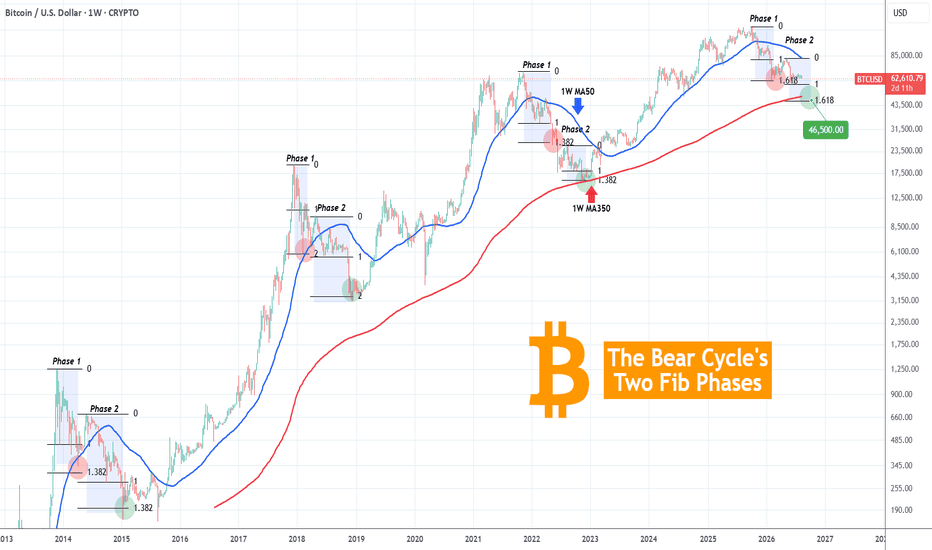
A weekly analysis of Bitcoin suggests a pattern of Fibonacci symmetry in bear cycles. The model argues that each cycle consists of two phases. Phase 1 is the initial drop, and Phase 2 forms the bottom. Historically, these phases have been symmetrical. In the current cycle, Phase 1 hit the 1.618 Fibonacci extension. If history repeats, Phase 2 could be aiming for a second drop to the 1.618 extension at $46,500. This level sits just below the 1W MA350, which aligned with the 2022 bottom. It is a bearish long-term map, but one that provides a clear floor for those looking to accumulate.
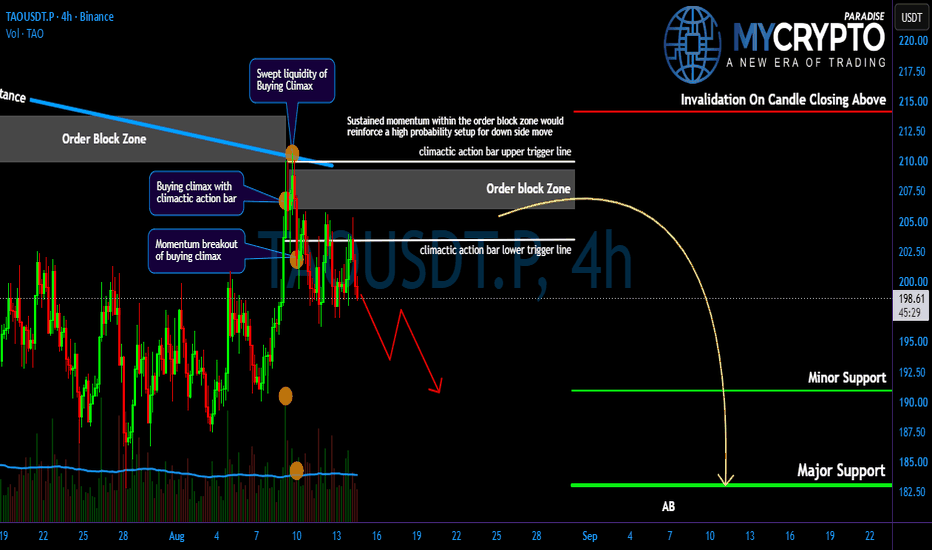
For TAO, the outlook is more immediate and more grim. The asset formed a buying climax followed by a climactic action bar, which is a classic sign of institutional distribution. The price swept the upper trigger line but failed to hold, and a subsequent break below the lower trigger line suggests supply is now in control. The next major downside target is 183.10. As long as the price stays within the 4H order block zone, the momentum favors a move lower.
TRON is facing a multi-year trendline breakdown. For the first time in years, the market cap of TRX is trading below its long-term trendline. This coincides with UK and EU sanctions against HTX and the blocking of $344M across the network. The immediate task for TRX is to reclaim $0.35. If it fails and loses $0.325, the path opens toward the $0.25 to $0.27 zone. Given the ties between Justin Sun, HTX, and TRX, these regulatory clouds are unlikely to clear quickly.
Smart Money Signals — Hyperliquid Leaderboard
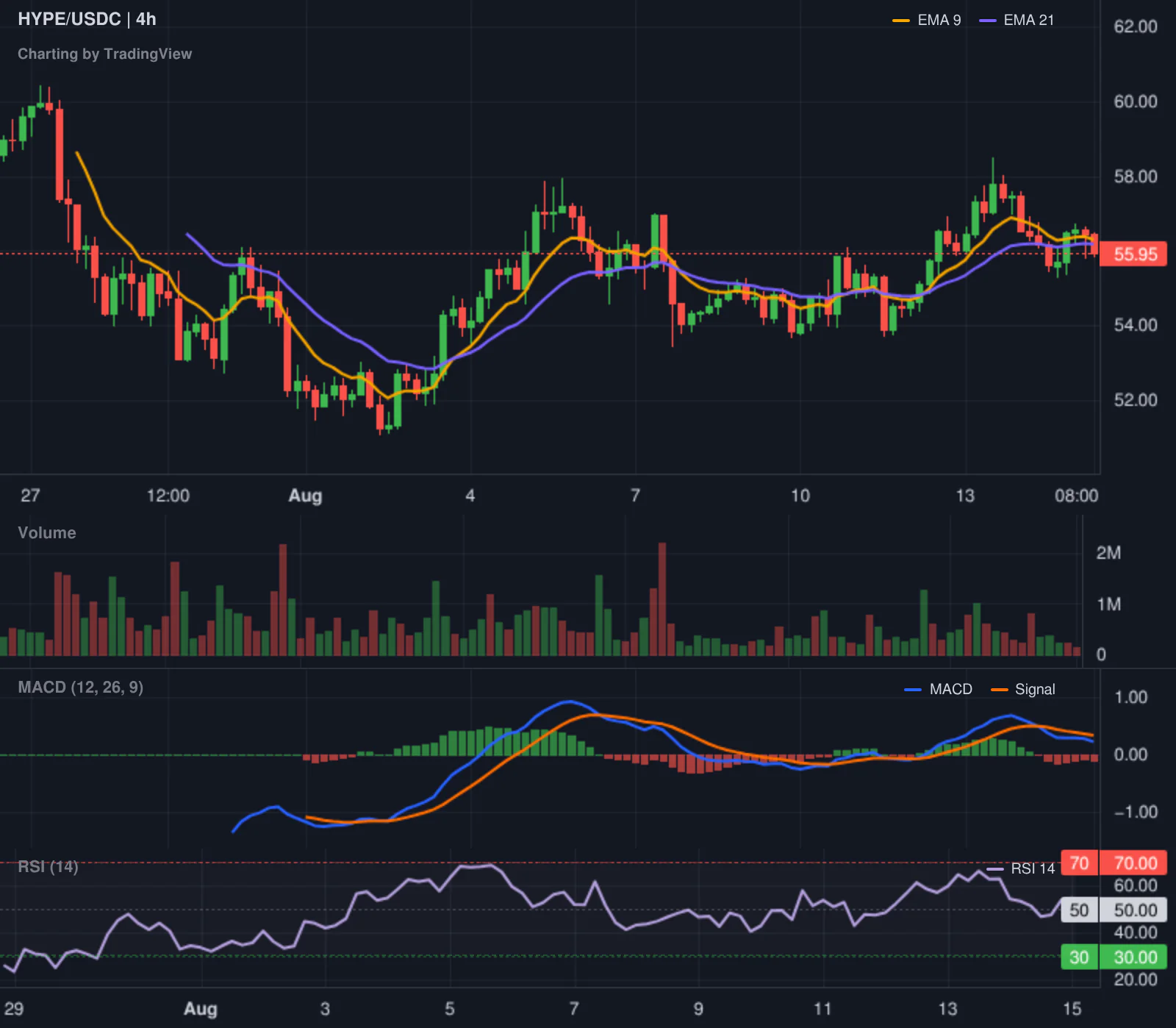
The leaderboard shows a high-confidence long position in HYPE. Trader 0x53f81d, who boasts a 975% 30-day ROI, opened a long at $57.127 with a notional value of $45,132. This aligns with the whale movements seen in the social intelligence data. When a top-tier trader with a near 1,000% return enters a position, it usually suggests a fundamental catalyst that hasn't been fully priced in by the retail market.
Altcoin Spotlight
Hyperliquid is the asset to watch. Despite a 1.04% dip today, it is seeing a concentrated influx of "smart money." The rotation from UNI to HYPE by Fund Monetalis and the leaderboard signal both point to a growing conviction in the HYPE ecosystem. In a market where most altcoins are bleeding or stagnant, HYPE is attracting the kind of aggressive positioning that usually precedes a volatility spike.
What to watch next
The market is currently a standoff. The institutional data is bullish, but the volume and sentiment data are bearish. We are seeing a professional accumulation phase happening in a retail vacuum. The most important metric to watch over the next 48 hours is the derivatives volume. If volume remains crashed while prices hold, we are in a consolidation phase. If volume spikes while the Fear index remains high, we could see a sharp flush to clear out the remaining leverage.
Keep a close eye on the SEC's response to the tokenization stocks. Any sign that the "speed bump" is becoming a wall will likely drag Bitcoin and Ethereum lower. Conversely, if the World Liberty bank charter leads to actual USD1 issuance, it could provide the liquidity spark this ghost town desperately needs.
Some links in this article may be affiliate links. We may earn a commission at no extra cost to you — this never influences our analysis or coverage.

Sigrid Voss
Crypto analyst and writer covering market trends, trading strategies, and blockchain technology.
More Articles

The OCC just gave Trump a bank charter while the SEC stalls everything else
The regulatory split between banking charters and securities law remains confusing for crypto players. While one body…
Crypto Market Overview | Derivatives volume explodes while regulatory delays stall tokenization efforts | August 14, 2026
Derivatives volume explodes while regulatory delays stall tokenization efforts in this market overview analysis for…
Crypto Market Overview | leverage bets rise as spot volume fades and sentiment dips | August 13, 2026
Leverage bets rise as spot volume fades and sentiment dips in this market overview of crypto trading dynamics for August…
GSR cuts Bitcoin to 16% to load up on Solana
GSR appears to have decided Bitcoin isn't enough for their portfolio; they seem keen on Solana instead. The reported cut…