
GSR cuts Bitcoin to 16% to load up on Solana
The fact that GSR is reportedly cutting Bitcoin allocation to 16% suggests a specific thesis about where capital next finds its footing. While the average trader is staring at a Fear and Greed index of 38 and wondering if the bottom is in, institutional players are executing an institutional rotation from ethereum to solana. This is not a sudden whim. It is a calculated move away from a stagnant Ethereum and a heavy Bitcoin concentration toward a chain that actually handles the volume the market demands. We previously covered SOL ETFs filing details for more background.
Understanding the institutional rotation from ethereum to solana
The short answer is that professional capital is prioritizing efficiency over legacy. For years, Ethereum was the only viable place for smart contracts, but the data now shows a preference for high-throughput, lower-cost chains. Ethereum dominance currently sits at 10.45%, a figure that feels increasingly fragile when compared to the actual on-chain activity.
Our signal scanner flagged SOL's recent volume spikes relative to ETH, suggesting that the "growth" part of institutional portfolios is shifting. According to coindesk.com, GSR views Solana as a growth asset tied to stablecoins and tokenization. The logic is simple. Institutions do not want to pay exorbitant gas fees for treasury operations. They want the near-instant settlement and low costs that Solana provides.
What the market structure tells us about altcoin rotation
There is a strange contradiction in the current data. Bitcoin dominance remains high at 58.55%, and the Altcoin Season Index is a dismal 20/100. On paper, this is a "Bitcoin Season," meaning most altcoins are simply bleeding out. However, our market data tools show a divergence between derivatives volume and spot activity.
While spot accumulation in alts is low, derivatives volume has surged to nearly $600B. This tells us that the rotation is not happening through slow, organic buying. It is happening via leverage and sophisticated hedging. The "smart money" is not buying the dip in a hopeful way. They are positioning for a specific outcome where Solana captures the utility that Ethereum has failed to scale.
We previously covered how the dominance data agrees with the idea that capital is consolidating. But the GSR move shows that this consolidation is not just about Bitcoin. It is about trimming the fat from Ethereum to fund a bet on Solana.
How does institutional rotation from ethereum to solana work?
Technically, this shift is driven by a collapse in Ethereum's utility metrics. We are seeing ETH gas fees sit between 0.05 and 0.06 Gwei. In plain English, the network is bored. There is very little happening on-chain that justifies the current valuation relative to its competitors.
In contrast, Solana has moved from being a "risky alternative" to a genuine institutional contender. Our market data tools show a 24h volume of $53.77B, and the technical indicators favor SOL's performance metrics over ETH’s current inactivity. The shift is essentially a treasury decision. As solanacompany.co notes, the trade-off is between Ethereum's proven stability and Solana's efficiency.
Institutions are deciding that stability is less important than speed. When you are managing billions in tokenized assets, a 100-millisecond settlement time is more useful than a "proven" legacy system that processes transactions sequentially.
Where people get tripped up
The biggest mistake retail traders make here is assuming that a "Bitcoin Season" means all altcoins are dead. They see the 20/100 Altcoin Index and sell their SOL to buy BTC. They miss the fact that institutional rotation is selective.
Money is not flowing into "alts" as a category. It is flowing into specific infrastructure. If a protocol does not have a clear path to institutional utility, it is vaporware. Solana has a path. Ethereum is currently trying to find one through a series of upgrades that have yet to spark a new wave of genuine on-chain demand.
Putting it into practice
If you are tracking this rotation, stop looking at the total altcoin market cap. Instead, watch the gap between derivatives volume and spot volume for SOL and ETH. When the derivatives volume leads the spot move, it usually means the professionals have already made their bet and the retail crowd is just catching up.
The GSR move to 16% Bitcoin is a loud signal. It suggests that the "macro stability" phase of the cycle is ending and the "growth" phase is beginning. The only question is whether Ethereum can wake up before the rotation becomes permanent.
Some links in this article may be affiliate links. We may earn a commission at no extra cost to you — this never influences our analysis or coverage.

Sigrid Voss
Crypto analyst and writer covering market trends, trading strategies, and blockchain technology.
More Articles

Ripple just got a US banking license. Here is why the RLUSD stablecoin is the real story
The industry's insistence on being purely decentralized seems to take a brief holiday when the OCC grants Ripple a US…
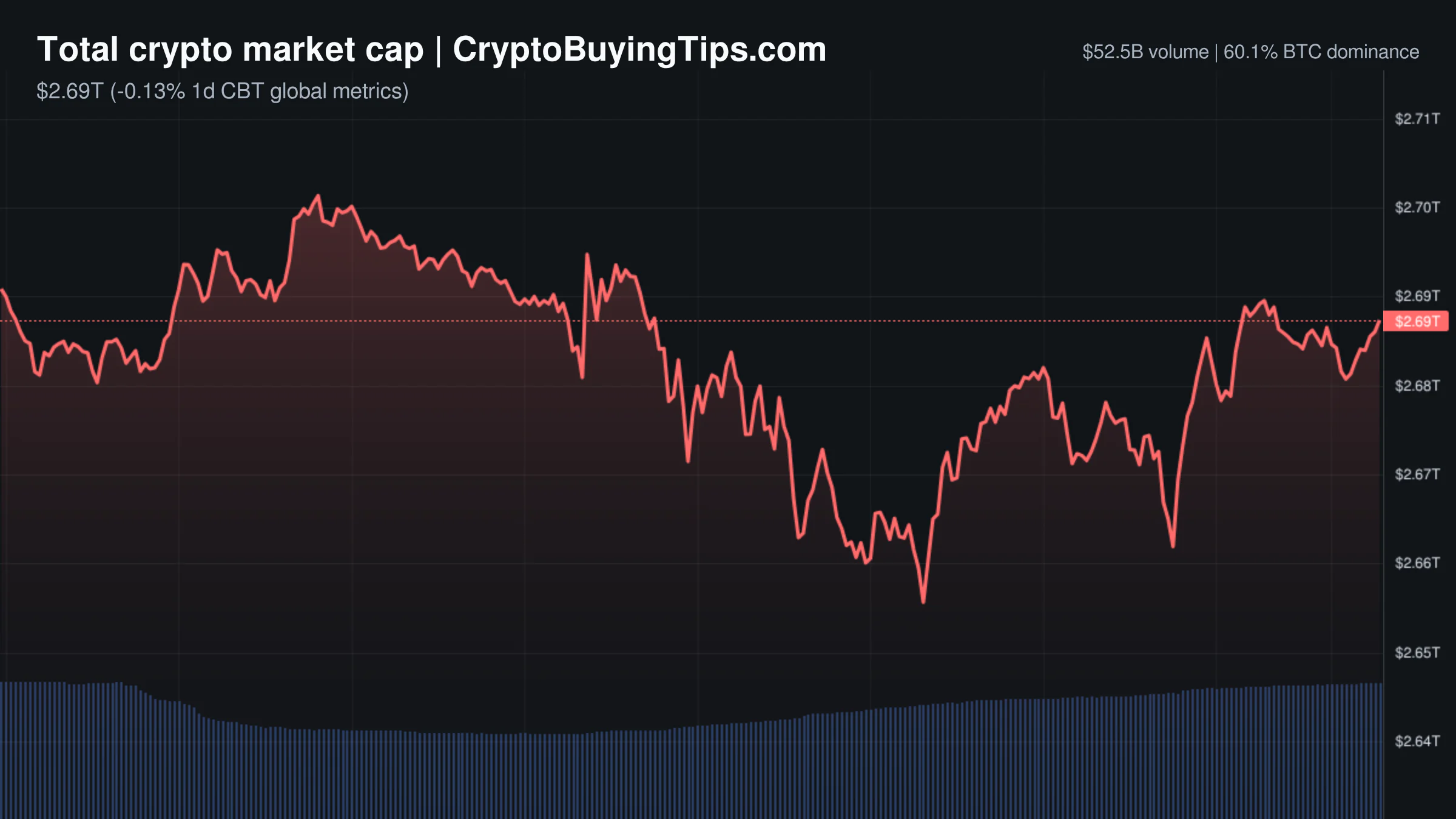
Crypto Market Overview | Derivatives volume dwarfs spot activity amid macro caution and ETF inflows | October 26, 2026
Derivatives volume dwarfs spot activity amid macro caution and ETF inflows; see our market overview for key asset…

Hyperliquid whales are net short HYPE as $37M hits Coinbase
The crowd loves the hype, but our tracker shows whales betting otherwise as $37M hits Coinbase. Professional positioning…
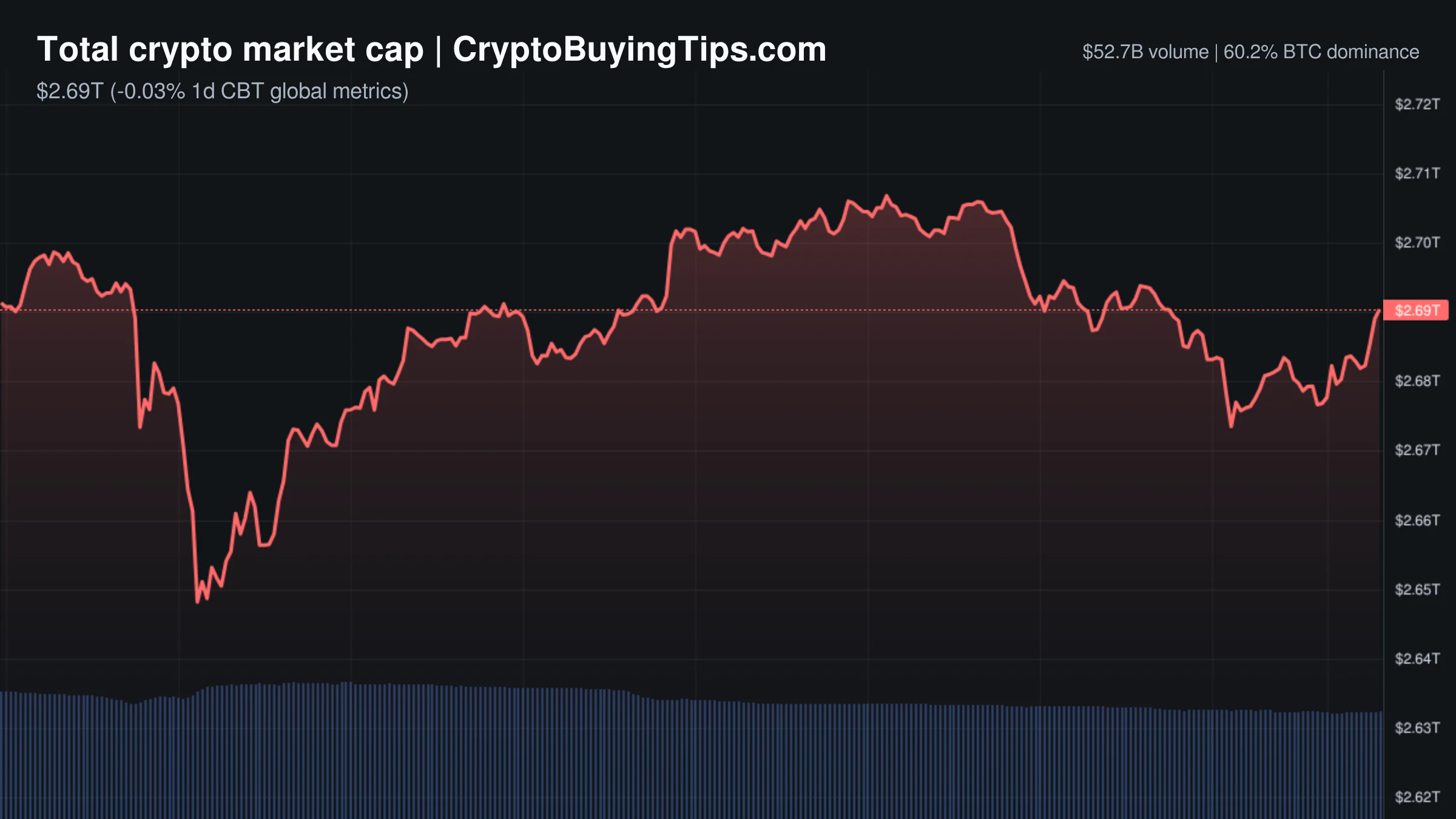
Crypto Market Overview | volume collapses as bitcoin holds $80k amid mixed institutional signals | October 25, 2026
Crypto market overview shows collapsing volume as bitcoin holds $80k amid mixed institutional signals and geopolitical…