
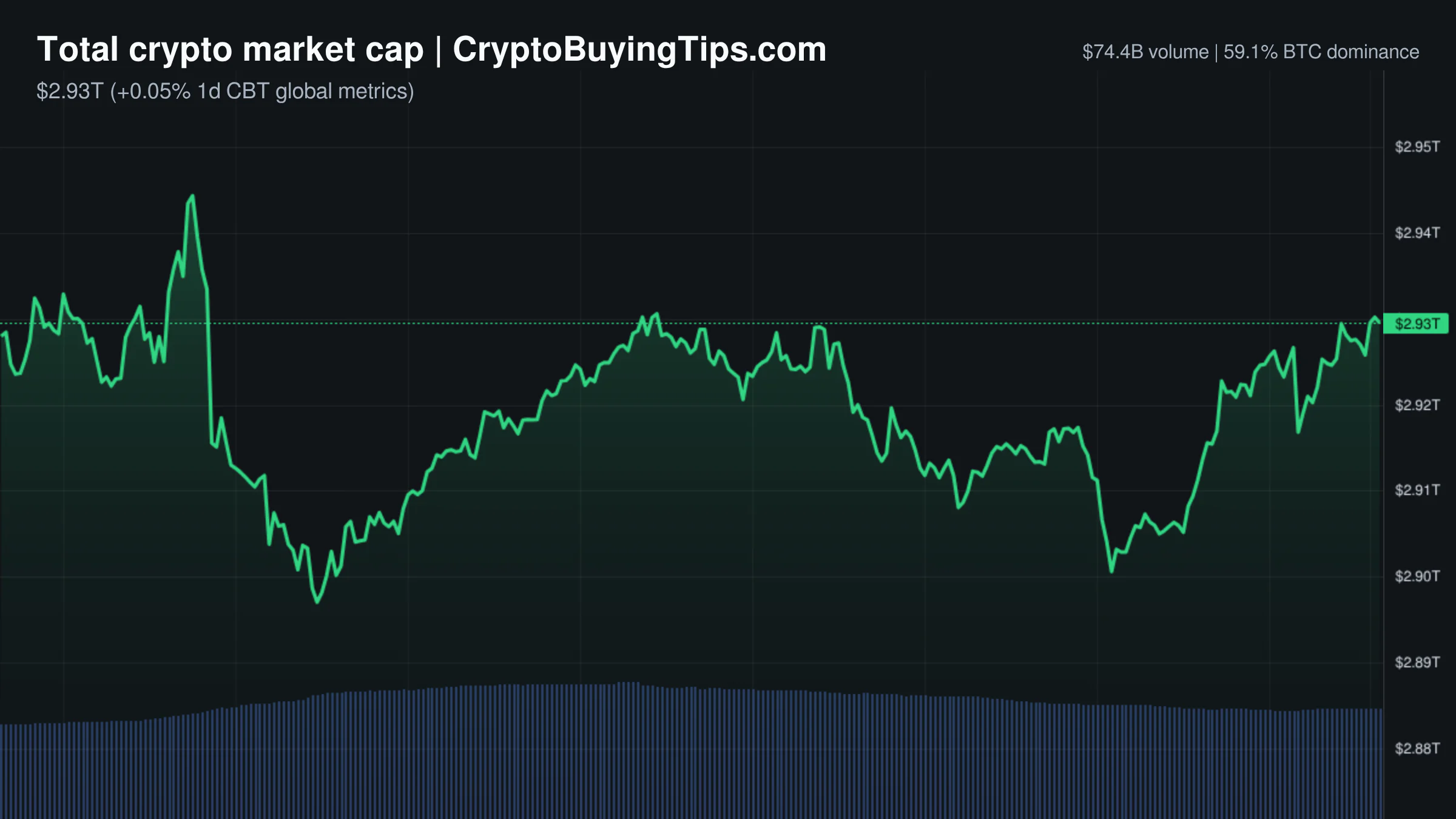
Crypto Market Overview | Leveraged derivatives volume dwarfs spot trading amid institutional infrastructure developments | October 6, 2026
Crypto Market Overview | Leveraged derivatives volume dwarfs spot trading amid institutional infrastructure developments | October 6, 2026
Market overview
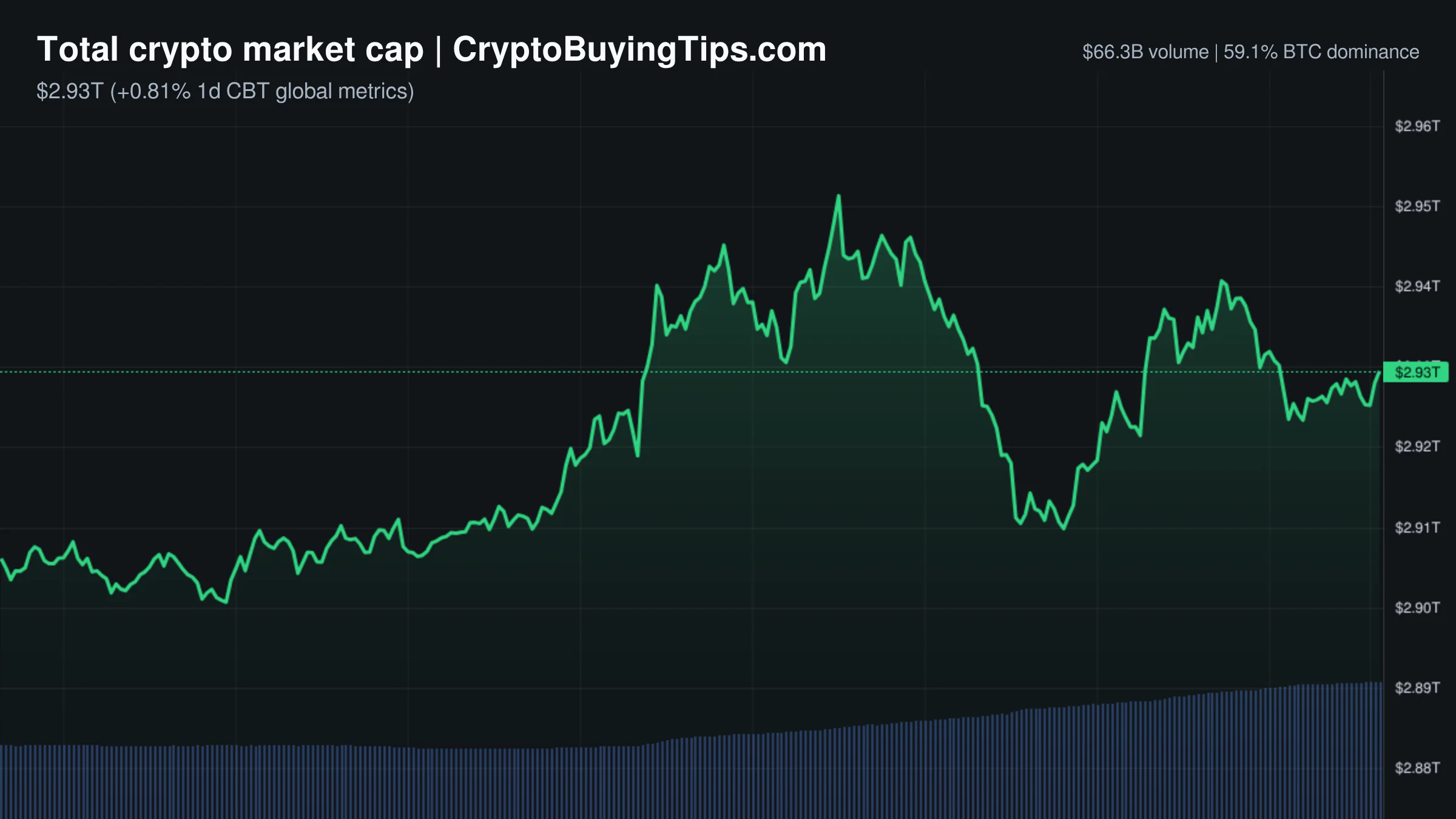
The market is currently in a state of expensive boredom. While the total market cap sits at $2.93T, the actual price action is largely flat. We are seeing a strange divergence where the S&P 500 and NASDAQ are climbing, yet crypto is merely idling. The Fear and Greed Index is at 68, which suggests greed is the dominant emotion, but the price charts don't seem to have received the memo.
The most striking data point is the massive gap between spot and derivatives activity. Derivatives volume is $641.77B, which is roughly 8.6 times higher than the $74.37B seen in spot trading. This is a highly leveraged environment. When the market is this skewed toward perps and futures, any sudden move in either direction tends to trigger a cascade of liquidations. The market is essentially a giant spring coiled tight, waiting for a catalyst to tell it which way to jump.
Stablecoin volume rose by 16.90%, which usually indicates that capital is moving behind the scenes. Traders are either hedging their positions or preparing for a move. With BTC dominance at 59.10% and the Altcoin Season Index at 62, we are in a neutral zone. Money isn't aggressively rotating into alts, but it isn't fleeing back to the safety of Bitcoin either. It is a standoff.
Bitcoin and Ethereum
Bitcoin is currently fighting for air at $86,161.7. It has spent the last few sessions bumping its head against the $87,000 ceiling. The lack of conviction at this level is telling. While the macro environment looks supportive, Bitcoin is struggling to find the momentum needed to break into a new range. The implied volatility for BTC is 37.86%, which is relatively modest given the amount of leverage currently sitting in the order books.
Ethereum is slightly lower at $2,713.82. The network state is curiously quiet. Gas fees are exceptionally low, with fast transactions costing only 1.21 Gwei. Low gas usually means low on-chain congestion, which is great for the user but boring for the analyst. It suggests that the current price action is being driven by exchange trading rather than a surge in DeFi activity or NFT mints. Ethereum's implied volatility is higher than Bitcoin's at 49.83%, reflecting the usual uncertainty around its relative performance.
Top crypto prices
Bitcoin remains the anchor at $86,161.7, showing a negligible 24h change of 0.04%. Ethereum has dipped 0.17% to $2,713.82. BNB is down 0.71% to $783.93, and XRP has fallen 0.74% to $1.5.
Solana is trading at $120.35, down 0.28%. TRON is at $0.3354, a 0.31% decrease. Hyperliquid is one of the few gainers in the top ten, rising 0.85% to $93.57.
News driving today's market
The most significant development is the launch of Solana DvP. This open-source escrow program, developed with input from J.P. Morgan, allows financial institutions to settle trades atomically. In plain English, it removes the multi-day waiting period for clearinghouses and ensures that the asset and payment change hands at the same time. This is a direct hit on traditional finance's slowest components. We previously covered how SOL ETFs filing news suggested institutional conviction, and this infrastructure play confirms that the interest is moving from passive holding to active utility.
On the regulatory front, the CFTC and SEC are finally speaking the same language. They have proposed a joint crypto framework to provide clearer guardrails for the industry. The CFTC's proposed "CTX" and "CAM" rules would allow exchanges to operate under federal oversight rather than a confusing mix of state laws. While regulation often brings a temporary chill to the market due to compliance costs, this move reduces the long-term risk of "regulation by enforcement." We previously discussed how the SEC crypto portfolio barriers were being dismantled, and this federal framework is the next logical step.
Not all news is helpful. The US Treasury recently exposed a $2 million Hamas fundraising network that used crypto. Simultaneously, a self-styled "Godfather" named Adam Iza was sentenced to prison for a $37 million Meta fraud involving crypto custodians. These stories provide the usual ammunition for critics of the industry. However, the market seems to have developed a thick skin for these narratives. The news that FinCEN is withdrawing proposed rules on crypto mixers as part of a deregulatory agenda is likely doing more for sentiment than the fraud stories are doing to hurt it.
Social intelligence
The technical community is focusing on Ethereum's scaling roadmap. The Ethereum Economic Zone (EEZ) has successfully executed the first atomic L1-to-L2 mainnet transaction. This means that synchronous composability is no longer just a theoretical goal in a whitepaper. It is a tangible milestone that could make the experience of using different layers feel like a single, unified network.
On the fundamental side, analyst @willywoo has been poking holes in the "be your own bank" narrative. His point is that traditional banking is essentially a claim on a debt that the bank owes you, assuming they stay solvent. Self-custody of Bitcoin is a different animal entirely because you hold the legal title to the asset. It is a dry observation, but it highlights the core value proposition of the asset class during times of banking instability.
We are also seeing an expansion in Real World Assets (RWA). Ondo is allowing non-US investors to trade a pre-IPO AI company on-chain. The trend of bringing traditional equity and private equity into the crypto ecosystem is accelerating. It turns the blockchain into a 24/7 global trading floor for assets that used to be locked behind gated institutional portals.
Trading ideas worth watching
The technical outlook for Bitcoin is currently a mess of conflicting signals. One setup suggests that BTC has lost its ascending trendline after failing to break $86.8K. If this breakdown holds, the next targets are $83K and potentially $80K. This is a classic "failed breakout" scenario where the lack of buyers at the top leads to a fast trip down to the next support level.
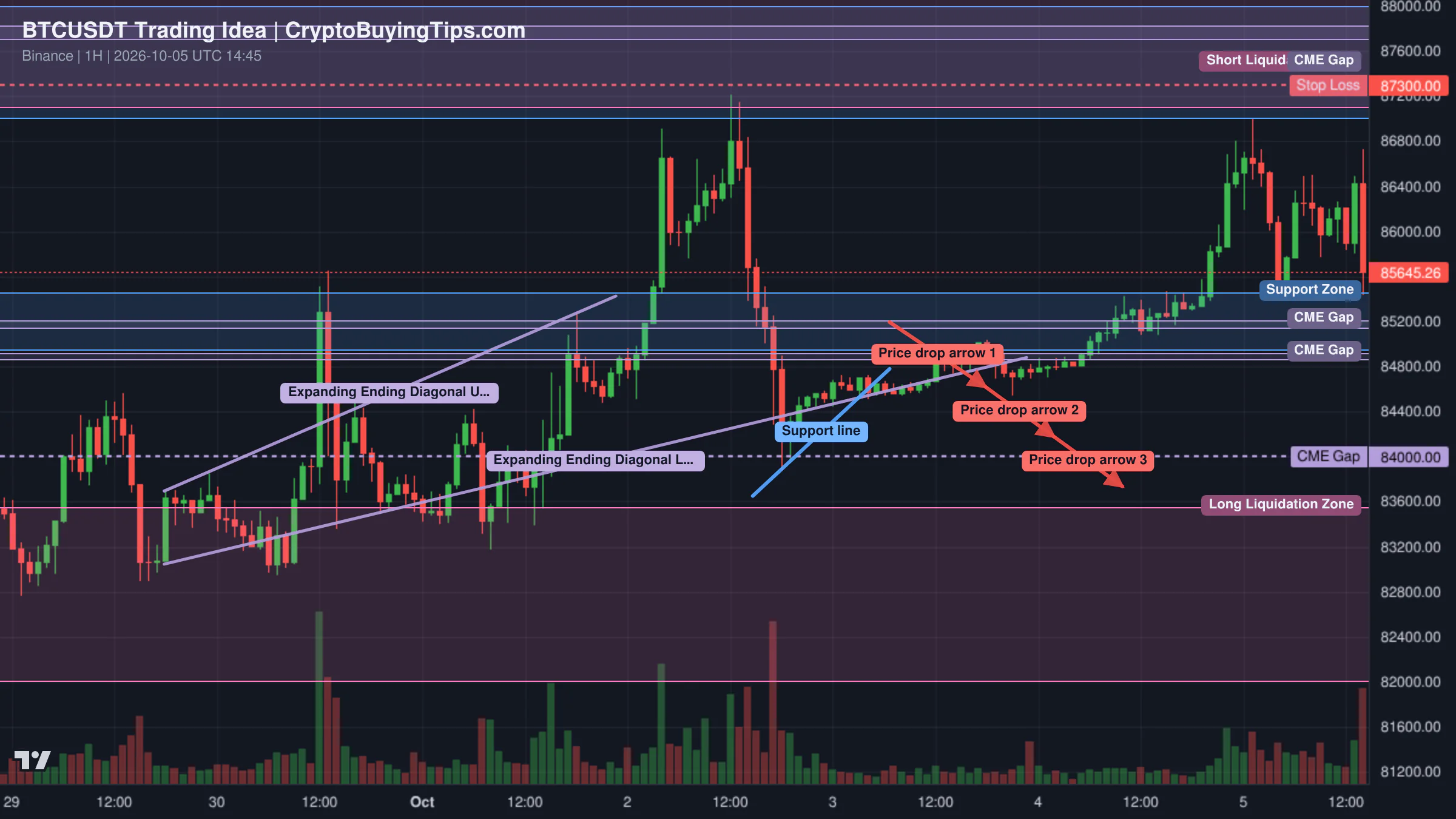
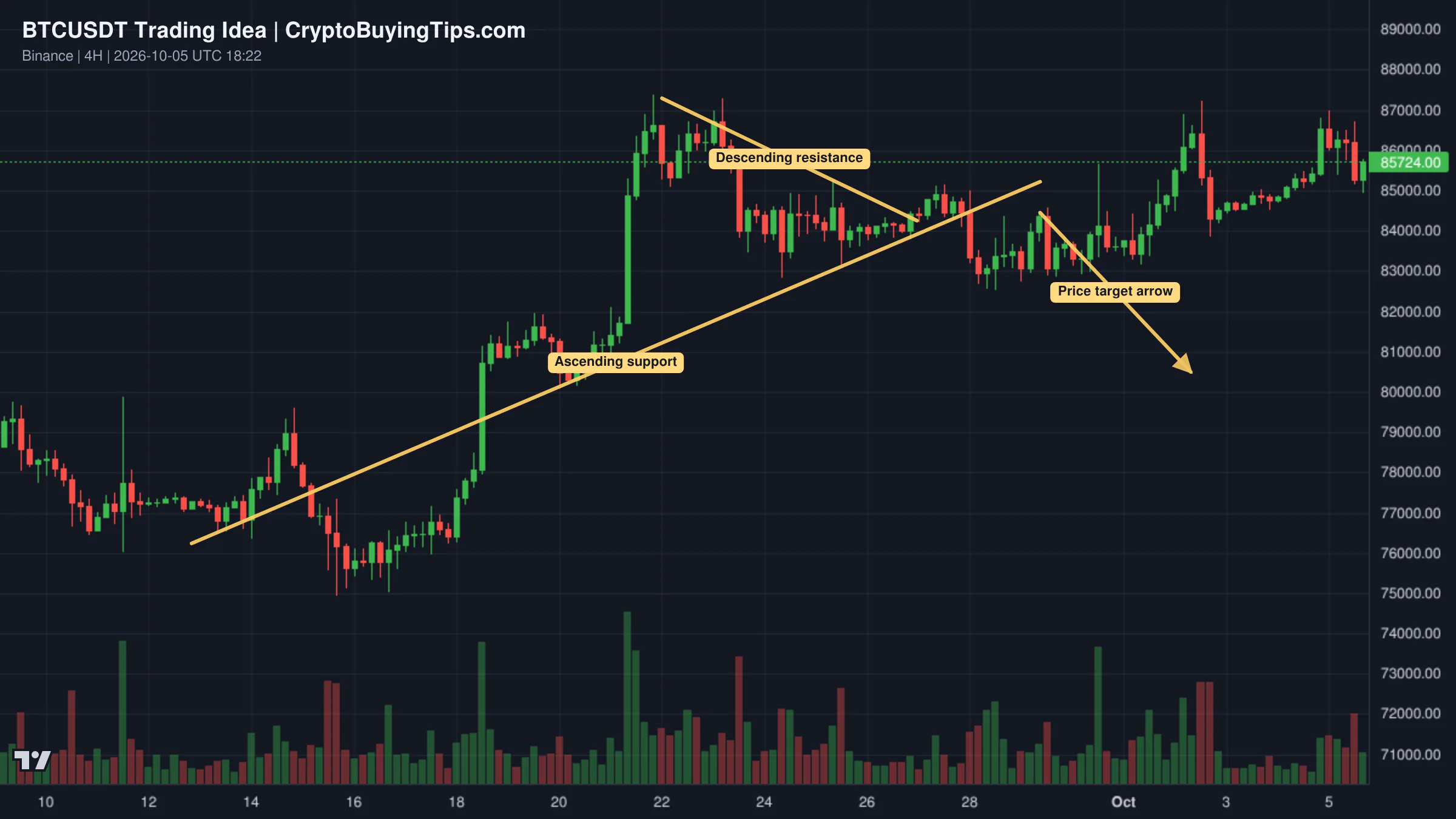
A more complex view from the Elliott Wave perspective suggests that Bitcoin is trapped in an Expanding Ending Diagonal. This pattern often appears at the end of a primary wave and signals exhaustion. The support zone is identified between $84,940 and $85,460. If the price drops below this zone, a move toward $84,000 is likely. The risk here is that the current rally is a bull trap, and the lack of volume on the way up suggests the move is fragile.
Finally, some analysts see a symmetrical triangle forming on the 2-hour timeframe. This indicates a tightening battle between buyers and sellers. The $87,000 level is the ceiling, and $84,000 is the floor. A decisive break above $87,000 would invalidate the bearish theses and likely spark a short squeeze, given the high amount of leverage in the market.
Smart Money Signals — Hyperliquid Leaderboard
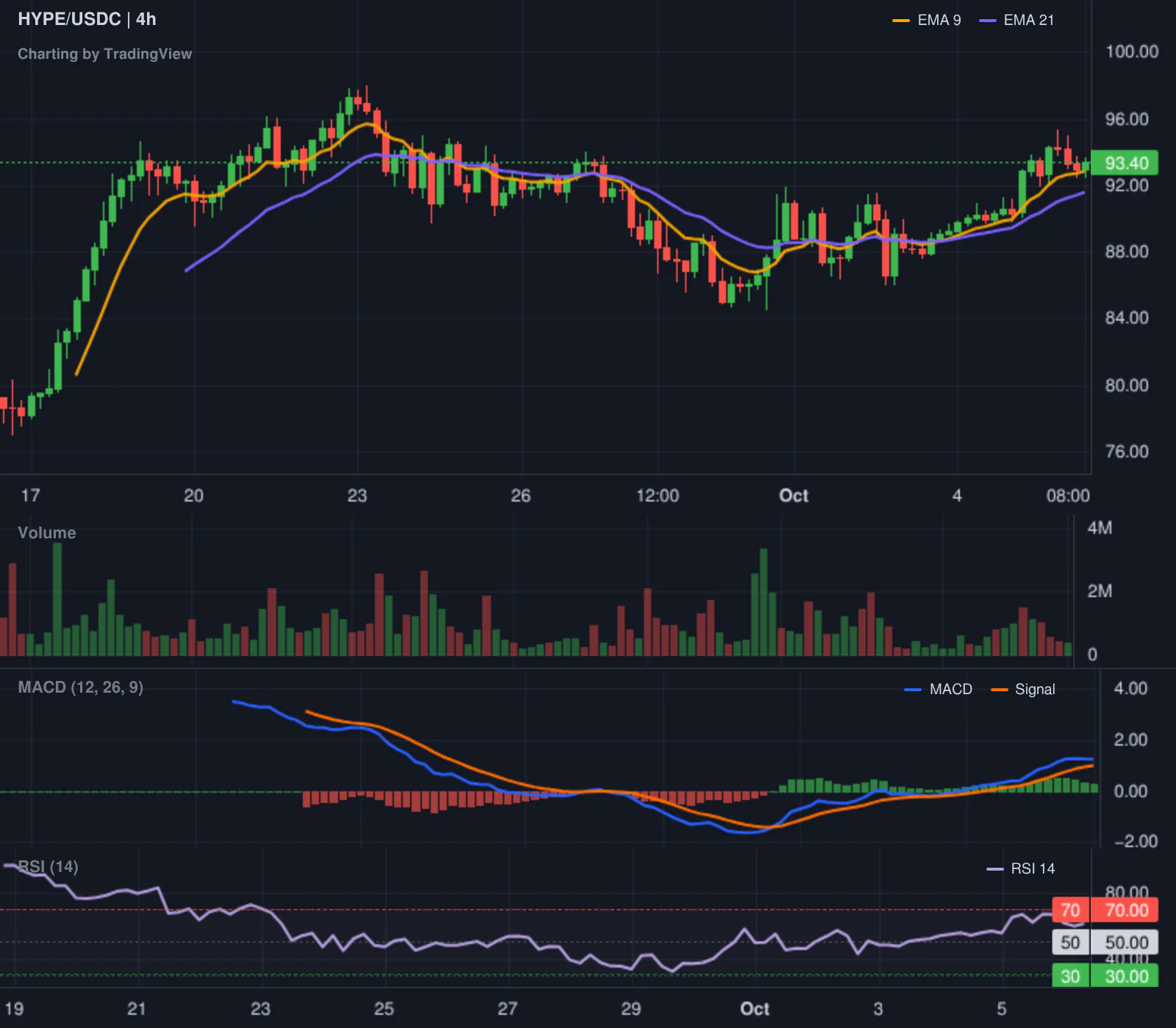
Our tracker has flagged a significant move from a high-performing trader. A wallet with a 586% 30-day ROI has opened a short position in HYPE at $92.846. The notional value of the trade is $28,627. Given the trader's track record, this bet against Hyperliquid suggests that the recent price bump may have hit a local top. It is a contrarian move in a market that is otherwise idling.
Altcoin Spotlight
Solana deserves the spotlight today. While the price is slightly down at $120.35, the fundamental news is massive. The Solana DvP program is not just another "partnership" announcement. It is the creation of a standardized API for institutional settlement. By involving J.P. Morgan in the design, the Solana Foundation is building the rails that banks actually know how to use. This moves Solana away from being just a place for memecoins and toward being a legitimate piece of global financial infrastructure.
What to watch next
The immediate focus is the $87,000 level for Bitcoin. If BTC cannot conquer this ceiling, the high leverage in the derivatives market will likely force a correction toward $83K. The market cannot stay in this state of high-leverage stagnation forever.
We are also watching the implementation of the CFTC's new framework. If the rules are too restrictive, we might see a temporary exodus of leveraged traders. If they provide the clarity the industry has been begging for, it could unlock the next wave of institutional capital. For now, the market is holding its breath, and the data suggests that the "smart money" is hedging for a volatile move.
Some links in this article may be affiliate links. We may earn a commission at no extra cost to you — this never influences our analysis or coverage.

Sigrid Voss
Crypto analyst and writer covering market trends, trading strategies, and blockchain technology.
More Articles

Solana just tried to fire the clearinghouses
Another day, another attempt to make old banking rails look quaint. Solana’s Delivery-versus-Payment (DvP) rail is less…
Crypto Market Overview | Speculative leverage dwarfs spot activity as bitcoin leads the market | October 5, 2026
Speculative leverage dwarfs spot activity as bitcoin leads the market overview; see how derivatives volume drives…

FET rips 13% as the market bets on the new AI czar
The AI narrative continues to drive capital flow regardless of policy nuance; FET jumped over 13 percent on news linking…
Crypto Market Overview | price stability masks collapsing trading volumes and low on-chain activity | October 4, 2026
Price stability masks collapsing trading volumes and low on-chain activity, suggesting conviction is lacking despite…