
How to buy Binance Coin (BNB)
This guide shows verified market-pair data, exchange listings, and related buying information for BNB. Always confirm fees, country availability, and withdrawal support directly with the exchange before depositing funds.
Buying checks for Binance Coin (BNB)
Buying routes
Some links may be affiliate links. Route data is shown only when it was found in our market-pair or route data.
| Exchange/route | Pair | Type | Volume/liquidity | Action |
|---|---|---|---|---|
 Gate.io | BNB/USDT | CEX | $23.94M | Check route |
 MXC.COM | BNB/USDT | CEX | $110.04M | Check route |
 Binance | BNB/USDT | CEX | $6.55B | Check route |
 Venus | vBNB/BNB | CEX | $20.4B | Check route |
 HBTC | BNB/USDT | CEX | $981.93M | Check route |
 Hydax Exchange | BNB/USDT | CEX | $981.93M | Check route |
 BKEX | BNB/USDT | CEX | $816.84M | Check route |
 GX.com | BNB/USDT | CEX | $593.88M | Check route |
 ZT | BNB/USDT | CEX | $506.59M | Check route |
 Dcoin | BNB/USDT | CEX | $404.98M | Check route |
Risk checks
Before buying BNB, check exchange availability, fees, withdrawal support, liquidity, and whether the asset is the correct token or network.
How this guide is checked
- Last verified
Last updated:
What is Binance Coin and what problem does it solve?
Binance Coin, known as BNB, is the native utility token of the BNB Chain ecosystem. Launched in July 2017, it was originally created to provide trading fee discounts and other utilities within the Binance exchange, which is the largest cryptocurrency exchange globally by daily trading volume. The project aims to position cryptocurrency exchanges at the center of global financial activity.
Over time, BNB evolved from a simple exchange token into the foundational asset for a broader ecosystem. It now powers the BNB Smart Chain (BSC), opBNB Layer 2s, and BNB Greenfield. The token is used to pay for transaction fees (gas) on these networks and serves as a governance token, allowing holders to participate in decentralized on-chain governance.
The core problem BNB solves is the need for a high-performance, low-cost infrastructure for decentralized applications (dApps). By utilizing its own blockchain, the ecosystem provides a faster and cheaper alternative to Ethereum for users who want to engage in DeFi or trade meme coins without paying high network fees.
What are BNB's current market statistics?
BNB currently holds the #3 rank among all cryptocurrencies. The asset is trading at $328.50, with a market capitalization of $50,764,046,228.06. Trading activity is high, with a 24-hour volume of $17,605,005,139.86.
The supply metrics are as follows:
- Circulating Supply: 154,532,785 BNB
- Total Supply: 170,532,785 BNB
- Max Supply: 170,532,785 BNB
Recent price performance shows extreme short-term volatility and growth. BNB has seen a 68.46% increase in the last 24 hours and a 145.14% increase over the last 7 days. The 30-day change is even more significant, showing a growth of 685.52%.
How does BNB's technology work?
BNB transitioned from an Ethereum-based ERC-20 token to its own blockchain on April 18, 2019. An ERC-20 token is a standard for tokens on the Ethereum network, which allows them to be scalable and support smart contracts (self-executing contracts with the terms of the agreement directly written into code). The current BNB Chain uses a Byzantine Fault Tolerant (BFT) consensus mechanism via Tendermint to secure the network.
The ecosystem is split into several functional layers. The BNB Smart Chain (BSC) supports smart contracts and is compatible with the Ethereum Virtual Machine (EVM), making it easy for developers to migrate projects. To further improve efficiency, the ecosystem includes opBNB, which is a Layer 2 (L2) solution. Layer 2s are secondary frameworks built on top of a main blockchain to increase speed and reduce costs.
A key technical feature of BNB is its deflationary tokenomics. Binance conducts quarterly burns, which means the exchange permanently removes BNB from circulation to reduce the total supply. This is designed to increase the scarcity of the token over time. Additionally, the BEP-95 upgrade implemented a system where a portion of gas fees (the cost of performing a transaction on the network) is burned, similar to Ethereum's EIP-1559.
The technology enables various real-world use cases, including the Binance NFT marketplace and decentralized finance (DeFi) protocols. Despite previous security issues, such as a $200M exploit of Pancake Bunny and hacks of Cream Finance, the network remains popular due to its low fees and high volume of activity.
What is the community and social sentiment around BNB?
Social sentiment for BNB is characterized by a mix of institutional interest and retail speculation. Official communications from @binance focus heavily on the integration of AI, promoting AI trading bots and agents. This suggests a strategic shift toward "agentic AI" where system-triggered tasks handle a large portion of user interactions.
Community discussions on X (formerly Twitter) show a strong "moon" mentality, with retail users viewing BNB as a life-changing asset. There is significant activity around "BSC meme season," where users trade low-cap tokens on the BNB Smart Chain. Some users compare BNB to Solana (SOL) and Ethereum (ETH) as core assets to hold during market rallies.
However, there are recurring themes of comparison and competition. Some community members discuss whether other tokens, such as $Rave or $CRO, could eventually challenge BNB's market cap. Despite this, the overall sentiment remains bullish, driven by the perceived stability of the Binance ecosystem and the utility of the token within the world's largest exchange.
Where can you buy BNB?
BNB is widely available across most major cryptocurrency exchanges.
- Binance is the most direct option. As the native token of the platform, it offers the highest number of trading pairs and the most competitive rates.
- Gate.com lists over 2,250 cryptocurrencies and is a strong choice for those who want a massive array of trading products. Their futures perpetual contracts start at 0.015% maker fees.
- Bitmart supports over 1,400 coins. It is a viable option for traders seeking low futures fees, starting at 0.02% maker.
- StealthEX provides a non-custodial instant swap service. This is the best option for privacy seekers because it requires no account registration and no KYC.
Should you buy BNB? Risk and potential evaluation
The potential for BNB is tied to the continued dominance of the Binance exchange and the adoption of the BNB Chain. The deflationary burn mechanism creates a constant buy-pressure and reduces supply, which is a bullish factor for long-term price action. The integration of AI tools and the expansion into Layer 2 solutions like opBNB suggest the project is evolving beyond a simple exchange token.
The risks are primarily centered on regulatory pressure and centralization. Because BNB is so closely linked to a single entity (Binance), any legal or regulatory action against the exchange directly impacts the token's value. Additionally, while the network is fast, the history of DeFi exploits on the BSC, such as the Pancake Bunny attack, highlights potential security vulnerabilities in the ecosystem's third-party protocols.
This asset may suit investors with a medium to high risk tolerance who believe in the growth of the Binance ecosystem. It is less suitable for those seeking a fully decentralized asset, as the project's value is heavily dependent on the success of a centralized company.
This is not financial advice. Always do your own research (DYOR) before investing.
Frequently asked questions about BNB
What makes BNB unique compared to other coins?
BNB is unique because it is integrated into the world's largest exchange ecosystem. Unlike many tokens, it has a built-in burn mechanism that actively reduces the total supply every quarter to create scarcity.
Who created BNB?
BNB was created by Changpeng Zhao (founder and CEO of Binance) and He Yi (co-founder and CMO). Zhao has a background in tradebook futures development at Bloomberg and founded BijieTech before launching Binance in 2017.
What blockchain is BNB built on?
BNB originally started as an ERC-20 token on Ethereum. It now operates on its own blockchain, the BNB Chain, which uses a BFT consensus mechanism via Tendermint.
Is BNB safe and legit?
BNB is the native token of the largest exchange in the world and has a massive market cap. However, like all crypto assets, it carries risks, including regulatory challenges and the potential for exploits in the DeFi protocols built on its chain.
What are the risks and outlook for BNB?
The primary technical risk for BNB is the security of the smart contracts within its ecosystem. While the base chain is secure, the abundance of meme coins and DeFi projects on BSC increases the risk of exploits. From a regulatory standpoint, the concentration of power within the Binance ecosystem makes it a target for global regulators, which could create sudden price volatility.
The near-term trajectory appears strong based on recent momentum, with a 685.52% increase over 30 days. This suggests a massive rotation of capital into the asset. The shift toward AI-driven trading tools and the "Build and Build" philosophy indicate that the project is focusing on utility and infrastructure.
The long-term outlook depends on whether BNB can maintain its utility as the gas token for a thriving Web3 environment while navigating the legal complexities of the global financial system. If the ecosystem continues to attract developers and users despite regulatory headwinds, its position as a top-three asset is likely to persist.
Related Articles
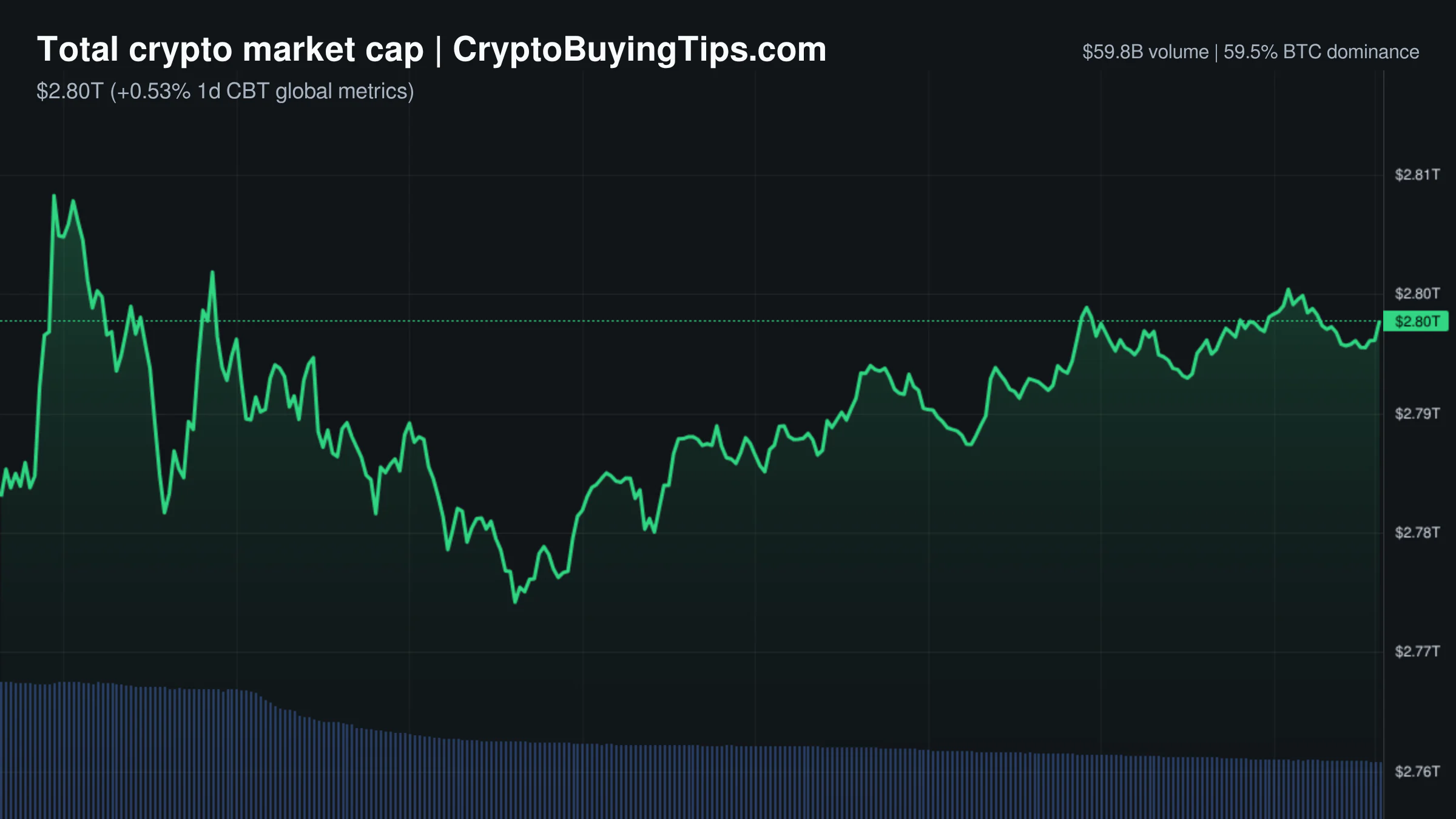
Crypto Market Overview | Liquidity vanishes as spot volume drops while derivatives remain bloated | October 10, 2026
Spot volume drops while derivatives remain bloated in today's crypto market overview; see what our data shows about…
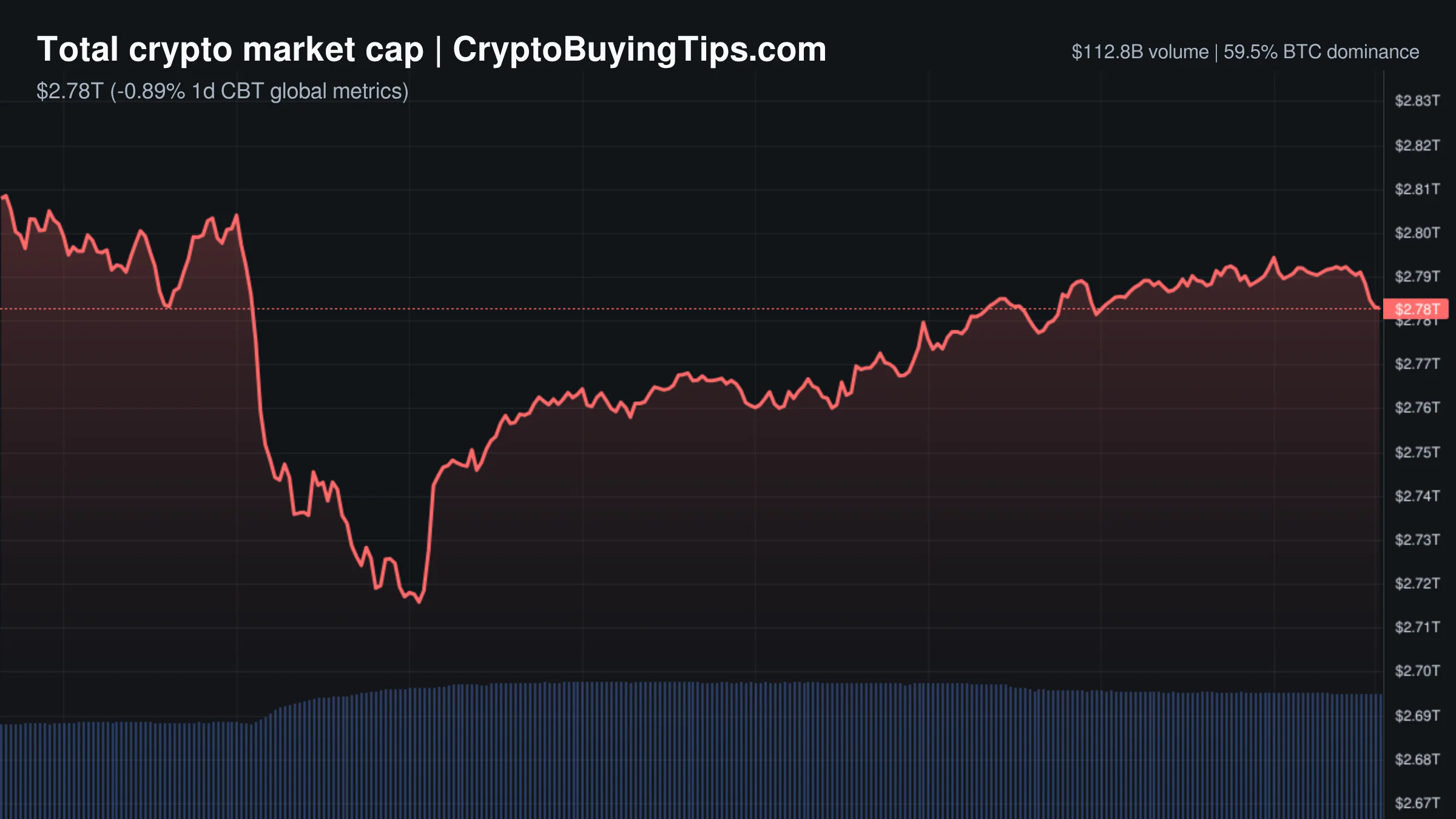
Crypto Market Overview | Volume surges amid regulatory friction and institutional accumulation | October 9, 2026
Crypto market overview shows volume surging amid price dips; see how institutional accumulation contrasts with…
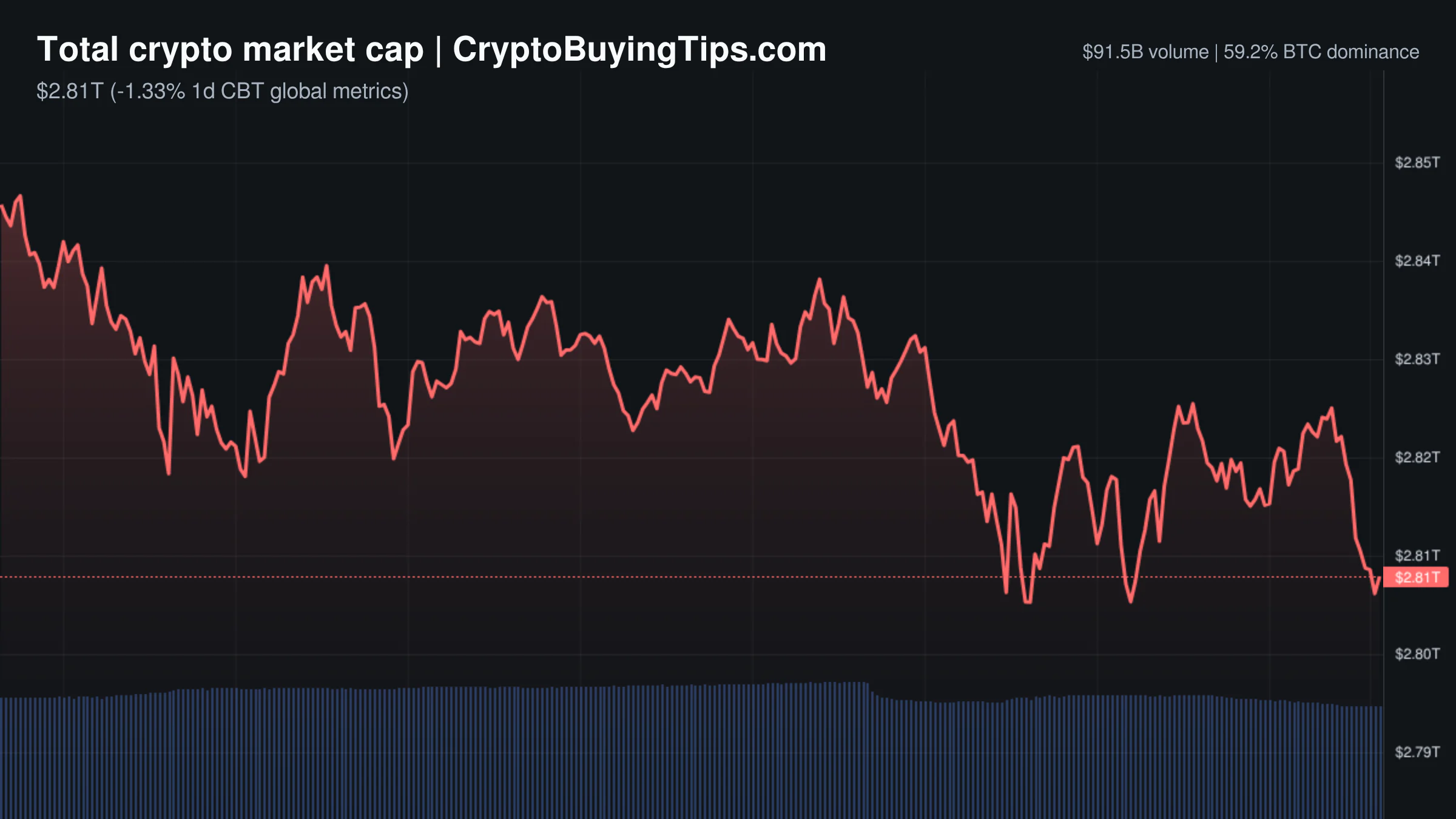
Crypto Market Overview | leveraged bets dwarf spot volume amid institutional outflows and regulatory pressure | October 8, 2026
Leveraged bets dwarf spot volume amid institutional outflows and regulatory pressure, detailing market dips in BTC and…
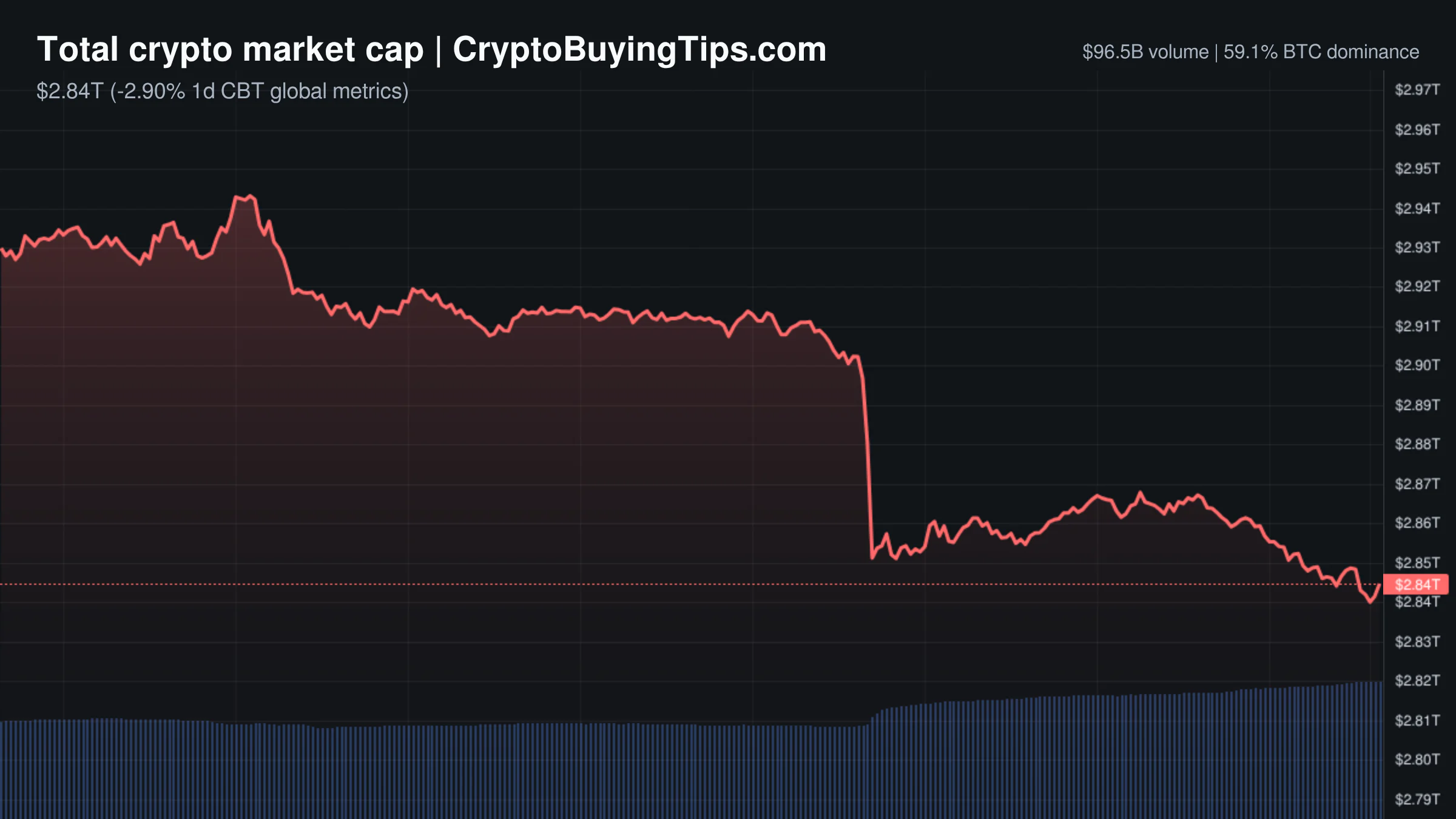
Crypto Market Overview | volume spikes amid institutional inflows despite quantum fears | October 7, 2026
Crypto market overview shows volume spikes amid institutional inflows despite quantum fears; see how ETF flows contrast…
Recent Articles
See moreHSBC is building AI payment rails while OpenAI war-games a catastrophe
The financial world seems to be installing high-end pipes while simultaneously rehearsing for an earthquake.…
Ethereum gas fees are at a standstill. Here is why that is actually a warning
The quiet cost of transactions on Ethereum might feel like a bargain for beginners. Our read is that persistently low…
Moody's and central banks are legitimizing stablecoins while retail panics
The plumbing gets an upgrade, apparently without asking permission first. Stablecoin volume rises while overall market…
What is stablecoin dominance and why it is the most ignored lead indicator in crypto
The market seems greedy on paper, but our data suggests otherwise; stablecoin dominance acts as the true measure of…
Binance Coin Market Sentiment
Source: CoinMarketCap. Updated Oct 10, 2026, 11:01 PM
BNB to USD Converter

BNB
BNB
Rank
#4
$750.52