
Crypto Market Overview | Broad market pullback | May 16, 2026
Crypto Market Overview | Broad market pullback | May 16, 2026
Market overview
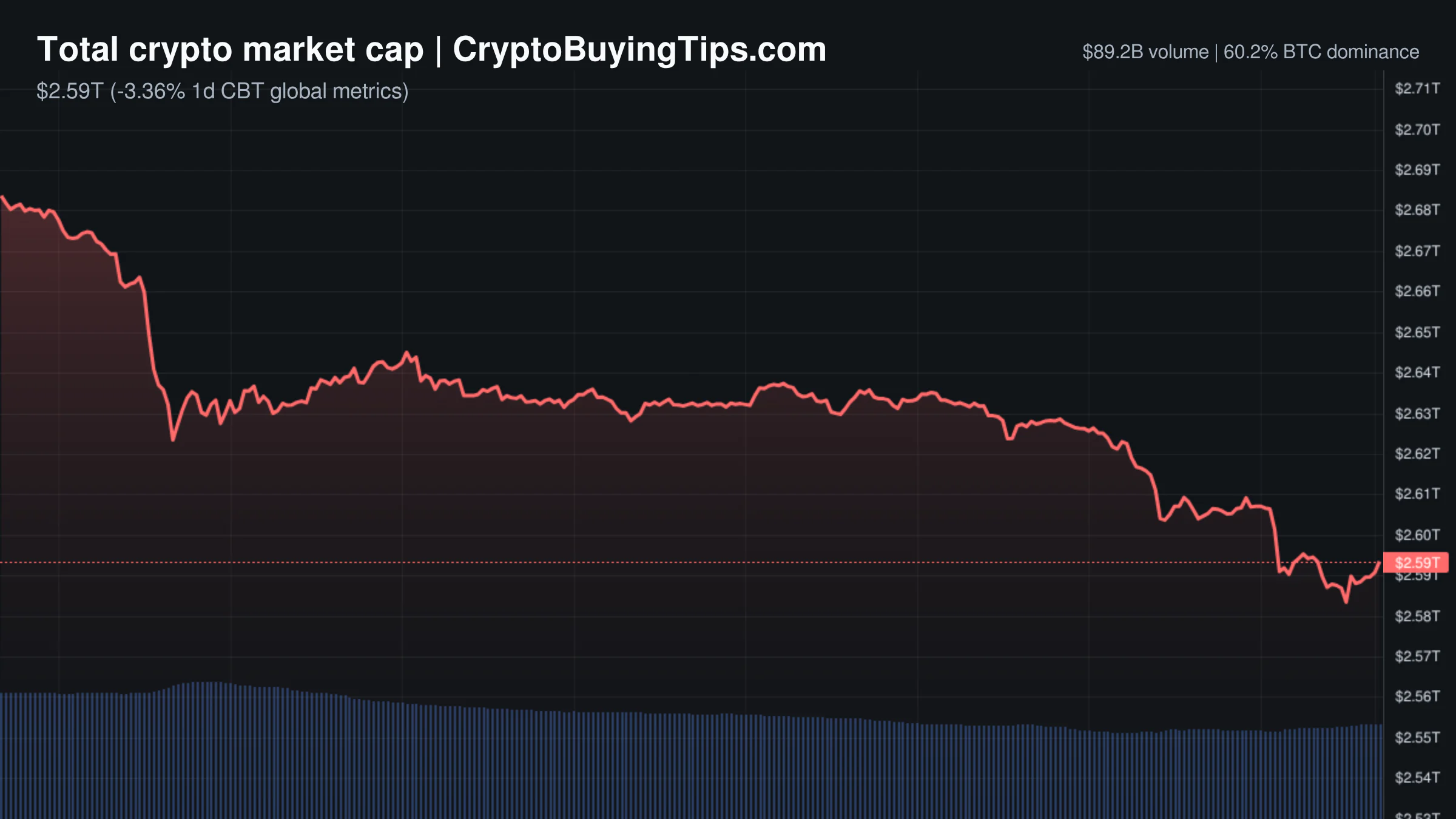
The crypto market is in a clear bearish slide, with the total market cap dropping to $2.59T, a decline of roughly 3.5% over the last 24 hours. This is not a localized dip in a few assets but a broad contraction. Both the CMC20 and CMC100 indices are sliding with almost identical intensity, around 3.8% to 3.9%, which suggests a systemic pullback rather than asset-specific weakness.
Liquidity is drying up across the board. Trading volume for spot, derivatives, and stablecoins has all plummeted by approximately 20%. When volume drops while prices fall, it typically indicates a lack of buying conviction. Traders are not stepping in to buy the dip, and instead, capital is moving to the sidelines.
Sentiment has shifted to neutral, with the Fear and Greed Index sitting at 42. This reflects a market that is cautious and waiting for a catalyst. While the Altcoin Season Index is at 31, the environment remains firmly in a Bitcoin season. Money is still heavily concentrated in Bitcoin relative to the rest of the market, though that dominance is currently providing little protection against the broader sell-off.
Bitcoin and Ethereum
Bitcoin is trading at $77,887.05, down 3.53% today. The primary driver here is a sudden reversal in institutional appetite. Spot Bitcoin ETFs have bled $1 billion in a single week, snapping a six-week streak of inflows. This rotation away from crypto and toward AI stocks creates immediate selling pressure that the spot market is struggling to absorb.
Ethereum is facing even steeper headwinds, down 4.05% to $2,171.33. The network is seeing an eerie lack of activity, with gas fees plummeting to between 0.13 and 0.14 Gwei. While low fees are usually a win for users, such extreme lows often signal a drop in on-chain engagement and DeFi utility. Furthermore, spot Ethereum ETFs have seen five consecutive days of outflows, with a $65.65 million loss on May 15 alone. This combined lack of institutional demand and on-chain momentum leaves ETH vulnerable to further downside.
Top crypto prices
The broader market is struggling to find a floor. BNB has fallen 5.04% to $653.67, and XRP is down 4.51% to $1.4. Solana has seen a more aggressive drop of 5.95%, now trading at $85.76.
TRON is the only major asset showing resilience, remaining flat at $0.3517. On the other end of the spectrum, Hyperliquid has plummeted 9.89% to $40.86. This sharp correction follows a period of high volatility and suggests that the recent rally may have been overextended.
News driving today's market
Security failures are weighing heavily on DeFi sentiment. THORChain confirmed a $10 million exploit, which led to a trading halt and a double-digit plunge for the RUNE token. The exploit involved a vulnerability in the GG20 threshold signature scheme that allowed private keys to be reconstructed. We previously covered Cross-Chain Bridges Risks and this incident reinforces why these "magic" bridges remain a primary attack vector.
Regulatory and structural risks are also surfacing. CME Group and ICE have warned U.S. regulators about potential market manipulation and sanctions evasion on Hyperliquid, which adds a layer of uncertainty to the protocol's long-term stability. Simultaneously, Bitcoin Depot has issued a going concern warning, signaling that it may not survive the next 12 months as ATM revenue falls and regulatory pressure grows. We previously covered DeFi wallet risks for more background.
On the bullish side, Saudi Arabia is moving to tokenize its economy to protect wealth from global shocks, with mandates already securing $12.5 billion for real estate tokenization. Additionally, Augustus Bank is nearing the launch of a U.S. national bank designed around AI and stablecoins, challenging the legacy clearing systems of global banks. These moves suggest a long-term shift toward programmable money, even if the short-term price action is bearish.
Social intelligence
Whale activity is showing some divergence from the general trend. On-chain data from @lookonchain reveals that a single trader spent 628 ETH (approximately $1.4 million) to acquire 4.21 billion $ASTEROID. This massive buy suggests a high-conviction bet on a smaller asset while the majors are sliding.
Institutional sentiment remains grim. @WuBlockchain reported that on May 15, none of the 12 U.S. spot Bitcoin ETFs saw net inflows, with a total net outflow of $290 million. This confirms that the "institutional wall" of money is currently retreating.
From a technical security perspective, Cardano founder Charles Hoskinson has warned that there is a greater than 50% chance that quantum systems could threaten current digital security by 2033. He noted that Cardano is already working on post-quantum security using lattice cryptography to prevent future private key compromises.
Smart Money Signals — Hyperliquid Leaderboard
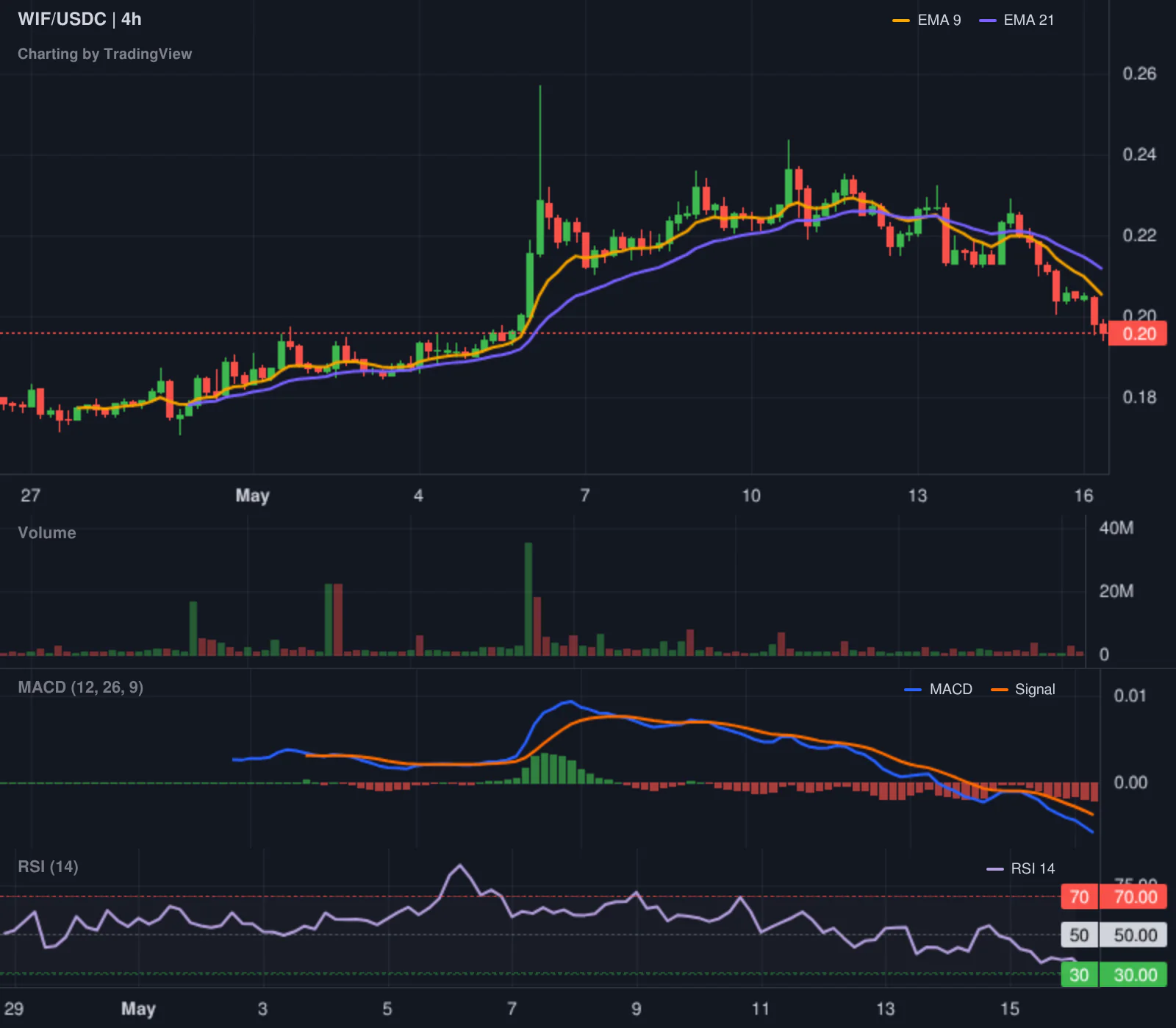
High-ROI traders on Hyperliquid are currently positioning for further downside in several key assets. Trader "thank you efee," who has a 107% 30-day ROI, opened a short position in WIF/USDC at $0.2153. This bet on a further drop in WIF aligns with the general risk-off sentiment seen across the altcoin market today.
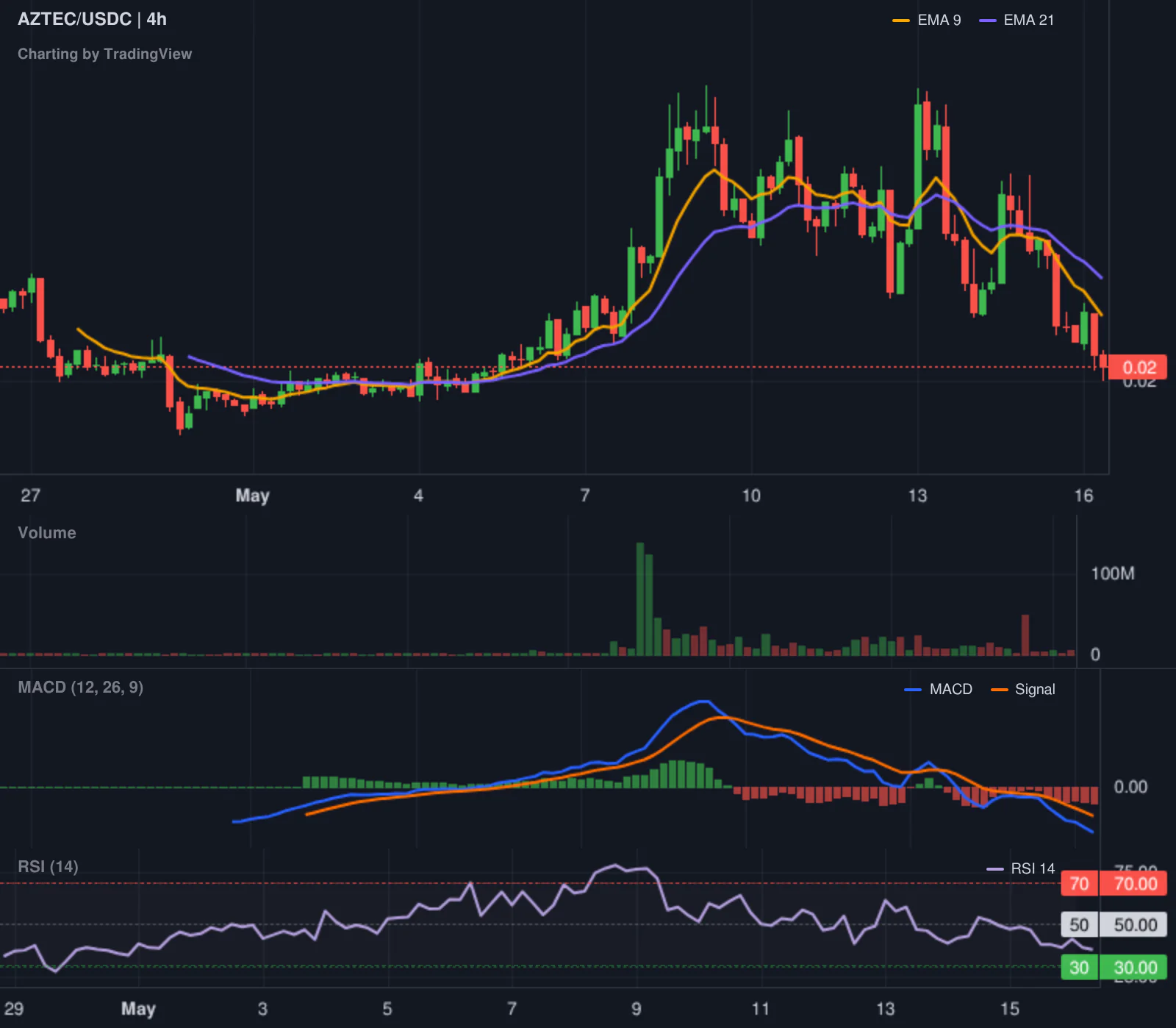
Another top trader, 0xf138b3, who boasts an 856% 30-day ROI, is playing both sides of the market. This trader opened a long position in AZTEC/USDC at $0.0225, suggesting a belief in the asset's relative strength. However, the same trader also opened a short position in TON/USDC at $2.1942, indicating a bearish outlook on the Toncoin ecosystem.
Altcoin Spotlight
Hyperliquid deserves attention despite its nearly 10% drop today. The asset has been a focal point of institutional interest following the launch of a spot ETF by Bitwise and Coinbase's role as a USDC treasury deployer. The current price crash to $40.86 is a sharp correction after a massive run. The tension between the bullish institutional catalysts and the bearish regulatory warnings from CME and ICE makes HYPE one of the most volatile and watched assets in the current cycle.
What to watch next
The immediate focus is on whether Bitcoin can stabilize around $77,000 or if the ETF outflows will trigger a deeper liquidation event. With $485 billion in open interest in perpetuals, the market is heavily leveraged. A further drop could trigger a cascade of liquidations that would drag the rest of the market down.
Keep a close eye on the THORChain recovery process. If the protocol successfully manages the refund portal and restores user trust, it could provide a blueprint for other DeFi protocols facing exploits. Conversely, if the recovery fails, it will likely accelerate the move toward more conservative, audited liquidity solutions. Finally, the macro environment remains the biggest wild card, as a potential interest rate reset could either provide the liquidity needed for a rebound or further incentivize the rotation into AI stocks and away from crypto.
Some links in this article may be affiliate links. We may earn a commission at no extra cost to you — this never influences our analysis or coverage.

Sigrid Voss
Crypto analyst and writer covering market trends, trading strategies, and blockchain technology.
More Articles
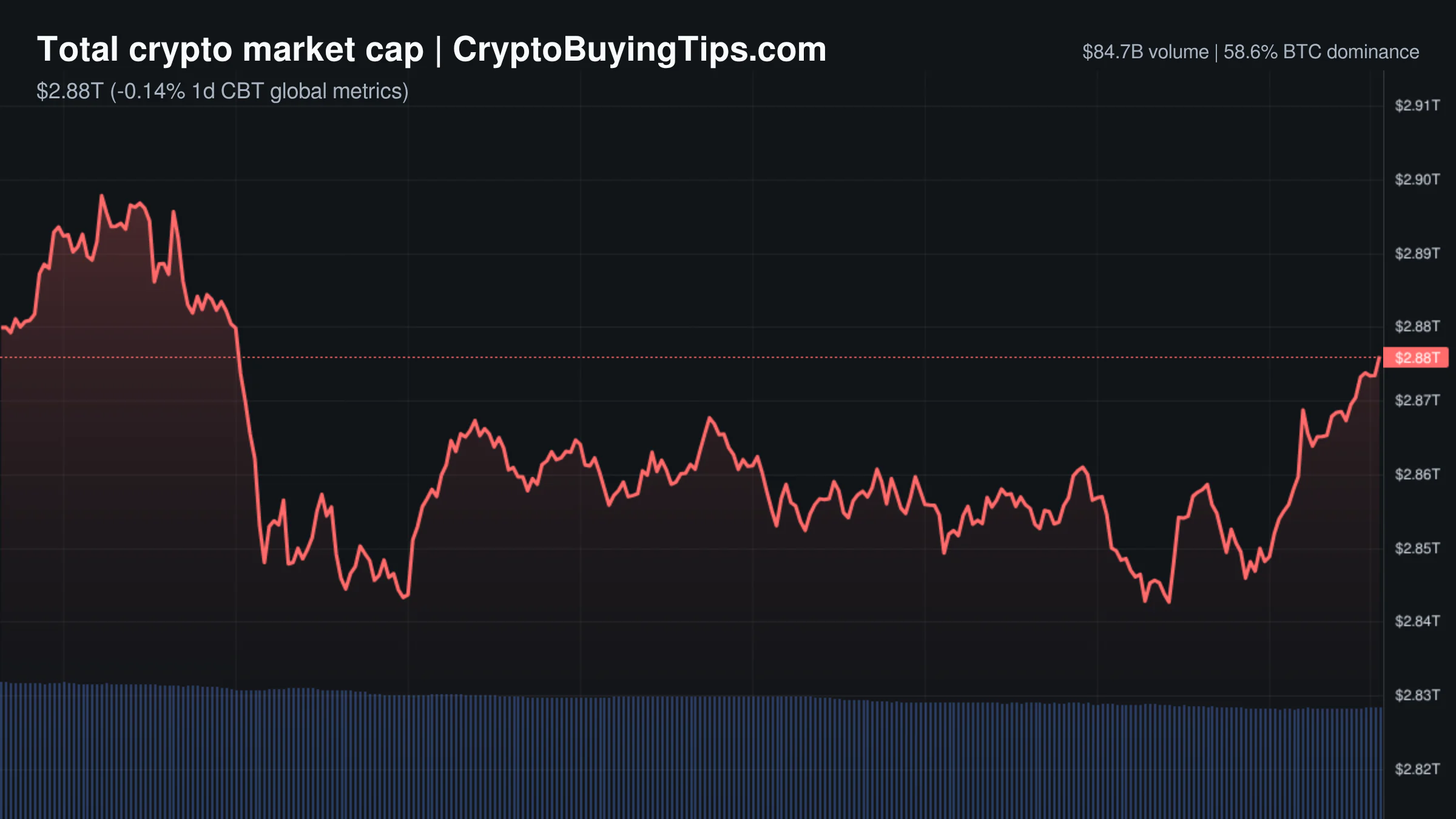
Crypto Market Overview | Volume collapses as institutional rails clash with regulatory friction | September 30, 2026
Volume collapses as crypto rails clash with regulation; see how market cap dipped 2.32% while ETF flows continue to move…

NEAR just got an ETF while the SEC is falling apart
The SEC seems rather preoccupied with its own structural integrity; meanwhile, institutional money appears quite…
Crypto Market Overview | Leveraged bets drive gains amid expanding institutional rails | September 29, 2026
Leveraged bets drive gains amid expanding rails; see how $1.04 trillion in derivatives volume impacts crypto market…

Hyperliquid whales are loading ETH while the rest of the market ignores it
Whales are loading ETH while the rest of the market ignores it. Our Hyperliquid leaderboard tracker shows top traders…