

Vitalik wants Ethereum to be a store of value because the gas data says he has to
Ethereum gas is currently sitting at 0.06 Gwei. For the average user, this is a bargain. For anyone trying to argue that Ethereum is a high-utility world computer driving value through network demand, it is a disaster. This collapse in on-chain activity provides the necessary context for the recent pivot from Vitalik Buterin. He is now arguing that the market should view the vitalik buterin store of value eth narrative as the primary driver of the asset's price. We previously covered Ethereum gas fee disconnect for more background.
What happened
Vitalik Buterin has shifted the investment thesis for Ether. Rather than relying on the ultrasound money narrative, which depends on high transaction volumes to burn ETH and create deflation, Buterin suggests that ETH should be valued for its store of value properties bitcoinfoundation.org.
The logic is a simple tradeoff. More available blockspace makes transactions cheaper, but lower fees mean less ETH is burned. If the network does not burn enough ETH to offset issuance, the price cannot be supported by scarcity created through usage. Instead, the value must come from the asset's properties as a secure, stakeable reserve asset finance.biggo.com.
This is not a random philosophical whim. It is a response to the reality of the network.
Why the vitalik buterin store of value eth pivot is a data necessity
The public narrative often treats these shifts as visionary leadership. Our global metrics feed suggests it is more like a captain noticing the ship has stopped moving and deciding to call it a floating hotel.
When our metrics show gas at 0.06 Gwei, it means the demand for blockspace on Layer 1 has essentially vanished. Gas is the unit that measures the computational effort required to execute operations on the network ethereum.org. When that price drops to near zero, it is a sign that the utility of the main chain is at a standstill.
We have flagged this trend before. We previously covered how Ethereum gas costs explained at 0.14 Gwei was already a warning sign of subdued demand. Since then, the numbers have only gotten worse.
The utility narrative requires a virtuous cycle. More users lead to more transactions. Those transactions lead to higher gas fees, which lead to more ETH being burned. This increases scarcity and price. That cycle has broken. The migration of activity to Layer 2 solutions has worked too well. The main chain is now a settlement layer that is too quiet to sustain its own valuation through burns alone.
If you cannot rely on the burn, you must rely on the hold. By repositioning ETH as a store of value, Buterin is attempting to decouple the price of the token from the daily activity of the network. He is asking the market to stop looking at the empty streets of the mainnet and start looking at the security of the vault.
The utility trap
The problem with the utility argument is that it creates a paradox. Ethereum wants to be scalable and cheap to attract users. But the current tokenomics reward the network for being expensive and congested.
If the network becomes truly efficient and cheap, the burn mechanism becomes irrelevant. We see this in the current data. The market is in a state of Fear, with the Fear & Greed Index at 27. BTC dominance has climbed to 60.21%. Capital is rotating out of altcoins and into the one asset that has already claimed the store of value title: Bitcoin.
Ethereum is now fighting for the same space. The argument is that staking transforms ETH into a functional store of value by providing a yield on a secure asset. This is a more honest position than pretending that a 0.06 Gwei gas price is a sign of a thriving ecosystem.
What we're watching next
The transition from a utility play to a store of value play is not a flip of a switch. It requires a change in how institutional investors model the asset.
We are monitoring two specific triggers.
First, the BTC dominance level. At 60.21%, Bitcoin is vacuuming up the safe haven capital. For the store of value narrative to work for ETH, we need to see a stabilization of dominance. We want to see a rotation back into ETH that is not driven by meme-coin mania but by staking yields and long-term reserves.
Second, the gap between L1 gas and L2 growth. If L1 gas stays at these basement levels, the ultrasound money narrative is dead. We will continue to track if the store of value pivot manages to support the price even as the mainnet remains a ghost town.
The world computer is currently a very quiet library. Buterin is simply suggesting that we value the library for the rarity of its books rather than the number of people walking through the door.
Related Tickers
Some links in this article may be affiliate links. We may earn a commission at no extra cost to you — this never influences our analysis or coverage.

Sigrid Voss
Crypto analyst and writer covering market trends, trading strategies, and blockchain technology.
More Articles
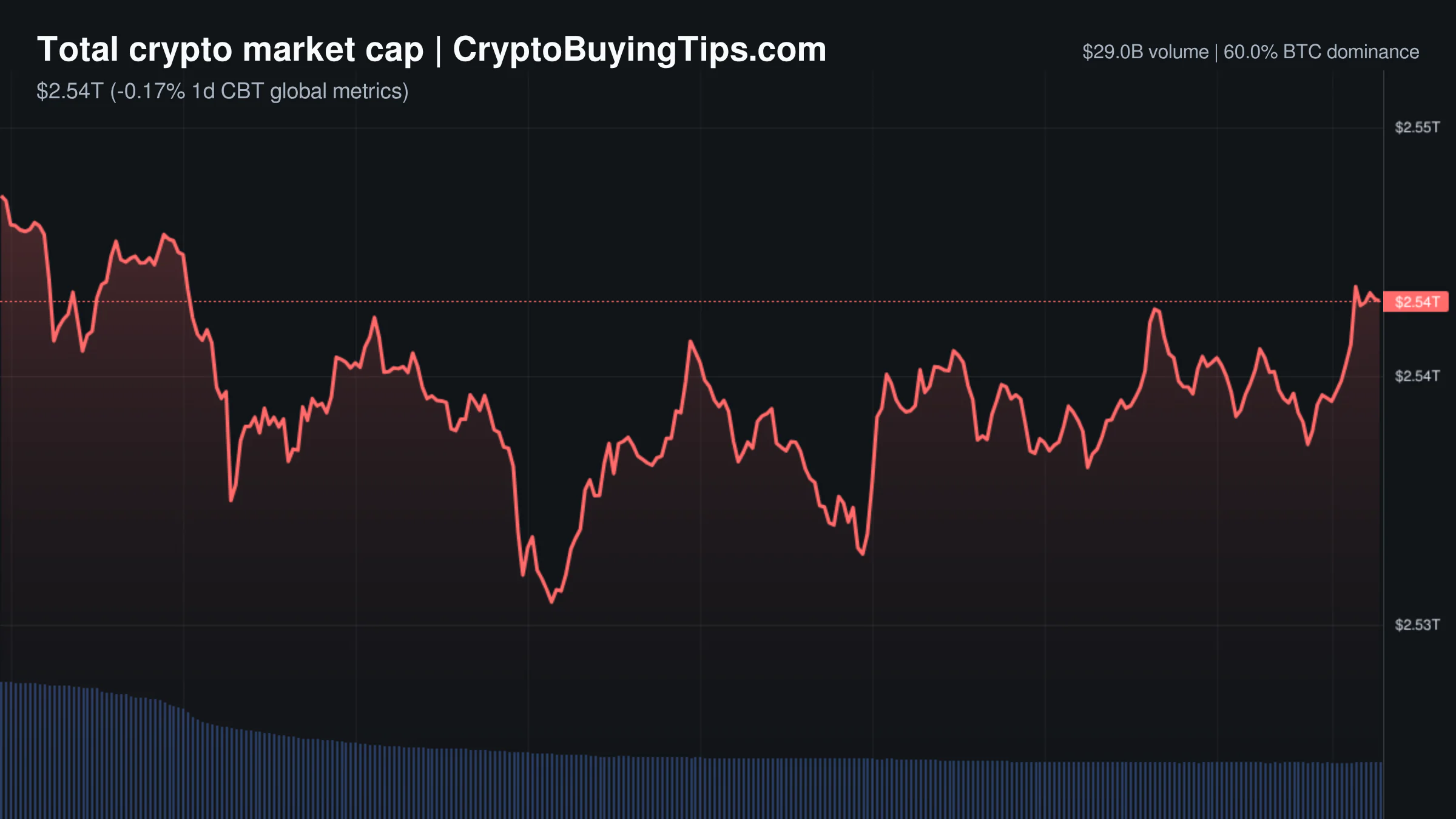
Crypto Market Overview | volume collapse amid regulatory heat hitting centralized exchanges | November 8, 2026
Crypto market overview shows volume collapse amid regulatory heat hitting centralized exchanges; see why liquidity is…

The $1.28B ETF exodus is real but the signal scanner sees a different story
The $1.28B ETF exodus sounds dramatic enough to warrant an emergency meeting; our signal scanner suggests that headline…
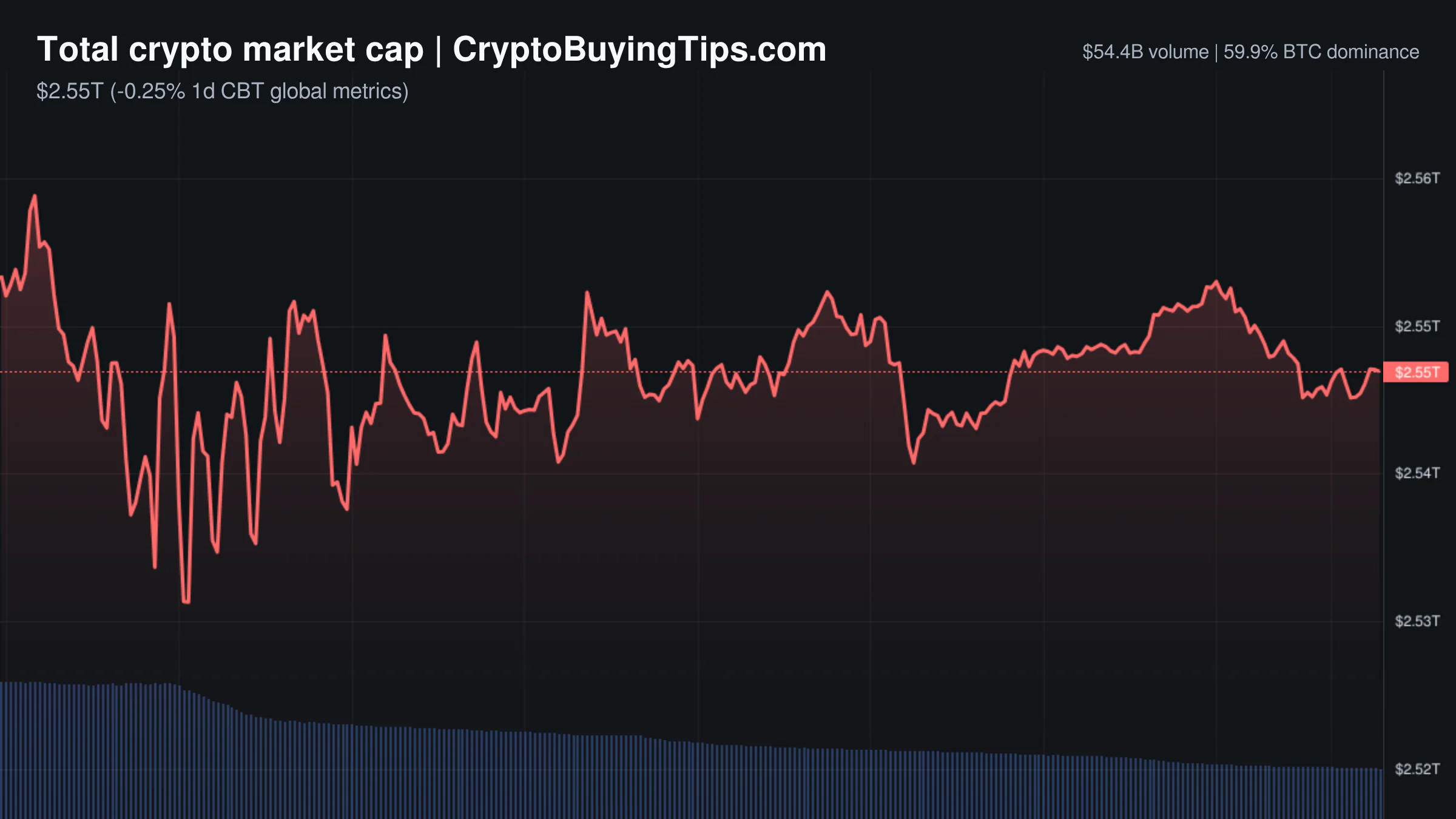
Crypto Market Overview | volume collapse amid regulatory crackdowns and whale accumulation | November 7, 2026
Crypto market overview shows volume collapse amid regulatory crackdowns and whale accumulation data points to internal…

Whales are buying the ETH dip while the altcoin season index stays frozen
Whales treat market dips like clearance sales while retail sentiment suggests otherwise; professional capital appears…