

Paraguay's banks just collapsed. Here is how self-custody actually works
The recent reports of banking instability in nations like Paraguay, where local banks have collapsed and left a huge portion of the population locked out of their accounts, force a fundamental question: what is crypto self custody? For most people, a bank is a black box. You put money in, a number goes up on a screen, and you assume the money is there. When the box breaks, you find out that your "balance" was actually just a promise from a third party that they would pay you back if you asked. We previously covered related angles in borrowing against bitcoin and Oil.
The short answer
Self-custody is the act of holding your own private keys to your digital assets rather than trusting a bank or an exchange to hold them for you. In simple terms, it means you are the only person with the "password" required to move your funds on the blockchain. If the entity you bought your crypto from goes bankrupt, your assets remain untouched because they were never actually in the entity's possession.
Why intermediaries fail and self-custody matters
Systemic banking failures demonstrate that relying on centralized custodians means trusting a third party, which is precisely what self-custody eliminates. When a bank collapses, it is usually because they have lent out your deposits or made bad bets with them. You aren't a customer; you are an unsecured creditor.
Our news scoring system rated the Paraguay bank lockout story 9/10 for novelty, and for good reason. It is a textbook example of counterparty risk. In the traditional world, you have no choice but to accept this risk. In crypto, you can opt out.
The current market sentiment reflects this general nervousness. The Fear & Greed Index currently sits at 31/100, which is firmly in "Fear" territory. When people stop trusting the institutions that hold their money, they start looking for exits. The problem is that many crypto users have simply traded one centralized bank for another by leaving their assets on an exchange.
How does what is crypto self custody work in practice?
To understand the mechanics, you have to stop thinking of a wallet as a purse that holds coins. A crypto wallet does not actually hold your money; your money lives on the blockchain. The wallet simply holds your private keys.
Think of it like a glass locker in a public square. Anyone can see what is inside (the public key/address), but only the person with the physical key can open it and move the contents (the private key).
When you use a custodial service, like a major exchange, the exchange holds the key. They let you move funds around their internal ledger, but they are the ones who actually sign the transaction on the blockchain. If they freeze your account or go bust, you cannot open the locker.
With self-custody, you generate your own keys. This means you are solely responsible for security, but you are also immune to bank failures. Given that the total crypto market cap is roughly $2.53T, the amount of capital currently sitting in custodial "lockers" is staggering. If a systemic failure hit the largest exchanges, the result would look exactly like the chaos in Paraguay.
The data shows capital fleeing centralized points
We often see a pattern where macro instability triggers a flight toward non-custodial assets. Our signal scanner flagged a correlation between macro instability and stablecoin dominance, which currently stands at 9.663464004944398.
When the traditional banking system looks shaky, traders often move into stablecoins. But there is a catch. If you hold those stablecoins on an exchange, you have not actually escaped the banking problem; you have just moved your risk to a different company. True risk mitigation only happens when those assets move into a self-custodied wallet.
Putting it into practice
If you are moving from a custodial setup to self-custody, the process is straightforward but requires a change in mindset. You are moving from a "forgot password" world to a "you are the bank" world.
First, you need a wallet. For small amounts, a software wallet on your phone is fine. For anything you cannot afford to lose, you need a hardware wallet. These devices keep your private keys offline, meaning a hacker cannot steal your funds via a phishing link or a compromised laptop. We generally suggest something like the Ledger Nano Gen5 for beginners because it removes the risk of "blind signing" through a secure screen.
Once you set up a wallet, you will be given a recovery seed phrase (usually 12 or 24 words). This phrase is the master key to your funds. If you lose your hardware wallet, this phrase lets you recover your money on a new device. If someone else gets this phrase, they own your money.
The process looks like this:
- Generate a new wallet and write down your seed phrase on paper (never store it in a cloud notes app or a photo).
- Send a small "test amount" of crypto from your exchange to your new address to ensure it arrives.
- Move the remaining balance once you are comfortable with the process.
The trade-off is simple. You trade the convenience of a "reset password" button for the certainty that no government, bank, or CEO can tell you that your money is gone. In a world where banks can lock out 60% of a country's population overnight, that trade looks increasingly reasonable.
Related Tickers
Some links in this article may be affiliate links. We may earn a commission at no extra cost to you — this never influences our analysis or coverage.

Sigrid Voss
Crypto analyst and writer covering market trends, trading strategies, and blockchain technology.
More Articles
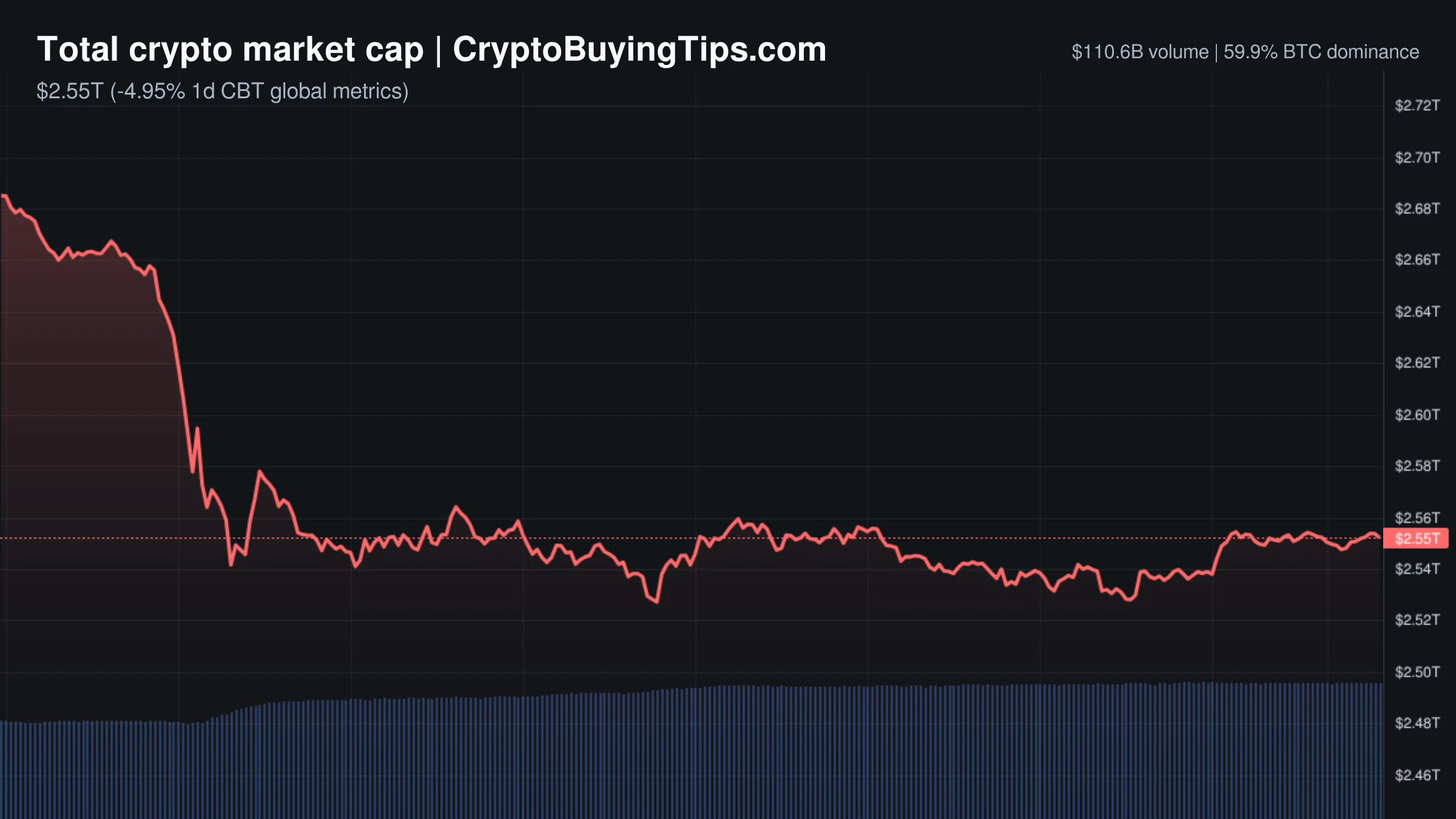
Crypto Market Overview | Systemic shocks and institutional selling drive broad selloff | November 6, 2026
Systemic shocks and institutional selling drive broad selloff as crypto market cap falls 7.17% amid high volatility.
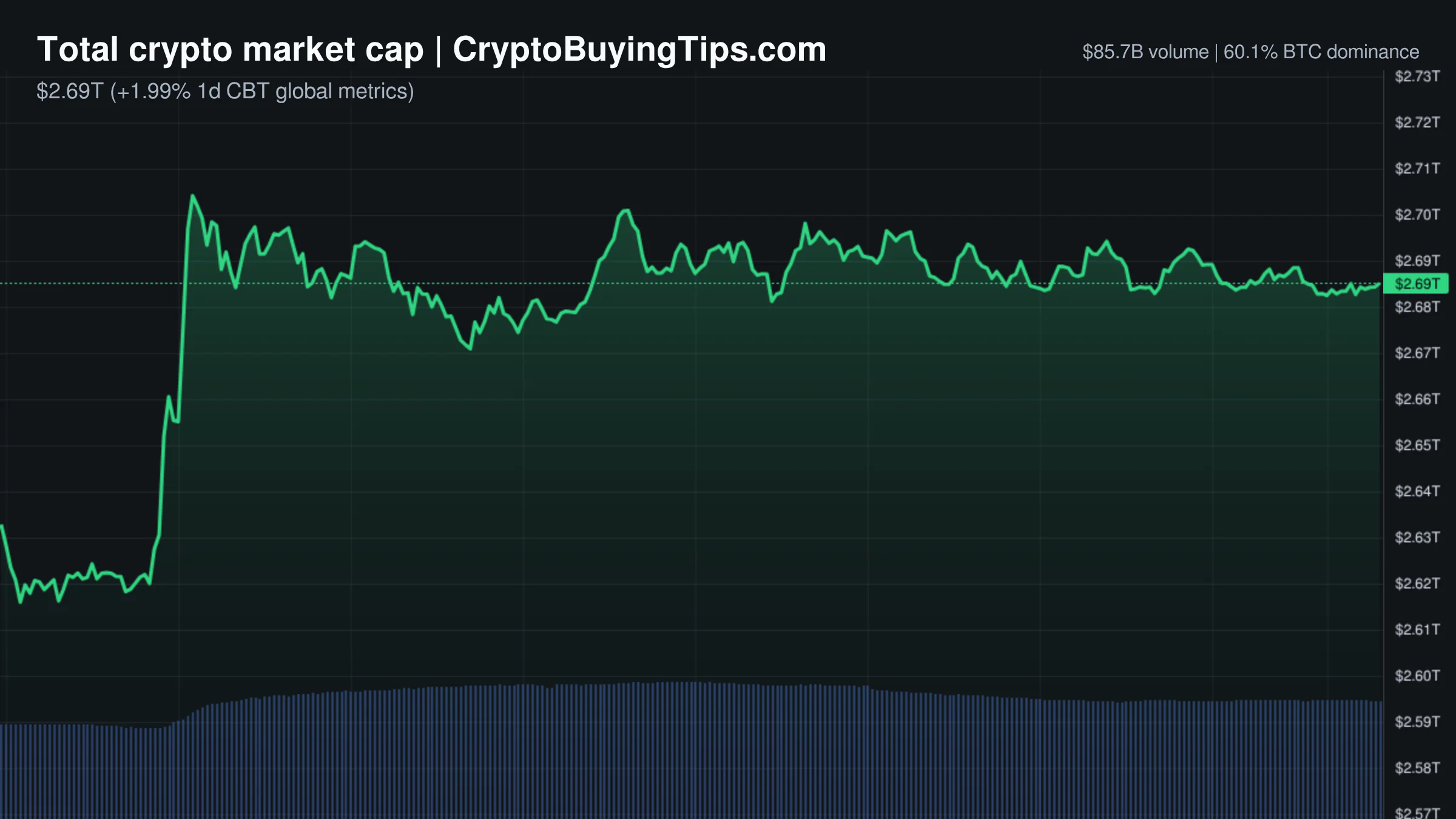
Crypto Market Overview | leverage dominates as institutional inflows meet political uncertainty | November 5, 2026
Crypto market overview shows leverage driving activity as institutional inflows meet political uncertainty; see our read…

Washington is arguing about the midterms while Wall Street tokenizes the world
Washington debates midterms while global finance quietly moves assets onto the ledger. Security tokenization isn't…
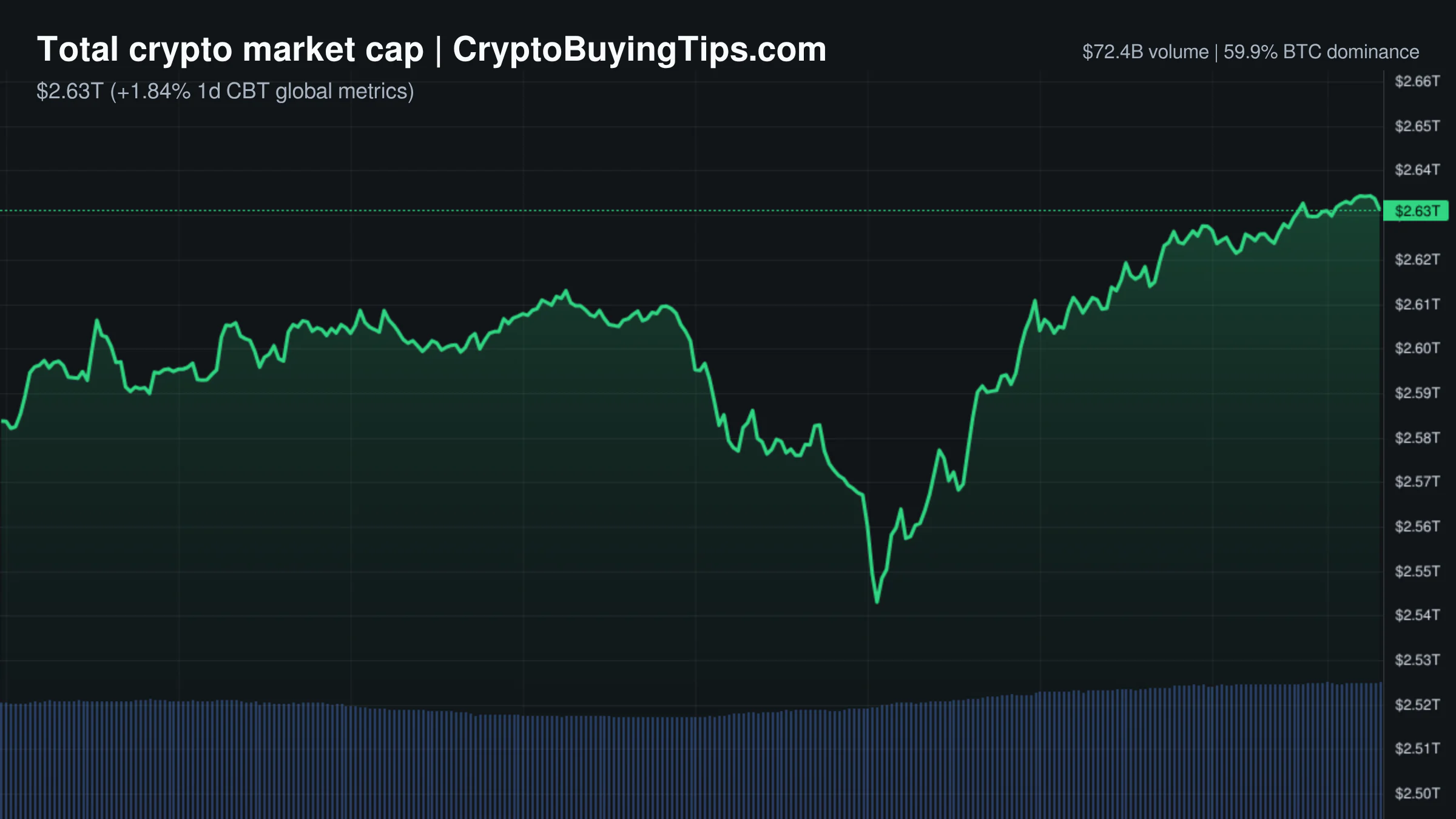
Crypto Market Overview | Leveraged bets dominate volume amid fear and institutional regulatory shifts | November 4, 2026
Leveraged bets dominate volume amid fear and institutional regulatory shifts; see our market overview on BTC, ETH, and…