
Bitcoin and the Fed: Why BTC is Now Leading the Market
I remember the sheer panic of 2008. I was on the trading floor when Lehman collapsed, and the feeling was simple: everything is breaking. For years, I viewed Bitcoin through that same lens of fragility. It was a reactive asset. If the Fed hiked rates, Bitcoin dropped. If they printed money, Bitcoin soared. But something has shifted. I've noticed that Bitcoin is no longer just reacting to the Federal Reserve; it's often front-running the narrative. Much of this comes down to the impact of bitcoin etfs on market trends, which have fundamentally changed who is buying and why.
Why Bitcoin is leading the macro narrative
In the past, Bitcoin was the "canary in the coal mine" for risk-on appetite. Now, it's becoming the lead indicator. The arrival of spot ETFs has plugged Bitcoin directly into the plumbing of Wall Street. We aren't just dealing with retail traders in their bedrooms anymore. We have institutional portfolios that rebalance based on macro projections.
When these funds move, they create a gravitational pull that the rest of the market follows. I've seen this play out over the last few months. Instead of waiting for a Fed announcement to move, the market now prices in the expected outcome weeks in advance through ETF inflows. It's a feedback loop. The institutional appetite for Bitcoin as a hedge against currency debasement is now a primary driver, not a secondary one.
The impact of bitcoin etfs on market trends and liquidity
The shift in liquidity is the part that really interests me. We are seeing a decoupling from the old "risk-on, risk-off" binary. While the NASDAQ is hovering around $584.98, Bitcoin is carving its own path.
The ETFs have created a permanent bid that didn't exist in 2019 when I first started covering this space. Back then, a bad headline could wipe out 20% of the market cap in an hour. Now, the institutional floor is deeper. But this doesn't mean it's a straight line up. I'm currently seeing a Fear & Greed Index of 30, which tells me the crowd is nervous. However, the institutional side doesn't always share that fear. They operate on different time horizons.
What I'm watching now
I'm keeping a close eye on the Altcoin Season Index, which is currently sitting at 49. It's neutral. This tells me that while Bitcoin is leading, the "wealth effect" hasn't fully trickled down to the smaller caps yet. In my experience, Bitcoin leads the charge, and then the money rotates.
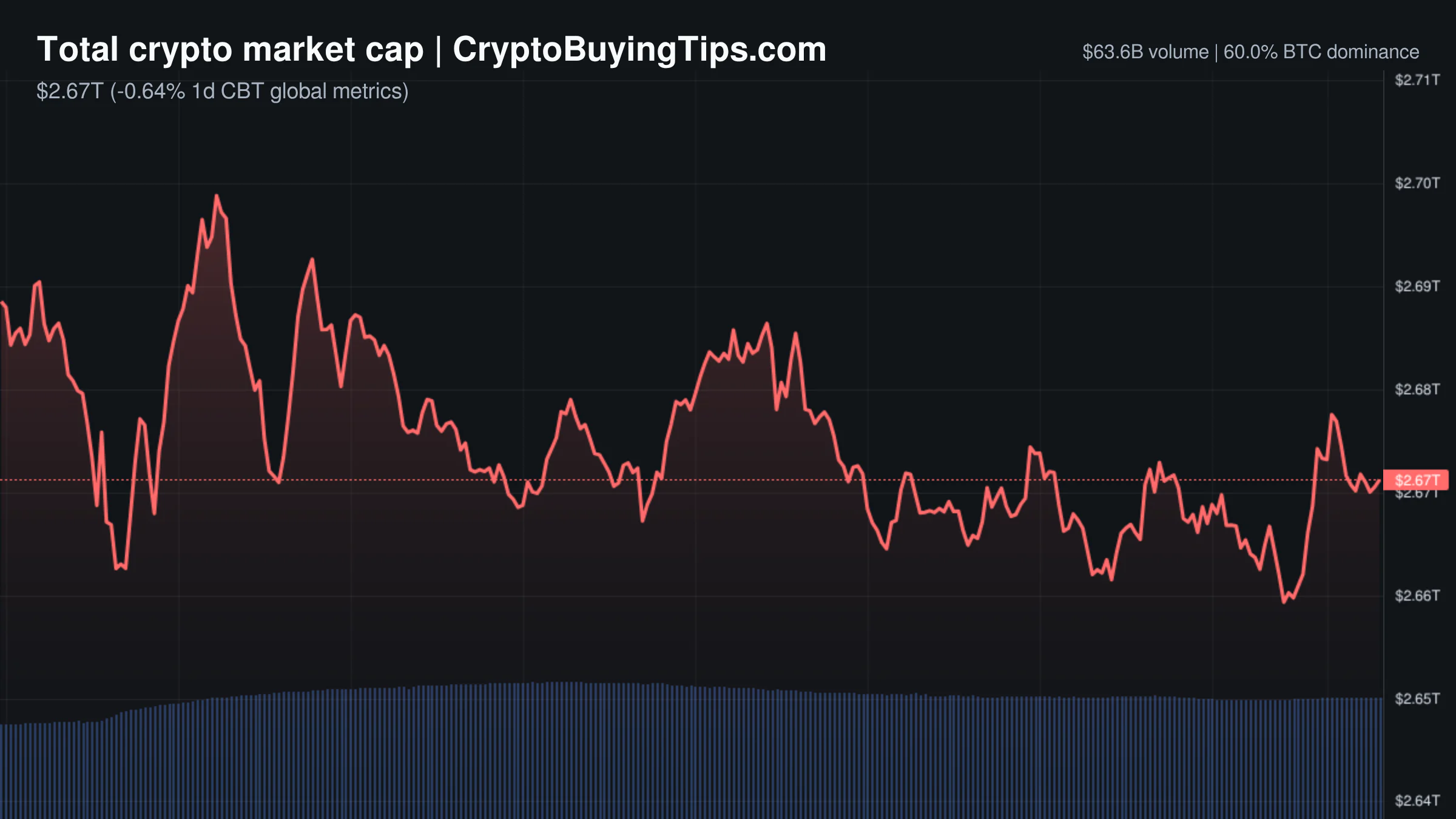
I'm also watching the total market cap, currently at $2.52T. If we see a sustained move higher in BTC dominance while the Fear & Greed index remains low, it's usually a sign that smart money is accumulating while the retail crowd is shaking out.
For those who are still trying to get their first position or move off a slow platform, I usually suggest Bybit. I prefer their interface for managing positions when the macro volatility kicks in. It's cleaner than most of the legacy options I've used.
The bottom line
Bitcoin is no longer a side show to the Federal Reserve. It has become a primary tool for gauging institutional sentiment toward the US dollar. I'm not a permabull, and I know the Fed still has the power to crush markets with a surprise rate hike. But the power dynamic has changed. Bitcoin is now the lead actor, and the Fed is the supporting cast.
Related Tickers
Some links in this article may be affiliate links. We may earn a commission at no extra cost to you — this never influences our analysis or coverage.

Sigrid Voss
Crypto analyst and writer covering market trends, trading strategies, and blockchain technology.
More Articles
Crypto Market Overview | Volume surges as regulatory wins clash with institutional friction | October 27, 2026
Market volume surges amid regulatory wins and institutional friction; see our overview on crypto's mixed signals for…

Ripple just got a US banking license. Here is why the RLUSD stablecoin is the real story
The industry's insistence on being purely decentralized seems to take a brief holiday when the OCC grants Ripple a US…
Crypto Market Overview | Derivatives volume dwarfs spot activity amid macro caution and ETF inflows | October 26, 2026
Derivatives volume dwarfs spot activity amid macro caution and ETF inflows; see our market overview for key asset…

Hyperliquid whales are net short HYPE as $37M hits Coinbase
The crowd loves the hype, but our tracker shows whales betting otherwise as $37M hits Coinbase. Professional positioning…