

Bitcoin-Backed Bonds: What Does Moody's Rating Mean for Crypto?
The first Moody's rating on a Bitcoin-backed bond landed this week, and I've been thinking about it constantly. Strive Asset Management, the firm run by Vivek Ramaswamy, received a Ba3 rating for their proposed Bitcoin Bond. That's junk territory in traditional finance speak, but here's the thing: the fact that a major rating agency even touched this is significant.
What Moody's rating on a Bitcoin-backed bond actually means
Let me back up for anyone unfamiliar with how bond ratings work. Moody's, along with S&P and Fitch, are the gatekeepers of institutional debt markets. Their ratings determine whether pension funds, insurance companies, and other large institutions can legally buy certain bonds. A Ba3 rating sits just below investment grade. It's speculative, sure, but it's rated.
I covered the 2008 financial crisis, and I remember how rating agencies became villains for slapping AAA on mortgage-backed garbage. The agencies have been cautious ever since, especially with anything novel. For Moody's to rate a Bitcoin-backed instrument at all tells me something has shifted in how traditional finance views crypto collateral.
The bond structure itself is interesting. Strive plans to raise capital backed by Bitcoin holdings, with the proceeds used to acquire more Bitcoin. It's a leveraged bet on BTC appreciation, which makes the speculative rating appropriate. But the mechanism creates a template that other issuers could follow.
Why this matters more than most institutional adoption news
I've grown skeptical of "institutional adoption" headlines. Half of them turn out to be nothing. A bank files a trademark application. A hedge fund mentions crypto in a footnote. The market pumps 3% and then forgets.
This feels different to me. Rating agencies don't rate things for fun. The process is expensive, time-consuming, and requires detailed documentation. Strive had to convince Moody's that their Bitcoin custody arrangements, their collateral management, and their legal structure met standards rigorous enough to assign a rating. That infrastructure now exists for others to copy.
The timing is notable too. We're sitting at a Fear & Greed Index of 32, firmly in fear territory. Total market cap is $2.58T with BTC dominance hovering around 63% by my calculation of the broader metrics. Institutions aren't launching Bitcoin bond products because retail is euphoric. They're building during the quiet periods.
The skeptic's view (and I share some of it)
I don't want to oversell this. A Ba3 rating isn't exactly a ringing endorsement. It means Moody's thinks there's substantial credit risk, and they're right. Bitcoin can drop 30% in a week. We've all lived through it. A bond backed by an asset that volatile will always carry risk premiums that make traditional fixed income investors uncomfortable.
There's also the question of whether this creates systemic risk. If Bitcoin-backed bonds become popular and BTC crashes, you get forced liquidations. Those liquidations push BTC lower, which triggers more liquidations. I've seen this movie before with mortgage-backed securities. The collateral correlates with itself in ways that models don't capture until it's too late.
But the counterargument is that Bitcoin's volatility has actually decreased over time. The 90-day realized volatility now is lower than it was in 2017 or 2021. And unlike mortgage pools, Bitcoin's supply is verifiable on-chain. You can audit the collateral in real time.
What I'm watching next
The real test will be whether this bond actually gets placed and at what yield. If institutional buyers show up despite the junk rating, expect more issuers to follow. If it struggles to find buyers, this might remain a curiosity rather than a trend.
I'm also watching for how this interacts with the spot Bitcoin ETFs. The ETFs gave institutions a way to get long BTC through familiar structures. Bitcoin-backed bonds give them a way to get yield exposure. These are different products for different parts of a portfolio.
For traders who want to position around institutional flows, I'd keep an eye on BTC accumulation addresses and ETF inflow data. If you're trading perpetuals to express a view on this, Bybit has some of the best liquidity for BTC pairs in my experience. Their funding rate data is also useful for gauging market sentiment.
The broader point is this: the infrastructure for Bitcoin as a treasury asset keeps getting built, piece by piece. A year ago, there was no spot ETF and no rated Bitcoin bonds. Now both exist. I'm not saying this means BTC goes to $200k next month. I am saying that the on-ramps for serious capital keep multiplying, and that matters over longer timeframes.
Related Tickers
Some links in this article may be affiliate links. We may earn a commission at no extra cost to you — this never influences our analysis or coverage.

Sigrid Voss
Crypto analyst and writer covering market trends, trading strategies, and blockchain technology.
More Articles
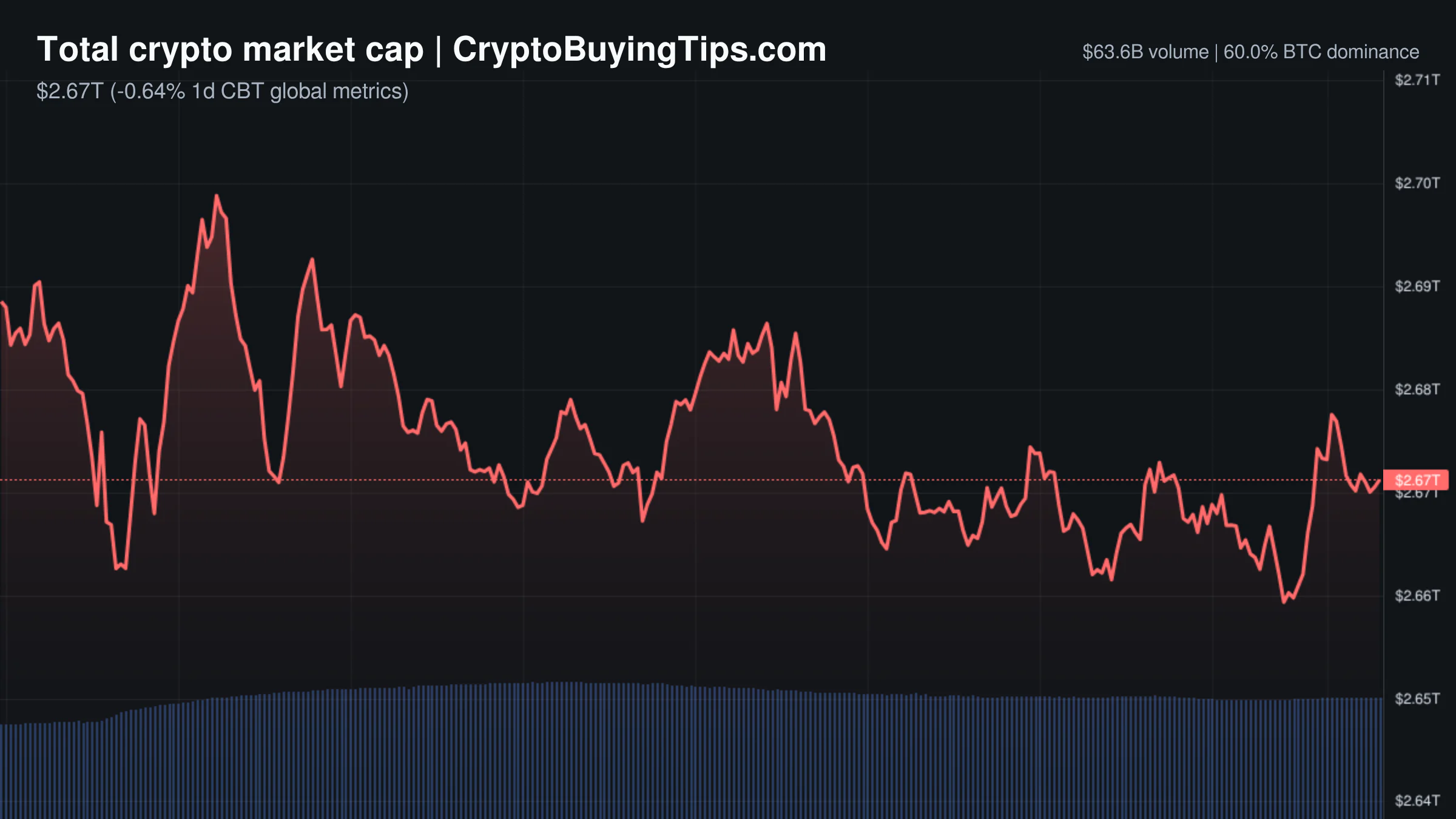
Crypto Market Overview | Volume surges as regulatory wins clash with institutional friction | October 27, 2026
Market volume surges amid regulatory wins and institutional friction; see our overview on crypto's mixed signals for…

Ripple just got a US banking license. Here is why the RLUSD stablecoin is the real story
The industry's insistence on being purely decentralized seems to take a brief holiday when the OCC grants Ripple a US…
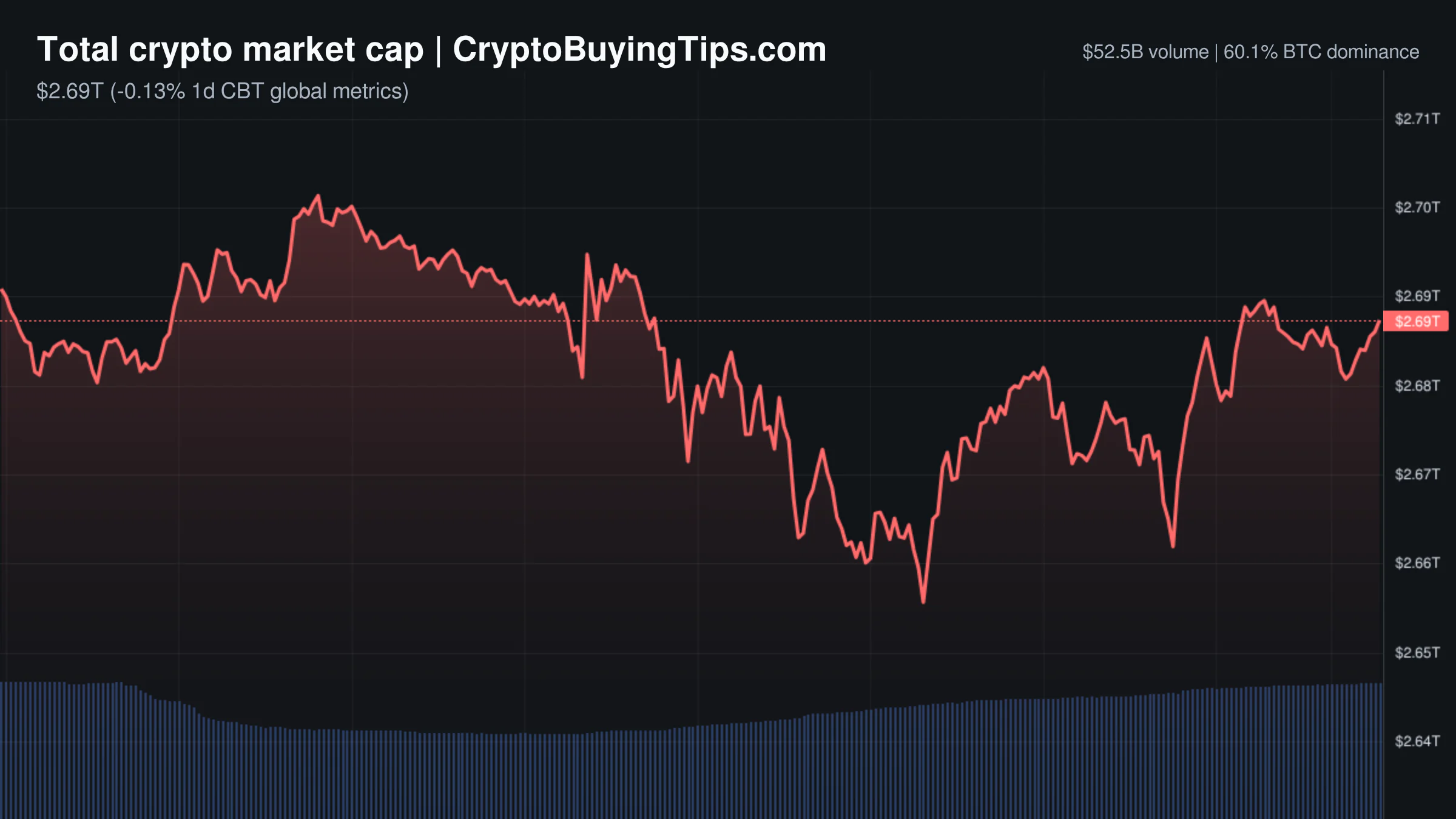
Crypto Market Overview | Derivatives volume dwarfs spot activity amid macro caution and ETF inflows | October 26, 2026
Derivatives volume dwarfs spot activity amid macro caution and ETF inflows; see our market overview for key asset…

Hyperliquid whales are net short HYPE as $37M hits Coinbase
The crowd loves the hype, but our tracker shows whales betting otherwise as $37M hits Coinbase. Professional positioning…