
BlackRock's IBIT options just beat Deribit and the offshore era is ending
I've spent a lot of time since 2019 watching the "crypto native" world act like a gated community. For years, if you wanted to actually hedge your Bitcoin or bet on volatility with any real precision, you had to go to Deribit. It was the wild west of options, dominated by offshore liquidity and a level of risk that would make a traditional fund manager sweat. But the tide has turned. BlackRock's IBIT options open interest has officially surpassed Deribit, and that is a massive deal. It means the center of gravity for Bitcoin price discovery is shifting from offshore platforms to regulated US exchanges. For a lot of people, the difference between spot etf and options etf is just a technicality, but for the market, it is a total regime change.
Why the shift to regulated options matters
When I first started tracking these markets, the "offshore" nature of crypto derivatives was seen as a feature. It meant fewer rules and faster innovation. But for the big money, it was a bug. Institutional traders don't like "offshore" because they can't easily justify the compliance risk to their boards.
By moving the action into IBIT options, the professionalization of Bitcoin is reaching its final stage. We aren't just talking about people buying the spot ETF to hold Bitcoin. We are talking about sophisticated players using options to hedge portfolios, execute complex spreads, and speculate on volatility within a legal framework they trust. When the biggest players in the world move their hedging to a regulated US product, the "crypto-native" exchanges lose their monopoly on the narrative.
The difference between spot etf and options etf
I get asked this a lot by friends who are just getting into the institutional side of things. A spot ETF, like the basic IBIT, is straightforward: you buy a share, and BlackRock holds the Bitcoin for you. You are betting that the price of Bitcoin goes up.
An options ETF, or more accurately, options on an ETF, is a different beast entirely. Instead of owning the asset, you are buying a contract that gives you the right to buy or sell the ETF at a specific price by a specific date. This allows for strategies that spot holding simply can't do. You can bet on the price staying flat, or you can protect your downside without selling your coins. It is the difference between owning a house and owning a contract that lets you buy that house at a fixed price in six months.
My take on the "offshore" decline
I'm not saying Deribit is going to vanish tomorrow, but the era where it was the undisputed king of Bitcoin volatility is over. I think this is actually healthy. The 2024-2025 period has shown us that the market can handle institutional volume without losing its soul, though it does feel less like a revolution and more like a standard financial asset now.
However, I do have a concern. As we move toward this "professionalized" market, we are seeing a massive drop in speculative energy. Look at the current data: derivatives volume is down nearly 40% in the last 24 hours. When the "degens" leave and the suits take over, the volatility often dries up. We might be entering a period where Bitcoin behaves more like a boring stock and less like the explosive asset that drew me in back in 2019.
How to handle the new market reality
If you are trading in this new environment, you need to be smarter about where you keep your assets. Whether you are playing the ETF game or still trading altcoins, the risk of keeping everything on an exchange is too high. I've seen too many platforms fail to realize that "regulated" doesn't always mean "safe."
For anyone holding a significant amount of Bitcoin, I always suggest moving it off the exchange. I personally prefer the Ledger Flex because it gives me that tactile E Ink touchscreen experience without costing as much as the high-end Stax. It uses a CC EAL6+ secure element chip, which is the gold standard for keeping your private keys away from hackers.
The market is maturing. We are moving away from the era of "trust me, I'm a crypto founder" and into the era of "here is the audited filing from BlackRock." It is less romantic, but for the long-term survival of this asset, it is exactly what needs to happen.
Some links in this article may be affiliate links. We may earn a commission at no extra cost to you — this never influences our analysis or coverage.

Sigrid Voss
Crypto analyst and writer covering market trends, trading strategies, and blockchain technology.
More Articles
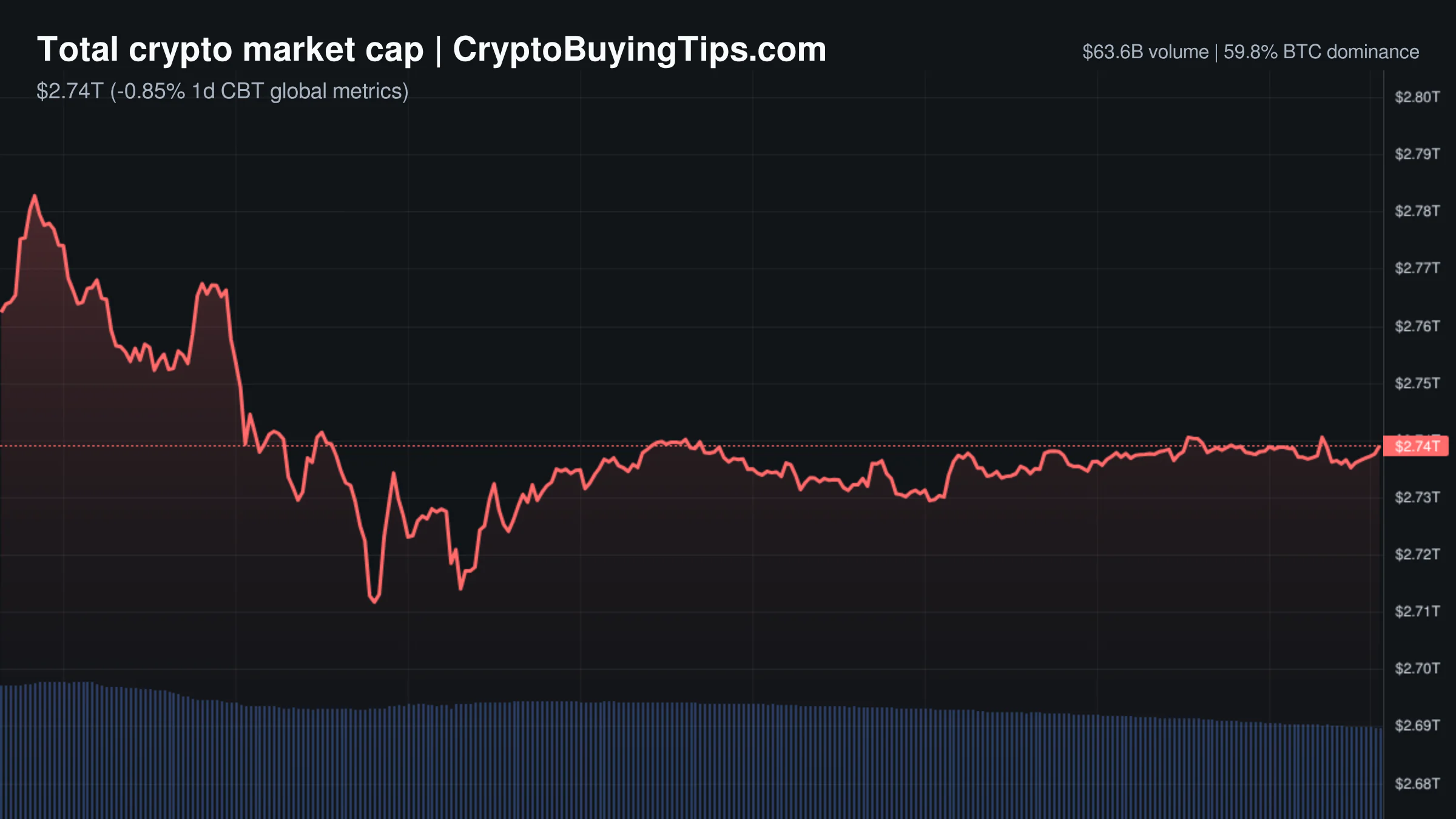
Crypto Market Overview | volume collapse amid macro pressure weighs on institutional flows | October 17, 2026
Market overview shows volume collapse amid macro pressure weighing on institutional flows; see how crypto is reacting to…

Speculators are ditching altcoins for tokenized Tesla stocks
Another day, another reason to question where all the money goes these days. Our signal scanner flagged a clear…
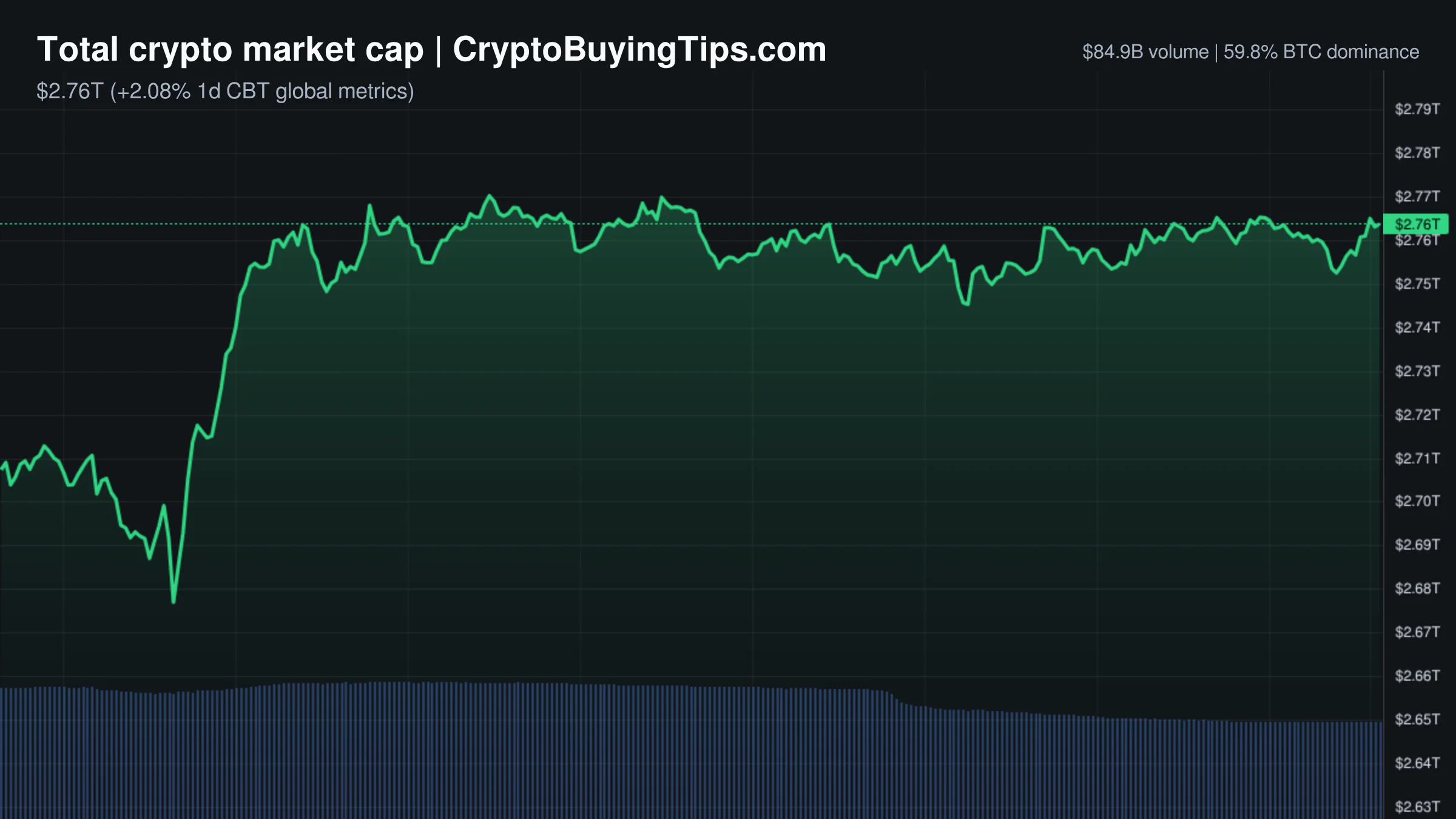
Crypto Market Overview | prices climb despite falling trading volume and stablecoin activity | October 16, 2026
Prices climb despite falling trading volume and stablecoin activity; see our market overview for context.

Wall Street is building its own rules while Congress argues
Wall Street seems to have decided waiting for Congress isn't worth the time. Major players like Mastercard are building…