

Ethereum is a coiled spring: volatility is spiking while gas fees vanish
I've been staring at the on-chain data for Ethereum this week, and something feels off. Usually, when the market expects a massive move, you see the network humming. You see gas fees climb because everyone is rushing to move funds, hedge positions, or mint something. But right now, we have a weird divergence. Implied volatility for ETH is sitting at 67.63, while Bitcoin is much calmer at 45.55. Yet, the actual network is a ghost town, with gas fees hovering between 0.46 and 0.77 Gwei.
When you look at an eth vs btc volatility comparison, this gap tells a specific story. The "smart money" in the derivatives market is pricing in a violent swing, but the actual users on the chain are barely moving. In my experience, this is what a coiled spring looks like. The tension is building in the options and futures markets, but the on-chain activity hasn't caught up yet.
What the data is telling me
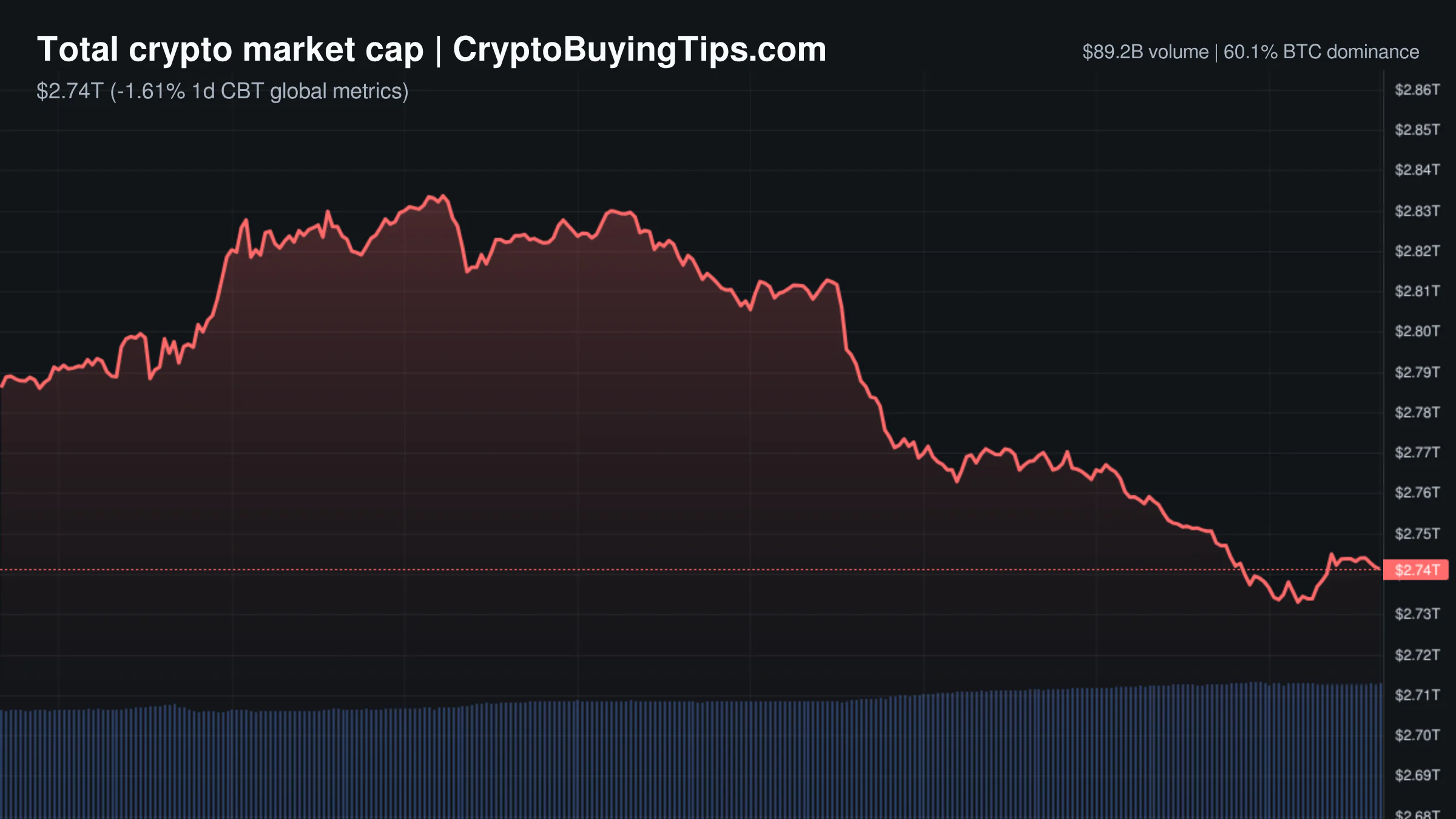
The numbers here are too stark to ignore. We have a Fear & Greed Index at 46, which puts us firmly in "Fear" territory. BTC dominance is creeping up to about 60.1%, meaning capital is rotating out of alts and back into the king. While the broader market is sliding, Ethereum is in this strange state of suspended animation.
The most telling metric is that implied volatility. A score of 67.63 for ETH compared to 45.55 for BTC means traders are paying a premium for ETH options because they expect a move that is significantly more aggressive than Bitcoin's. But look at the gas fees. Below 1 Gwei is practically unheard of during periods of high expected volatility. It means there is no congestion. No one is panic-selling or frantically rotating on-chain.
Why this divergence matters
This is a classic sentiment gap. The derivatives market is essentially betting that a catalyst is coming, but the spot holders are just sitting on their hands. When the move finally happens, it tends to be more violent because the on-chain liquidity is stagnant.
I've seen this pattern before. When the network is this quiet but the volatility pricing is this high, the breakout usually happens fast. If a positive catalyst hits, the rush to get back into ETH will send gas fees skyrocketing instantly. If it's a breakdown, the liquidation cascade will be just as sharp.
Right now, the market is in a consolidation phase. With the S&P 500 and NASDAQ both sliding slightly, the risk-off sentiment is present. But Ethereum is behaving like it's waiting for a signal.
How I'm playing this
I'm not a permabull, and I'm certainly not ignoring the fact that BTC dominance is eating the market. But the volatility gap is too wide to ignore. If I'm looking to position for this expected move, I want to be where the liquidity is deep and the fees don't eat my margins.
For those who want to trade this volatility without getting slaughtered by fees, I usually suggest MEXC. I prefer them for these kinds of setups because they have 0% maker fees on spot and futures. When you're playing a "coiled spring" trade, you might need to adjust your entries several times, and paying zero maker fees makes a huge difference in the long run.
What I'm watching next
I have my eye on two things. First, I'm watching for any spike in gas fees above 10 Gwei. That's the signal that the "ghost town" phase is over and the actual move has started. Second, I'm watching the BTC dominance level. If it hits a ceiling and starts to drop while ETH volatility stays high, that's the signal for a violent rotation back into Ethereum.
Until then, I'm staying cautious. The data says a move is coming, but it doesn't tell us the direction. It just tells us that when it happens, it won't be a slow climb. It'll be a jump.
Related Tickers
Some links in this article may be affiliate links. We may earn a commission at no extra cost to you — this never influences our analysis or coverage.

Sigrid Voss
Crypto analyst and writer covering market trends, trading strategies, and blockchain technology.
More Articles

Fidelity outflows and Ethereum OG dumps suggest a hidden exit
Another day of market data suggesting everything is fine until you look at the outflows and OG dumping. Institutional…
Crypto Market Overview | Leveraged bets surge amid regulatory clarity and institutional inflows | October 22, 2026
The market shows divergence between spot interest and leveraged bets amid regulatory clarity; see our overview here.

Volume is surging but prices are flat. Here is where the trigger is
Volume spikes while prices remain stubbornly flat; this divergence suggests an underlying battle between leveraged…
Crypto Market Overview | Leveraged speculation drives gains amid European regulatory uncertainty | October 21, 2026
Leveraged speculation drives crypto gains amid European regulatory uncertainty; see our market overview on BTC and ETH…