

Polygon's new shielded payments are a win for banks, but maybe not for cypherpunks
Most of us entered crypto because we wanted to get away from the prying eyes of big banks and government regulators. But if you look at the actual movement of money, the big players are just building their own walled gardens. Polygon's recent launch of shielded stablecoin payments is the perfect example of this shift. It is a technical achievement, but it raises a question that every cautious investor should ask: are shielded stablecoin payments legal? The answer depends entirely on who is holding the keys and who is doing the reporting.
The case for institutional privacy
For a big company or a hedge fund, privacy isn't about hiding money from the taxman. It is about trade secrets. If a major firm moves 500 million USDC to a specific address, the entire market can see it on a block explorer. Traders will front-run their moves, and competitors will know exactly what they are buying. This is why institutions hate the transparency of public blockchains.
Polygon is trying to solve this by allowing "shielded" transactions. This means the amount and the sender are hidden from the public, but the system still allows for "selective disclosure." In plain English, the company can hide the data from the world but show it to their auditor or a regulator.
I've been following the trend of banks moving into stablecoins for a while now. From Hong Kong licensing bank-issued tokens to European banks trying to speed up cross-border settlements, the goal is always the same. They want the speed of the blockchain without the "risk" of actual transparency. Polygon is giving them exactly what they want.
Why this feels like a compromise
I have mixed feelings about this. On one hand, it is a smart move to get more capital into the ecosystem. On the other hand, it feels like we are just rebuilding the old banking system on a new ledger.
The "shield" here isn't the kind of privacy we saw in the early days of Monero or Zcash. It is a compliance-first privacy. If the goal is to make the system palatable for the US Treasury or Morgan Stanley, then it is a success. But if the goal is financial sovereignty, this is just another layer of control.
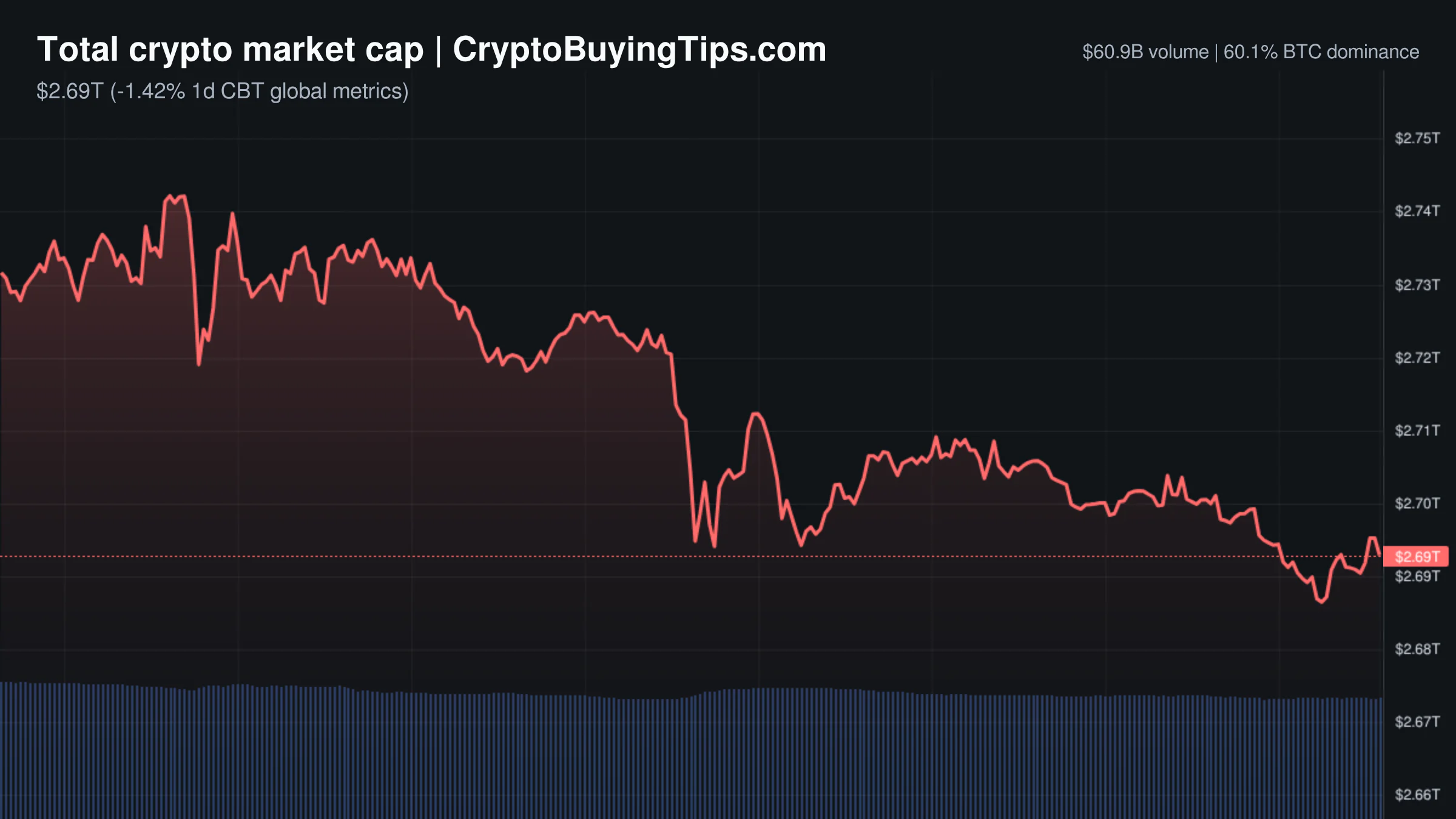
When I look at the current market, with a total market cap of $2.66T and Bitcoin still dominating the season, it is clear that the "institutional" narrative is winning. The banks aren't coming to crypto to be disrupted; they are coming to absorb the tech and keep the power.
Where the risks hide
The biggest risk here is the "backdoor" problem. If a protocol is designed to be "compliant," it means there is a mechanism to unmask users. I keep thinking about what happens when a government decides that "selective disclosure" should actually be "mandatory disclosure."
Once you build the infrastructure for regulators to peek into "private" transactions, you can't really take it back. We are moving toward a world where your stablecoins are essentially just digital bank accounts with a different name.
If you are worried about this level of surveillance, you might prefer tools that don't rely on centralized "shields." For those who actually care about privacy, I've found that using a non-custodial service like StealthEX is a better bet. They don't require account registration and they support privacy coins, which is a far cry from the "regulated privacy" Polygon is selling to the banks.
My final take
Polygon is doing what it does best: building a bridge for the enterprise world. They aren't trying to save the world from banks; they are trying to make banks comfortable using their chain.
Is this good for the price of the token? Maybe. Institutional adoption usually brings liquidity. Is it good for the philosophy of crypto? Probably not. But I've learned since 2019 that the market doesn't care about philosophy as much as it cares about who is providing the most efficient way to move money.
I'll be watching to see if other Layer 2s copy this "compliance-privacy" model. If they do, we can stop pretending that the "public" part of public blockchains is actually for everyone. It is becoming a public ledger for us and a private ledger for them.
Some links in this article may be affiliate links. We may earn a commission at no extra cost to you — this never influences our analysis or coverage.

Sigrid Voss
Crypto analyst and writer covering market trends, trading strategies, and blockchain technology.
More Articles
Crypto Market Overview | Derivatives volume dwarfs spot activity amid regulatory uncertainty and institutional outflows | October 24, 2026
Derivatives volume dwarfs spot activity amid regulatory uncertainty and institutional outflows, showing market…

Fidelity outflows and Ethereum OG dumps suggest a hidden exit
Another day of market data suggesting everything is fine until you look at the outflows and OG dumping. Institutional…
Crypto Market Overview | Leveraged bets surge amid regulatory clarity and institutional inflows | October 22, 2026
The market shows divergence between spot interest and leveraged bets amid regulatory clarity; see our overview here.

Volume is surging but prices are flat. Here is where the trigger is
Volume spikes while prices remain stubbornly flat; this divergence suggests an underlying battle between leveraged…