

The Clarity Act just cleared a major hurdle. Here is what it actually means for your stablecoins
If you have been holding USDT or USDC to earn a bit of extra yield, you need to pay attention. The Senate just cleared the "yield hurdle" in the Clarity Act, and it is a massive deal for how we use stablecoins. For anyone trying to wrap their head around stablecoin regulation for beginners 2026, this is the moment where the theory becomes reality. We are moving away from the Wild West and toward a system where the US government decides exactly how you can and cannot make money on your digital dollars.
What happened
The Clarity Act has been stuck in a tug-of-war between crypto lobbyists and the traditional banking sector. The main sticking point was the "yield hurdle." Basically, banks didn't want stablecoin issuers to be able to offer interest or rewards to users. Why? Because if you can earn 5% on a regulated stablecoin with a click of a button, you are less likely to keep your money in a traditional savings account.
The Senate has now cleared this hurdle, meaning the legislation can move forward with a framework that allows for certain types of yield. However, it is not a total victory for DeFi. The act seeks to bring stablecoin issuers under a regulatory umbrella that looks a lot like a banking license. This means more reporting, more KYC, and a much tighter leash on how reserves are managed.
Why it matters
In my experience, the "yield" part is where the real fight is. If the government restricts how issuers like Tether or Circle can pay out rewards, the incentive to hold these assets in centralized apps drops. I've been tracking this since 2019, and the biggest draw for the average person isn't the "tech" but the return. If the Clarity Act forces issuers to act like banks, we might see a split in the market.
On one side, you will have "compliant" stables that are safe, boring, and probably pay very little. On the other, you will have the offshore, non-compliant versions that offer high yields but carry the risk of being frozen or banned by the Treasury. I remember writing about Tether freezing $344 million in USDT recently, and this legislation only makes that risk more apparent. When the government gets a seat at the table, the "censorship-resistant" part of crypto starts to fade.
The second-order effect here is that the banking industry is finally admitting that stablecoins are a threat to their deposit base. They aren't fighting the technology; they are fighting the efficiency of the payment rails.
Where I land
I have mixed feelings about this. Part of me likes the idea of knowing that a stablecoin is actually backed by real assets and not just a collection of "promissory notes" and hope. But the other part of me hates how this pushes us back toward the same centralized systems that failed so spectacularly in the past.
If you are just starting out, the most important thing is to realize that "regulated" does not always mean "safe." It just means the rules are written by people in Washington. I still prefer keeping my assets in my own control. If you are moving your stables off an exchange to avoid this regulatory squeeze, I suggest using a hardware wallet. I personally use the Ledger Nano Gen5 because it is affordable and the E Ink touchscreen makes it much harder to accidentally sign a malicious contract when you are interacting with DeFi.
I think we are heading toward a world where USDC becomes the "official" digital dollar for institutions, while USDT remains the tool for traders and the "unbanked." The Clarity Act is the bridge that makes that divide permanent.
What I'm watching next
I am keeping a very close eye on the final language regarding reserve requirements. If the Act forces issuers to hold 100% of reserves in Treasury bills at a specific Fed-approved bank, the era of "aggressive" stablecoin growth is over.
I also want to see how the market reacts to the Altcoin Season Index, which is currently sitting at a low 36/100. We are firmly in a Bitcoin Season, and usually, when the macro regulatory news is this heavy, money flows back into BTC as a safe haven while people wait to see which stablecoins survive the legislative purge. If we see a sudden spike in BTC dominance above 60%, it is a sign that the market is nervous about the stablecoin transition.
Some links in this article may be affiliate links. We may earn a commission at no extra cost to you — this never influences our analysis or coverage.

Sigrid Voss
Crypto analyst and writer covering market trends, trading strategies, and blockchain technology.
More Articles
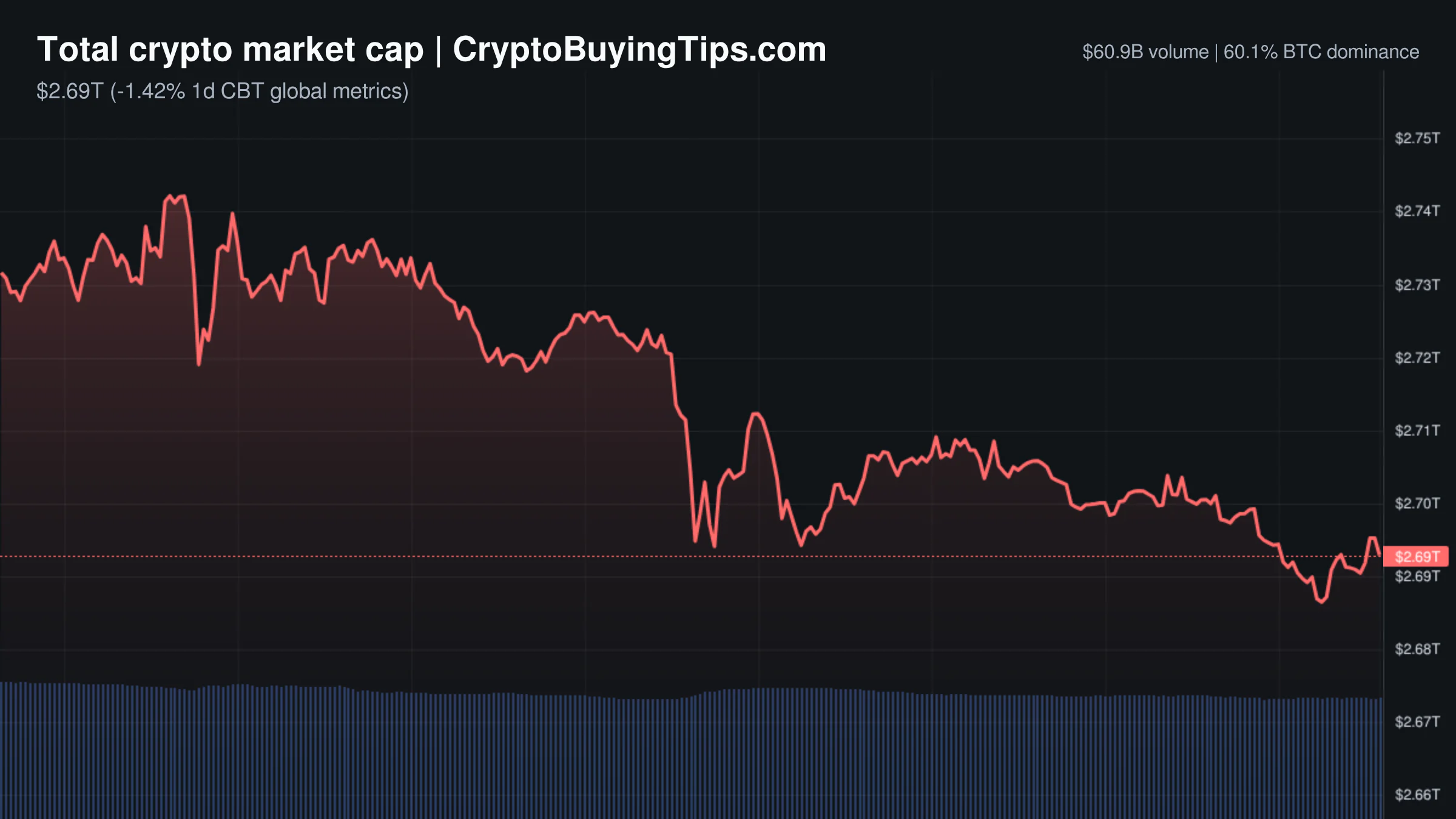
Crypto Market Overview | Derivatives volume dwarfs spot activity amid regulatory uncertainty and institutional outflows | October 24, 2026
Derivatives volume dwarfs spot activity amid regulatory uncertainty and institutional outflows, showing market…

Fidelity outflows and Ethereum OG dumps suggest a hidden exit
Another day of market data suggesting everything is fine until you look at the outflows and OG dumping. Institutional…
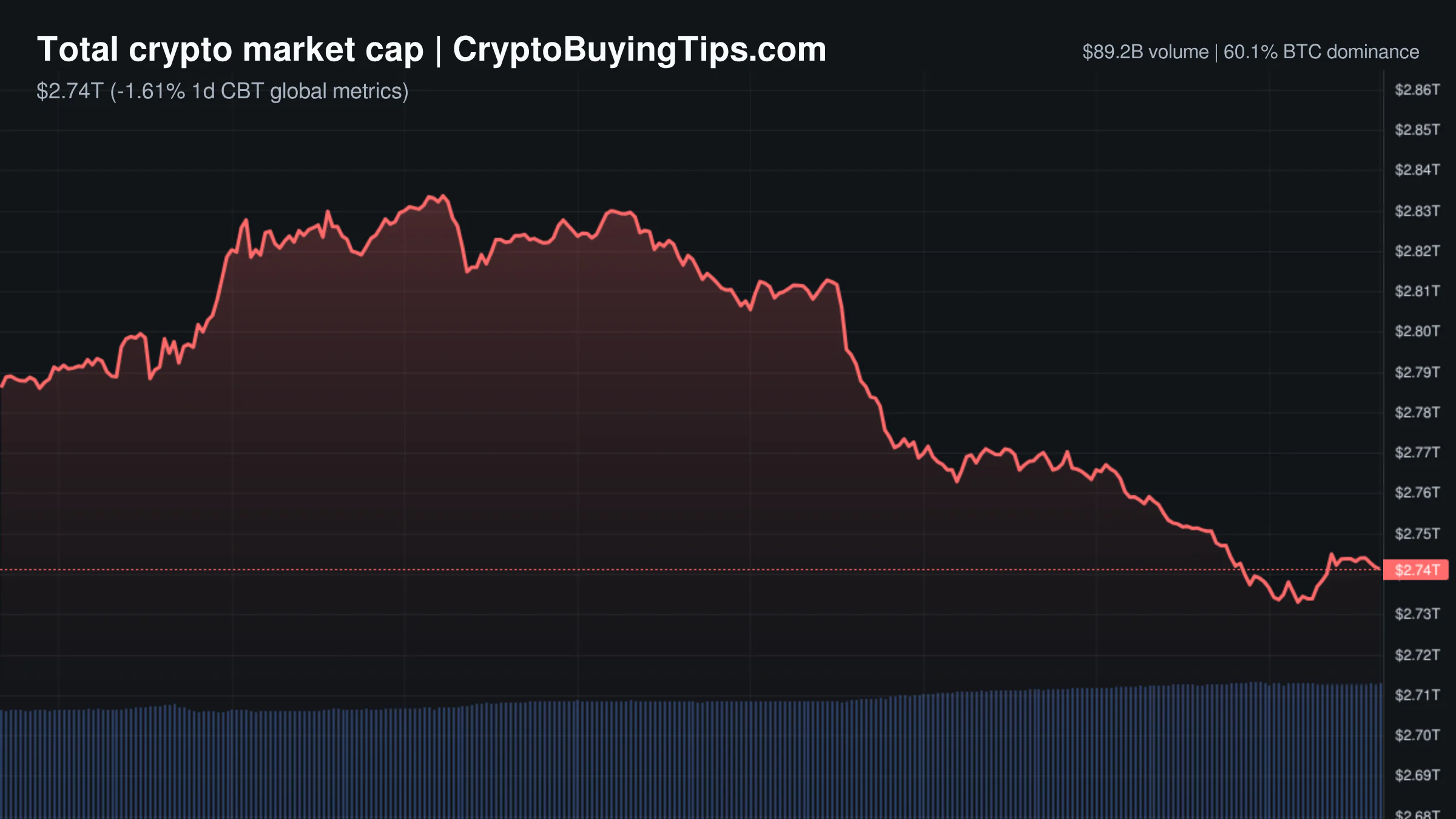
Crypto Market Overview | Leveraged bets surge amid regulatory clarity and institutional inflows | October 22, 2026
The market shows divergence between spot interest and leveraged bets amid regulatory clarity; see our overview here.

Volume is surging but prices are flat. Here is where the trigger is
Volume spikes while prices remain stubbornly flat; this divergence suggests an underlying battle between leveraged…