

Visa is building onchain banks and it changes everything for the underbanked
If you've ever tried to open a traditional bank account in a developing country, you know it is a nightmare of paperwork and arbitrary requirements. For millions of people, the "traditional" financial system is basically a closed club. Now, Visa is partnering with WeFi to build a system that bypasses this entirely. If you're wondering what are onchain banks, the simplest answer is that they are financial services that live on a blockchain rather than in a corporate headquarters, giving users a digital identity and a way to hold money without needing a physical branch.
How onchain banking actually works
In a normal bank, your money is just a number in a private database owned by a company. To get an account, you need a government ID, a permanent address, and a lot of patience. Onchain banks flip this. By using stablecoins like USDT and the Ethereum network, these "banks" allow users to create an account using a cryptographic wallet.
The real magic here is the integration of IBANs (International Bank Account Numbers) directly onto the blockchain. Visa and WeFi aren't just making a new app; they are building infrastructure where a user can have a globally recognized account number that settles in stablecoins. This means someone in a region with a collapsing currency can hold USDT, receive a payment from across the world, and spend it via a Visa-backed interface without ever stepping foot in a bank.
I've been tracking the shift toward tokenization since 2019, and this is the first time I've seen a corporate giant like Visa move beyond just "supporting" crypto to actually replacing the plumbing of the banking system.
Why this is a win for the underbanked
The "unbanked" is a term economists love to throw around, but for the people actually living it, it means you can't save securely or get a loan without predatory interest rates. Onchain banks solve this by removing the middleman.
When your account is on-chain, the "bank" doesn't need to verify your residency or your credit score in the traditional sense. Your history is your on-chain activity. This opens up a world of DeFi (Decentralized Finance) tools. Imagine a small business owner in Southeast Asia who can now take a loan against their stablecoin holdings via a smart contract, rather than begging a local lender for a high-interest loan.
But there is a catch. While the access is easier, the security is entirely on the user. In a traditional bank, if you lose your password, you go to the branch with your ID. In onchain banking, if you lose your private keys, your money is gone. That is why I always tell people starting out to get their assets off exchanges and into a hardware wallet. I personally prefer the Ledger Nano Gen5 for beginners because it brings an E Ink touchscreen to their most affordable tier for around $99, making it much harder to accidentally send funds to the wrong address.
The risks and the corporate irony
I have some mixed feelings about this. On one hand, providing financial tools to the underbanked is a genuine good. On the other, we are seeing the "decentralization" dream get absorbed by the biggest payment company on earth.
There is a real risk that these onchain banks will eventually just become another way for corporations to track every single cent you spend. We've seen the US Treasury push for more control over stablecoins recently, and if Visa is the primary gateway, they will have a front-row seat to all that data.
Also, the market is currently in a "Bitcoin Season," with the Altcoin Season Index sitting at 20/100. Most of the money is flowing into BTC, while the broader market, including ETH, is struggling. With ETH dominance at a meager 0.1% in some metrics and gas fees remaining low, the infrastructure is ready for this scale, but the appetite for altcoin-based utility isn't where it was during the 2021 hype.
My take on the shift
I think we are moving toward a world where the word "bank" will eventually just mean "a place that manages your keys." Visa isn't doing this out of the goodness of their heart; they are doing it because they see the writing on the wall. Traditional banking is slow and expensive. Onchain banking is instant and cheap.
I'm not saying this is a perfect utopia. The risk of smart contract bugs or regulatory crackdowns is always there. But for someone who has watched the traditional system fail ordinary people for decades, seeing the barriers to entry drop for millions of people is a net positive. I'll be watching closely to see if this actually empowers the user or if it just creates a more efficient way for Visa to collect fees.
Some links in this article may be affiliate links. We may earn a commission at no extra cost to you — this never influences our analysis or coverage.

Sigrid Voss
Crypto analyst and writer covering market trends, trading strategies, and blockchain technology.
More Articles
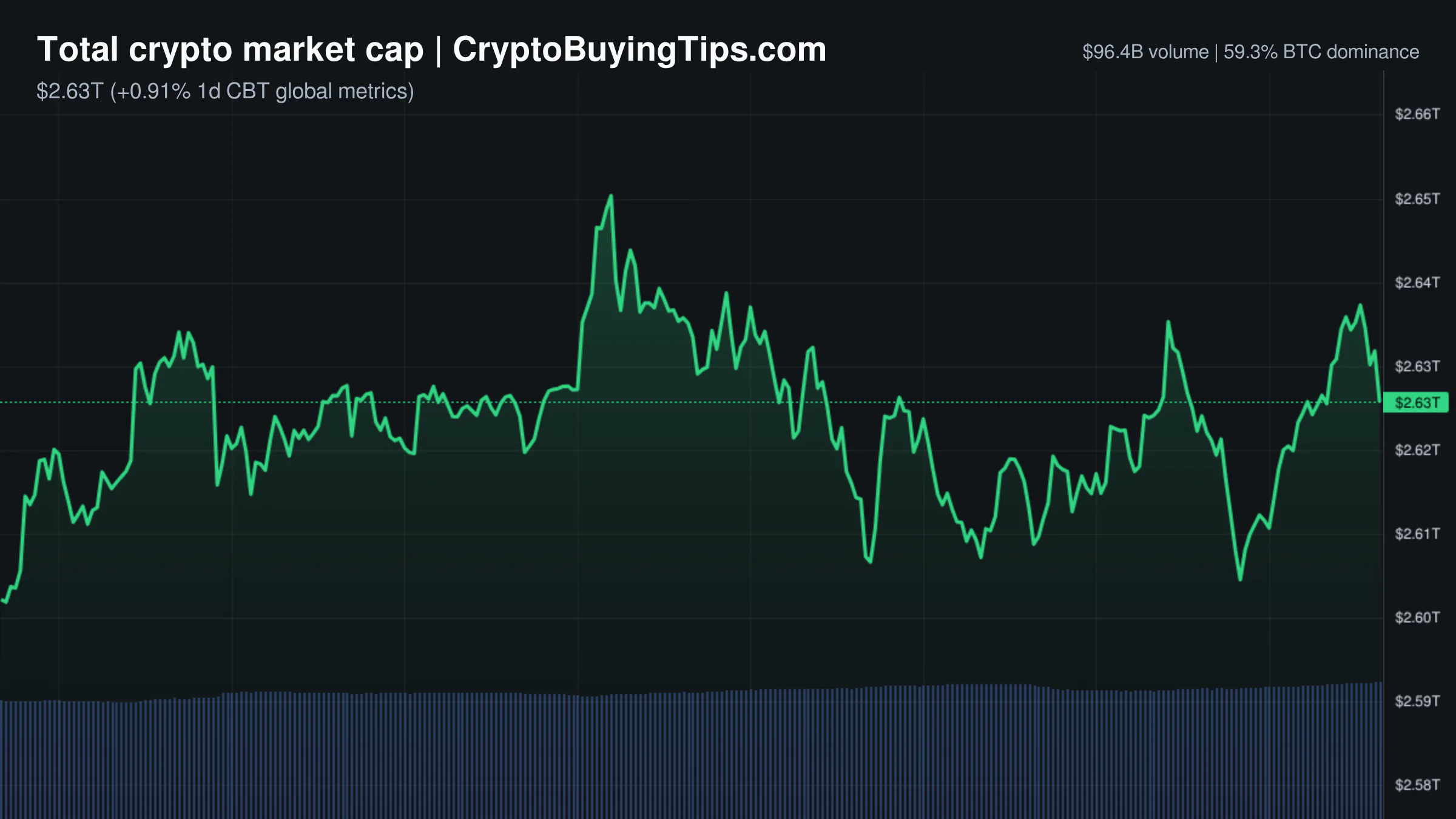
Crypto Market Overview | Leverage-driven rally amid strong ETF inflows as BTC targets 80k | August 24, 2026
Leverage-driven rally sees BTC near 80k amid strong ETF inflows; see our market overview on current crypto dynamics.

Derivatives volume is 8x higher than spot. Here is why that is a warning
The market's current price action seems to be driven by bets rather than cash; with derivatives volume eight times…
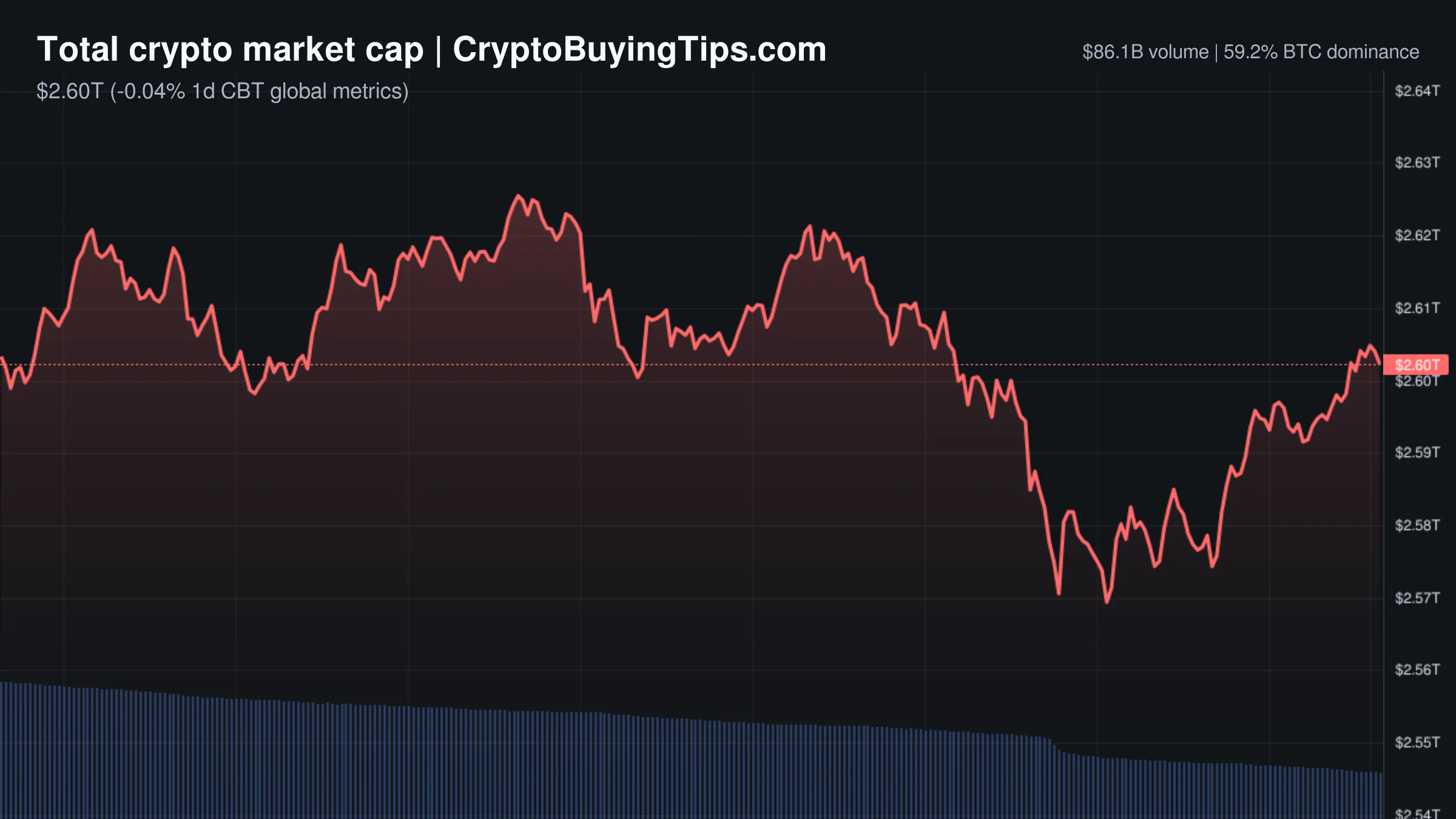
Crypto Market Overview | volume collapses as greed persists amid regulatory friction | August 23, 2026
Volume collapses as greed persists amid regulatory friction; see our market overview on crypto's current state and key…

Brussels is coming for DeFi vaults and the market is ignoring the risk
Brussels seems to think "decentralized" is just an aesthetic choice for now. Our read suggests MiCA regulation isn't…