
How to buy Avalanche (AVAX)
This guide shows verified market-pair data, exchange listings, and related buying information for AVAX. Always confirm fees, country availability, and withdrawal support directly with the exchange before depositing funds.
Buying checks for Avalanche (AVAX)
Buying routes
Some links may be affiliate links. Route data is shown only when it was found in our market-pair or route data.
| Exchange/route | Pair | Type | Volume/liquidity | Action |
|---|---|---|---|---|
 Gate | AVAX/USDT | CEX | $2.74M | Check route |
 MEXC0% trading fee | AVAX/USDT | CEX | $736.44K | Check route |
 Bitget | AVAX/USDT | CEX | $1.91M | Check route |
 Binance | AVAX/USDT | CEX | $11.56M | Check route |
 BitMart25% trading fee | AVAX/USDT | CEX | $5.24M | Check route |
PancakeSwap v2 (BSC) | AVAX/WBNB | CEX | $10.63K | Check route |
pancakeswap | AVAX/WBNB | DEX | $16.28K | Check route |
pancakeswap | AVAX/WBNB | DEX | $10.65K | Check route |
 KuCoin | AVAX/USDT | CEX | $13.32M | Check route |
 XT.COM | AVAX/USDT | CEX | $5.17M | Check route |
Risk checks
Token contract data is present for AVAX; users should verify the exact address and network through official sources before transferring funds.
Exchange availability, KYC requirements, and account features can vary by country.
Deposit and withdrawal support is not verified unless a route source explicitly provides it.
CoinMarketCap page information is used only as low-confidence background context, not as proof of listings, fees, liquidity, or contract safety.
Web research found source-backed controversy, legal, exploit, collapse, or governance context; readers should review those sources before using any route.
Large-cap buying queries are often exchange-dominated, so the guide should emphasize durable verification, custody, ecosystem, and risk context.
How this guide is checked
- Last verified
Last updated:
How to buy and use Avalanche (AVAX) responsibly
Avalanche is a layer one blockchain designed for decentralized applications and custom blockchain networks. Because it uses a unique architecture with three separate chains, users must be careful about which network they use when moving funds. This guide focuses on verifying contracts and understanding the specific utility of the network to avoid common transfer errors.
Verified ways to access AVAX
AVAX is available on several centralized exchanges and decentralized platforms.
Centralized exchanges with verified market pairs include:
Some of these platforms, such as MEXC, Bybit, and BitMart, require KYC verification. Users in certain regions, including the US and UK, may find that Bybit and MEXC are unavailable.
For those using decentralized exchanges, AVAX can be accessed via PancakeSwap or ApeSwap on the BNB Smart Chain (BSC).
What Avalanche is used for
Avalanche is a platform for smart contracts and decentralized apps. It aims for high transaction output, reaching up to 6,500 transactions per second.
The network is split into three chains:
- X-Chain: Used for exchanging assets.
- C-Chain: The smart contract layer.
- P-Chain: Used for coordinating validators and creating subnets.
The ecosystem is moving toward real-world institutional use. The Payments Collective, a 28-member alliance, integrates stablecoin settlement and treasury infrastructure across more than 150 countries. FIFA is also deploying Avalanche technology to prevent ticket scalping for World Cup tournaments.
Wallet, network, and custody checks
Verification is necessary before any transfer. AVAX exists on multiple networks, and using the wrong one can lead to loss of funds.
The primary contract addresses are:
- Avalanche C-Chain:
0xeeeeeeeeeeeeeeeeeeeeeeeeeeeeeeeeeeeeeeee - Avalanche X-Chain:
FvwEAhmxKfeiG8SnEvq42hc6whRyY3EFYAvebMqDNDGCgxN5Z - BNB Smart Chain (BEP20):
0x1ce0c2827e2ef14d5c4f29a091d735a204794041
Users should use the official explorer at snowtrace.io to verify transactions. For those who prefer self-custody, hardware wallets are a standard option for securing private keys.
Common mistakes before buying AVAX
Many users assume that every exchange supports every network. This is not true. An exchange might support the C-Chain but not the X-Chain. Always check the specific withdrawal network before sending funds.
Another frequent error is using a lookalike contract address. Only use addresses sourced from the official Avalanche website or verified documentation.
Finally, users often ignore country-specific restrictions. Some exchanges may allow you to open an account but restrict specific trading pairs or withdrawal features based on your residency.
Route, liquidity, and availability caveats
Deposit and withdrawal support for the listed routes is not verified. You must confirm that an exchange currently allows AVAX transfers before depositing.
Liquidity varies by pair. While AVAX/USDT is common on most CEXs, DEX routes like AVAX/WBNB on PancakeSwap depend on the liquidity of the specific pool.
Contract data is present for the BEP20 version of AVAX. Users must verify the exact address and network through official sources before transferring funds to avoid sending assets to an unsupported chain.
Sources and methodology
This guide uses data from our internal database and verified market-pair rows. Background context on institutional use and FIFA was gathered through web research. Information from CoinMarketCap page scrapes is treated as low-confidence context and is not used to prove fees or liquidity. Live market values, such as price and 24h volume, are omitted because they change too frequently to remain accurate in a static guide.
Related Articles
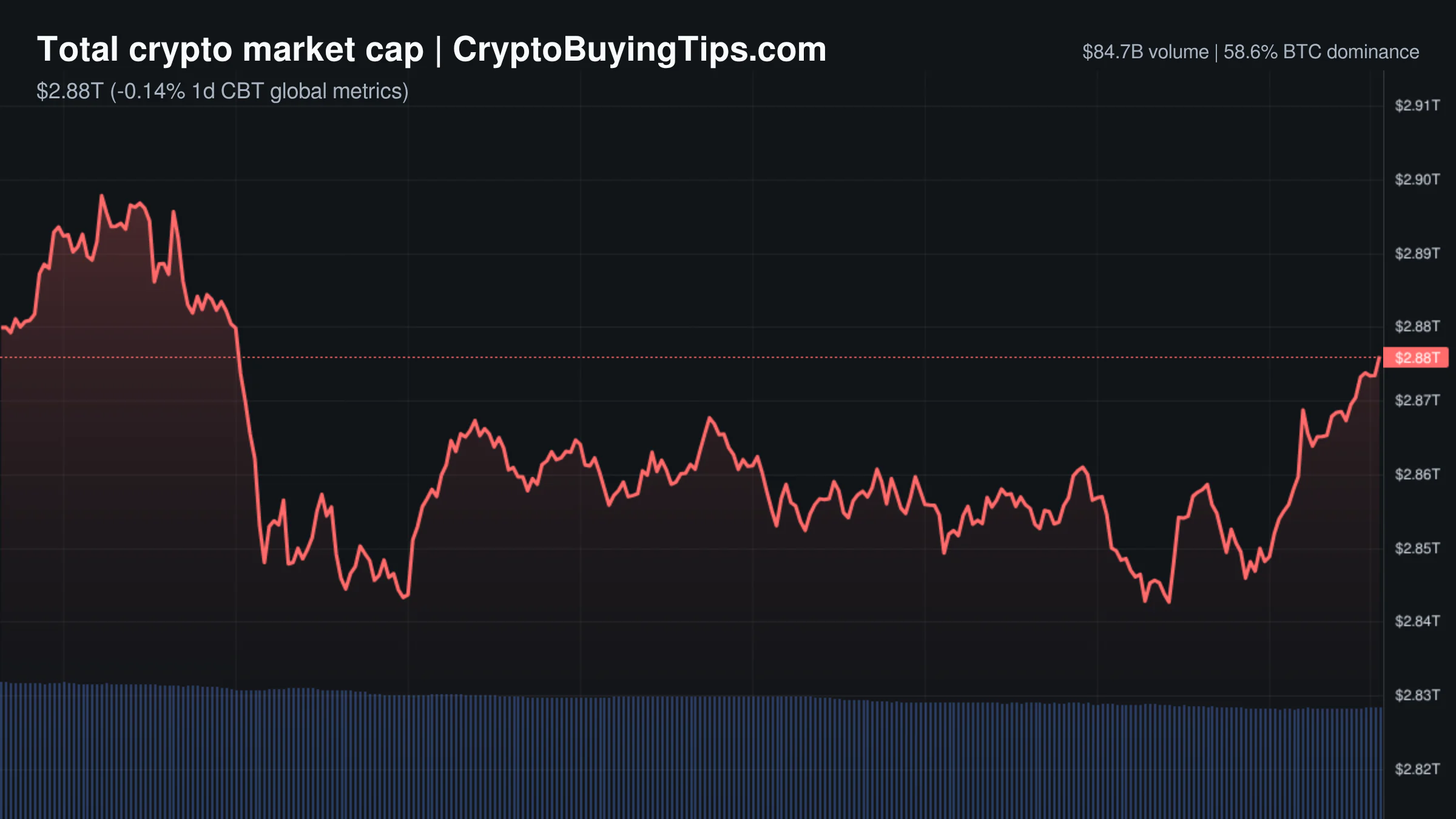
Crypto Market Overview | Volume collapses as institutional rails clash with regulatory friction | September 30, 2026
Volume collapses as crypto rails clash with regulation; see how market cap dipped 2.32% while ETF flows continue to move…
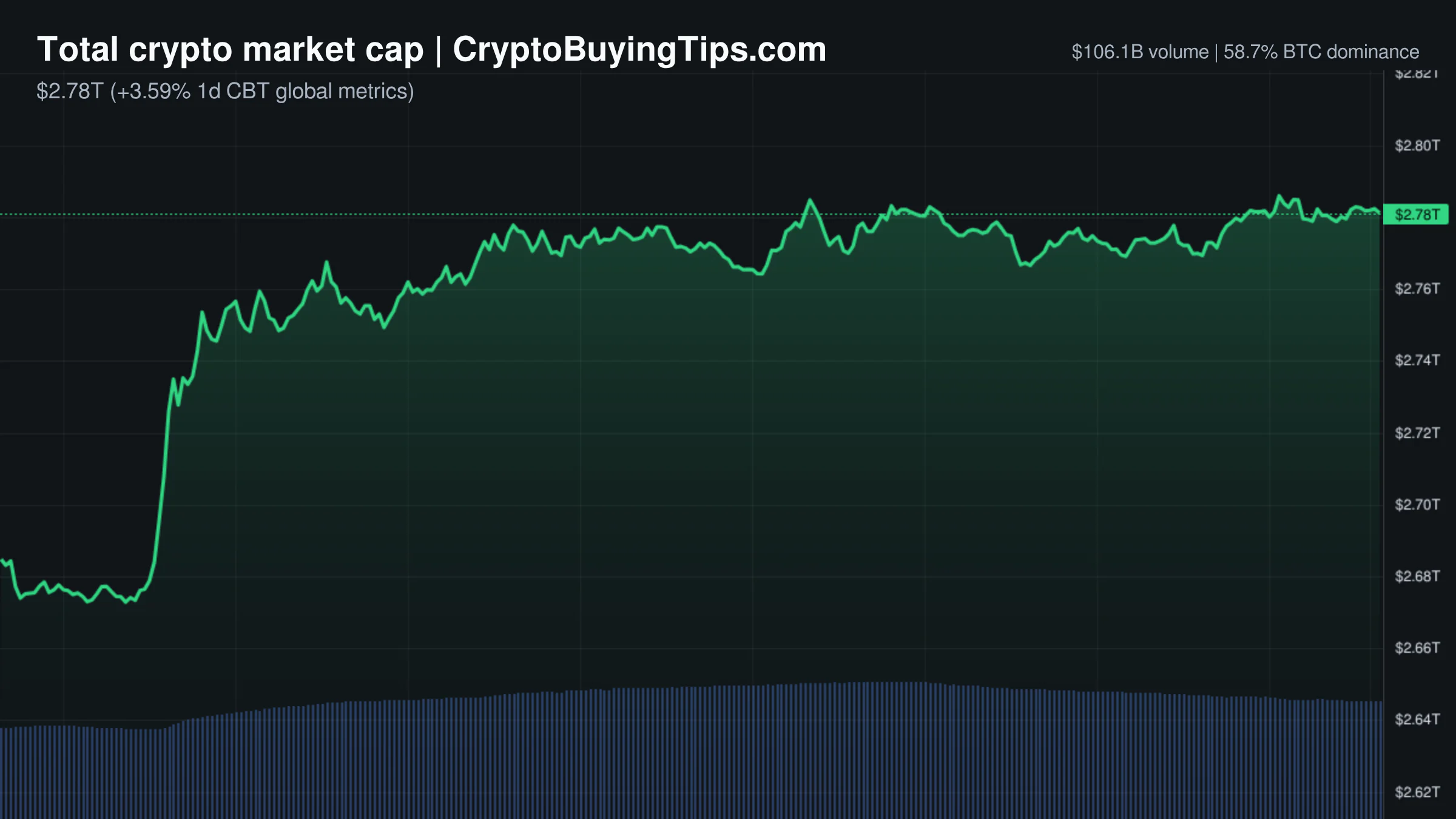
Crypto Market Overview | Leveraged bets drive gains amid diverging us regulatory paths | September 19, 2026
Leveraged bets drive crypto gains amid diverging us regulatory paths; see our market overview on BTC, ETH, and macro…
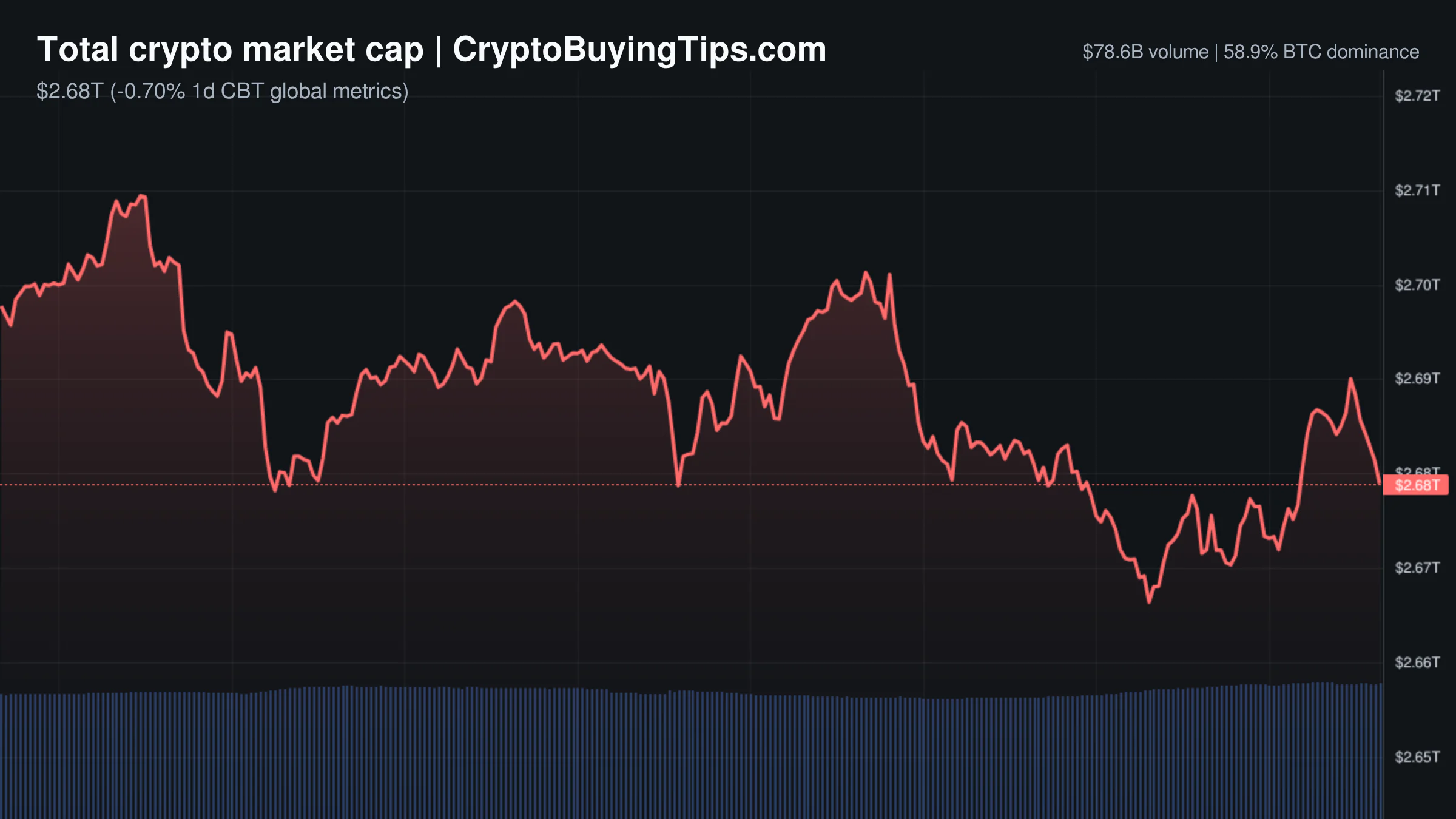
Crypto Market Overview | Derivatives volume dwarfs spot activity amid institutional rail expansion | September 8, 2026
Derivatives volume dwarfs spot activity amid institutional rail expansion; see our market overview on crypto's current…
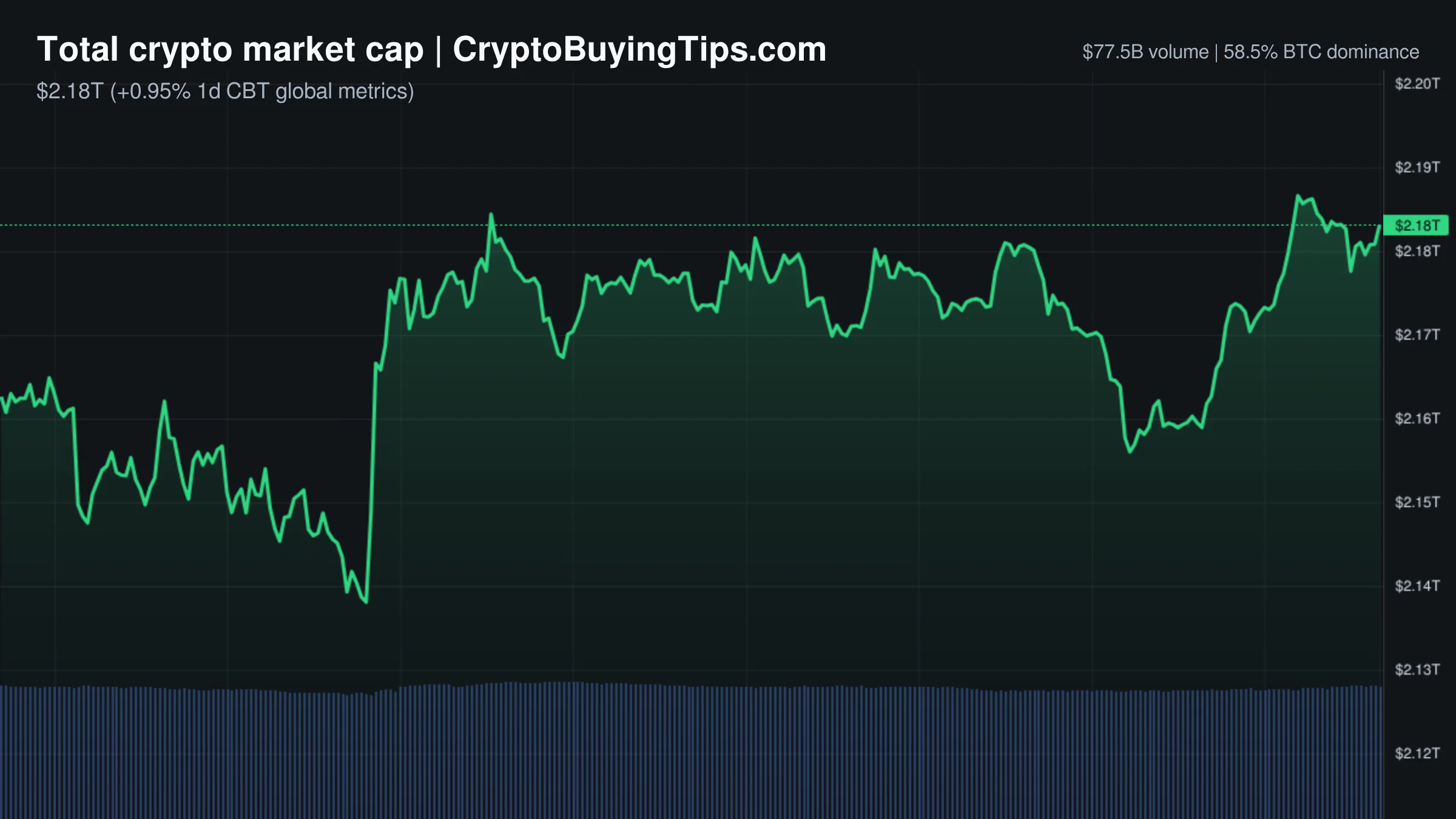
Crypto Market Overview | Extreme fear meets institutional expansion Market overview The crypto market is currently defined by a stark divergence between price | June 12, 2026
Crypto Market Overview Extreme fear meets institutional expansion Market overview The crypto market is currently defined…
Recent Articles
See moreThe volume collapse is hiding a massive Bitcoin setup
Volume has dropped significantly across crypto markets, which usually signals apathy. Our read suggests this quiet…
South Korea is letting firms borrow against Bitcoin while blocking their exchanges
South Korea is letting corporations borrow against Bitcoin while simultaneously clearing out retail exchanges; a curious…
BTC and ETH ETFs are bleeding while XRP is the only institutional winner
The narrative suggests endless accumulation, yet ETF outflows signal that big players have paused their spending spree.…
StarkNet is ripping but the altcoin season narrative is a lie
StarkNet's recent surge has the usual crowd convinced an altcoin season has arrived; our data suggests this rally is…
Avalanche Market Sentiment
Source: CoinMarketCap. Updated Oct 14, 2026, 4:55 PM
AVAX to USD Converter

Avalanche
AVAX
Rank
#24
$9.94