
How to buy Cardano (ADA)
This guide shows verified market-pair data, exchange listings, and related buying information for ADA. Always confirm fees, country availability, and withdrawal support directly with the exchange before depositing funds.
Buying checks for Cardano (ADA)
Buying routes
Some links may be affiliate links. Route data is shown only when it was found in our market-pair or route data.
| Exchange/route | Pair | Type | Volume/liquidity | Action |
|---|---|---|---|---|
 Gate | ADA/USDT | CEX | $11.75M | Check route |
 MEXC0% trading fee | ADA/USDT | CEX | $6.4M | Check route |
 Bitget | ADA/USDT | CEX | $3.55M | Check route |
 Binance | ADA/USDT | CEX | $29.26M | Check route |
BitMart25% trading fee | ADA/USDT | CEX | $11.25M | Check route |
pancakeswap | ADA/USDT | DEX | $103.2K | Check route |
pancakeswap | ADA/WBNB | DEX | $96.05K | Check route |
pancakeswap | ADA/WBNB | DEX | $24.61K | Check route |
XT.COM | ADA/USDT | CEX | $11.6M | Check route |
Coinbase Exchange | ADA/USD | CEX | $11.45M | Check route |
Risk checks
Token contract data is present for ADA; users should verify the exact address and network through official sources before transferring funds.
Exchange availability, KYC requirements, and account features can vary by country.
Deposit and withdrawal support is not verified unless a route source explicitly provides it.
CoinMarketCap page information is used only as low-confidence background context, not as proof of listings, fees, liquidity, or contract safety.
Web research found source-backed controversy, legal, exploit, collapse, or governance context; readers should review those sources before using any route.
Large-cap buying queries are often exchange-dominated, so the guide should emphasize durable verification, custody, ecosystem, and risk context.
How this guide is checked
- Last verified
Last updated:
How to buy and use Cardano (ADA) responsibly
Cardano is a proof-of-stake blockchain platform launched in 2017. It is designed to allow developers and innovators to create decentralized applications and smart contracts. Those who hold ADA can participate in the operation of the network and vote on proposed software changes.
Verified ways to access ADA
ADA is available on several centralized exchanges and decentralized platforms. When using these routes, verify the specific pair and your local availability.
Centralized exchanges with verified market pairs include:
- Binance (ADA/USDT)
- Bybit (ADA/USDT) - Trading fee: 0.1
- MEXC (ADA/USDT) - Trading fee: 0
- BitMart (ADA/USDT) - Trading fee: 0.25
- Gate (ADA/USDT)
- Coinbase Exchange (ADA/USD)
- Kraken (ADA/USD)
- OKX (ADA/USDT)
- KuCoin (ADA/USDT)
- Crypto.com Exchange (ADA/USDT)
- Bitget (ADA/USDT)
- HTX (ADA/USDT)
- LBank (ADA/USDT)
- XT.COM (ADA/USDT)
- Bitstamp by Robinhood (ADA/USD)
- BingX (ADA/USDT)
- Bitfinex (ADA/USDT)
- Upbit (ADA/KRW)
- Bithumb (ADA/KRW)
- Binance TR (ADA/TRY)
- Binance.US (ADA/USD)
- Tokocrypto (ADA/IDR)
For decentralized access, PancakeSwap provides ADA pairs on the BNB Smart Chain (BSC).
What Cardano is used for
Cardano is a Layer-1 blockchain that uses a proof-of-stake (PoS) consensus mechanism. The network supports smart contracts, which became available following the Alonzo hard fork in 2021.
The technology is used for several specific applications:
- Supply chain tracking, such as agricultural companies monitoring produce from field to fork.
- Storing educational credentials in a tamper-proof format.
- Retail solutions to identify and stop counterfeit goods.
- Governance, where ADA holders vote on software changes.
Wallet, network, and custody checks
ADA is a native coin with its own blockchain. However, it also exists as a token on other networks.
If you are using the BNB Smart Chain (BEP20), the verified contract address is 0x3ee2200efb3400fabb9aacf31297cbdd1d435d47. You must verify the network supported by your exchange or wallet before initiating a transfer.
For custody and network verification, use these official tools:
- Cardano Explorer for transaction and address checks.
- Official Documentation for technical verification.
- Cardano Website for general project information.
Common mistakes before buying ADA
Users often make errors that lead to loss of funds or account restrictions.
Avoid these common mistakes:
- Sending ADA to a lookalike contract address or using the wrong network.
- Assuming that every exchange supports the same deposit and withdrawal networks.
- Ignoring KYC requirements or country-specific restrictions before opening an account.
- Relying on temporary price or volume snapshots to make long-term decisions.
Route, liquidity, and availability caveats
Not all trading routes are equal. Deposit and withdrawal support is not verified for the routes listed above unless the exchange explicitly confirms it in their interface.
There are specific risks associated with the Cardano ecosystem:
- Security incidents: The SecondFi hack was a major security event that drained 16 million ADA. EMURGO has been involved in outlining recovery plans.
- Governance stability: There is ongoing scrutiny of governance mechanisms. The Cardano Foundation recently urged Stake Pool Operators to cast manual votes after a treasury proposal failed.
Exchange availability and account features vary by country. Users in the US, UK, or Canada should check the specific terms of the exchange they choose.
Sources and methodology
This guide is based on verified market-pair rows from our database and official project documentation. We use web research and news from sources like BSC News to provide context on security incidents and governance.
Information from CoinMarketCap pages is treated as low-confidence background context and is not used as proof of fees or contract safety. Live market values, such as current price and 24h volume, are omitted because they change too frequently to remain accurate in a static guide.
Related Articles
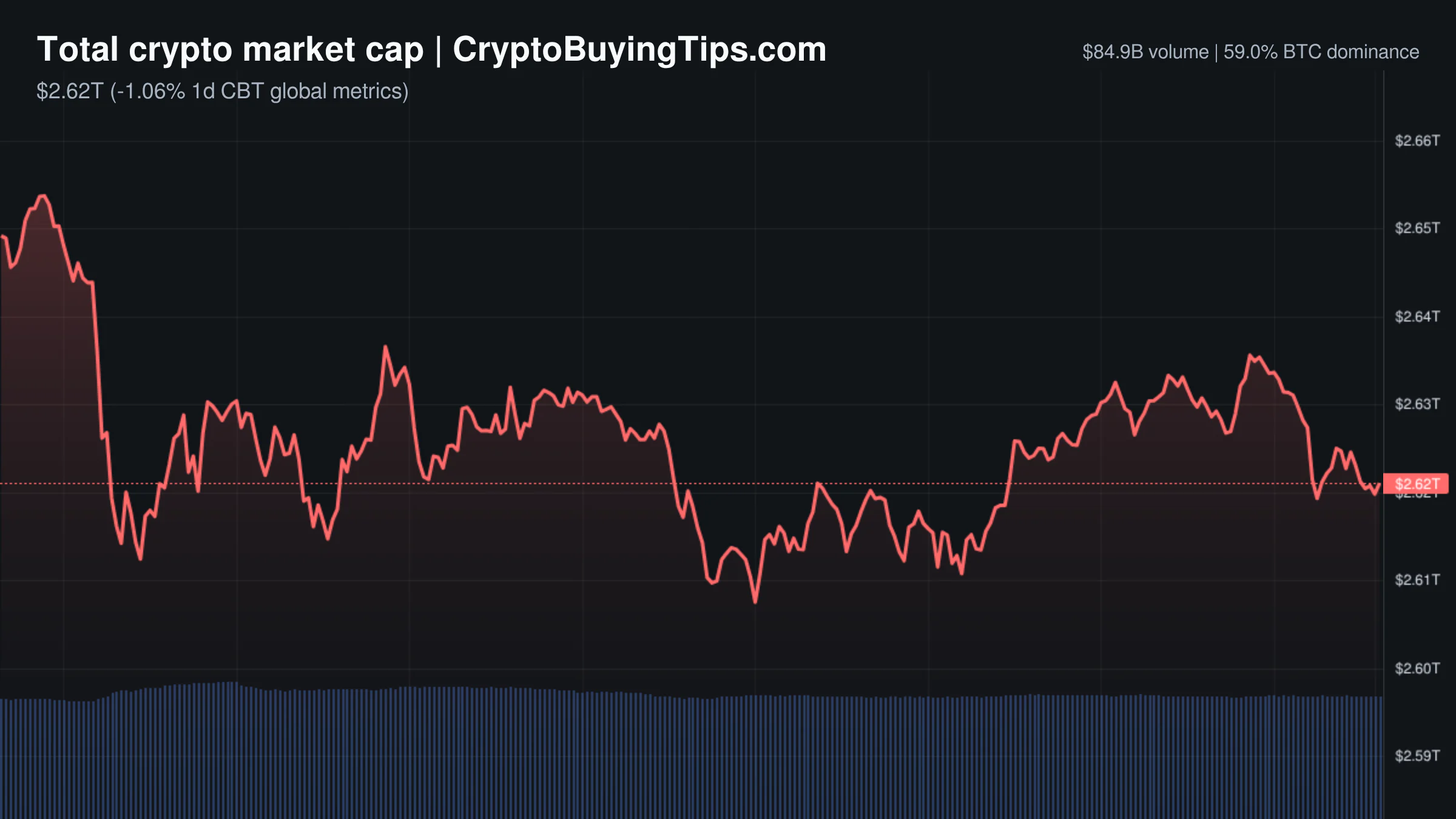
Crypto Market Overview | leveraged bets lead as institutional rails expand amid a broad pullback | September 11, 2026
Greed persists despite a pullback as leveraged bets dominate crypto volume amid cooling macro signals and ETF outflows.
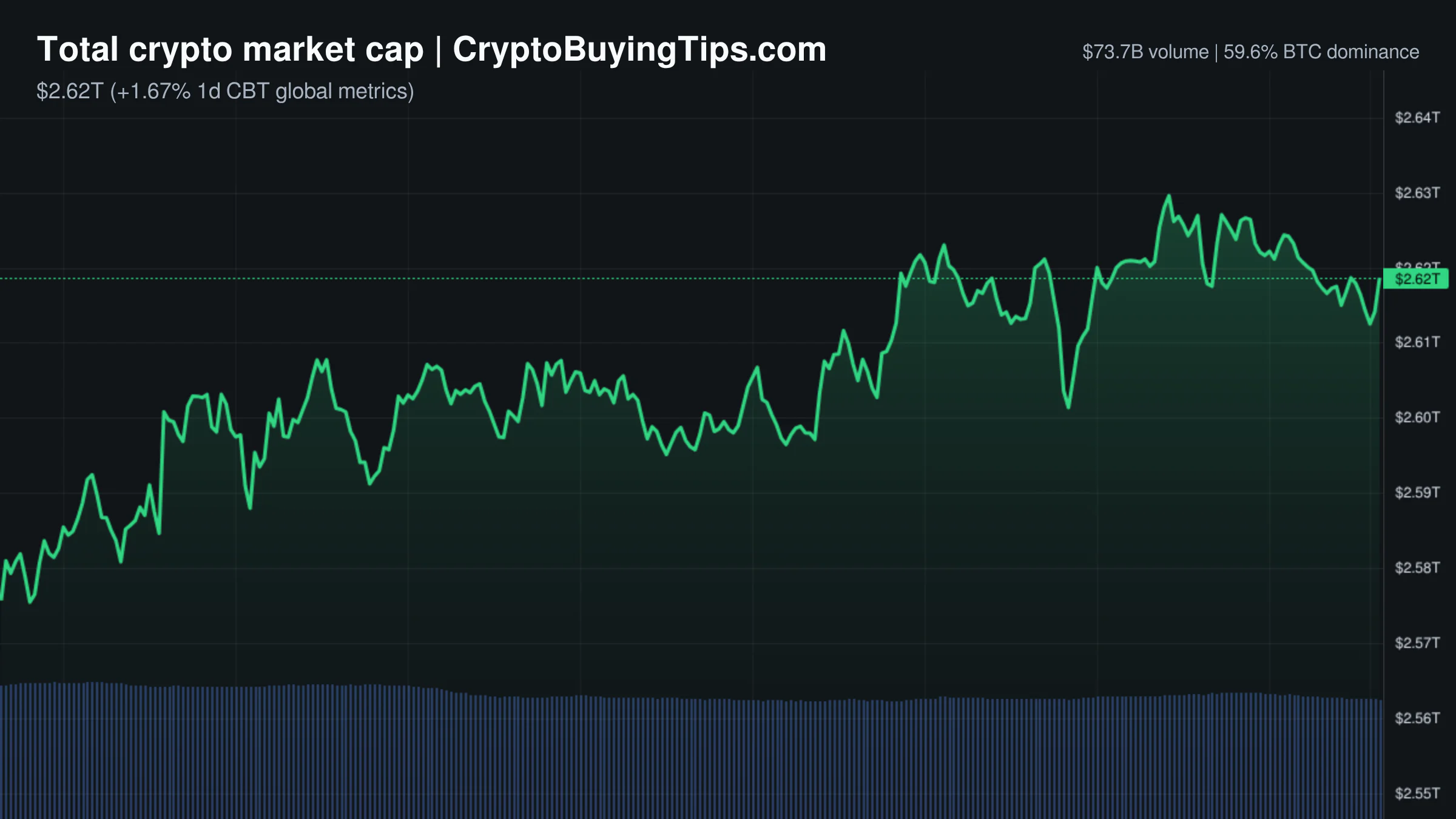
Crypto Market Overview | Leveraged positioning drives gains amid fading spot volume | September 3, 2026
Crypto market overview shows price gains driven by leverage amid fading spot volume; see our analysis on BTC and ETH…
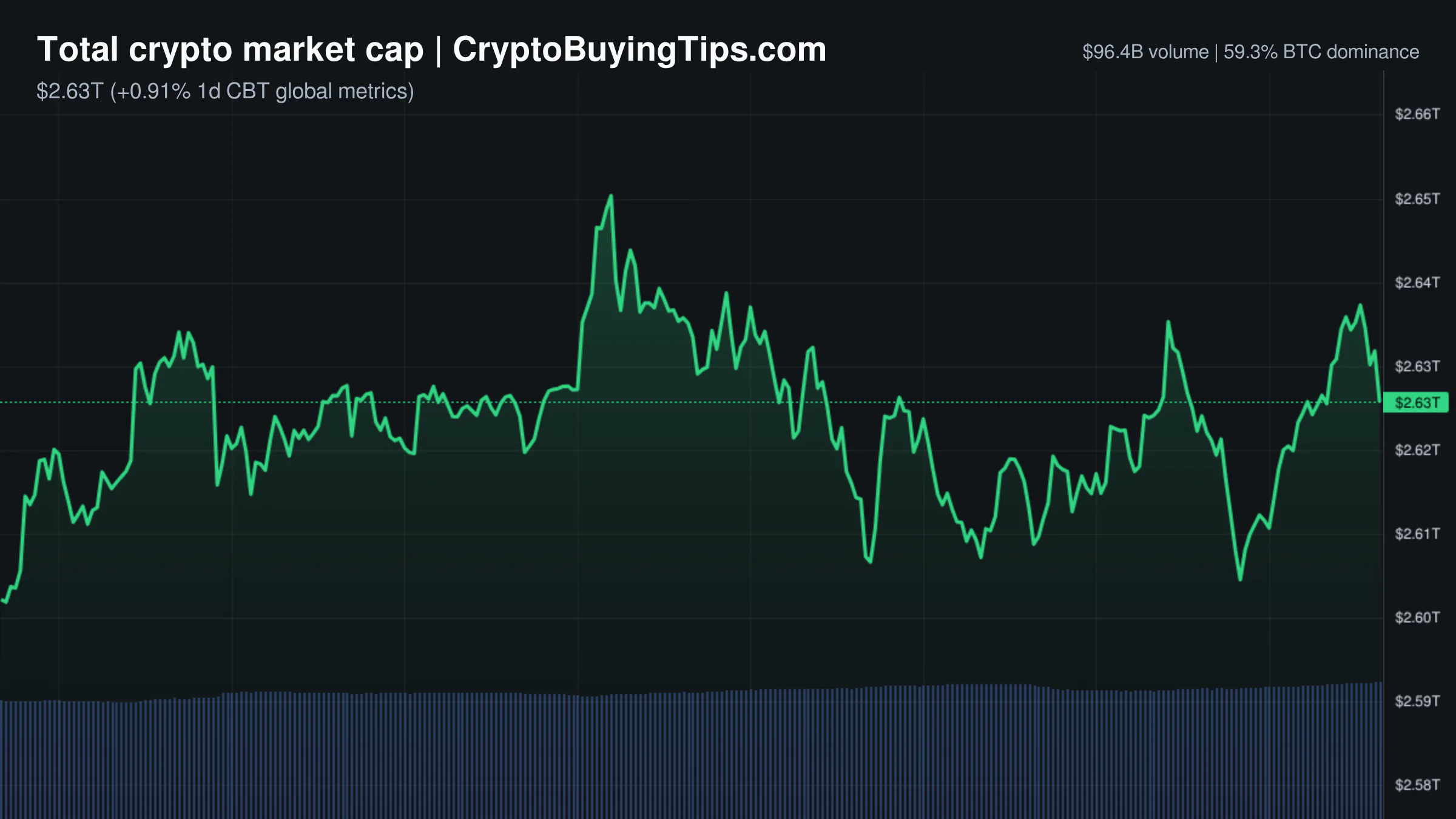
Crypto Market Overview | Leverage-driven rally amid strong ETF inflows as BTC targets 80k | August 24, 2026
Leverage-driven rally sees BTC near 80k amid strong ETF inflows; see our market overview on current crypto dynamics.
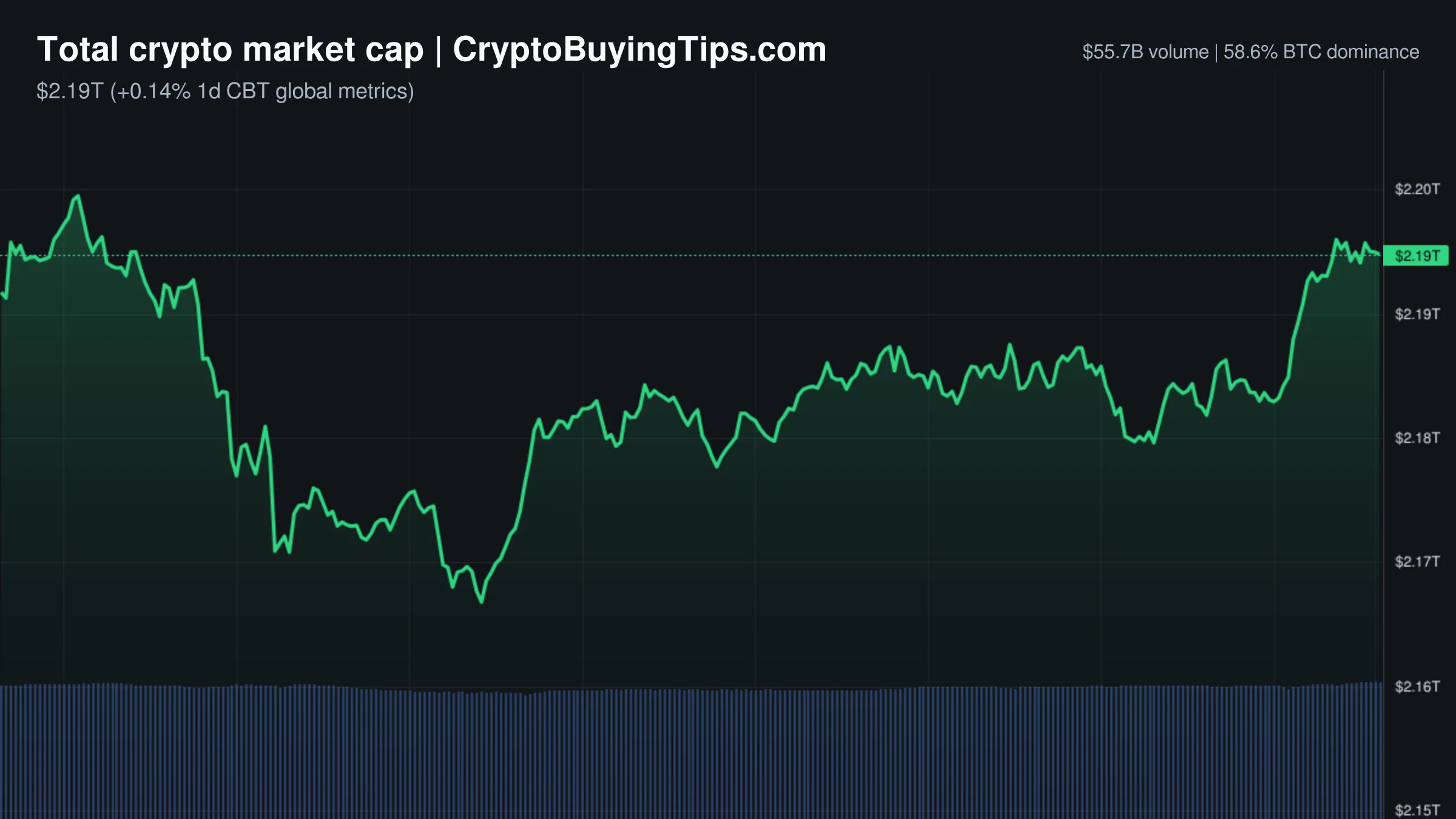
Crypto Market Overview | Derivatives volume dwarfs spot activity amid regulatory uncertainty and institutional rotation into bitcoin | August 12, 2026
Derivatives volume dwarfs spot activity amid regulatory uncertainty and institutional rotation into bitcoin on August…
Recent Articles
See moreThe volume collapse is hiding a massive Bitcoin setup
Volume has dropped significantly across crypto markets, which usually signals apathy. Our read suggests this quiet…
South Korea is letting firms borrow against Bitcoin while blocking their exchanges
South Korea is letting corporations borrow against Bitcoin while simultaneously clearing out retail exchanges; a curious…
BTC and ETH ETFs are bleeding while XRP is the only institutional winner
The narrative suggests endless accumulation, yet ETF outflows signal that big players have paused their spending spree.…
StarkNet is ripping but the altcoin season narrative is a lie
StarkNet's recent surge has the usual crowd convinced an altcoin season has arrived; our data suggests this rally is…
Cardano Market Sentiment
Source: CoinMarketCap. Updated Oct 15, 2026, 12:04 AM
ADA to USD Converter

Cardano
ADA
Rank
#14
$0.23