

Crypto Fear & Greed at 28: What This Means for Your Portfolio
Seeing the Crypto Fear & Greed Index hit 28 feels familiar. It reminds me of the trading floor in 2008 when Lehman Brothers collapsed and nobody wanted to touch a risky asset. I get messages daily from readers asking about the best time to buy bitcoin fear index strategies, especially when sentiment turns this negative. Fear is uncomfortable. It makes you want to sell. But in my experience covering both traditional finance and crypto since 2019, extreme fear often marks the zone where long-term opportunities hide.
current market context
The numbers tell a clear story right now. The Fear & Greed Index sits at 28, firmly in Fear territory. Total market capitalization is holding at $2.51T with a 24h volume of $101.3B. We have seen recent headlines about the Drift exploit and regulatory shifts like the Coinbase charter approval, but the market reaction is mostly nervousness.
When I look at the S&P 500 sitting at $655.94 with minimal movement, I see a traditional market waiting for direction. Crypto often moves independently, but sustained fear in equities can spill over. The Altcoin Season Index is neutral at 53/100. This suggests money isn't rotating aggressively into altcoins yet. Investors are hiding in stablecoins or waiting on the sidelines.
understanding the best time to buy bitcoin fear index signals
Many new investors treat sentiment indicators like a simple buy button. They see fear and they buy. I think this is dangerous. The index measures emotion, not fundamentals. A score of 28 means investors are worried. It does not guarantee a bottom.
I remember watching Bitcoin drop 80% in 2018. The fear index stayed low for months. If you bought the first sign of fear, you lost money before you made it. The key is distinguishing between temporary panic and structural breakdown. The recent FBI crackdown on wash trading actually helps here. It removes artificial volume, making the fear more genuine but also cleaning up the liquidity picture.
When I analyze this metric, I look for divergence. Is price dropping while development activity stays high? Are users still onboarding? If the tech works but the price bleeds, that is usually where the value lies.
what this means for your portfolio
So how do you act on this without gambling? I prefer a scaled approach. Going all in at 28 might be early. Waiting for 10 might mean you miss the recovery. Dollar cost averaging removes the stress of timing the exact bottom.
Security matters more during volatile periods. Scams increase when people are desperate for gains. I keep the majority of my holdings on a hardware wallet like Ledger. It removes exchange risk from the equation. For the portion I trade actively, I need an interface that doesn't crash during volatility. I personally use Bybit for this kind of trade. Their perpetual futures interface is the cleanest I've found, and liquidity holds up when things get messy.
You should also review your risk exposure. If a 20% drop keeps you awake, you are overleveraged. Reduce position size until you can sleep. No trade is worth your health.
looking ahead
We need to watch for a shift in macro liquidity. The Fear & Greed Index can stay low until capital flows change. I am watching ETF inflows closely. If institutions start buying into this fear, we will see a rapid sentiment flip.
Volatility is likely to continue in the short term. The neutral altcoin season reading suggests Bitcoin will lead the next move. If BTC stabilizes, capital might rotate into ETH and larger caps. But do not rush. Let the market show you its hand. I have learned the hard way that catching a falling knife hurts less if you wear a glove. Wait for confirmation, manage your risk, and let the fear work for you instead of against you.
Some links in this article may be affiliate links. We may earn a commission at no extra cost to you — this never influences our analysis or coverage.

Sigrid Voss
Crypto analyst and writer covering market trends, trading strategies, and blockchain technology.
More Articles
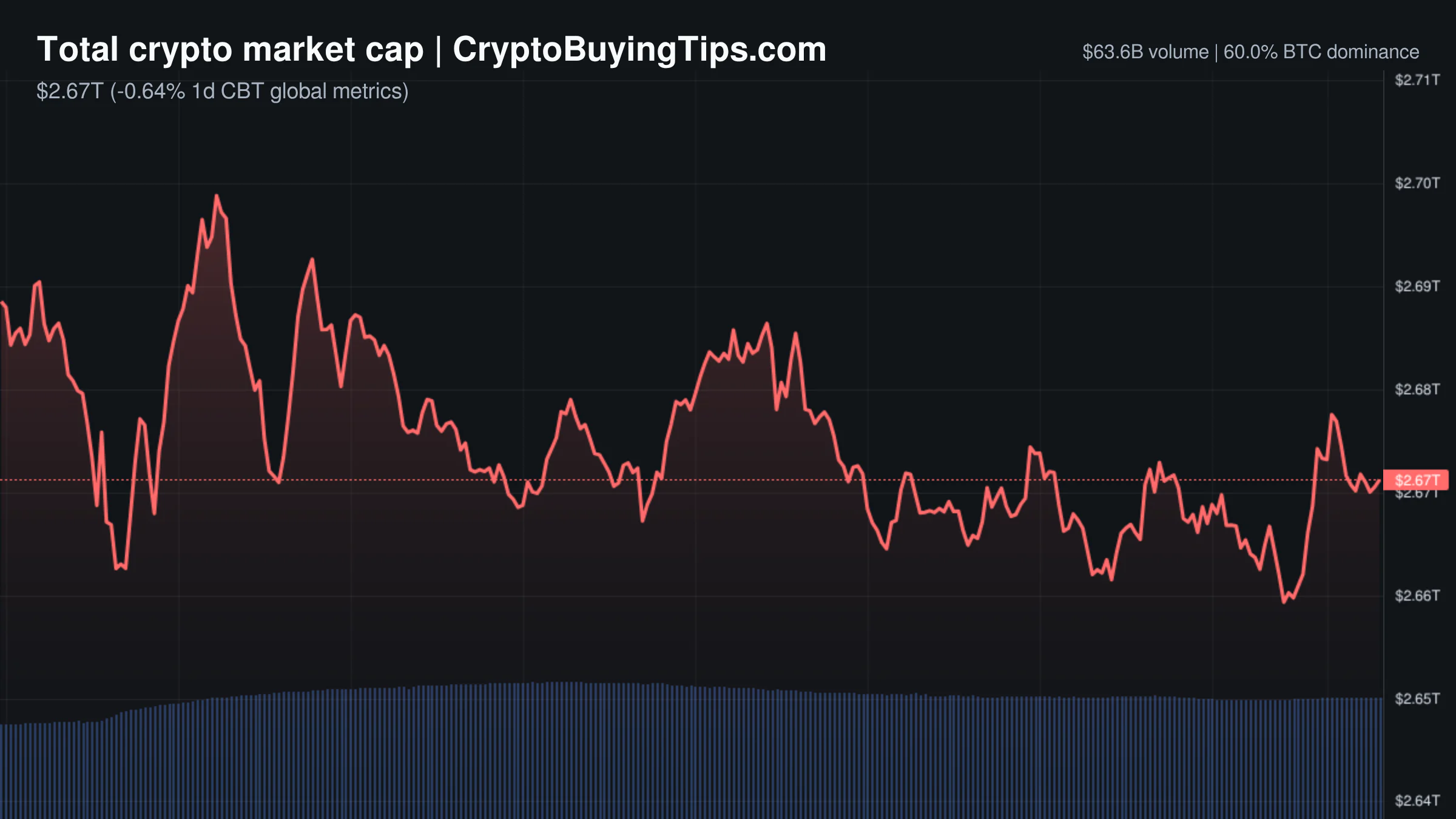
Crypto Market Overview | Volume surges as regulatory wins clash with institutional friction | October 27, 2026
Market volume surges amid regulatory wins and institutional friction; see our overview on crypto's mixed signals for…

Ripple just got a US banking license. Here is why the RLUSD stablecoin is the real story
The industry's insistence on being purely decentralized seems to take a brief holiday when the OCC grants Ripple a US…
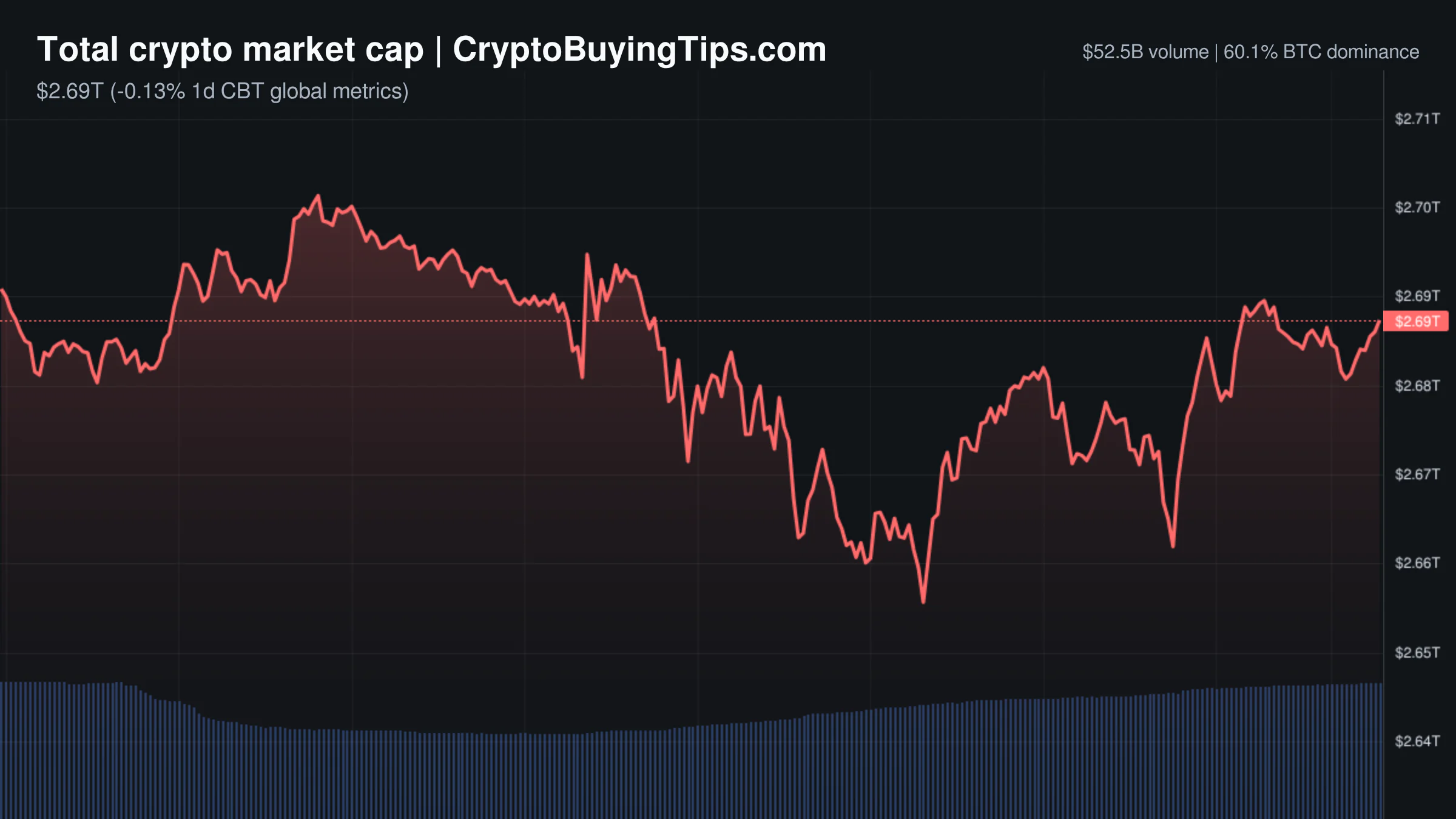
Crypto Market Overview | Derivatives volume dwarfs spot activity amid macro caution and ETF inflows | October 26, 2026
Derivatives volume dwarfs spot activity amid macro caution and ETF inflows; see our market overview for key asset…

Hyperliquid whales are net short HYPE as $37M hits Coinbase
The crowd loves the hype, but our tracker shows whales betting otherwise as $37M hits Coinbase. Professional positioning…