

Morgan Stanley is moving into tokenization and it is a signal for the next bull run
I have spent years watching the "institutional adoption" narrative. Usually, it is just a fancy way for a bank to say they are opening a brokerage account for a few wealthy clients. But Morgan Stanley is doing something different now. They are not just trading Bitcoin; they are integrating the actual plumbing of blockchain into their business. For anyone wondering how does rwa tokenization work in a practical sense, this is the real world test case. It is a shift from treating crypto as a speculative casino to using it as a legitimate financial layer.
The case for institutional tokenization
When I first started tracking this space in 2019, "Real World Assets" (RWA) sounded like a buzzword. Now, it is a strategy. Morgan Stanley is pushing into tokenization and tax solutions because they have realized that the current system for settling trades is slow and expensive.
Tokenization is basically taking a physical asset, like a building or a government bond, and turning it into a digital token on a blockchain. This allows for fractional ownership and instant settlement. Instead of waiting two days for a trade to clear, it happens in seconds. I think this is the only way the industry actually scales. We can only have so many people buying BTC ETFs before the market needs a new reason to exist. Integrating trillion dollar asset classes is that reason.
How does rwa tokenization work for the big players?
In the simplest terms, a bank creates a digital representation of an asset. They use a smart contract to define who owns it and how it can be traded.
I've seen a lot of projects try to do this with "community-driven" real estate funds, and most of them were disasters. But when a giant like Morgan Stanley does it, they have the legal infrastructure to make it actually work. They are not just minting tokens; they are building the regulatory bridge. This is similar to what I saw with Pharos hitting a $1 billion valuation recently. The money is moving away from pure speculation and toward things that actually have a cash flow.
If you are looking to get a head start on these types of assets, I usually suggest using an exchange with a broad range of listings. I've found Bybit to be one of the most reliable for accessing the newer tokens that often power these RWA protocols.
The strongest counterargument
The bears will tell you that this is just "blockchain for banks." They argue that if the banks control the tokens, we lose the whole point of decentralization. They are right. We are not getting a revolution here; we are getting a more efficient version of the same old system.
There is also the risk of a "walled garden." If Morgan Stanley builds its own private chain, it does not help the public Ethereum or Solana ecosystems. It just makes the bank faster. I worry that we might see a fragmented system where institutional tokens cannot be traded on public exchanges, which would kill the liquidity that makes crypto attractive in the first place.
Where I land
I am cautiously optimistic. The current market data shows we are in a Bitcoin season, with an Altcoin Season Index of only 24. Most of the money is still hugging the safety of BTC. But the move by Morgan Stanley tells me that the "smart money" is preparing for the next phase.
I don't care if it is not "decentralized" enough. I care that the biggest players in finance are admitting that the legacy system is broken. Once the infrastructure for RWA is set, the floodgates open. We are moving from the "trading phase" to the "utility phase." That is usually where the most sustainable growth happens. I will be watching the total market cap, currently at $2.72T, to see if this institutional shift triggers a rotation back into the altcoins that actually provide the rails for this tokenization.
Some links in this article may be affiliate links. We may earn a commission at no extra cost to you — this never influences our analysis or coverage.

Sigrid Voss
Crypto analyst and writer covering market trends, trading strategies, and blockchain technology.
More Articles
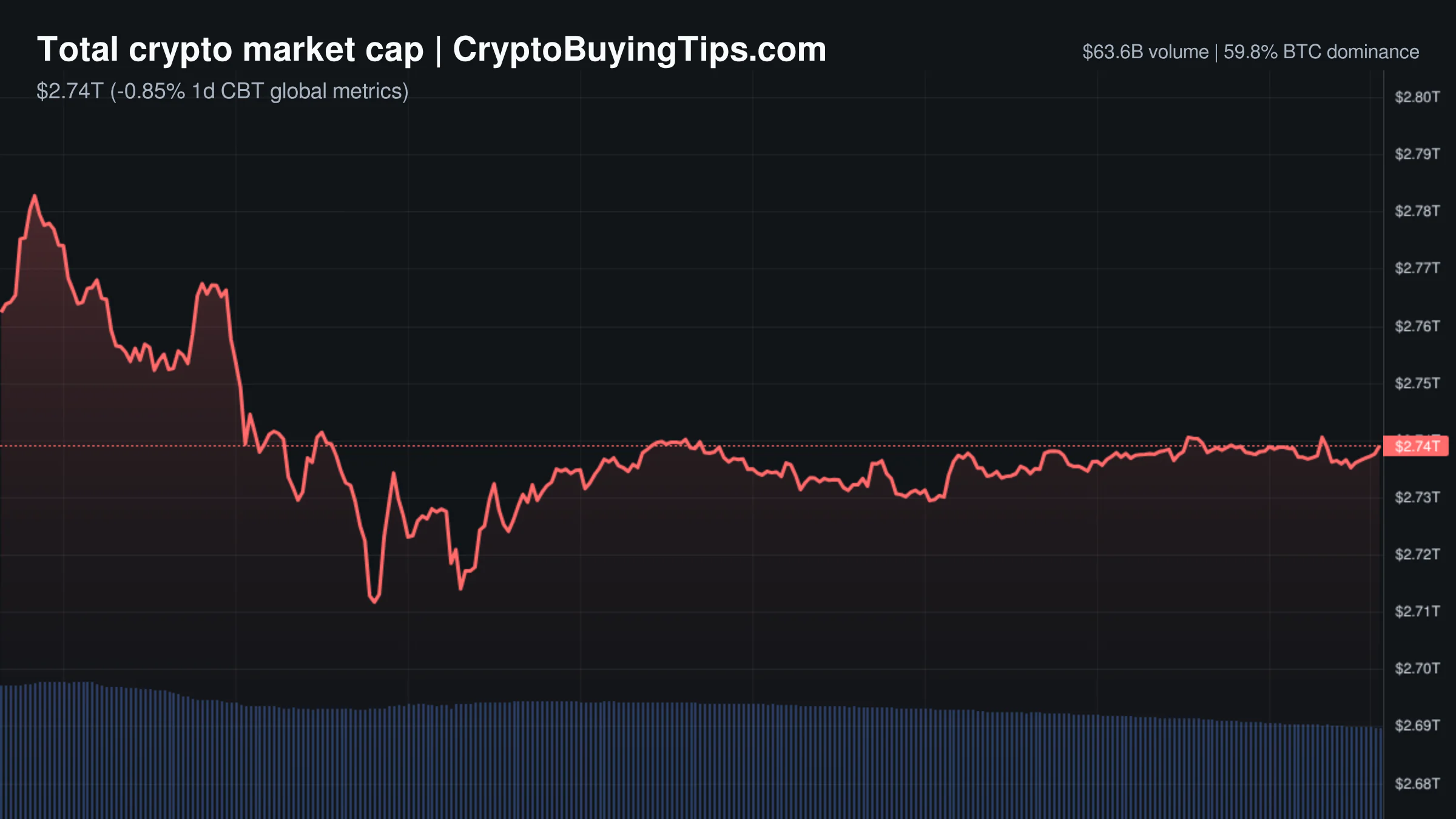
Crypto Market Overview | volume collapse amid macro pressure weighs on institutional flows | October 17, 2026
Market overview shows volume collapse amid macro pressure weighing on institutional flows; see how crypto is reacting to…

Speculators are ditching altcoins for tokenized Tesla stocks
Another day, another reason to question where all the money goes these days. Our signal scanner flagged a clear…
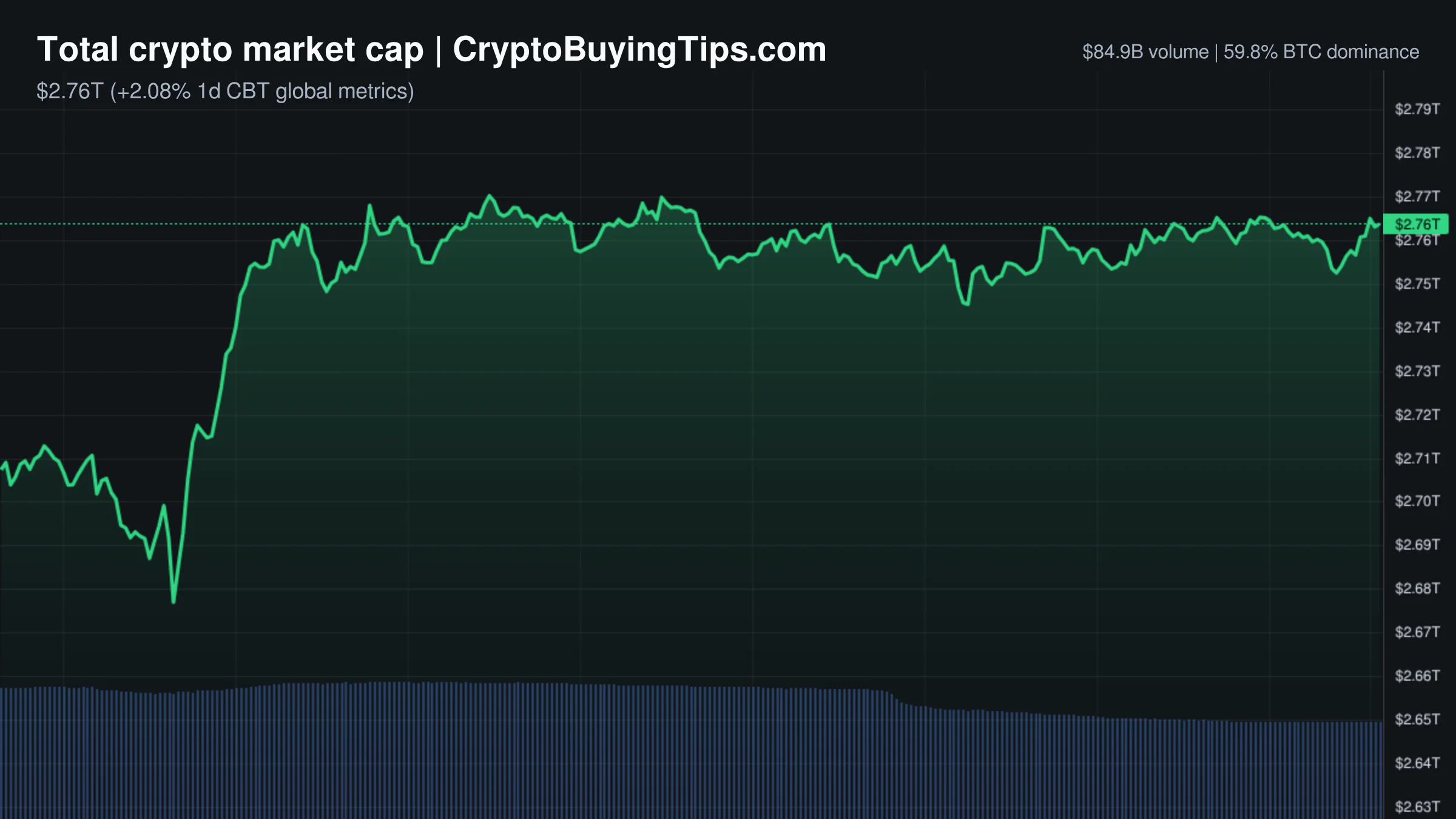
Crypto Market Overview | prices climb despite falling trading volume and stablecoin activity | October 16, 2026
Prices climb despite falling trading volume and stablecoin activity; see our market overview for context.

Wall Street is building its own rules while Congress argues
Wall Street seems to have decided waiting for Congress isn't worth the time. Major players like Mastercard are building…