

Morgan Stanley wants your stablecoin reserves and it is a problem for DeFi
The news that Morgan Stanley is eyeing the management of stablecoin reserves is a massive shift in how the plumbing of the crypto market works. For years, we've dealt with the opacity of Tether or the regulatory tightrope Circle walks. Now, the reserve layer is moving from these specialized issuers to a Wall Street giant. This is a bit of a paradox for anyone searching for the best stablecoins for long term holding, because while a big bank might seem "safer" on paper, it brings the very centralization that crypto was built to replace.
What is actually happening
Morgan Stanley isn't launching a coin. Instead, they want to be the custodian for the assets that back stablecoins. Currently, if you hold USDT or USDC, the "backing" (usually US Treasuries or cash) is held by the issuer or their partners. Morgan Stanley wants to step in as the professional manager of those billions.
In my experience, this is a strategic move to capture the massive float of the stablecoin market. With the total market cap sitting at $2.84T and a neutral Fear & Greed Index of 45, the market is in a holding pattern. Banks see this stability as an opportunity to institutionalize the backend. They get the fees, and the stablecoin issuers get a "stamp of approval" from a global powerhouse.
Why this is a risk for DeFi
I've been following the crypto markets since 2019, and the trend is clear: the "on-ramps" are becoming more like the banks we tried to leave behind. If a firm like Morgan Stanley manages the reserves, they aren't just holding money. They are creating a centralized point of failure.
If the US government decides a specific wallet address is "problematic," it is much easier for a Wall Street bank to freeze the underlying assets than it is for a decentralized protocol to stop a transaction. I remember reading about Tether freezing $344 million in USDT recently. That was a wake-up call. Now, imagine that power combined with the compliance department of a global investment bank.
The contradiction here is glaring. DeFi is supposed to be about removing the middleman. But by putting the reserve layer in the hands of Morgan Stanley, we are just adding a bigger, more powerful middleman. If the reserves are centralized in a traditional bank, the "stable" part of the stablecoin depends entirely on that bank's solvency and its relationship with regulators.
The search for the best stablecoins for long term holding
When people ask me about the best stablecoins for long term holding, I usually tell them to diversify. Relying on a single issuer is a gamble. If you are moving large amounts of capital, I prefer using a non-custodial approach to keep as much control as possible.
For those who want to move away from centralized exchange risks, I often suggest using a hardware wallet. I personally like the Ledger Stax because the E Ink touchscreen lets me verify exactly what I am signing in a DeFi contract. It is a $399 investment, but when you are holding stables that might be subject to institutional freezes, having your own keys is the only real defense.
Where I land
I'm torn on this. On one hand, having a regulated bank manage reserves reduces the chance of a "surprise" where an issuer reveals they don't actually have the money. It solves the transparency problem that has plagued Tether for a decade.
On the other hand, it kills the spirit of the industry. We are essentially building a new financial system on top of the old one, using the same banks that caused the 2008 crash. I'm impressed by the efficiency of these institutional flows, but the tokenomics of control make me uncomfortable.
If the reserve layer becomes fully institutionalized, stablecoins stop being "digital dollars" and start being "bank deposits with a fancy ticker." That is a huge difference. I'll be watching to see if this leads to a surge in decentralized alternatives like DAI, which don't rely on a single bank's balance sheet. For now, the market remains in a Bitcoin season with a dominance of 60%, meaning most people are ignoring the stablecoin risk until the next big crash happens.
Some links in this article may be affiliate links. We may earn a commission at no extra cost to you — this never influences our analysis or coverage.

Sigrid Voss
Crypto analyst and writer covering market trends, trading strategies, and blockchain technology.
More Articles
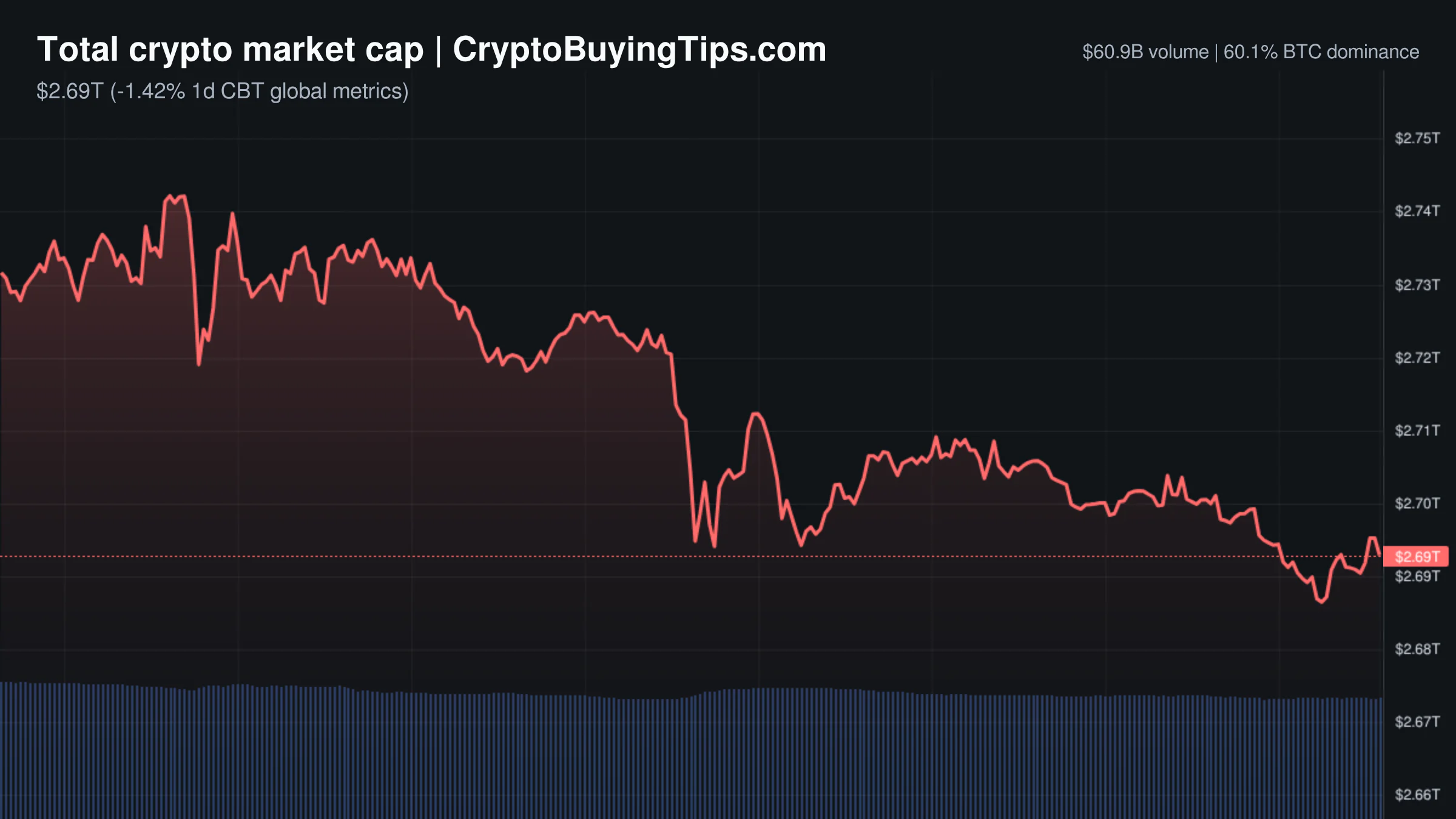
Crypto Market Overview | Derivatives volume dwarfs spot activity amid regulatory uncertainty and institutional outflows | October 24, 2026
Derivatives volume dwarfs spot activity amid regulatory uncertainty and institutional outflows, showing market…

Fidelity outflows and Ethereum OG dumps suggest a hidden exit
Another day of market data suggesting everything is fine until you look at the outflows and OG dumping. Institutional…
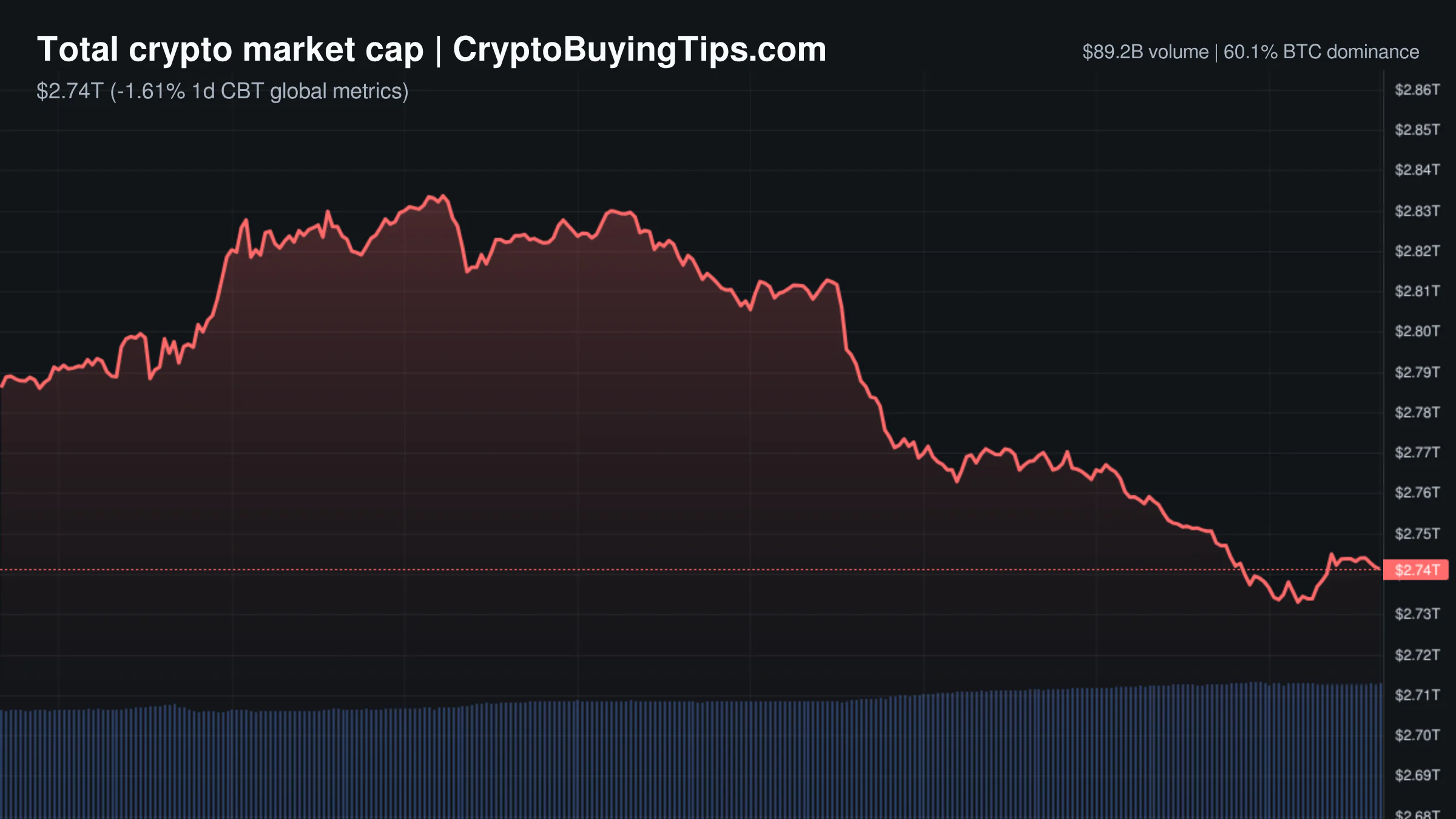
Crypto Market Overview | Leveraged bets surge amid regulatory clarity and institutional inflows | October 22, 2026
The market shows divergence between spot interest and leveraged bets amid regulatory clarity; see our overview here.

Volume is surging but prices are flat. Here is where the trigger is
Volume spikes while prices remain stubbornly flat; this divergence suggests an underlying battle between leveraged…