

Perpetual futures now dwarf traditional futures 300 to 1
The sheer disparity between $336.55B in perpetual open interest and just $1.15B in traditional futures suggests a structural imbalance that warrants closer inspection. The market is currently sitting at a Fear & Greed score of 67, which is officially "Greed." In the crypto world, this is often the point where confidence peaks just as the technicals start to look fragile. This massive gap in how leverage is positioned creates a specific crypto perpetuals vs futures risk that most retail traders ignore until their liquidation notification arrives. We previously covered crypto exchanges reverse bridge for more background.
Understanding the mechanics: crypto perpetuals vs futures risk
To understand why this imbalance matters, we have to look at how these two instruments actually function. A traditional dated future is a contract with a deadline. It has a fixed expiry date, and as that date approaches, the price of the contract converges toward the spot price. If you want to keep your position, you have to "roll" it by closing the expiring contract and opening a new one.
A perpetual contract, or "perp," simply refuses to end. There is no expiry. To keep the perp price anchored to the spot price, the system uses a funding rate. This is essentially a rent payment where longs pay shorts, or vice versa, every few hours. According to phidiaspropfirm.com, perps are designed for continuous, leveraged speculation, while dated futures are better suited for the kind of quarterly hedging that institutional desks prefer.
Our signal scanner flagged the extreme Open Interest imbalance between these two derivative types. With $336.55B in perpetuals and only $1.15B in dated futures, the market is almost entirely composed of "rent-paying" speculative bets. This means the market is not being used for its original purpose of price discovery or hedging, but as a giant, high-leverage casino.
How does crypto perpetuals vs futures risk play out?
The risk here is not about the direction of the price, but the fragility of the structure. Because perpetuals allow for much higher leverage than dated futures, they are far more prone to cascading liquidations. In a traditional futures market, the fixed expiry and lower leverage requirements act as a natural dampener. As learn.backpack.exchange notes, this reduced leverage lowers the risk of sudden margin calls.
In the current environment, the concentration of capital in perpetuals means that any sharp, sudden move can trigger a chain reaction. When a large cluster of perpetual positions is liquidated, it forces immediate market sells (or buys), which pushes the price further, triggering the next cluster of liquidations.
Our Hyperliquid leaderboard tracker shows significant notional value being managed in perpetuals, often with high leverage. When you have $336.55B in open interest concentrated in one product, the market becomes a tinderbox. A 5% move in the wrong direction doesn't just cause a price dip; it can trigger a liquidation event that wipes out billions in notional value in minutes. We've seen this before, and as we previously covered, derivatives volume surging while spot trading remains quiet is usually a warning sign of a leverage trap.
What the volume collapse tells us
The price action looks slightly bullish, but the volume data tells a different story. Over the last 24 hours, we've seen a synchronized crash in trading activity. Spot volume has dropped by 59.38% to $41.31B, and derivatives volume has fallen by 61.90%.
This is a strange contradiction. The Fear & Greed index says people are greedy, but they've stopped trading. Usually, this means one of two things. Either participants are so heavily leveraged in their perpetual positions that they are simply sitting on their hands, or they've moved to the sidelines to watch the fireworks.
With Bitcoin dominance at 58.91%, the market is heavily anchored to the flagship asset, but the lack of fresh volume suggests the current "Greed" is passive. It is the kind of confidence that feels stable until the first major liquidation candle hits. If you are looking for a place to manage these positions, Hyperliquid provides a transparent on-chain order book that lets you see where the actual liquidity sits, which is far more useful than trusting a centralized exchange's internal feed.
What we're watching next
We aren't calling for a crash, but we are calling for caution. The structural imbalance is too large to ignore. We are watching for two specific triggers.
First, we're monitoring the funding rates on BTC and ETH perpetuals. If funding becomes excessively positive while volume continues to dry up, it suggests a "crowded long" trade. This is the ideal setup for a long squeeze.
Second, we're looking at the $41.31B spot volume floor. If spot volume continues to decline while perpetual open interest remains at these extreme levels, the gap between "real" ownership and "leveraged" bets grows. When that gap gets too wide, the market usually finds a way to close it violently.
The data shows a market that is pretending to be healthy while leaning heavily on a very thin structural pillar. We'll keep an eye on the OI imbalance. If the $336.55B in perps starts to unwind without a corresponding increase in dated futures, the move will likely be disorderly.
Some links in this article may be affiliate links. We may earn a commission at no extra cost to you — this never influences our analysis or coverage.

Sigrid Voss
Crypto analyst and writer covering market trends, trading strategies, and blockchain technology.
More Articles
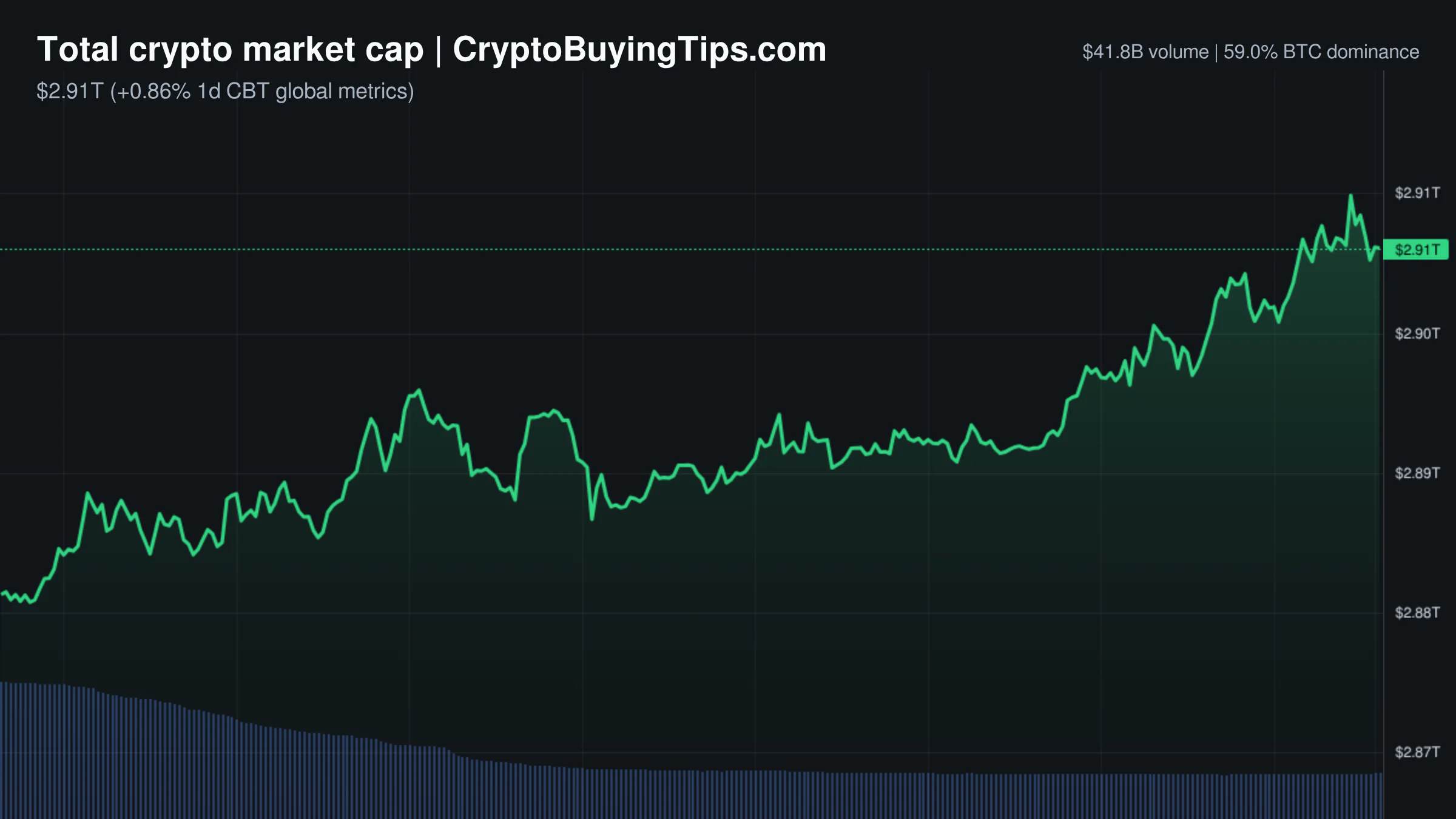
Crypto Market Overview | price stability masks collapsing trading volumes and low on-chain activity | October 4, 2026
Price stability masks collapsing trading volumes and low on-chain activity, suggesting conviction is lacking despite…
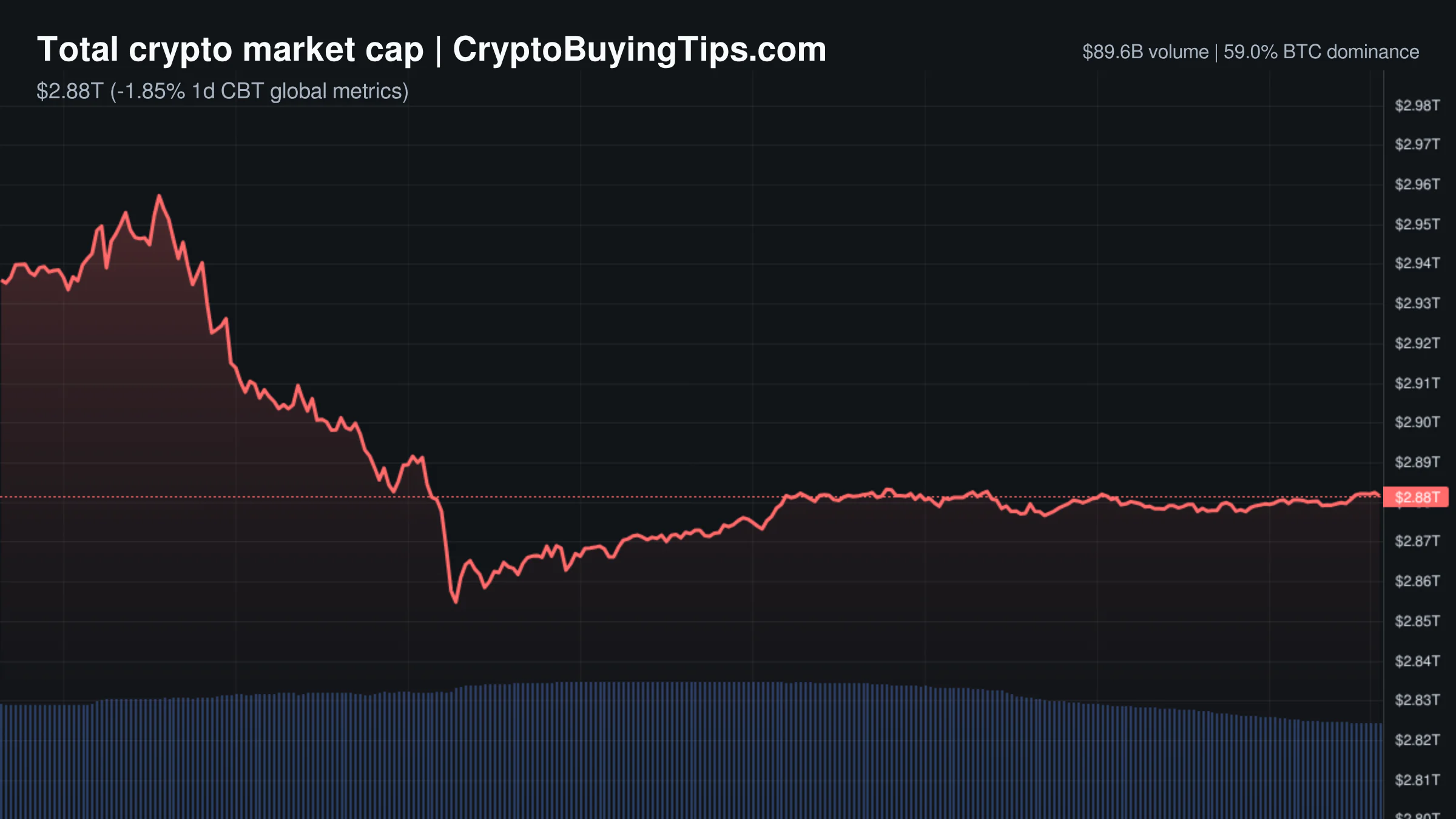
Crypto Market Overview | Leveraged bets dominate as spot volume fades | October 3, 2026
Leveraged bets dominate as spot volume fades; see our overview of current crypto market metrics, BTC dominance, and…

Bitcoin is slipping, but our scanner just flagged new setups
The market is having a bit of a wobble, which some are treating like an apocalypse. Our signal scanner suggests the…
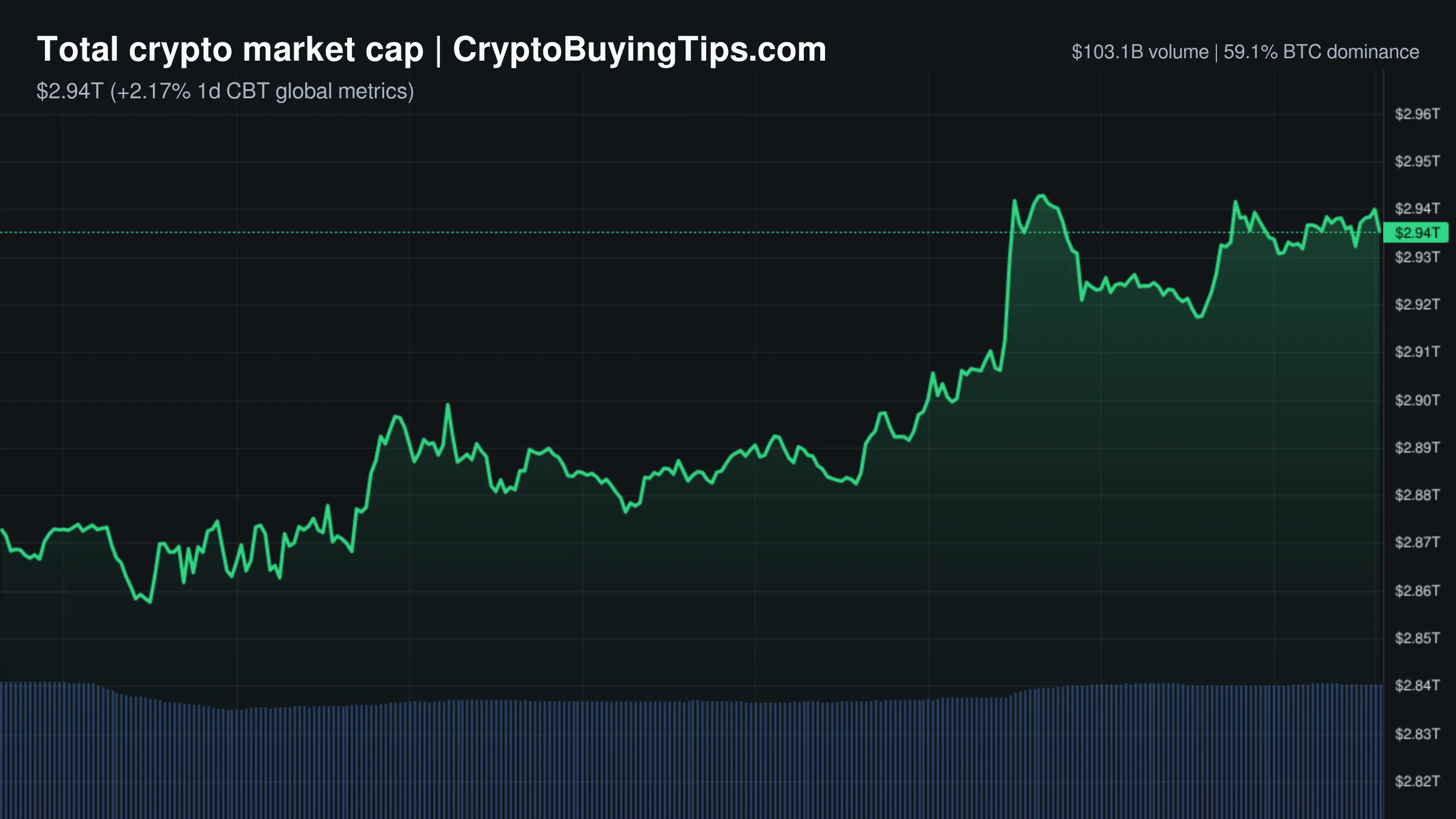
Crypto Market Overview | leverage-driven market structure amid regulatory clarity and institutional inflows | October 2, 2026
The crypto market overview shows leverage-driven structure amid regulatory clarity and institutional inflows, with BTC…