

The $480 billion leverage trap most traders are ignoring
The market looks calm on the surface, but the plumbing is screaming. While most people are staring at the Fear and Greed Index, which is sitting at a neutral 45, they're missing a massive red flag in the derivatives market. We have $480.87 billion in open interest for perpetuals, yet trading volume is crashing. In my experience, this is where the most dangerous "funding rate traps" happen. If you're trying to wrap your head around understanding crypto funding rate arbitrage, you need to realize that when price goes sideways but leverage stays high, the market becomes a powder keg.
What is actually happening
Right now, we're in a fragile equilibrium. Bitcoin dominance is holding steady at 60.03%, which effectively keeps the altcoin market in a chokehold. The Altcoin Season Index is at 42, meaning we're firmly in a Bitcoin season, but the real story is the divergence between price and positioning.
The total market cap is slightly up at $2.61 trillion, but derivatives volume has plummeted by 27.48%. This is a weird signal. Usually, when volume drops, it means traders are stepping away. But the open interest remains astronomical. This means people aren't closing their positions; they're just holding onto high-leverage bets while the market moves nowhere.
Why this creates a funding rate trap
Funding rates are essentially a fee that longs pay to shorts (or vice versa) to keep the perpetual price pegged to the spot price. When everyone is bullish and longing the market, funding rates spike. Longs start paying a premium just to keep their positions open.
Here is the trap: during a consolidation phase, these funding payments eat into your profit. If you're long and the price is flat, you're losing money every eight hours just to hold the trade. Eventually, the "pain" of paying the funding rate becomes too much. Traders start closing their longs not because they've changed their mind about the project, but because the cost of carry is too high.
This creates a cascading effect. A small dip triggers a wave of liquidations from overleveraged longs, which pushes the price further down, triggering more liquidations. It's a vicious cycle that often happens exactly when the "Neutral" sentiment makes people feel safe.
The risk of arbitrage in a low volume market
Some traders try to hedge this by understanding crypto funding rate arbitrage, where they go long on spot and short on perpetuals to collect the funding fee. It sounds like free money, but in a low-volume environment, it's risky.
When liquidity dries up, as we're seeing with the current volume collapse, the "basis" (the difference between spot and futures prices) can swing violently. If a sudden volatility spike hits, you can get liquidated on your short position before the spot gain can cover the loss. I've seen this happen countless times since 2019; the "risk-free" trade becomes a nightmare when the order book is thin.
What I'm watching next
I'm keeping a very close eye on that $480 billion open interest. If we see a sharp increase in funding rates while the price stays flat, I'm expecting a "long squeeze." The market needs to flush out this leverage before it can make a healthy move higher.
For those who are tired of the leverage game and just want to hold assets without worrying about funding fees or exchange hacks, I always suggest moving funds off the exchange. I personally prefer the Ledger Flex because it gives you that secure E Ink touchscreen and CC EAL6+ security without costing as much as the high-end Stax. It's a much better way to sleep at night when the derivatives market looks this unstable.
I'm also watching the ETH gas fees. They are incredibly low (0.11 to 0.15 Gwei), which tells me there's almost no real on-chain activity. We have a market where the "gamblers" are heavily positioned in perpetuals, but the actual users aren't using the network. That's a divergence I don't trust.
Some links in this article may be affiliate links. We may earn a commission at no extra cost to you — this never influences our analysis or coverage.

Sigrid Voss
Crypto analyst and writer covering market trends, trading strategies, and blockchain technology.
More Articles

6 million Bitcoin are quantum-exposed. Here is what that actually means
Six million Bitcoin are sitting in addresses that could be vulnerable to quantum attacks. The risk isn't theoretical; it…
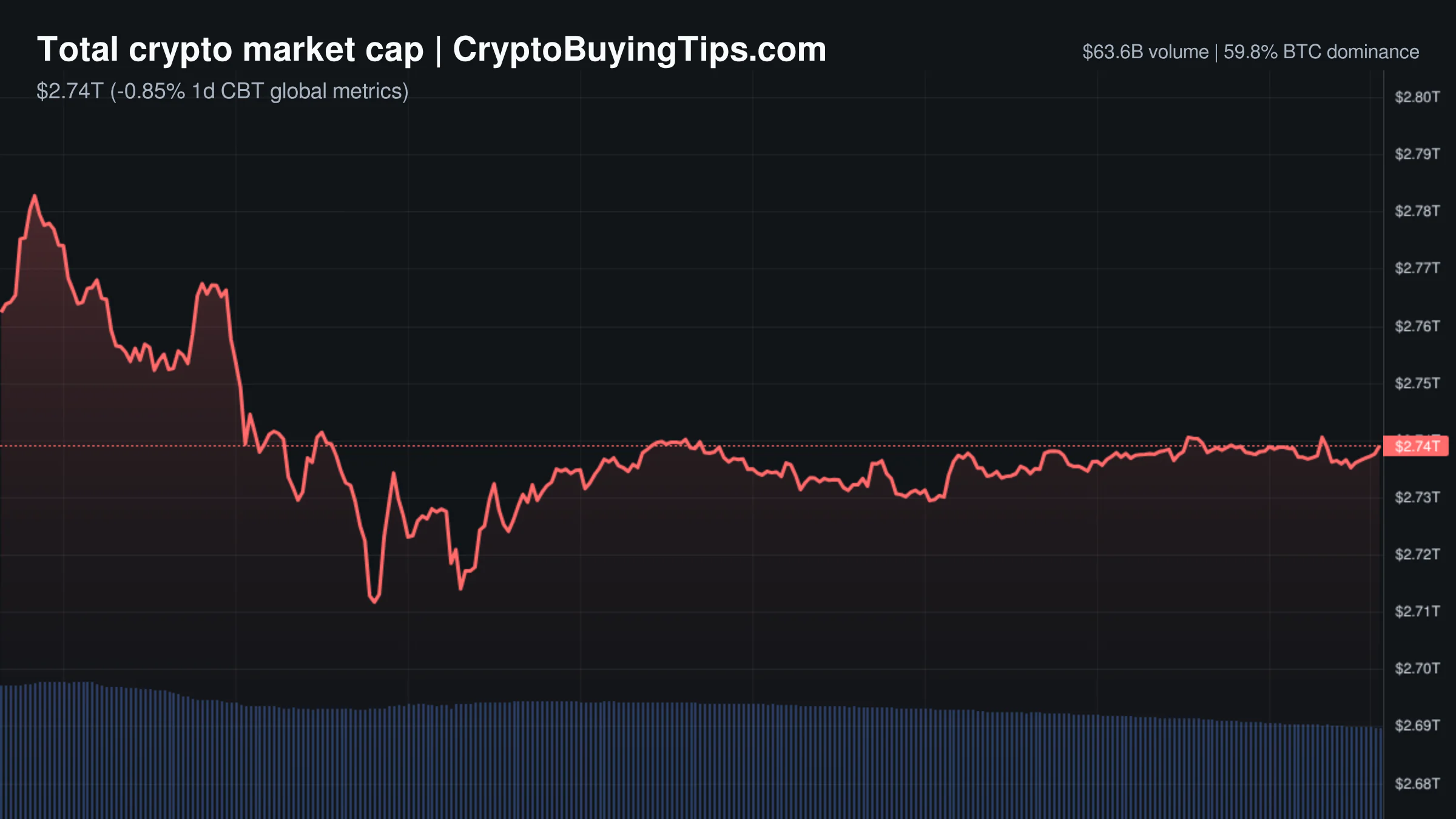
Crypto Market Overview | volume collapse amid macro pressure weighs on institutional flows | October 17, 2026
Market overview shows volume collapse amid macro pressure weighing on institutional flows; see how crypto is reacting to…

Speculators are ditching altcoins for tokenized Tesla stocks
Another day, another reason to question where all the money goes these days. Our signal scanner flagged a clear…
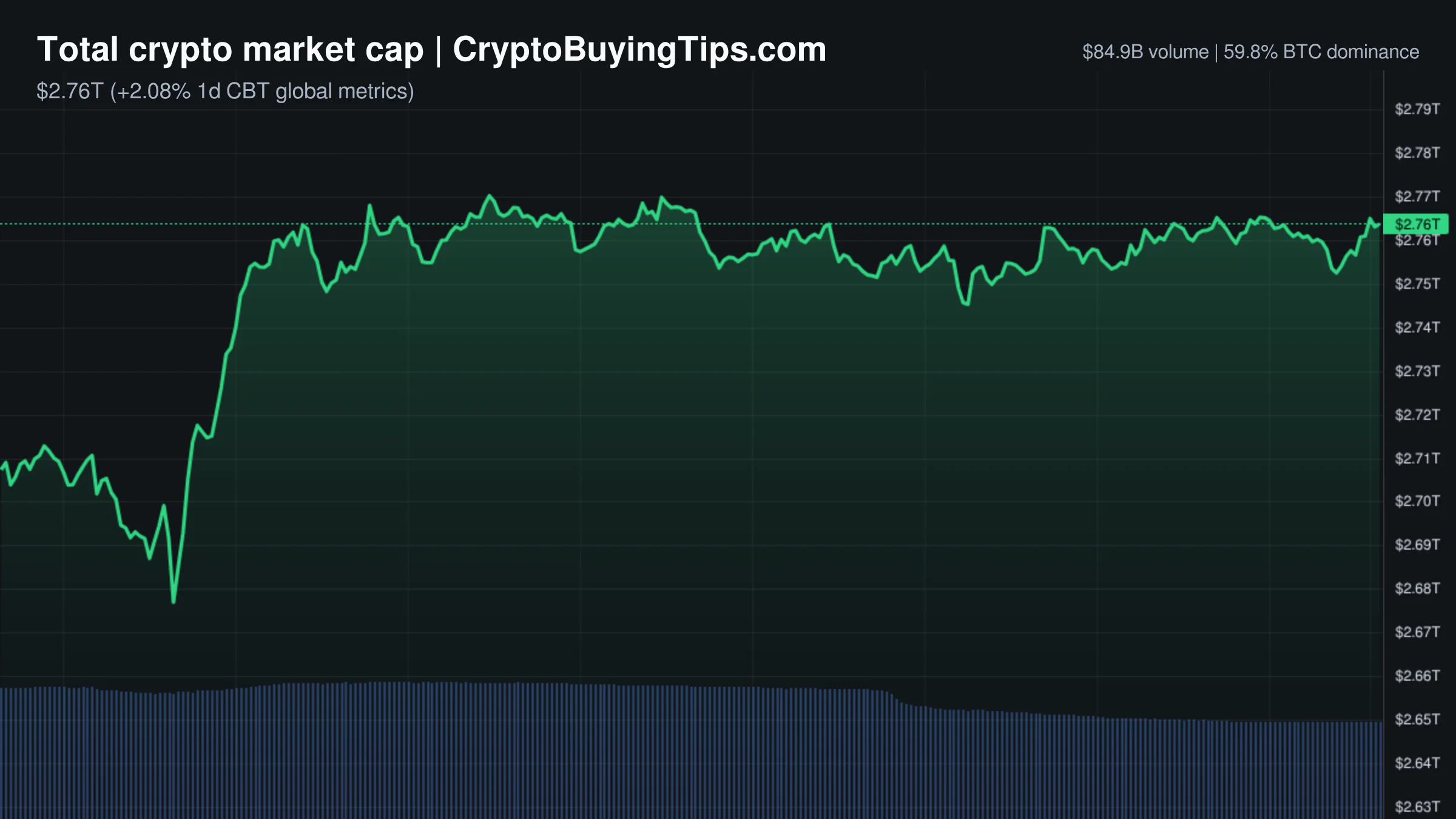
Crypto Market Overview | prices climb despite falling trading volume and stablecoin activity | October 16, 2026
Prices climb despite falling trading volume and stablecoin activity; see our market overview for context.