
The US is choking off Iran's crypto lifelines. Here is how it hits the market
The US government is no longer just watching stablecoins from the sidelines; it is using them as a weapon of state warfare. Between the "Economic Fury" campaign and the naval blockades in the Hormuz Strait, we are seeing a concerted effort to shut down the digital corridors Iran uses to bypass traditional sanctions. For most traders, this feels like a distant geopolitical spat, but if you are wondering how do us sanctions affect crypto prices, you need to look at the liquidity and the psychological shift in how we view "censorship resistance."
What is actually happening
The US is targeting the "lifelines" that allow sanctioned states to move value. This isn't just about banning a few wallets. We are talking about systemic pressure on stablecoin issuers like Tether to freeze assets and the physical disruption of trade routes that often correlate with the movement of digital capital.
When the US Treasury or OFAC targets specific addresses, the "neutrality" of the blockchain is put to the test. In my experience, the market usually ignores these events until they hit a critical mass. But when you combine a naval blockade with a crackdown on USDT, you create a volatility loop. If a state can't move its funds, it might panic sell other assets to get liquid, or it might push the market toward more obscure, privacy-focused coins.
Why this matters for the market
The big irony here is that the US is using the USD-backed stablecoin system to enforce the USD's dominance. It's a paradox. We use Bitcoin because it's supposed to be outside the reach of any single government, but most of the actual trading volume happens in USDT.
I think the real risk here is a "liquidity shock." Right now, the market is in a neutral phase. The Fear & Greed Index is sitting at 45, and we are firmly in a Bitcoin Season with an Altcoin Season Index of only 17. When the US aggressively freezes funds, it reminds the "smart money" that their stablecoins are just programmable dollars that can be turned off by a regulator in Washington.
If institutional investors start fearing that their "safe" stablecoin holdings could be frozen due to a geopolitical escalation, they might rotate back into BTC or ETH. This could actually drive a price spike in the short term, but it creates a fragile environment.
How do us sanctions affect crypto prices in the long run
In the short term, sanctions usually cause a dip because of the uncertainty. But in the long run, I believe this accelerates the move toward true self-custody.
When I see the US government choking off these lifelines, I don't think "crypto is failing." I think "the era of trusting exchanges with your life savings is over." If you are keeping your assets on a centralized platform, you are essentially trusting that platform to fight the US government on your behalf. That is a losing bet.
This is why I've always pushed for hardware wallets. If you're worried about geopolitical volatility or the risk of exchange freezes, you have to own your keys. I personally prefer the Ledger Nano Gen5 for a balanced setup. It's an entry-level device at around $99, but it gives you that CC EAL6+ security chip and an E Ink touchscreen, which makes it a lot harder to accidentally send funds to a scam address during a market panic.
What I'm watching next
I'm keeping a close eye on the stablecoin dominance metrics. If we see a massive spike in the volume of non-USD stablecoins or a surge in privacy coins, it's a sign that the market is trying to hedge against US state warfare.
I'm also watching the derivatives volume. It recently dropped by about 23%, which tells me that the speculative fever has cooled off. We are in a consolidation phase. If the US ramps up the pressure on Iran and we see a sudden surge in BTC dominance (which is already high at nearly 60%), it means the market is fleeing to the only asset that doesn't have a CEO who can be subpoenaed.
The intersection of naval blockades and blockchain freezes is a messy place to be. But for those of us who have been here since 2019, it's a reminder that the "financial revolution" isn't a straight line. It's a tug-of-war between old-world power and new-world tech.
Some links in this article may be affiliate links. We may earn a commission at no extra cost to you — this never influences our analysis or coverage.

Sigrid Voss
Crypto analyst and writer covering market trends, trading strategies, and blockchain technology.
More Articles
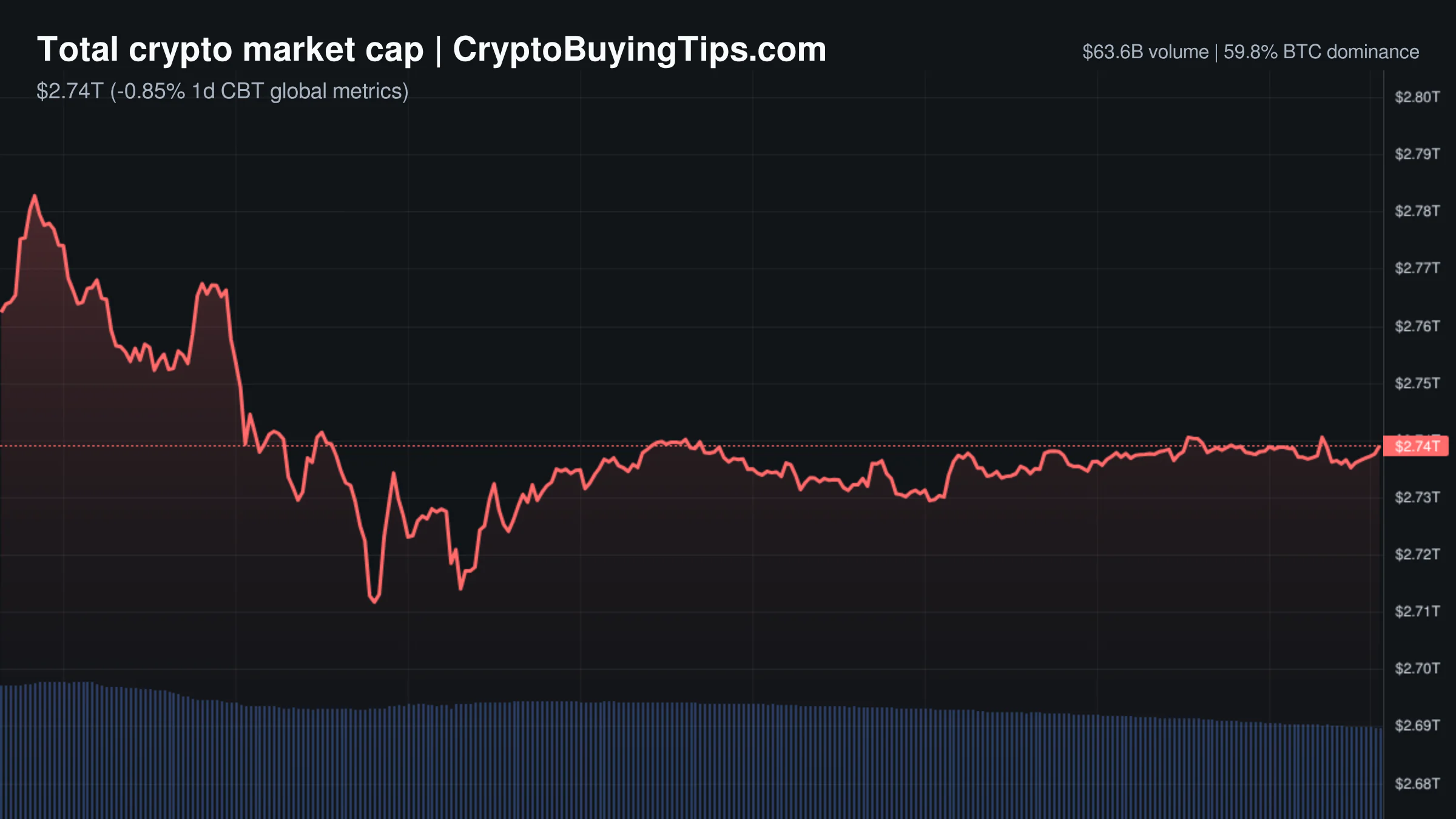
Crypto Market Overview | volume collapse amid macro pressure weighs on institutional flows | October 17, 2026
Market overview shows volume collapse amid macro pressure weighing on institutional flows; see how crypto is reacting to…

Speculators are ditching altcoins for tokenized Tesla stocks
Another day, another reason to question where all the money goes these days. Our signal scanner flagged a clear…
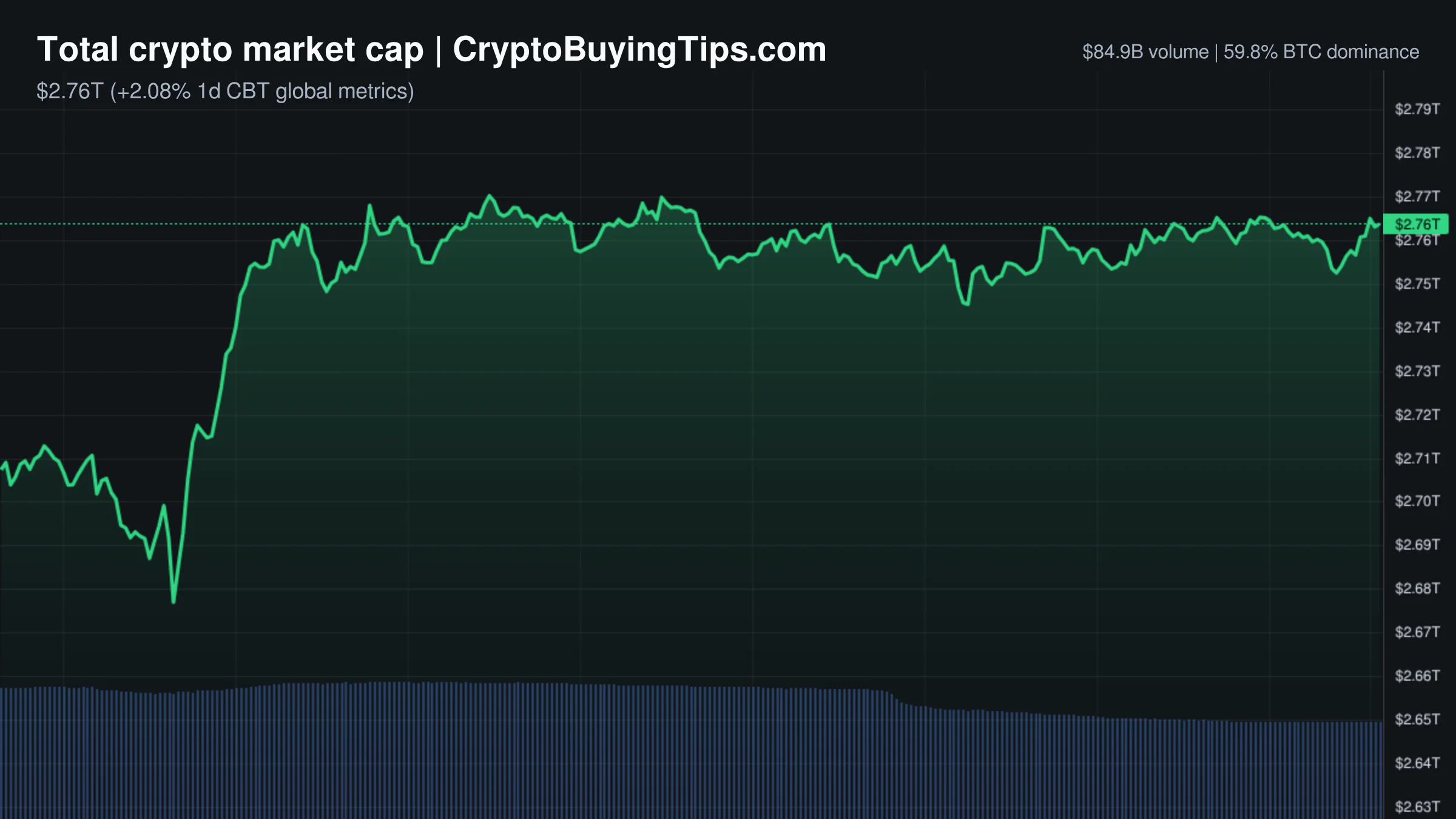
Crypto Market Overview | prices climb despite falling trading volume and stablecoin activity | October 16, 2026
Prices climb despite falling trading volume and stablecoin activity; see our market overview for context.

Wall Street is building its own rules while Congress argues
Wall Street seems to have decided waiting for Congress isn't worth the time. Major players like Mastercard are building…