
How to buy Chainlink (LINK)
This guide shows verified market-pair data, exchange listings, and related buying information for LINK. Always confirm fees, country availability, and withdrawal support directly with the exchange before depositing funds.
Buying checks for Chainlink (LINK)
Buying routes
Some links may be affiliate links. Route data is shown only when it was found in our market-pair or route data.
| Exchange/route | Pair | Type | Volume/liquidity | Action |
|---|---|---|---|---|
 Gate | LINK/USDT | CEX | $812.81K | Check route |
 MEXC0% trading fee | LINK/USDT | CEX | $897.4K | Check route |
 Bitget | LINK/USDT | CEX | $1.12M | Check route |
 Binance | LINK/USDT | CEX | $13.18M | Check route |
 BitMart25% trading fee | LINK/USDT | CEX | $8.83M | Check route |
 KuCoin | LINK/USDT | CEX | $9.56M | Check route |
 HTX | LINK/USDT | CEX | $6.74M | Check route |
 Bybit10% trading fee | LINK/USDT | CEX | $5.63M | Check route |
 XT.COM | LINK/USDT | CEX | $5.27M | Check route |
 Coinbase Exchange | LINK/USD | CEX | $4.98M | Check route |
Risk checks
Token contract data is present for LINK; users should verify the exact address and network through official sources before transferring funds.
Exchange availability, KYC requirements, and account features can vary by country.
Deposit and withdrawal support is not verified unless a route source explicitly provides it.
CoinMarketCap page information is used only as low-confidence background context, not as proof of listings, fees, liquidity, or contract safety.
Large-cap buying queries are often exchange-dominated, so the guide should emphasize durable verification, custody, ecosystem, and risk context.
How this guide is checked
- Last verified
Last updated:
How to buy and use Chainlink (LINK) responsibly
Chainlink is a cryptocurrency launched in 2017 that operates on the Ethereum platform. It is an oracle platform designed to bring capital markets onchain and is used by a large portion of decentralized finance (DeFi) protocols. To use the network, the LINK token is used to pay for platform services and secure the network.
Verified ways to access LINK
LINK is available on several centralized exchanges and decentralized protocols.
Centralized exchanges with verified market pairs include:
- Binance
- KuCoin
- BitMart (Trading fee: 0.25%)
- HTX
- Bybit (Trading fee: 0.1%)
- XT.COM
- Coinbase Exchange
- LBank
- OKX
- Kraken
- Upbit
- Bitget
- MEXC (Trading fee: 0%)
- Gate
- BingX
- Bithumb
- Bitstamp by Robinhood
- Crypto.com Exchange
- Gemini
- Binance.US
- Binance TR
- Tokocrypto
- Bitfinex
Decentralized options include Uniswap and PancakeSwap v3.
What Chainlink is used for
Chainlink provides infrastructure that allows smart contracts to interact with external data. This is done through oracles, which provide the data feeds necessary for DeFi applications to function.
The platform offers several specific tools:
- CCIP, Data Streams, Data Feeds, and Proof of Reserve.
- Integration with the Circle-backed Arc program to help developers build on stablecoin-native Layer-1s.
- Support for real-world asset (RWA) use cases within stablecoin ecosystems.
The LINK token is the utility asset used to pay for these services.
Wallet, network, and custody checks
LINK exists on multiple networks. You must verify the contract address and the network before making any transfers to avoid loss of funds.
Verified contract addresses include:
- Ethereum:
0x514910771af9ca656af840dff83e8264ecf986ca - BNB Smart Chain (BEP20):
0xf8a0bf9cf54bb92f17374d9e9a321e6a111a51bd - Solana:
LinkhB3afbBKb2EQQu7s7umdZceV3wcvAUJhQAfQ23L - Polygon:
0x53e0bca35ec356bd5dddfebbd1fc0fd03fabad39 - Gnosis Chain:
0xE2e73A1c69ecF83F464EFCE6A5be353a37cA09b2 - Avalanche C-Chain:
0x5947bb275c521040051d82396192181b413227a3 - Celo:
0xd07294e6E917e07dfDcee882dd1e2565085C2ae0 - Optimism:
0x350a791bfc2c21f9ed5d10980dad2e2638ffa7f6
You can use the official Etherscan explorer to check addresses and transactions. For deeper project verification, the official whitepaper and source code are available.
Common mistakes before buying LINK
Users often make a few specific errors when acquiring LINK:
- Using a lookalike contract address or selecting the wrong network.
- Assuming that every exchange supports deposits and withdrawals for every network.
- Ignoring KYC requirements or country-specific restrictions before opening an account.
- Relying on live price or volume snapshots as permanent data.
Route, liquidity, and availability caveats
Deposit and withdrawal support is not verified for the listed routes unless the source explicitly provides that data.
KYC requirements and account features vary by platform. For example, Bybit and MEXC have specific lists of banned countries. You should check the current terms of the exchange for your specific region before depositing funds.
Sources and methodology
The routes in this guide come only from verified market-pair rows in our database. Web research and news from sources like BSC News are used for background and risk context. Information from CoinMarketCap pages is treated as low-confidence context. Live market values are omitted because they change too frequently to remain accurate in a static guide.
Related Articles
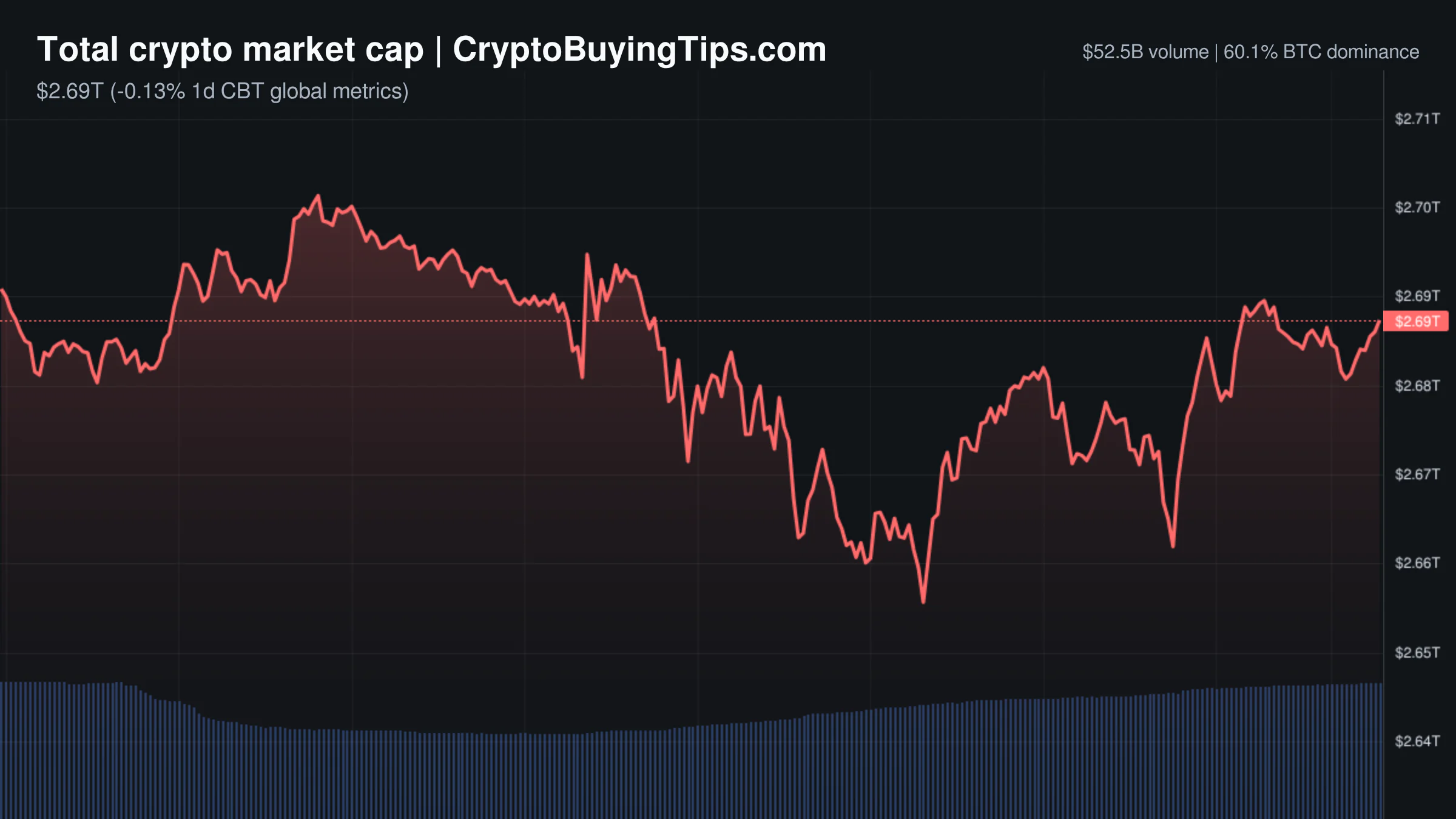
Crypto Market Overview | Derivatives volume dwarfs spot activity amid macro caution and ETF inflows | October 26, 2026
Derivatives volume dwarfs spot activity amid macro caution and ETF inflows; see our market overview for key asset…
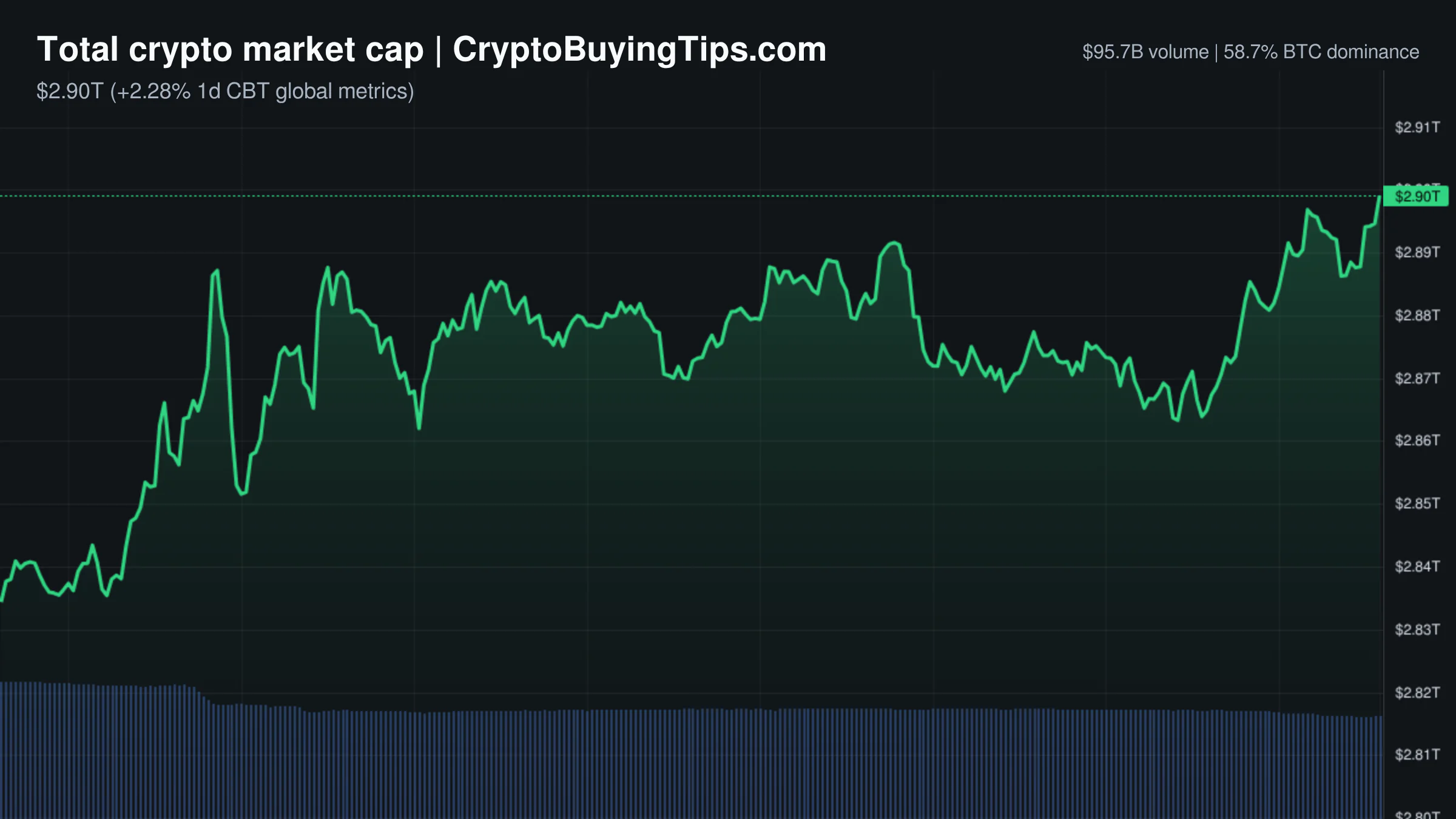
Crypto Market Overview | low volume rally meets high leverage and fed stablecoin rules | September 25, 2026
The market shows high leverage despite low spot volume; see our read on the Fed, BTC action, and altcoin rotation for…

Crypto Market Overview | leveraged bets dominate despite declining spot accumulation and regulatory overhang | September 10, 2026
Leveraged bets dominate crypto despite spot accumulation decline and regulatory overhang; see our market overview read…
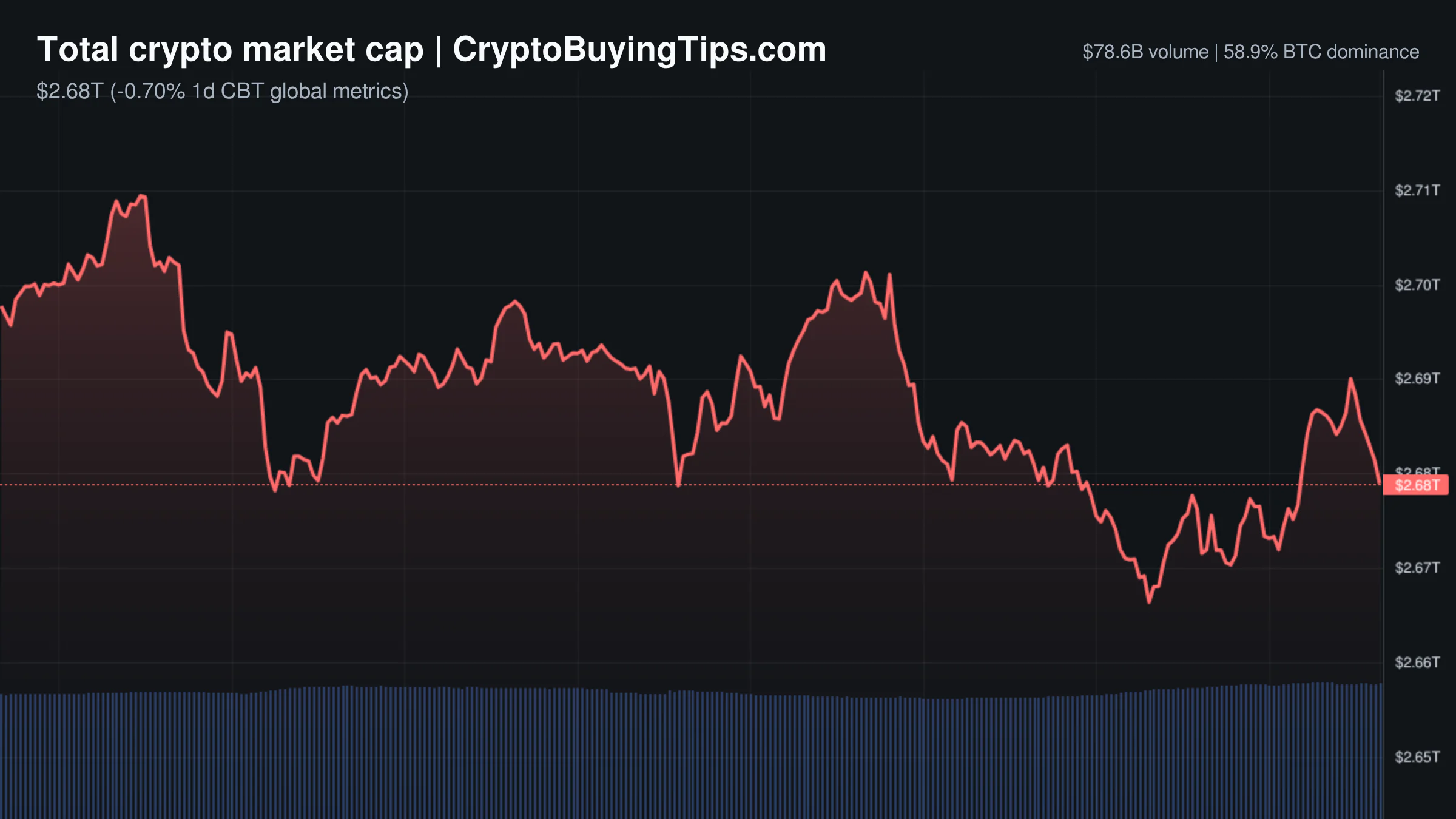
Crypto Market Overview | Derivatives volume dwarfs spot activity amid institutional rail expansion | September 8, 2026
Derivatives volume dwarfs spot activity amid institutional rail expansion; see our market overview on crypto's current…
Recent Articles
See moreHyperliquid whales are net short HYPE as $37M hits Coinbase
The crowd loves the hype, but our tracker shows whales betting otherwise as $37M hits Coinbase. Professional positioning…
Stablecoins are leaving the exchanges. HSBC just proved it
The market seems preoccupied with leverage ratios while real money moves elsewhere; a major bank issuing licensed…
Fidelity outflows and Ethereum OG dumps suggest a hidden exit
Another day of market data suggesting everything is fine until you look at the outflows and OG dumping. Institutional…
Volume is surging but prices are flat. Here is where the trigger is
Volume spikes while prices remain stubbornly flat; this divergence suggests an underlying battle between leveraged…
Chainlink Market Sentiment
Source: CoinMarketCap. Updated Oct 26, 2026, 2:37 PM
LINK to USD Converter

Chainlink
LINK
Rank
#13
$11.43