
How to buy Vaulta (A)
This guide shows verified market-pair data, exchange listings, and related buying information for A. Always confirm fees, country availability, and withdrawal support directly with the exchange before depositing funds.
Buying checks for Vaulta (A)
Buying routes
Some links may be affiliate links. Route data is shown only when it was found in our market-pair or route data.
| Exchange/route | Pair | Type | Volume/liquidity | Action |
|---|---|---|---|---|
 Gate | A/USDT | CEX | $65.53K | Check route |
 MEXC0% trading fee | A/USDT | CEX | $71.1K | Check route |
 Bitget | A/USDT | CEX | $325.88K | Check route |
 Binance | A/USDT | CEX | $639.37K | Check route |
BitMart25% trading fee | A/USDT | CEX | $747.98K | Check route |
HTX | A/USDT | CEX | $1.78M | Check route |
Hotcoin | A/USDT | CEX | $1.32M | Check route |
Poloniex | A/USDT | CEX | $919.96K | Check route |
WhiteBIT | A/USDT | CEX | $864.92K | Check route |
BloFin | A/USDT | CEX | $632.33K | Check route |
Risk checks
Token contract data is present for A; users should verify the exact address and network through official sources before transferring funds.
Exchange availability, KYC requirements, and account features can vary by country.
Deposit and withdrawal support is not verified unless a route source explicitly provides it.
CoinMarketCap page information is used only as low-confidence background context, not as proof of listings, fees, liquidity, or contract safety.
How this guide is checked
- Last verified
Last updated:
How to buy and use Vaulta (A) on its native network
Vaulta (A) is a Web3 banking network designed to support decentralized financial services. Launched in 2025, it is built on the EOS network to provide institutional-grade features and real-time performance. The project focuses on bridging traditional finance and Web3 through tools like Bitcoin-native yield and tokenized assets.
Verified routes to get A
Vaulta is available on several centralized exchanges. Most of these platforms use USDT as the primary trading pair.
- Binance (A/USDT)
- Bybit (A/USDT)
- MEXC (A/USDT)
- Gate (A/USDT)
- BitMart (A/USDT)
- OKX (A/USDT)
- KuCoin (A/USDT)
- Kraken (A/USD)
- Upbit (A/KRW)
For those prioritizing fees, MEXC lists 0% maker fees on spot, while Bybit lists 0.1% and BitMart lists 0.25%.
What the native network does
Vaulta operates on the EOS network. This infrastructure allows the network to achieve one-second finality using the Savanna consensus algorithm. It also uses a RAM-based architecture for scalable on-chain memory.
The ecosystem includes several key components:
- exSat: A virtual chain on Vaulta that enables Bitcoin-native DeFi.
- Block Producers: Token holders elect these producers to maintain the network and approve protocol upgrades.
- Governance: The project recently introduced a tripartite governance model to balance centralized oversight with decentralized community influence.
Wallet, transfer, and network-fee checks
To hold Vaulta outside of an exchange, you need a wallet that supports the EOS network. The verified token address for Vaulta is core.vaulta.
Before making any transfer, use the Vaulta explorer to verify the account and transaction details. Always double check that you are using the EOS network, as sending tokens to the wrong blockchain will result in a permanent loss of funds.
Self-custody and withdrawal risks
Moving assets from an exchange to a private wallet involves specific risks. Deposit and withdrawal support for Vaulta is not verified for all exchanges listed above. You must check the specific exchange's current status before attempting a transfer.
Common mistakes to avoid include:
- Using a lookalike contract address instead of the official
core.vaultaaddress. - Assuming that an exchange that allows trading also supports withdrawals to the native network.
- Ignoring KYC requirements or country-specific restrictions that may lock your account.
For those seeking higher security for their private keys, hardware wallets like Ledger are often used to reduce the risk of online theft.
Sources and methodology
The routes listed in this guide come exclusively from verified market-pair rows in our database. Background information on the project and governance was gathered through web research and official documentation. Information from CoinMarketCap page scrapes is treated as low-confidence context and is not used as proof of liquidity or contract safety. Live market values, such as price and 24h volume, are omitted because they change too frequently to remain accurate in a static guide.
Related Articles
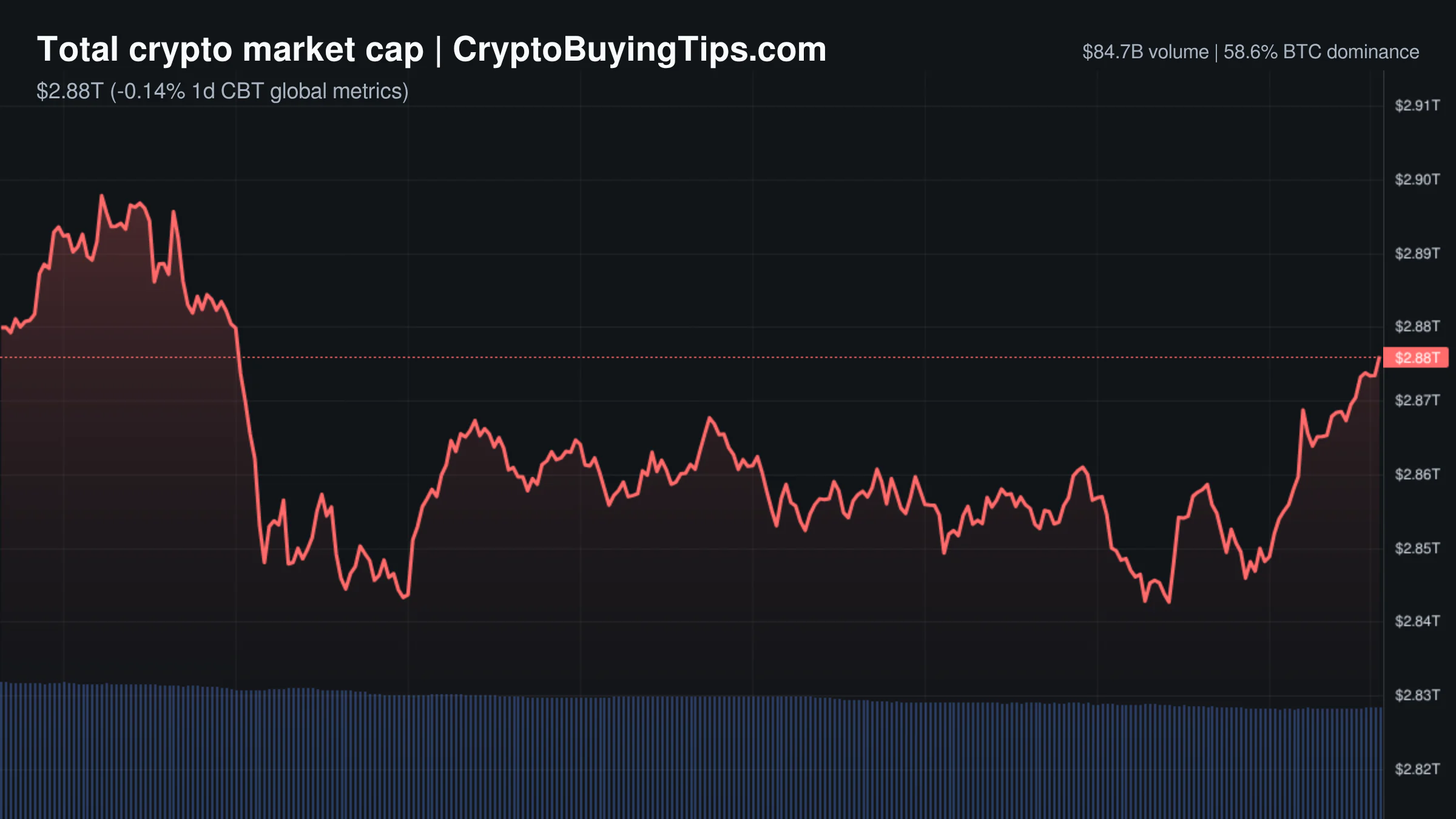
Crypto Market Overview | Volume collapses as institutional rails clash with regulatory friction | September 30, 2026
Volume collapses as crypto rails clash with regulation; see how market cap dipped 2.32% while ETF flows continue to move…

NEAR just got an ETF while the SEC is falling apart
The SEC seems rather preoccupied with its own structural integrity; meanwhile, institutional money appears quite…

Aave is letting you borrow USDC against Nvidia stocks and the crypto-only era is over
The crypto world has finally moved past merely displaying stock tickers on a ledger. Aave V4's Equities Hub is enabling…
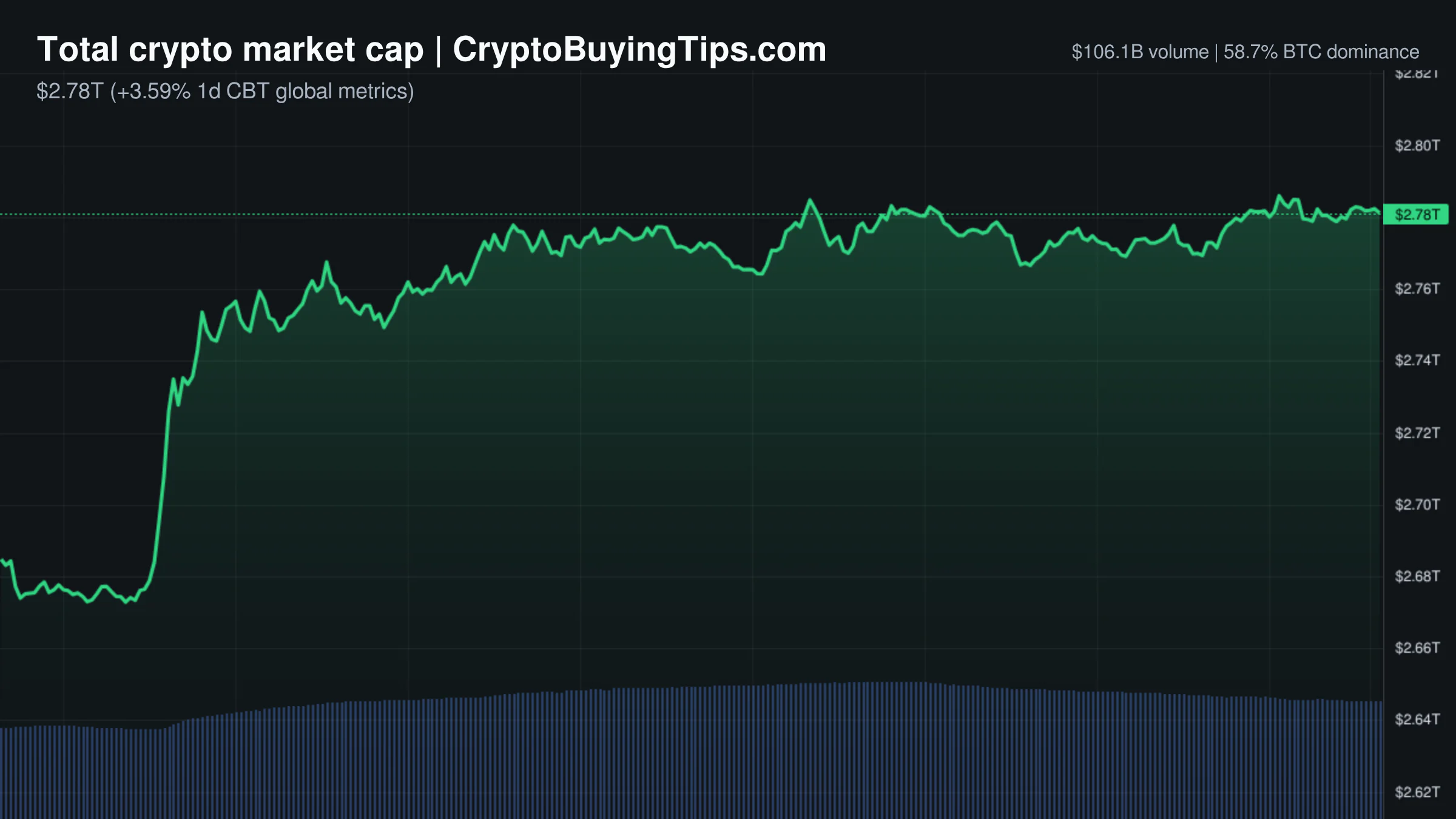
Crypto Market Overview | Leveraged bets drive gains amid diverging us regulatory paths | September 19, 2026
Leveraged bets drive crypto gains amid diverging us regulatory paths; see our market overview on BTC, ETH, and macro…
Recent Articles
See moreSolana just tried to fire the clearinghouses
Another day, another attempt to make old banking rails look quaint. Solana’s Delivery-versus-Payment (DvP) rail is less…
FET rips 13% as the market bets on the new AI czar
The AI narrative continues to drive capital flow regardless of policy nuance; FET jumped over 13 percent on news linking…
Perpetual futures now dwarf traditional futures 300 to 1
Perpetual open interest dwarfs traditional futures by over 30 to 1. This massive imbalance suggests that current market…
Bitcoin is slipping, but our scanner just flagged new setups
The market is having a bit of a wobble, which some are treating like an apocalypse. Our signal scanner suggests the…
Vaulta Market Sentiment
Source: CoinMarketCap. Updated Oct 7, 2026, 4:28 AM
A to USD Converter

Vaulta
A
Rank
#155
$0.10