
100 projects just folded. Here is where the money went
The headline "Crypto is going through a massive dot-com style shakeout as over 100 projects fold in 2026" forces us to ask: why are crypto projects shutting down 2026? On the surface, it looks like a bloodbath. For the retail trader holding a bag of a "next-gen" Layer 3 that just deleted its Twitter account, it feels like the end of the world. But our read is different. This isn't a random collapse. It is a violent, necessary tidying of the room. We previously covered crypto decoupling happens for more background.
The short answer
The current wave of liquidations isn't just random failure. It reflects a capital rotation. Money is moving away from speculative, unproven concepts and toward established infrastructure. The market is simply stopping the funding of "zombie" protocols that have no users and no revenue.
How does why are crypto projects shutting down 2026 work?
To understand the mechanics, we have to look at how these projects were built. Most of the 100 projects folding now were funded during a period of cheap leverage and infinite optimism. They didn't build products; they built pitch decks.
Our news scoring system rated the story of this shakeout 7/10 for novelty, but the underlying cause is old. As noted by bit.com, macro environments don't create structural failures. They reveal them. When the tide goes out, you see who was swimming naked. In this case, the "naked" are protocols with tokenomics designed only to extract value from the next buyer.
These projects usually fail in a specific sequence. First, the venture capital funding dries up. Then, the protocol's own token price drops, which destroys the value of the treasury they were using to pay developers. Finally, the team realizes the "revolutionary" tech is actually just a fork of a 2021 project with a different logo. They fold, and the capital flees.
Where the capital is actually flowing
If 100 projects are dying, the money has to go somewhere. It isn't leaving the asset class entirely; it is just getting less picky.
Our news scoring system rated the recent institutional flow data 9/10 for novelty because of the sheer scale. While the "zombies" fold, Bitcoin investors poured $853 million into spot ETFs in a single week. BlackRock's IBIT claimed the bulk of that. This is the core of the rotation. Institutional money isn't interested in a "decentralized AI-powered cat-token" ecosystem. They want the liquidity and perceived safety of the flagship asset.
We've seen this pattern before. We previously covered how dominance data agrees that capital is consolidating into Bitcoin during periods of risk aversion. With BTC dominance sitting at 52.8% and the Altcoin Season Index at a dismal 22/100, the market is effectively in a "flight to quality."
The survivor data
The most interesting part of the data is the gap between the "institutional" survivors and the "degenerate" survivors.
On one side, you have the ETFs and the majors. On the other, you have the pure gambling plays. Our market data tools show that while 100 protocols are folding, Book of Meme (BOME) just ripped 24.5995% in 24 hours.
This tells us that the market is split. Investors are either buying the safest possible version of crypto (BTC ETFs) or the most honest version of a gamble (memecoins). The middle ground, where "utility tokens" with fake roadmaps live, is where the deaths are happening. The market has lost patience for the "tech" narrative when that tech doesn't actually do anything.
How to spot a zombie
For those still holding mid-cap alts, the data suggests a few red flags. Most of the projects that survived the first wave of the 2026 shakeout have specific traits. According to dipprofit.com, projects with controlled inflation rates or meaningful buy pressure from actual protocol fees have better recovery profiles.
If a project's only "growth" is a series of partnerships with other projects that are also folding, it is a zombie. If the token has no burn mechanism and the team is still selling their unlock schedule into a dying bid, it is a zombie.
The Fear & Greed Index is currently at 41, which is neutral. This is the danger zone. It is not a panic, but it is not a rip. It is the kind of environment where the last few "zombies" realize no one is coming to save them. Our read is that the shakeout will continue until the gap between the "narrative" and the "numbers" is closed. Until then, the safest place for capital is where the $853 million is going.
Some links in this article may be affiliate links. We may earn a commission at no extra cost to you — this never influences our analysis or coverage.

Sigrid Voss
Crypto analyst and writer covering market trends, trading strategies, and blockchain technology.
More Articles
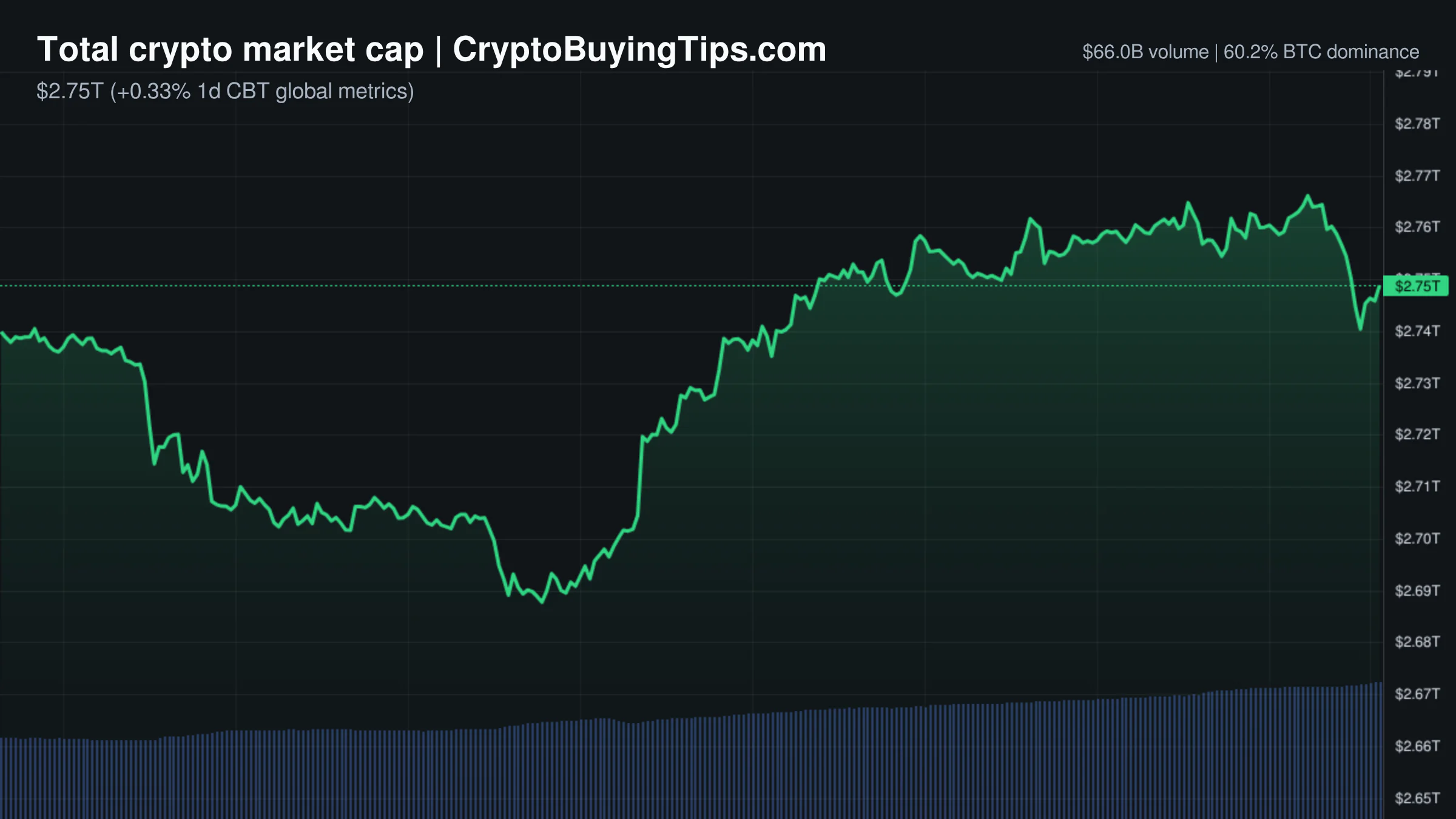
Crypto Market Overview | Leveraged bets surge as institutional rails expand despite ETF outflows | October 19, 2026
Leveraged bets surge as institutional rails expand despite ETF outflows; see our market overview on BTC dominance and…

Why 0.04 Gwei gas is a red flag for Ethereum
The quiet gas fees suggest nothing about underlying utility demand; meanwhile, $566B in derivatives volume points…
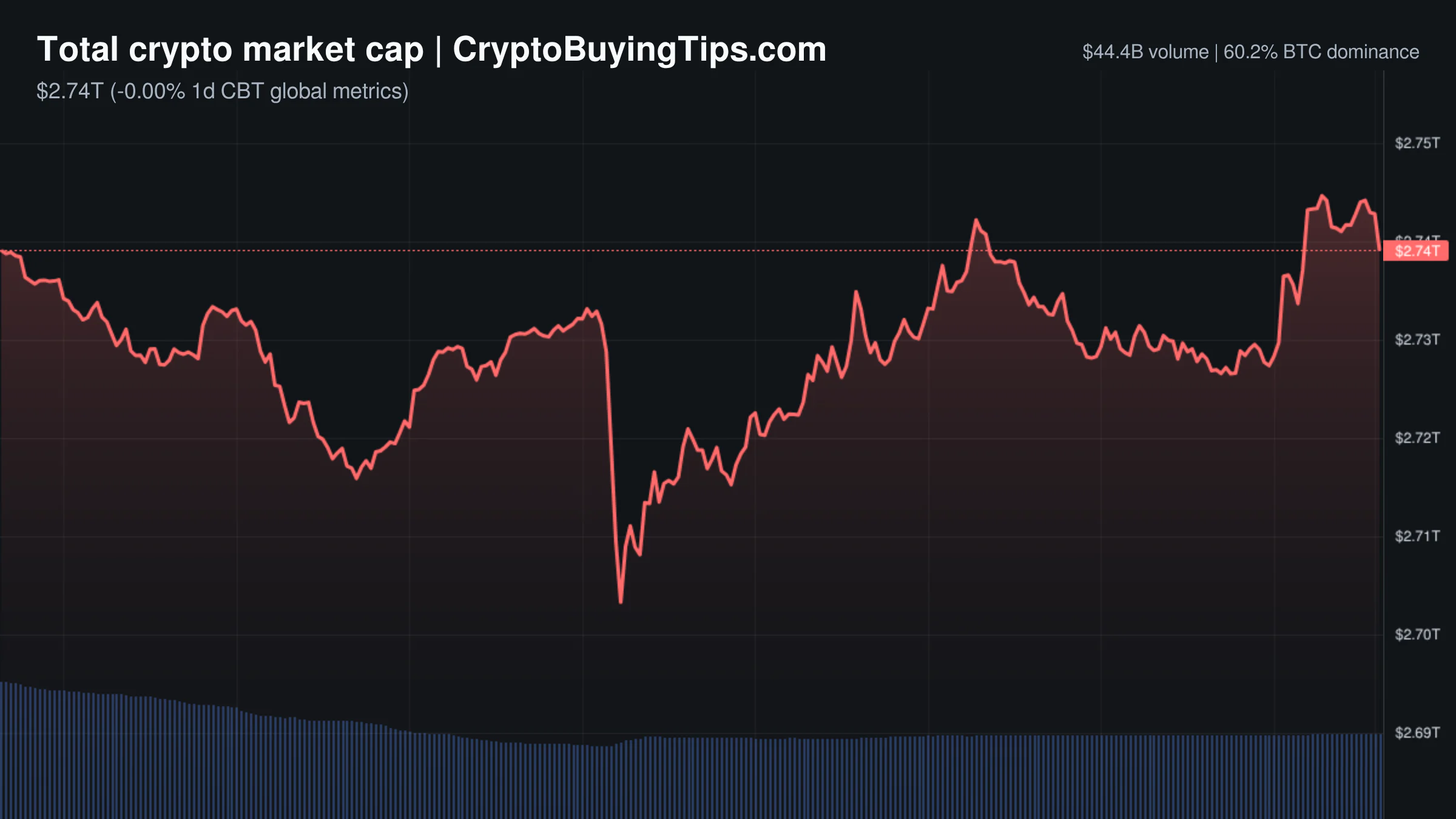
Crypto Market Overview | Bitcoin dominance climbs while altcoins struggle amid institutional friction | October 18, 2026
Bitcoin dominance climbs to 60.1% while altcoins struggle amid institutional friction; see our market overview for…

6 million Bitcoin are quantum-exposed. Here is what that actually means
Six million Bitcoin are sitting in addresses that could be vulnerable to quantum attacks. The risk isn't theoretical; it…