
A $1.5 million oracle error just proved that your leverage is a gamble
Imagine waking up to find your long position liquidated, not because the market crashed, but because a piece of software simply lied about the price for ten seconds. That is exactly what happened during the Hyperliquid SPACEX-USDH flash crash. Millions of dollars vanished in minutes because the "truth" the system relied on was wrong. If you are trading with 10x, 20x, or 50x leverage, you need to understand what is a crypto price oracle because it is the single most invisible point of failure in your portfolio. We previously covered Elevated Funding Rates for more background.
The short answer
A crypto price oracle is a service that finds real-world price data (from exchanges like Binance or Coinbase) and feeds it into a blockchain smart contract. Since blockchains cannot "look" at the outside world, they rely on these oracles to tell them when to trigger liquidations or execute trades.
How it actually works
Think of a blockchain as a secure vault with no windows. It knows everything happening inside the vault, but it has no idea if Bitcoin is at $60,000 or $10. To make a decentralized exchange or a lending protocol work, the vault needs a trusted messenger to knock on the door and say, "The current price of BTC is X." That messenger is the oracle.
Most modern protocols use decentralized oracle networks. Instead of trusting one source, they pull data from multiple exchanges, average it out, and push that "aggregated" price onto the chain. In a perfect world, this prevents a single glitch from ruining everyone. But in the real world, things break.
In the Hyperliquid case, the oracle provided a price that didn't match reality. Because the system believed the oracle, it triggered automatic liquidations. The traders didn't do anything wrong, and the market didn't actually move, but the code saw a "price" that hit the liquidation threshold and wiped the accounts.
Where people get tripped up
The biggest mistake I see beginners make is assuming that "decentralized" means "safe from errors." People think that because they aren't using a centralized broker, they are immune to systemic failure. That is a dangerous assumption.
When you use high leverage, you are essentially giving a smart contract permission to seize your funds based on the oracle's word. If the oracle lags by a few seconds during a volatile move, or if it suffers a "flash crash" error like we saw with SPACEX-USDH, you can be liquidated even if the price recovers instantly.
I've seen this happen repeatedly. It is a cold reminder that you aren't just betting on the coin; you are betting that the data feed remains accurate. This is why I always tell my friends to be wary of "extreme" leverage. When you use 100x leverage, a tiny oracle glitch of 1% is enough to zero your account.
Putting it into practice
You can't fix the oracles, but you can change how you interact with the risk. If you are trading perpetuals, the first thing I recommend is lowering your leverage. It is boring advice, but it is the only thing that actually works when the plumbing of the market breaks.
I also suggest diversifying where you keep your assets. If you are just holding for the long term, get your coins off the exchanges and into a hardware wallet. I personally use the Ledger Nano Gen5 because it has a secure touchscreen and the CC EAL6+ chip, which means your private keys are offline and safe from the kind of chaos that happens on-chain.
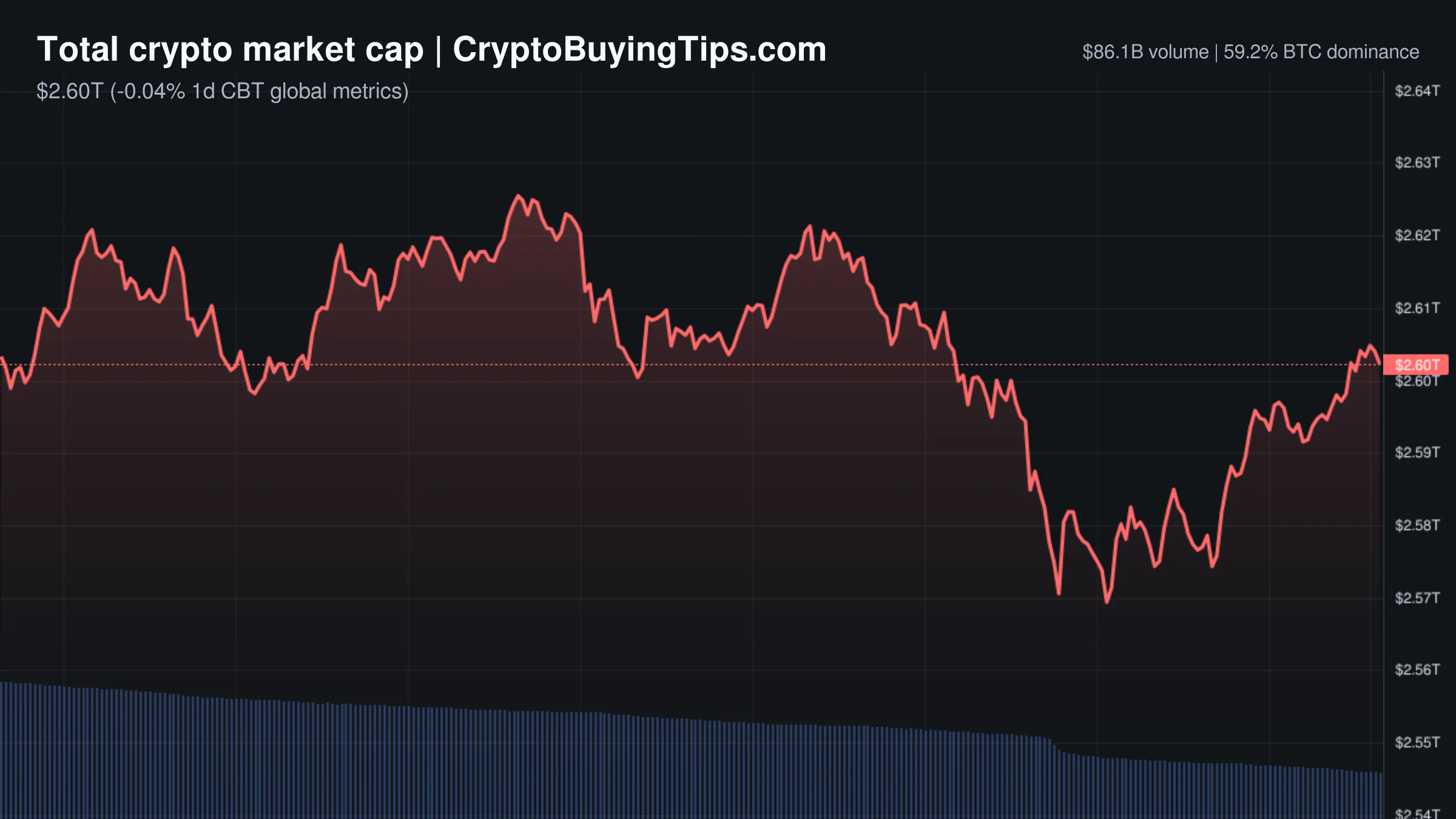
If you must trade leverage, keep a close eye on the overall market health. Right now, the Fear & Greed Index is at 33, which means the market is in a state of fear. We are also seeing a weird divergence where prices are ticking up slightly but 24h volume has crashed by nearly 19%. This suggests liquidity is drying up. In a low-liquidity environment, oracle errors and "wicky" price action become much more common.
We previously covered how this relates to the leverage trap explained in our deeper look at perpetual futures. The lesson is the same: the system is fragile. Don't let a software glitch be the reason you lose your savings.
Trade the news at our editorial-picked exchange: MEXC
Some links in this article may be affiliate links. We may earn a commission at no extra cost to you — this never influences our analysis or coverage.

Sigrid Voss
Crypto analyst and writer covering market trends, trading strategies, and blockchain technology.
More Articles

Derivatives volume is 8x higher than spot. Here is why that is a warning
The market's current price action seems to be driven by bets rather than cash; with derivatives volume eight times…
Crypto Market Overview | volume collapses as greed persists amid regulatory friction | August 23, 2026
Volume collapses as greed persists amid regulatory friction; see our market overview on crypto's current state and key…

Brussels is coming for DeFi vaults and the market is ignoring the risk
Brussels seems to think "decentralized" is just an aesthetic choice for now. Our read suggests MiCA regulation isn't…
Crypto Market Overview | Spot accumulation rises while derivatives volume cools | August 22, 2026
Spot accumulation rises while derivatives volume cools in this market overview of crypto activity and macro drivers for…