

Aave is letting you borrow USDC against Nvidia stocks and the crypto-only era is over
DeFi 24h volume is increasing by 2.85% while overall spot market volume is declining by 4.26%. This suggests a structural shift in where capital finds utility. Traders are less interested in simply swapping one token for another and more interested in actually using their assets. The launch of Aave V4's Equities Hub on Base is the clearest example of this trend. For the first time, the "on-chain" world isn't just pretending to be a financial system; it is starting to eat the traditional one. If you have been wondering how aave v4 tokenized stocks work, the answer is that they turn static equity holdings into productive collateral. We previously covered Aave tokens buying signal for more background.
The shift from holding to borrowing
Most of the coverage around tokenized assets focuses on the fact that they exist. We see headlines about BlackRock or Coinbase putting a stock on a blockchain and people treat it like a magic trick. Our news scoring system rated this Aave V4 story 10/10 for novelty because it moves past the "look, it's on a chain" phase and into actual utility.
Holding a tokenized share of Nvidia is just owning a digital receipt. It is a passive experience. Using that share as collateral to borrow USDC is a financial tool. It allows a user to unlock liquidity without selling their position, which means they keep their upside in the AI trade while gaining spending power in stablecoins. It is the same logic as a margin loan at a traditional brokerage, but it happens on a decentralized rail.
How aave v4 tokenized stocks work
The mechanism is handled through a dedicated Equities Hub on Base. Instead of mixing these assets into the general lending pool where a sudden crash in a random altcoin could cause systemic issues, Aave uses a hub and spoke architecture. This keeps the risk isolated.
The process is straightforward for eligible non-U.S. users. They supply one of seven supported Coinbase tokenized stocks: AAPLc, AMZNc, GOOGLc, METAc, MSFTc, NVDAc, or TSLAc. These assets are wrapped into blockchain collateral, and the user can then borrow USDC against them.
There are a few strict rules here. USDC is the only asset you can borrow at launch. You cannot borrow a tokenized stock using another tokenized stock as collateral. Each equity has its own supply caps and borrowing limits to prevent the market from becoming too top-heavy in one single company. Chainlink provides the on-chain price feeds to ensure the protocol knows exactly when a user's collateral is no longer sufficient to cover their loan.
The risk of the blockchain receipt
While the utility is clear, the risk profile is different from borrowing against something like Ethereum. When you use tokenized stocks, you are introducing a layer of counterparty risk. You aren't just trusting the Aave smart contract; you are trusting the issuer of the tokenized stock to maintain the 1:1 peg to the actual share.
We have previously covered how tokenizing stocks trap narratives can be misleading when they are just centralized receipts wearing blockchain paint. If the issuer fails or the regulatory status of the token changes, the "collateral" could vanish or become illiquid instantly.
The collateral ratios for these assets range from 65% to 79%. This means if you post $1,000 of Nvidia tokens, you can borrow roughly $650 to $790 in USDC. If Nvidia's price drops sharply, you face the same liquidation risk as any other DeFi borrower. The only difference is that your liquidation is triggered by a Nasdaq price movement rather than a crypto whale dumping tokens on a Sunday night.
Why this changes the market structure
This expansion suggests a maturation of the space. We are seeing a world where traditional finance plumbing meets decentralized rails. It also explains why we see a divergence in market activity.
Bitcoin dominance currently sits at 58.29003756723365, and the general appetite for speculative altcoins has cooled. But the rise in DeFi volume shows that capital is still active; it is just moving into more sophisticated setups.
The ability to use "real world" assets as collateral reduces the need for traders to exit their traditional portfolios to play in DeFi. It creates a bridge. Instead of selling stocks to buy crypto, a trader can simply borrow against their stocks to buy crypto. This is the kind of recursive leverage that usually precedes a very loud market correction, but it is also exactly how the professional financial world has operated for decades.
Aave is no longer just a place to lend your ETH. It is becoming a decentralized brokerage. The "crypto-only" era was a necessary starting point, but it was always too small. The real growth happens when the protocol stops caring if the asset was born on a blockchain or in a boardroom in Cupertino.
Some links in this article may be affiliate links. We may earn a commission at no extra cost to you — this never influences our analysis or coverage.

Sigrid Voss
Crypto analyst and writer covering market trends, trading strategies, and blockchain technology.
More Articles
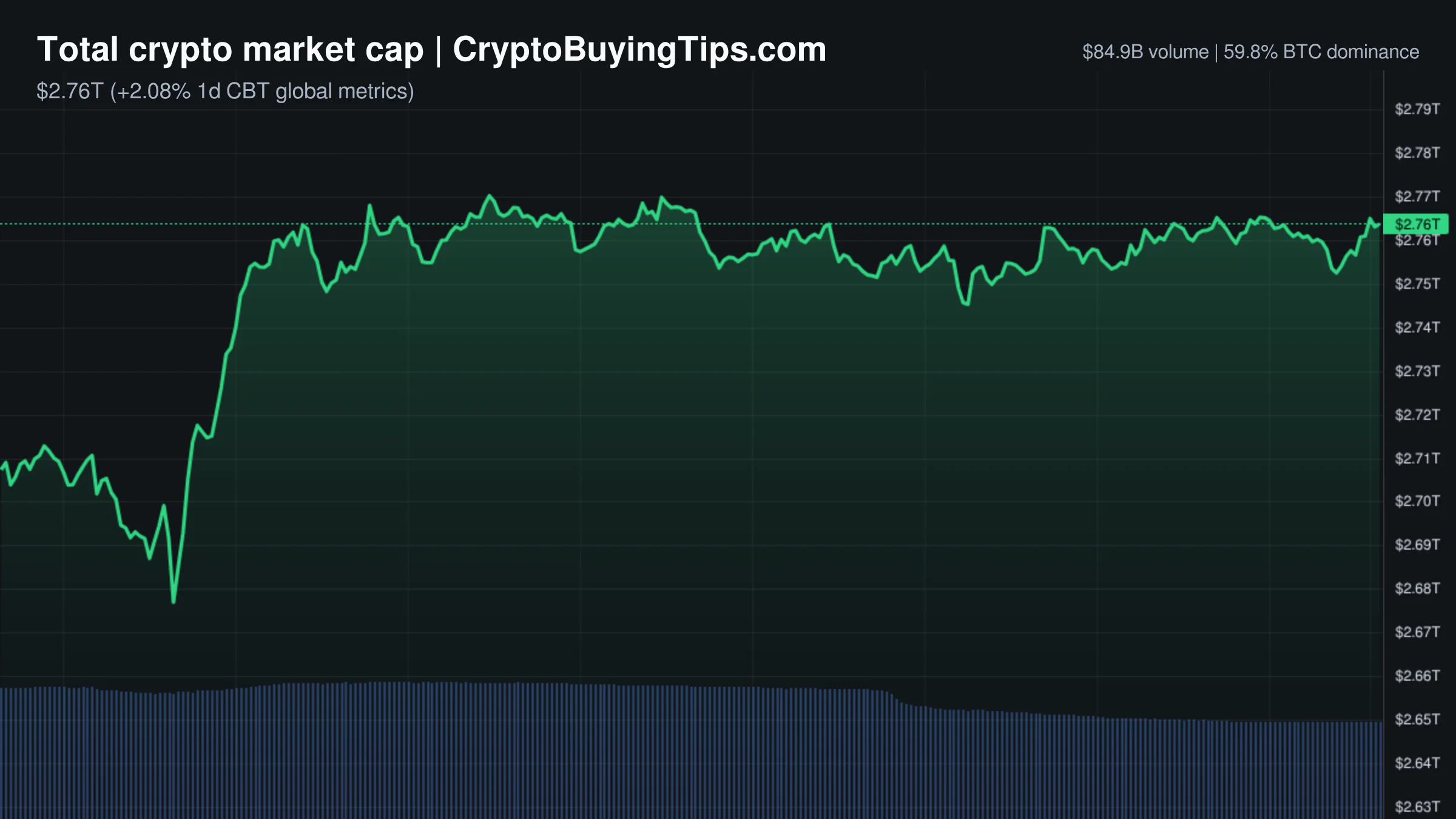
Crypto Market Overview | prices climb despite falling trading volume and stablecoin activity | October 16, 2026
Prices climb despite falling trading volume and stablecoin activity; see our market overview for context.

Wall Street is building its own rules while Congress argues
Wall Street seems to have decided waiting for Congress isn't worth the time. Major players like Mastercard are building…
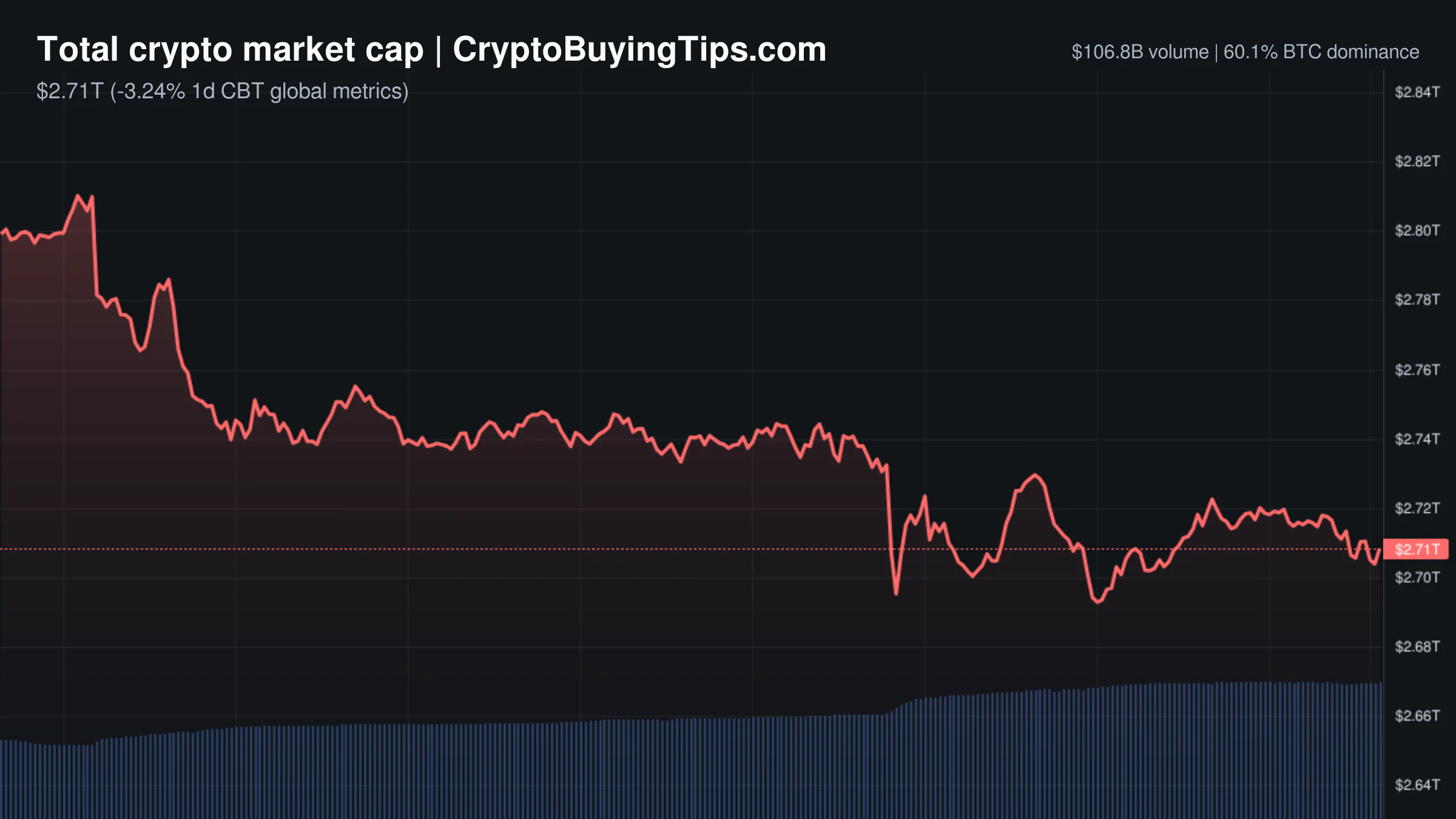
Crypto Market Overview | leveraged flush amid macro headwinds and institutional rails buildout | October 15, 2026
The crypto market sees leveraged flushing amid macro headwinds; see our read on institutional rails building out now.

Price is down but volume is ripping. This is a high-conviction flush
The market dropped nearly four percent while volume surged by over forty-four percent; this suggests the usual bleed is…