

BlackRock is moving in but Ethereum gas is 0.08 Gwei. Here is the paradox
The recent news cycle is dominated by BlackRock tokenizing billions in traditional finance assets, yet our live metrics show ETH gas fees are barely registering at 0.08 Gwei. For a beginner, this contradiction is confusing. If the biggest asset manager in the world is moving onto the chain, why is the network so quiet? To understand this, we need to look at what low ethereum gas fees mean in the real world versus how they are presented in a press release. We previously covered Ethereum gas fees and activity for more background.
The short answer: what low ethereum gas fees mean
In plain English, low gas fees mean there is very little competition for space in the next block of transactions. Gas is simply the unit of measurement for the computational effort required to process an action on the network. When fees are this low, it suggests that the vast majority of users are not currently interacting with the main Ethereum chain.
This creates a strange disconnect. Our signal scanner flagged ETHUSDT bullish, noting that "Ethereum Double Bottom Signals Potential Bullish Reversal," but the on-chain data tells a story of a ghost town. The price may be preparing for a move, but the actual plumbing of the network is currently idling.
How gas actually works
To understand the paradox, you have to understand that Ethereum is essentially a giant, shared computer. Every time you send a token or interact with a smart contract, you are paying for a slice of that computer's time. According to ethereum.org, these fees change based on network congestion.
The total cost is determined by three things. First is the base fee, which is the minimum required to get into a block and is burned to reduce the ETH supply. Then there is the gas limit, which is the amount of work the transaction requires. Finally, there is a priority tip paid to validators to get your transaction processed faster.
When we see gas at 0.08 Gwei, it means the base fee has dropped to nearly nothing. As crypto.news explains, this usually happens when there are no major NFT mints or viral DeFi launches forcing users to outbid each other for space.
The institutional narrative versus on-chain reality
There is a wide gap between "institutional adoption" and "network utility." Our news scoring system rated the story of BlackRock tokenizing $311B of European Money Market Funds as a 10/10 for novelty. It is a massive number. However, tokenization does not always equal congestion.
Most institutional moves happen in "walled gardens." Large firms often use private sub-networks or highly optimized systems that do not spam the main Ethereum chain with thousands of tiny transactions. They might move $1 billion in a single transaction, which uses the same amount of gas as a retail trader moving $10.
The total market cap of the crypto world sits at $2.19T, yet the activity on Ethereum's main layer remains subdued. We've previously covered how Ethereum market share vanishes as it gets a corporate makeover, and this is the evidence. The network is becoming a settlement layer for the wealthy rather than a playground for the masses.
How does what low ethereum gas fees mean help DeFi?
While the lack of congestion might look bearish for network growth, it is a practical win for anyone actually using the chain. Low fees make complex, multi-step interactions economically viable.
In a high-gas environment, a retail user cannot afford to move funds through three different protocols to chase a 1% higher yield because the gas costs would eat the entire profit. With fees at these levels, those advanced yield strategies become accessible to smaller capital deployments.
This is particularly relevant when you look at the current market structure. ETH dominance is currently at 9.2%. With the network this quiet, the cost of entry for new DeFi experiments is at a historical low. It is the ideal time for developers to deploy and for users to test new protocols without losing $50 to a failed transaction.
Putting it into practice
If you are a user looking at these numbers, there are a few logical steps to take.
First, if you have assets sitting on Layer 2 networks like Arbitrum or Optimism, now is the time to consider moving them back to the main chain if you need them there. The cost of bridging is significantly lower when the mainnet is this quiet.
Second, avoid the temptation to assume that low gas means a "dead chain." It simply means the current demand for block space is low. The institutional interest is real, but it is silent. They are building the pipes; they just aren't running the water through them yet.
The play here is to ignore the noise of the 10/10 news stories and watch the gas metrics. When 0.08 Gwei turns into 80 Gwei, that is when you know the institutional narrative has finally turned into actual network usage. Until then, enjoy the cheap transactions.
Related Tickers
Some links in this article may be affiliate links. We may earn a commission at no extra cost to you — this never influences our analysis or coverage.

Sigrid Voss
Crypto analyst and writer covering market trends, trading strategies, and blockchain technology.
More Articles
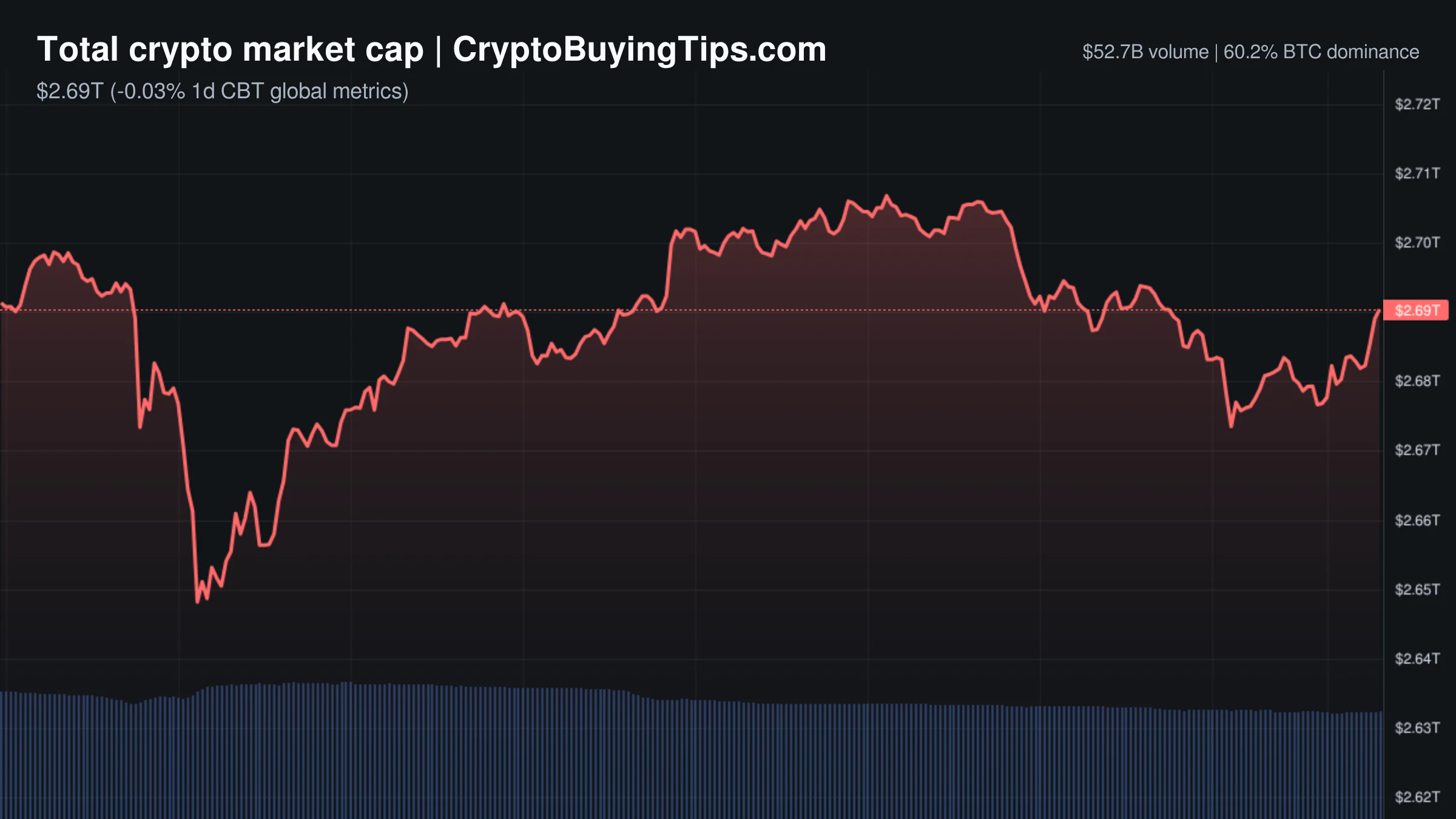
Crypto Market Overview | volume collapses as bitcoin holds $80k amid mixed institutional signals | October 25, 2026
Crypto market overview shows collapsing volume as bitcoin holds $80k amid mixed institutional signals and geopolitical…

Stablecoins are leaving the exchanges. HSBC just proved it
The market seems preoccupied with leverage ratios while real money moves elsewhere; a major bank issuing licensed…
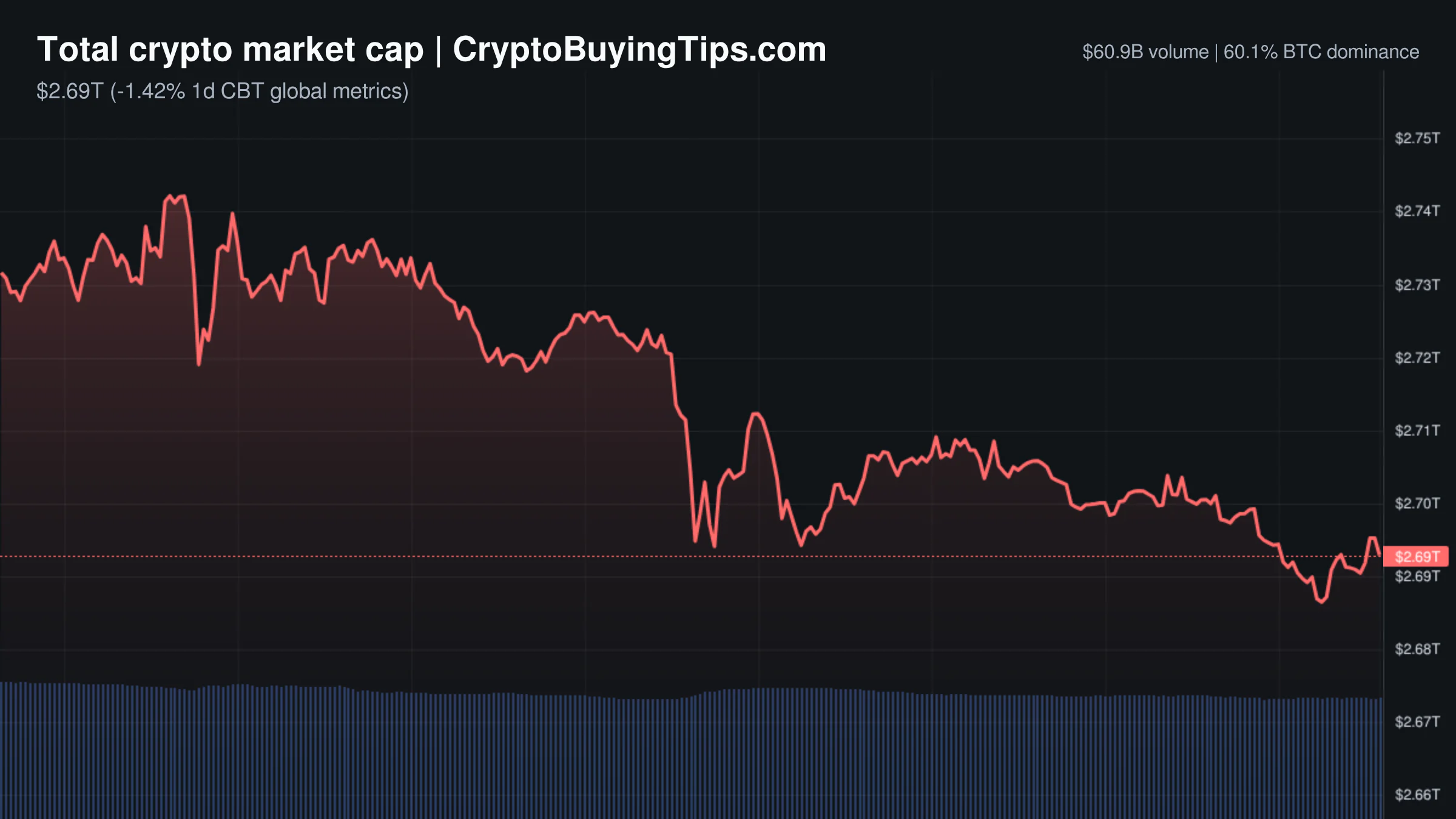
Crypto Market Overview | Derivatives volume dwarfs spot activity amid regulatory uncertainty and institutional outflows | October 24, 2026
Derivatives volume dwarfs spot activity amid regulatory uncertainty and institutional outflows, showing market…

Fidelity outflows and Ethereum OG dumps suggest a hidden exit
Another day of market data suggesting everything is fine until you look at the outflows and OG dumping. Institutional…