

Ethereum is getting a corporate makeover while its market share vanishes
The current market metrics show BTC dominance at 58.02%, which is a stark contrast to what many are reporting regarding institutional Ethereum adoption. While the news cycle is buzzing about a new nonprofit designed to bring enterprises onto the chain, the actual capital flow tells a different story. For those trying to make sense of the charts, asking what does ethereum dominance mean is the first step in realizing that institutional interest and actual buying pressure are not the same thing. We previously covered volume data suggests fight for more background.
How does what does ethereum dominance mean work?
In short, Ethereum dominance is the percentage of the total cryptocurrency market capitalization held by Ethereum. When this number rises, it means Ethereum is gaining value relative to every other asset in the market. If the total market grows but Ethereum dominance falls, Ethereum is effectively underperforming the rest of the crypto ecosystem.
Right now, our market data tools show a clear divergence between the narrative and the actual ETH dominance figure, which sits at 9.39%. This is a lean number. For context, a rising dominance percentage usually suggests that investors are concentrating capital in Ethereum because they view it as a safer bet during uncertain conditions [mexc.com].
The recent launch of "Ethereum Institutional" with backing from Standard Chartered and Joe Lubin [newscord.org] is a polished piece of corporate PR. It aims to create a neutral gateway for enterprises [cryptotimes.io]. However, the data shows that these high-level structural moves have not translated into a shift in market share. We see a recurring gap where a project's roadmap promises a future of institutional utility, but the current capital flow is simply not there.
How does bitcoin dominance shifting affect altcoin rotation?
When Bitcoin dominance climbs, it usually means the "big money" is hiding in the safest asset. We are currently in a Bitcoin Season, as confirmed by an Altcoin Season Index of 47/100. This indicates that capital is consolidating in Bitcoin rather than rotating into altcoins.
This anchor effect is a problem for Ethereum. Even as the broader market recovers, the persistent strength of BTC keeps the rotation stalled. We've seen this pattern before; we previously covered how Bitcoin ETF flows analysis revealed a clear preference for Bitcoin as a primary reserve asset.
The market is currently displaying a strange kind of schizophrenia. The Fear & Greed Index is sitting at a deep 20, signaling extreme fear, yet the total market cap is actually rising. This suggests that while the retail crowd is panicking, a few large players are quietly stacking Bitcoin. They are not stacking Ethereum.
What does ethereum dominance mean for near-term risk assessment?
The primary risk for investors right now is trusting a press release over a price chart. Our news scoring system rated the "Ethereum Institutional" story 8/10 for novelty, but novelty does not equal liquidity.
The total market cap grew by 2.38714485099602% recently, yet the capital did not flow into Ethereum. Instead, it stayed in Bitcoin or moved into speculative niches. This is the "narrative trap." The idea that institutional interest automatically leads to market dominance is a fallacy. Interest is a leading indicator that can take years to materialize into actual buys. Dominance is a lagging indicator of where the money actually is.
If you are looking at the 9.39% dominance figure and the 58.02% Bitcoin lead, the read is simple. The market is currently treating Bitcoin as the only institutional-grade asset. Ethereum is being treated as a high-beta play on the broader ecosystem.
Until we see a sustained move in the dominance chart, the "institutional push" is just a series of meetings and nonprofit charters. We will continue to watch the BTC dominance level. If it hits 60% while the total market cap rises, the rotation into Ethereum may be further delayed than the optimists suggest.
Some links in this article may be affiliate links. We may earn a commission at no extra cost to you — this never influences our analysis or coverage.

Sigrid Voss
Crypto analyst and writer covering market trends, trading strategies, and blockchain technology.
More Articles
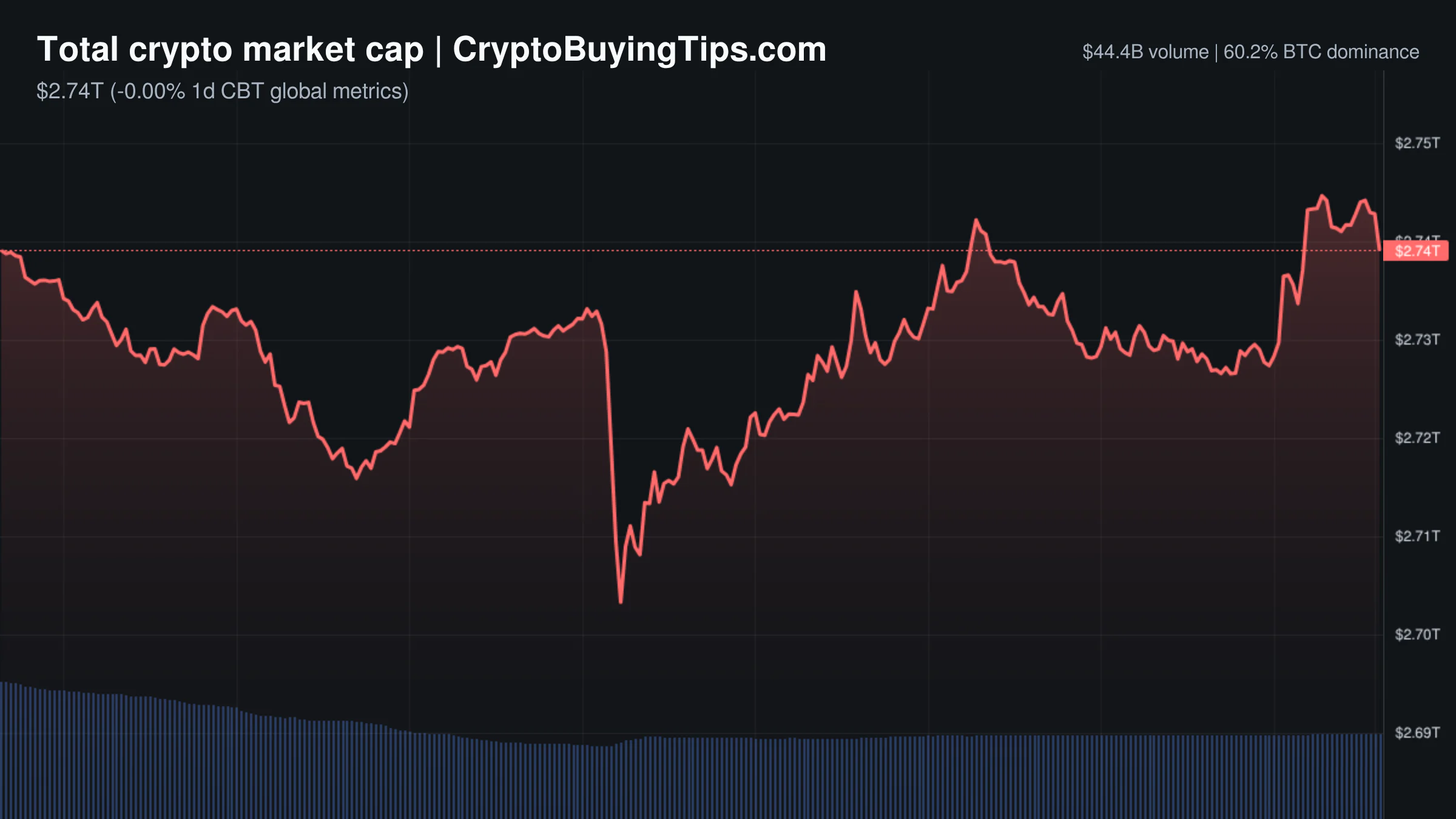
Crypto Market Overview | Bitcoin dominance climbs while altcoins struggle amid institutional friction | October 18, 2026
Bitcoin dominance climbs to 60.1% while altcoins struggle amid institutional friction; see our market overview for…

6 million Bitcoin are quantum-exposed. Here is what that actually means
Six million Bitcoin are sitting in addresses that could be vulnerable to quantum attacks. The risk isn't theoretical; it…
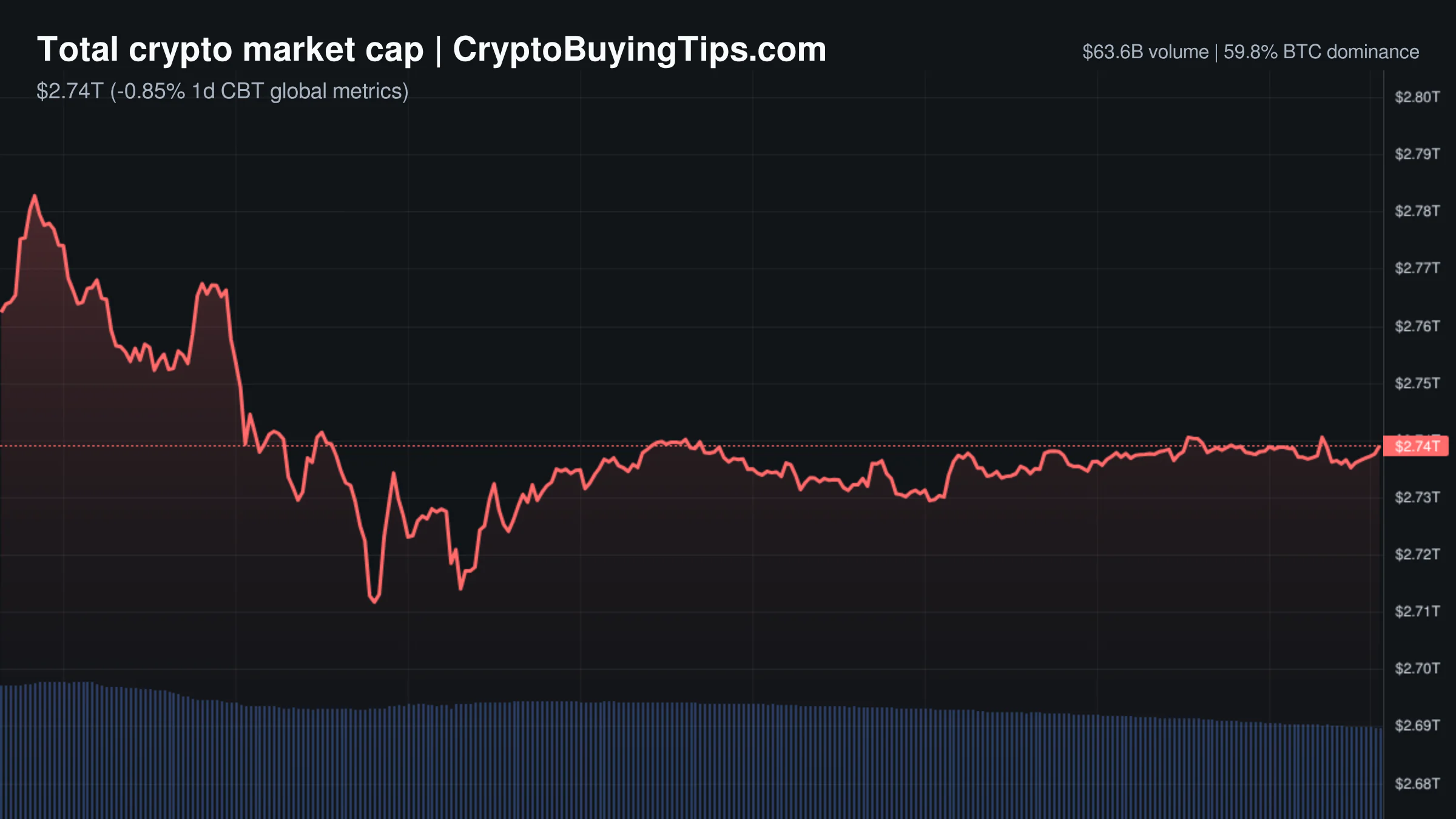
Crypto Market Overview | volume collapse amid macro pressure weighs on institutional flows | October 17, 2026
Market overview shows volume collapse amid macro pressure weighing on institutional flows; see how crypto is reacting to…

Speculators are ditching altcoins for tokenized Tesla stocks
Another day, another reason to question where all the money goes these days. Our signal scanner flagged a clear…