

DeFi volume is ripping while the broader market bleeds
The DeFi market cap is sitting at $76.86B while its 24h volume has jumped by +18.09% against a backdrop where the CMC100 Index fell 1.70% in 24 hours. It is a strange moment for the charts. Most traders are retreating to the safety of Bitcoin, yet a specific pocket of the market is seeing a surge in activity. If you are wondering why is defi volume increasing while the general indices are sliding, the answer usually lies in the gap between price action and actual utility. We previously covered related angles in BTC dominance data analysis and Bitcoin dominance analysis.
Why is defi volume increasing?
The surge in DeFi activity suggests capital rotation into yield-bearing, permissioned protocols rather than broad market participation. While the general crowd is panicking about the CMC100, a smaller group of sophisticated players is moving money into assets that actually do something. Our news scoring system rated this story 9/10 for novelty because this kind of divergence is rare during a short-term bearish trend.
The numbers show a concentrated burst of energy. With a DeFi market cap of $76.86B, the 24h volume has hit $13.32B. This isn't a retail-led pump. Instead, it looks like a flight to quality. In down markets, traders often seek safe returns through passive income, collecting between 3% and 5% in yield rather than flipping tokens [coindesk.com].
The Fear & Greed index currently sits at 70, which suggests a level of optimism that the actual price charts are currently laughing at. We see this as a sign that while the "vibes" remain greedy, the actual capital is becoming more surgical.
Where is the money actually flowing in DeFi?
The data points to specific, high-volume tokens absorbing the liquidity surge, even as general market indices decline. This isn't a rising tide lifting all boats; it is a few very large boats moving into specific harbors.
Our DEX trending tracker identified a massive outlier in this volume surge. Invesqo QQQ (QQQB) on the BNB Smart Chain recorded a 24h volume of 912,052,802.8800014. The fact that a synthetic play on TradFi indices is seeing nearly a billion dollars in volume while the crypto market bleeds is a bit ironic. It suggests traders are using DeFi tools to hedge against the very volatility they are experiencing.
Outside of the synthetic plays, we are seeing extreme moves in smaller, specialized assets. Our market data tools flagged Bifrost (BFC) as a top gainer, with a 24h price jump of 274.022%. VeThor Token (VTHO) also ripped by 52.114%. This confirms our read that the volume is not a broad sector lift. It is a rotation into specific protocols that provide actual utility or high-risk speculative opportunities.
The macro divergence: risk appetite versus protocol utility
We see a classic decoupling where on-chain utility remains robust despite bearish signals from traditional indices. The S&P 500 (SPY) is currently at $762.4, down 0.46%, and the NASDAQ (QQQ) has dipped to $716.31. Usually, crypto follows these indices off a cliff. But the DeFi volume is moving in the opposite direction.
Our signal scanner flagged the divergence between falling index prices and rising DeFi volume. This is a signal that the "plumbing" of the market is still working, even if the "price" of the market is struggling. When BTC dominance climbs to 58.57%, it usually means altcoins are dying. But the volume surge in DeFi suggests that while the price of altcoins may be falling, the use of DeFi protocols is actually increasing.
This is a nuanced distinction. Price is what you pay, but volume is what you do. The fact that volume is growing faster (+18%) than the overall market (+3%) tells us that the market isn't just exiting; it is rearranging.
The risk here is that this rotation is a temporary hedge rather than a structural bottom. If the broader macro environment continues to deteriorate, even the most efficient yield-bearing protocols will struggle to attract new capital. For now, the data shows a market that is bleeding from the edges but remains very active in the center.
Some links in this article may be affiliate links. We may earn a commission at no extra cost to you — this never influences our analysis or coverage.

Sigrid Voss
Crypto analyst and writer covering market trends, trading strategies, and blockchain technology.
More Articles
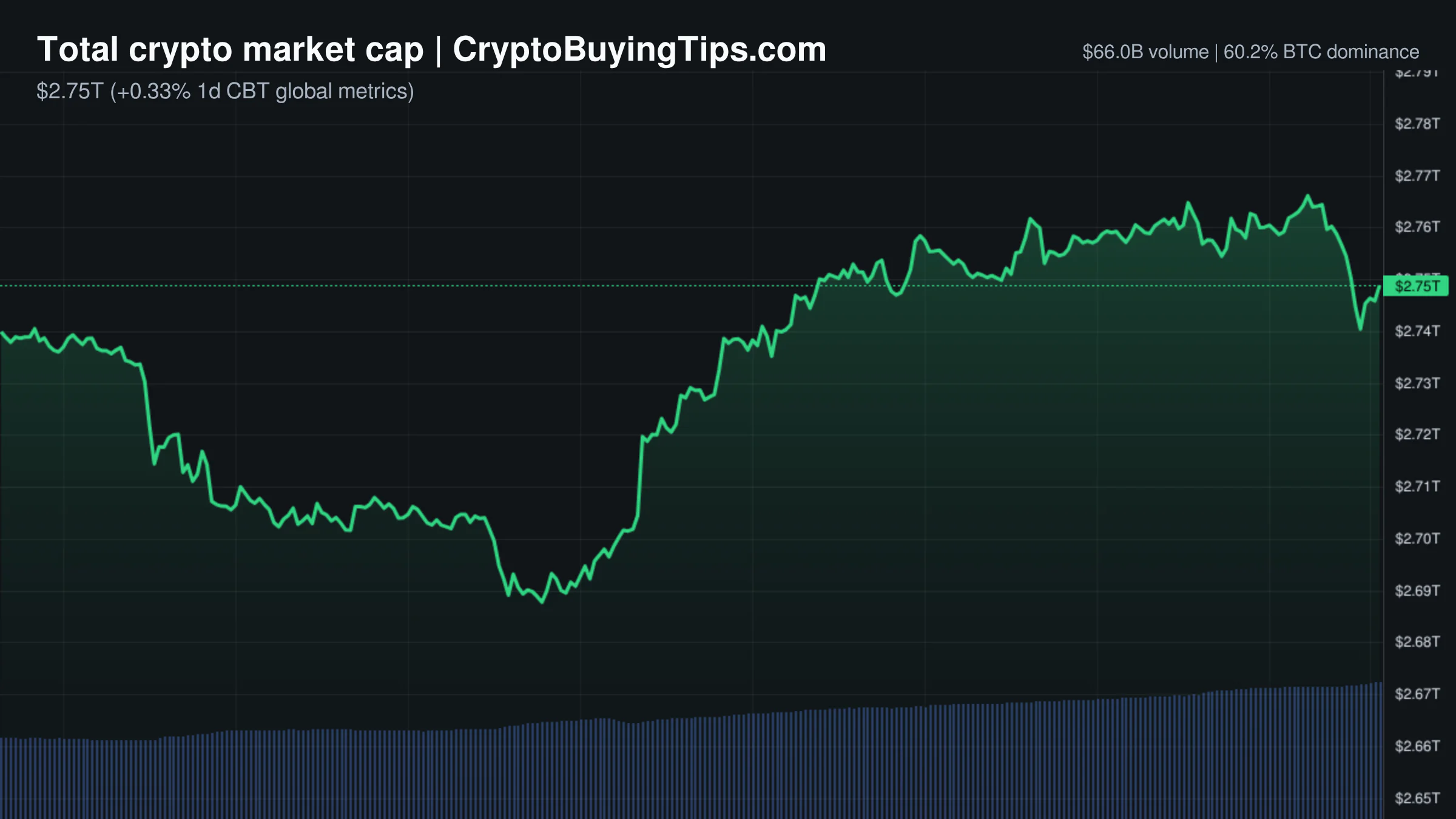
Crypto Market Overview | Leveraged bets surge as institutional rails expand despite ETF outflows | October 19, 2026
Leveraged bets surge as institutional rails expand despite ETF outflows; see our market overview on BTC dominance and…

Why 0.04 Gwei gas is a red flag for Ethereum
The quiet gas fees suggest nothing about underlying utility demand; meanwhile, $566B in derivatives volume points…
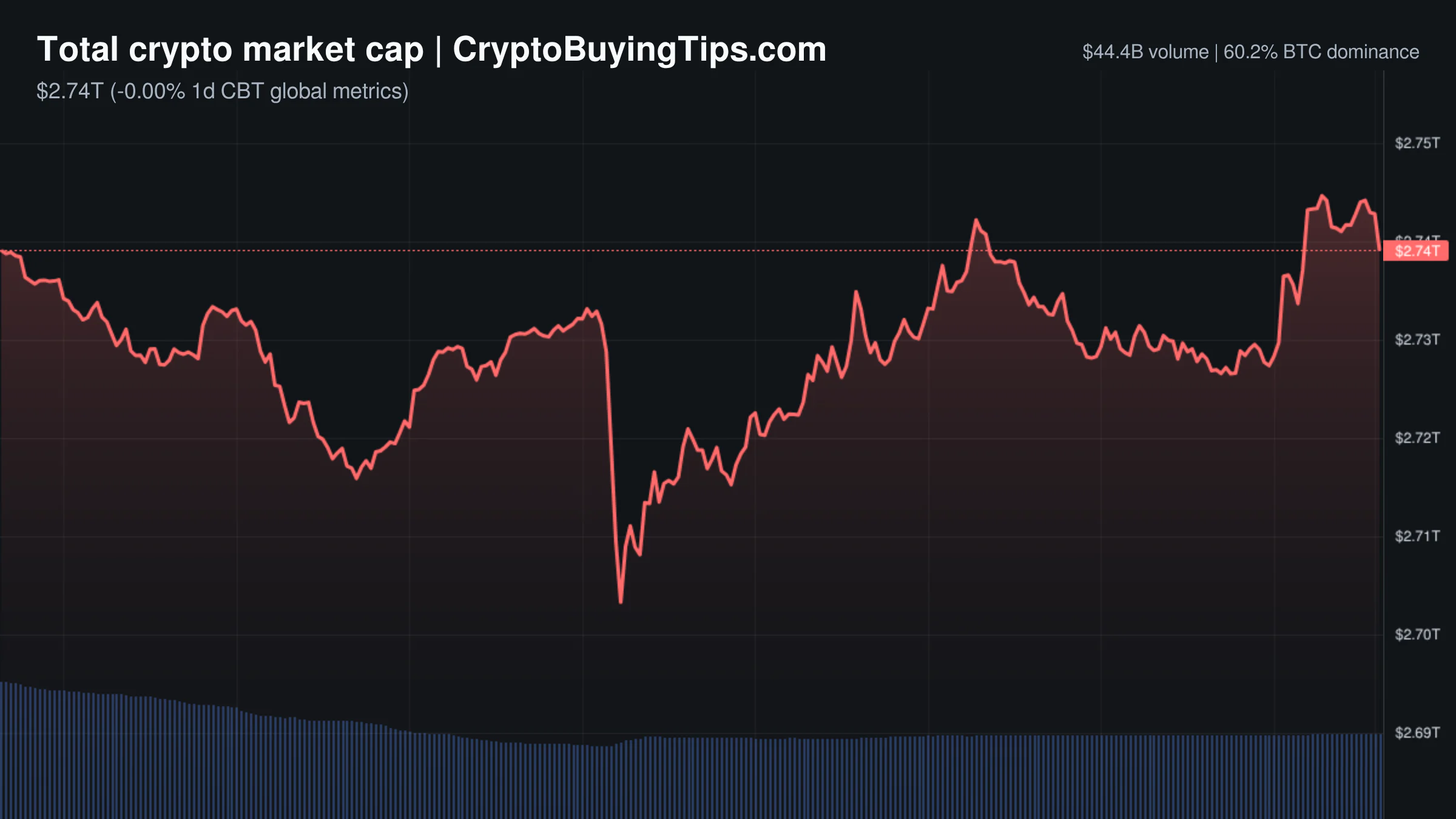
Crypto Market Overview | Bitcoin dominance climbs while altcoins struggle amid institutional friction | October 18, 2026
Bitcoin dominance climbs to 60.1% while altcoins struggle amid institutional friction; see our market overview for…

6 million Bitcoin are quantum-exposed. Here is what that actually means
Six million Bitcoin are sitting in addresses that could be vulnerable to quantum attacks. The risk isn't theoretical; it…