

Ethereum ETFs are buying the dip while the network goes silent
The numbers coming out of the institutional side of Ethereum look like a recovery, but the on-chain data suggests a ghost town. We are seeing a strange divergence where spot ETFs are recording a three-week streak of inflows, including $104M in weekly institutional buying reported by @WuBlockchain, while the actual network is barely breathing. For anyone trying to figure out why ethereum etf inflows matter in the current environment, the answer depends on whether you view ETH as a financial product or a piece of technology. Right now, the market is treating it like the former.
The gap between paper and utility demand
There is a distinct divide between paper demand and utility demand. Paper demand is what we see in the ETF flows. Institutions are methodically sizing into Ethereum exposure, often through vehicles like BlackRock's ETHA, which recently accounted for over 84% of a single day's inflows en.cryptonomist.ch. This is a corporate-led accumulation phase. These buyers aren't interested in the nuances of gas optimization or the latest DeFi yield strategy. They are buying a regulated wrapper of an asset they believe has a floor.
Utility demand is the actual use of the Ethereum blockchain. This is where the narrative hits a wall. While the ETFs are green, the network activity is anemic. We've seen this pattern before, as we previously covered when Ethereum market share vanishes despite the polished PR. The institutions are buying the ticker, but they aren't using the plumbing.
Why ethereum etf inflows matter in a silent market
The core question is whether these inflows can drive price action without a corresponding rise in network utility. In the short term, they can. ETFs create a supply sink. When a fund buys ETH and locks it in a vault, it removes that supply from the open market. If demand stays steady, the price goes up. This happens regardless of whether anyone is actually swapping tokens or minting NFTs on the mainnet.
But this creates a valuation fragility. If ETH is valued purely as a beta play on Bitcoin or a regulated corporate asset, it loses its unique value proposition as a utility layer. We are seeing a shift where Ethereum is moving from a congested hub of activity to a scalable world ledger. While that is good for scalability, it is bad for the burn mechanism that makes ETH deflationary. Low fees mean fewer tokens are burned. This puts more pressure on the issuance side.
We've seen similar disconnects in the past. We previously noted how Ethereum gas fees and activity failed to keep pace with high-level talk of tokenization. The gap between the boardroom and the blockchain remains wide.
The data behind the silence
Our global market structure data puts the reality into perspective. While the ETF buyers are active, ETH dominance is stagnating at 10.19%. This suggests that even with institutional support, Ethereum is failing to take any meaningful ground back from Bitcoin or the broader altcoin market.
The most telling metric is the cost of doing business on the network. Our internal metrics show gas fees at a historic low of 0.04 Gwei. To put that in perspective, the network is so quiet that transaction costs are practically nonexistent cryptonews.com. In a healthy bull market, low fees are a gift to users. But when fees hit these levels during a supposed institutional buy the dip phase, it signals a lack of economic urgency.
If the World Computer is currently a world of empty offices, the ETF inflows are essentially just paying for the lease without anyone actually showing up to work.
Our read on the divergence
We aren't calling for a crash, but we are calling for a reality check. The institutional bid is providing a floor, but it isn't providing a catalyst. For Ethereum to move beyond this stagnant dominance, we need to see the attention gap close cryptodaily.co.uk.
Right now, the market is in a state of professional paranoia. The institutions are buying because it's the correct portfolio move for Q3, but the retail traders and developers are scrolling past. If the network remains this silent, the ETF inflows are simply a hedge against a future that hasn't arrived yet. We'll keep an eye on the gas metrics. Until those fees start to climb again, the institutional buying is just a fancy way of holding a very quiet asset.
Related Tickers
Some links in this article may be affiliate links. We may earn a commission at no extra cost to you — this never influences our analysis or coverage.

Sigrid Voss
Crypto analyst and writer covering market trends, trading strategies, and blockchain technology.
More Articles

Volume is exploding while prices fall. This is not a healthy dip
Volume spikes while prices fall; it's less of a dip to buy into and more like large hands distributing assets right…
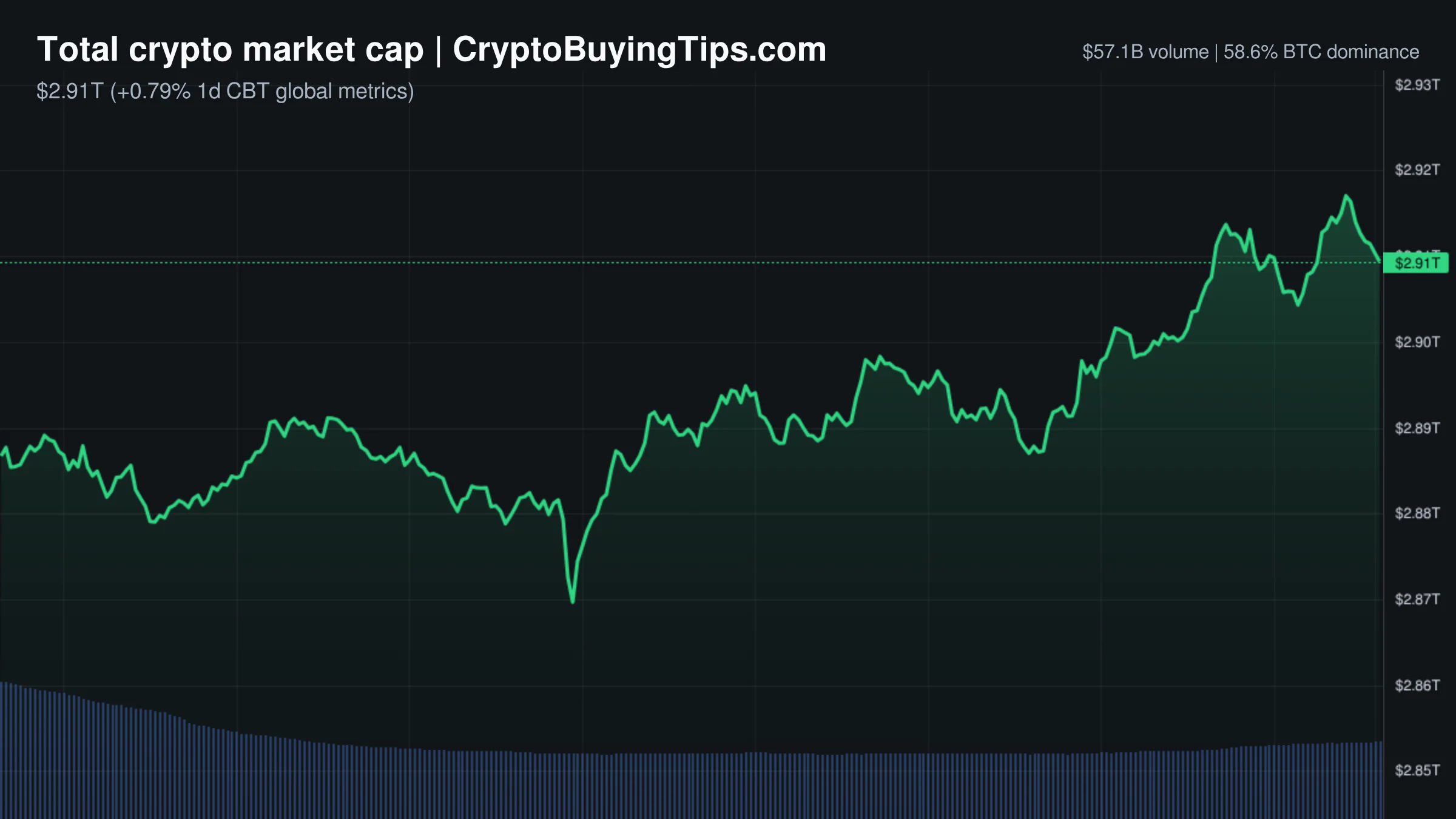
Crypto Market Overview | Institutional inflows drive prices despite collapsing trading volume | September 27, 2026
Institutional inflows drive crypto prices despite low volume; see our market overview on BTC, ETH, and altcoin shifts…
Quant is ripping 74% and the AI rotation is finally here
The market seems to have forgotten how volume works; meanwhile, Quant has decided it's time for its solo performance.…
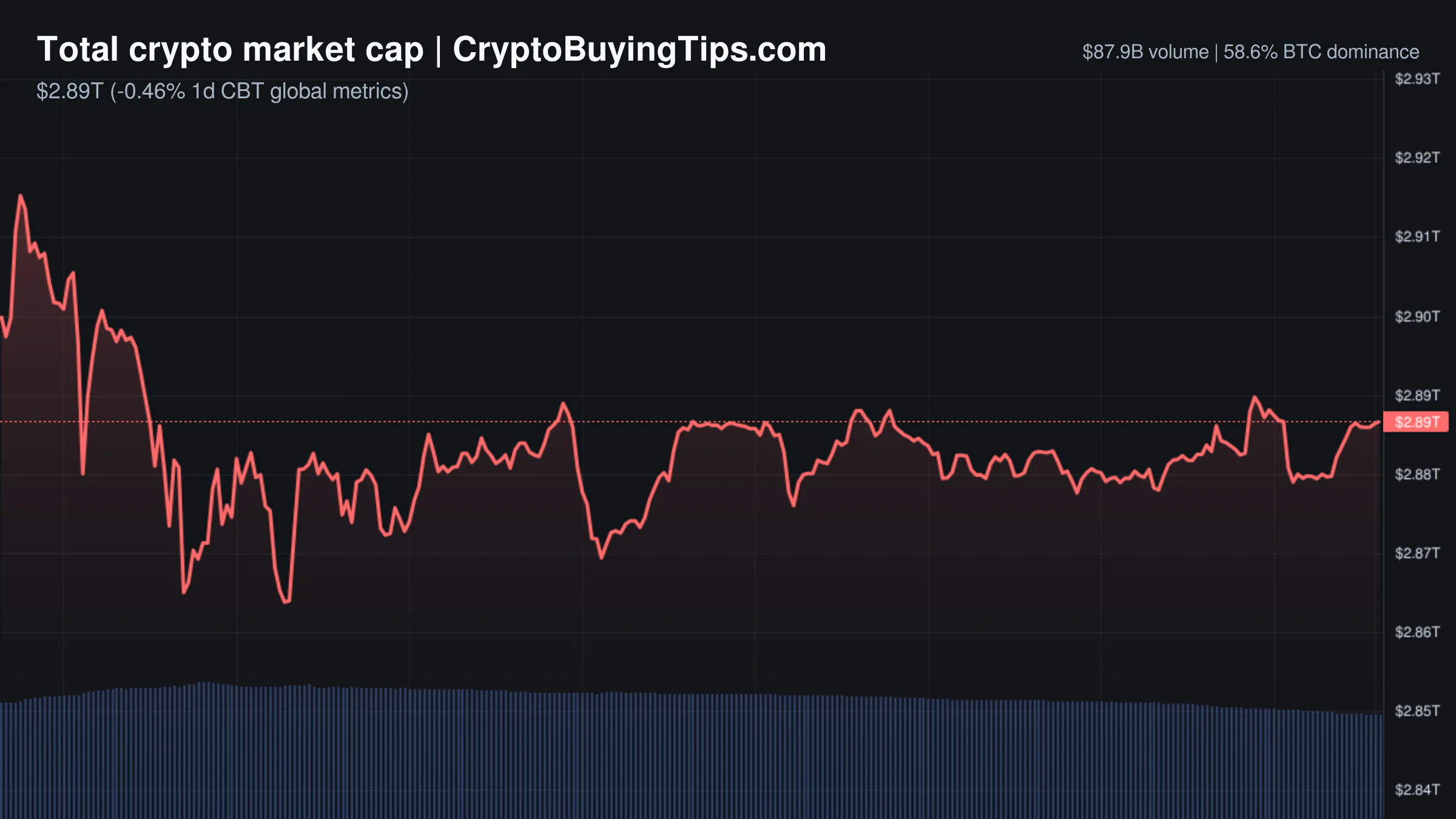
Crypto Market Overview | Greed index high amid cooling derivatives volume and stablecoin dominance at 8.94% | September 26, 2026
The crypto market overview reveals high greed despite cooling derivatives volume; see how stablecoin dominance at 8.94%…