

Hyperliquid whales are hitting record longs. Is a breakout finally here?
I've been watching the derivatives markets closely this week, and something strange is happening. While most of the retail crowd is staring at ETF inflows or arguing about regulatory news, the "smart money" on Hyperliquid is doing something incredibly aggressive. Glassnode data shared via Twitter shows that Hyperliquid whales have hit a record for net long exposure. In my experience, when high-net-worth traders move in unison like this, it's usually a signal that they see something the rest of us are missing.
But before you jump in, you have to ask yourself where you actually want to place these bets. If you're weighing hyperliquid vs bybit for long positions, the choice usually comes down to whether you want the bleeding-edge feel of a decentralized perpetual exchange or the deep liquidity of a centralized powerhouse. For those who prefer the latter, I often use Bybit because their perpetual futures base rate is very competitive at 0.02% maker and 0.055% taker, and the liquidity is deep enough to handle massive positions without slippage.
What the data is telling us
The numbers right now are skewed. We have a total market cap of $2.70T, but the real story is in the volume. Spot volume is around $154B, but derivatives volume is absolutely exploding, sitting between $914B and $916B. That's nearly six times the spot volume.
When you see a derivatives surge this massive, it usually means one of two things. Either we're about to have a violent "squeeze" where one side gets wiped out, or we're seeing a massive accumulation phase by people who have a lot of capital. The fact that Hyperliquid whales are hitting record longs suggests the latter. They aren't just hedging; they are betting on a move up.
Bitcoin dominance is still holding strong at 60.44%, and the Altcoin Season Index is sitting at 38 to 40, which means we are firmly in a Bitcoin season. The whales aren't rotating into alts yet. They are doubling down on the king.
Why this is a risky bet
I'll be honest, this makes me a bit nervous. I remember the "leverage traps" of previous cycles where high open interest becomes a liability. Right now, perpetuals are sitting at $452.04B. That is a staggering amount of open interest.
If the market dips even a small percentage, these record long positions could trigger a cascade of liquidations. We've seen this movie before. The whales might be right about the long-term direction, but the short-term volatility could be brutal. The Fear and Greed Index is at 50, which is neutral. That's actually the most dangerous place to be because it means the market is undecided. There's no extreme fear to buy the dip, and no extreme greed to sell the top.
Where I land
I'm cautiously optimistic, but I'm not blindly following the whales. The massive gap between spot and derivatives volume tells me that this move is driven by speculation, not necessarily by people buying and holding the actual asset.
However, the low ETH gas fees (0.11 Gwei) and the steady Bitcoin dominance suggest that the infrastructure is quiet, and the big players are positioning themselves for a breakout. If Bitcoin can hold its current levels while these longs continue to pile in, we could see a very fast move upward as shorts get squeezed.
I'm keeping a close eye on the $80,000 level. If we see a surge in spot volume to match the derivatives madness, then I'll be fully convinced. Until then, I'm treating this as a high-stakes game of chicken between the whales and the market.
Trade the news at our editorial-picked exchange: MEXC
Related Tickers
Some links in this article may be affiliate links. We may earn a commission at no extra cost to you — this never influences our analysis or coverage.

Sigrid Voss
Crypto analyst and writer covering market trends, trading strategies, and blockchain technology.
More Articles

Fidelity outflows and Ethereum OG dumps suggest a hidden exit
Another day of market data suggesting everything is fine until you look at the outflows and OG dumping. Institutional…
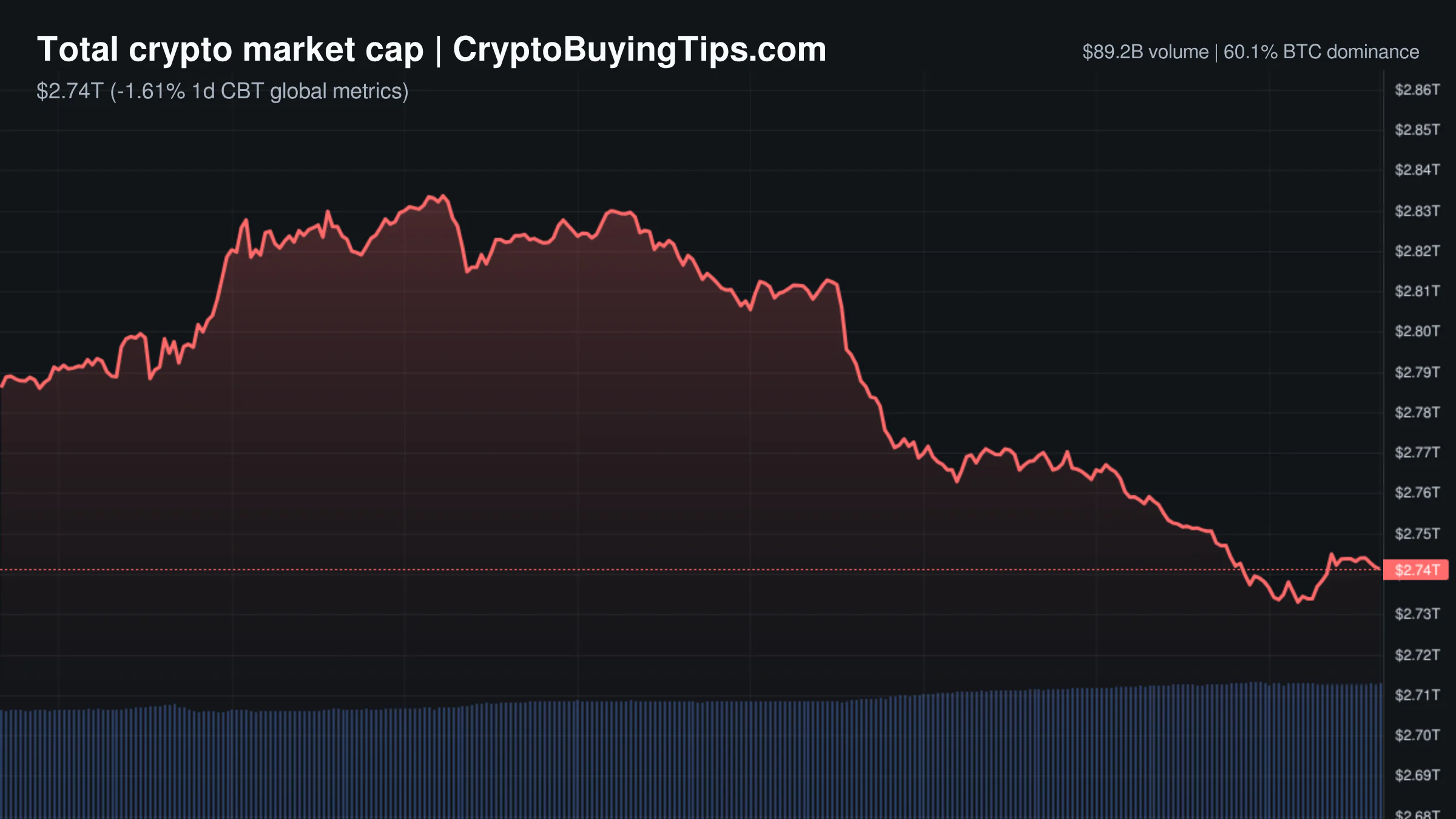
Crypto Market Overview | Leveraged bets surge amid regulatory clarity and institutional inflows | October 22, 2026
The market shows divergence between spot interest and leveraged bets amid regulatory clarity; see our overview here.

Volume is surging but prices are flat. Here is where the trigger is
Volume spikes while prices remain stubbornly flat; this divergence suggests an underlying battle between leveraged…
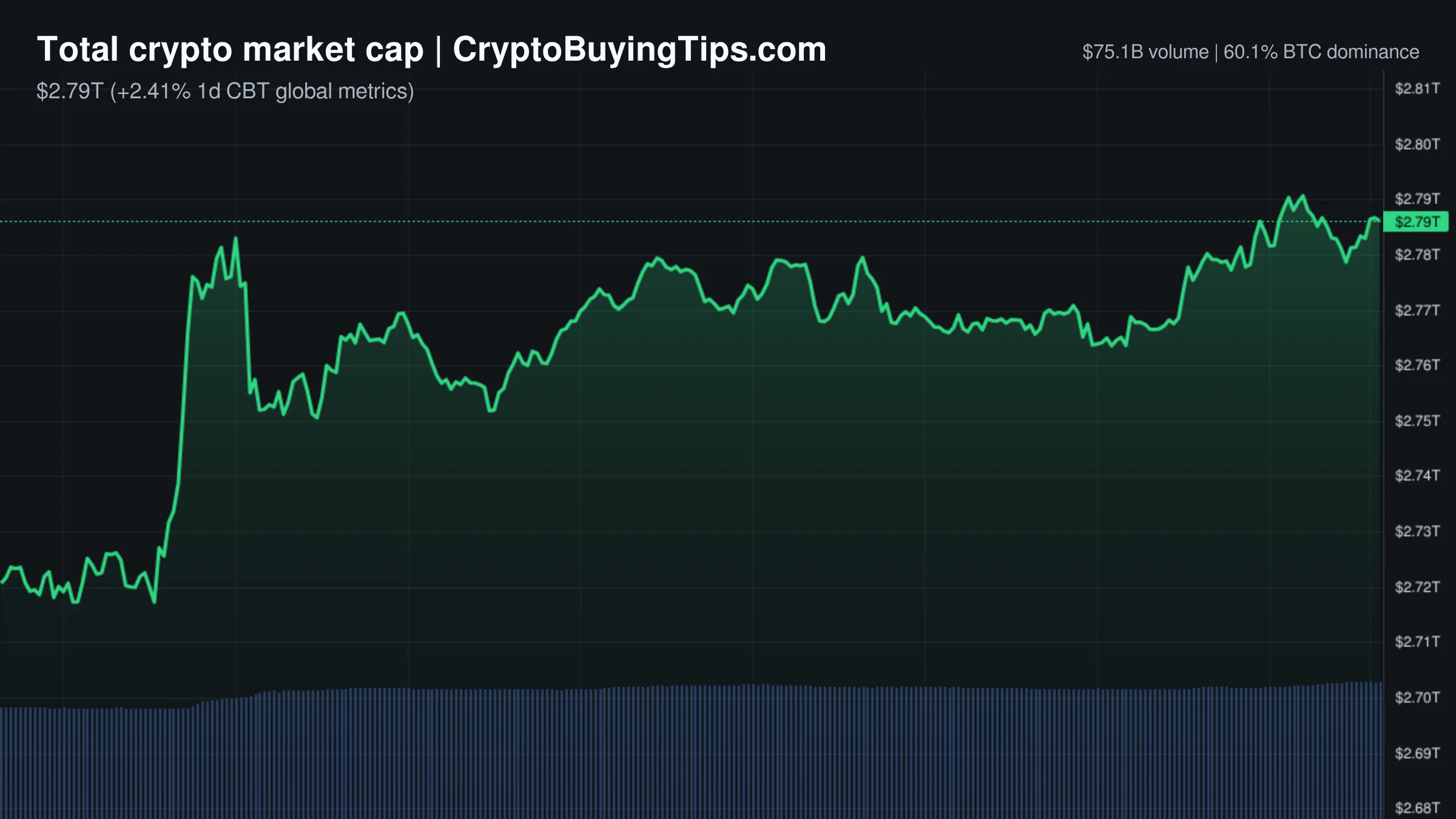
Crypto Market Overview | Leveraged speculation drives gains amid European regulatory uncertainty | October 21, 2026
Leveraged speculation drives crypto gains amid European regulatory uncertainty; see our market overview on BTC and ETH…