
Meta is paying creators in USDC. Is the 'Facebook Coin' finally happening?
I remember the absolute circus that was the Libra announcement back in 2019. Mark Zuckerberg tried to build a global currency from the ground up, and the regulators basically laughed him out of the room. It was a classic case of a tech giant thinking they could just disrupt the entire global financial system overnight. But while the "Facebook Coin" died a slow death, Meta hasn't actually given up on the idea of stablecoins. They just stopped trying to build their own and started using someone else's.
The news that Meta is now paying creators in USDC in Colombia and the Philippines is a massive shift in strategy. Instead of fighting the Fed, they are plugging into existing rails like Solana and Polygon. If you are a creator in those regions, you are no longer waiting for a slow bank transfer that eats 5% in fees. You are getting USDC. For anyone wondering about the best wallet for USDC payments on solana to actually hold these funds, the answer usually comes down to balancing ease of use with the fear of getting hacked.
The pivot from Libra to partnerships
Meta learned a hard lesson with Libra. You cannot just tell the world you are launching a new currency and expect the G7 to be okay with it. Their new approach is much smarter. By using USDC, they are using a regulated, fiat backed stablecoin that already has the trust of the market. They aren't creating the asset; they are just providing the distribution.
I think this is a far more realistic path to mass adoption. Meta has billions of users. If they integrate a "Send USDC" button into Instagram or WhatsApp, they don't need to convince people to download a complex DeFi app. They just make it a feature of the app people already use. I've seen this pattern before with other tech giants. They stop trying to build the infrastructure and just start using the most efficient one available.
Why Solana and Polygon matter here
The choice of networks is not accidental. You cannot pay a creator a few dollars in USDC on Ethereum mainnet because the gas fees would eat the entire payment. Meta needs speed and near zero costs. Solana and Polygon provide exactly that.
In my experience, the "blockchain" part of this is almost invisible to the end user. The creator doesn't care about validators or block times. They care that the money arrives instantly and the value is pegged to the US dollar. This is the first time I've seen a Big Tech company actually implement a payment system that makes the underlying tech irrelevant.
Finding the best wallet for USDC payments on solana
If you are actually receiving these payments, you have a choice to make. You can leave your funds on a platform, or you can take control of your keys. I always lean toward the latter. I've watched too many "safe" platforms vanish overnight since 2019.
For people who are actually moving significant amounts of money, I suggest a hardware signer. If you want something that feels like a modern gadget, the Ledger Stax is a great pick. It has a curved E Ink touchscreen and a Transaction Check feature that helps you spot DeFi scams before you sign them. It is a premium device at $399, but when you are dealing with your income, paying for a Secure Element Chip is a no brainer.
My honest take on the "Facebook Coin" ghost
Is this the return of the Facebook Coin? In spirit, yes. In practice, no. Meta is essentially acting as a massive on ramp for Circle (the issuer of USDC). They get the utility of a global payment system without the regulatory headache of being a "bank."
I'm still a bit skeptical about how much control Meta will actually have. They love their walled gardens. I suspect we will eventually see a "Meta Wallet" that feels seamless but keeps you locked into their ecosystem. But for the creators in Colombia and the Philippines, that is a secondary concern. Getting paid in a stable currency that doesn't lose value to local inflation is a win.
The market is currently in a state of fear, with the Fear and Greed Index sitting at 39. Most people are staring at the Bitcoin price and worrying about the next dip. But while the traders are stressed, the actual utility of crypto is quietly expanding. Meta paying people in USDC is a real world use case that doesn't depend on whether BTC hits a new high. It is just a better way to move money.
Some links in this article may be affiliate links. We may earn a commission at no extra cost to you — this never influences our analysis or coverage.

Sigrid Voss
Crypto analyst and writer covering market trends, trading strategies, and blockchain technology.
More Articles
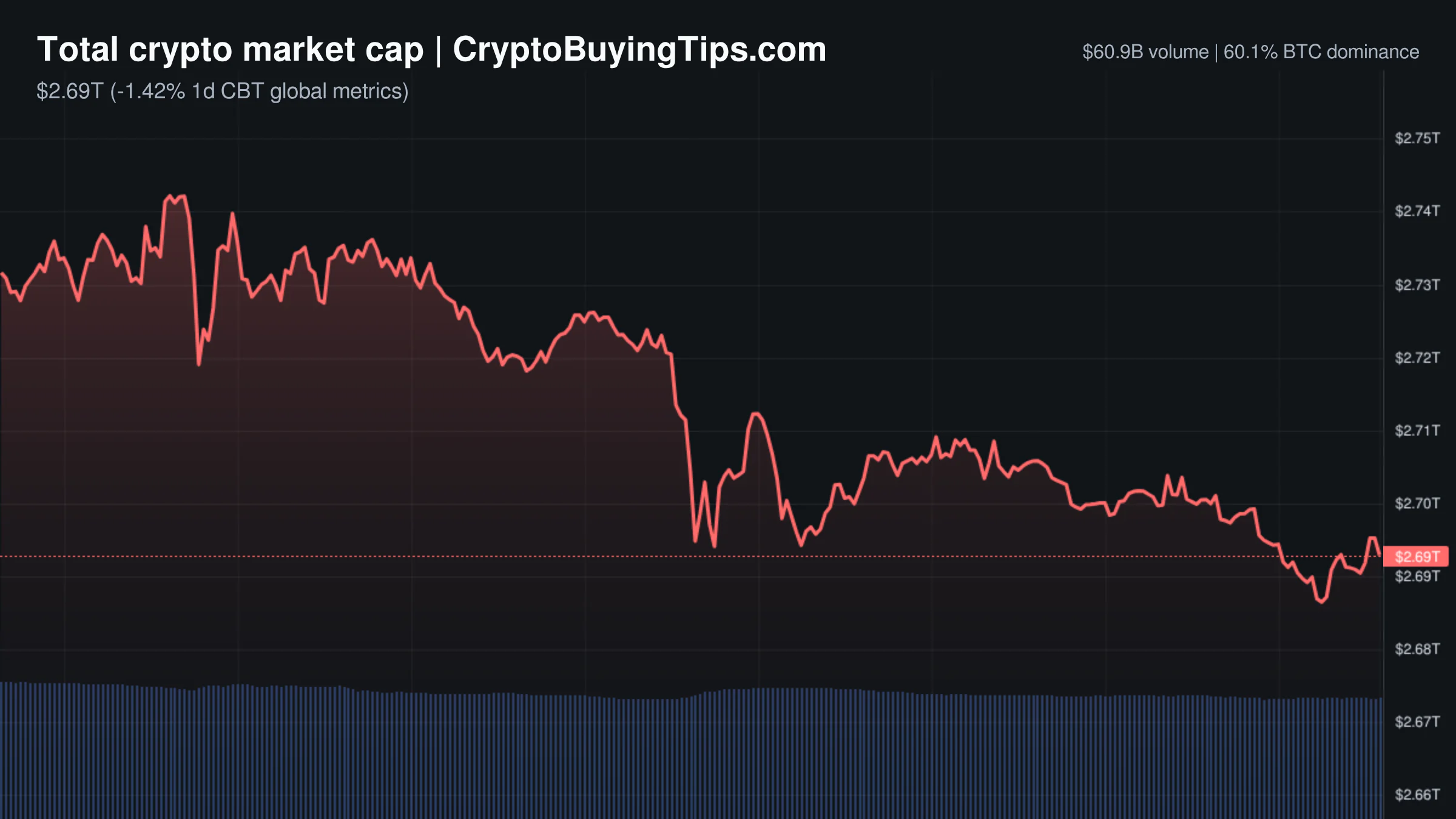
Crypto Market Overview | Derivatives volume dwarfs spot activity amid regulatory uncertainty and institutional outflows | October 24, 2026
Derivatives volume dwarfs spot activity amid regulatory uncertainty and institutional outflows, showing market…

Fidelity outflows and Ethereum OG dumps suggest a hidden exit
Another day of market data suggesting everything is fine until you look at the outflows and OG dumping. Institutional…
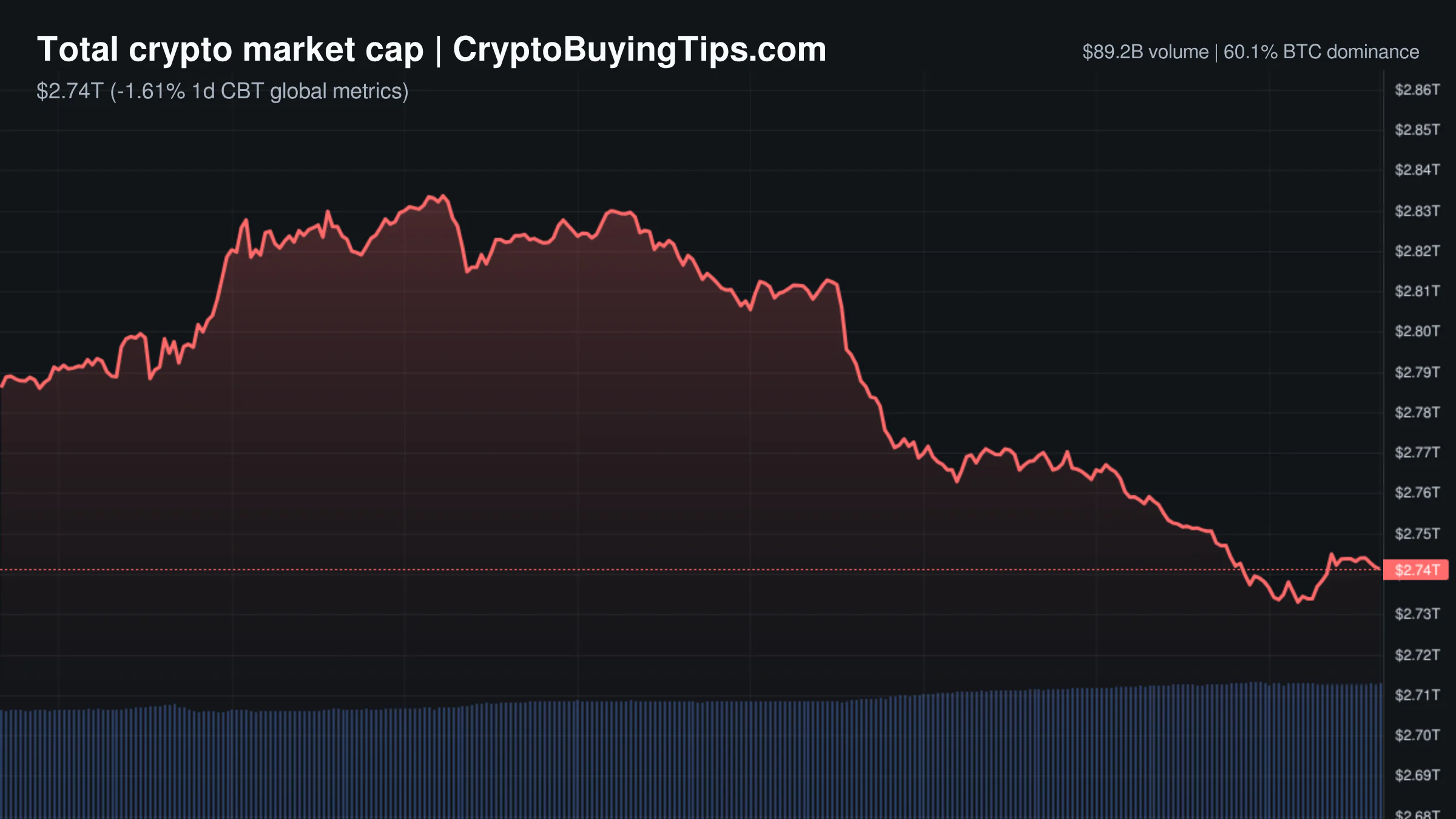
Crypto Market Overview | Leveraged bets surge amid regulatory clarity and institutional inflows | October 22, 2026
The market shows divergence between spot interest and leveraged bets amid regulatory clarity; see our overview here.
Volume is surging but prices are flat. Here is where the trigger is
Volume spikes while prices remain stubbornly flat; this divergence suggests an underlying battle between leveraged…