

Over $330 million in tokens unlock this week. Here is how to survive the sell pressure
I've spent enough time in this market since 2019 to know that "scheduled inflation" is just a polite way of saying "venture capital is about to exit." When you see over $330 million in tokens hitting the market in a single week, the retail crowd usually stays optimistic until the price actually drops. If you're holding assets like SOL, WLD, ZRO, or HYPER, you need to stop looking at the 24-hour chart and start looking at the unlock schedule. To avoid getting blindsided, you'll need the best tools for monitoring token unlocks so you can see exactly when the supply shock hits.
What is actually happening with these unlocks
A token unlock happens when coins that were locked up for team members, early investors, or advisors suddenly become tradable. In the case of this week's $330 million surge, we're seeing a massive amount of new supply entering the ecosystem.
The problem isn't just the number of coins. It's the incentive. Early investors often bought in at fractions of the current price. When their tokens unlock, they aren't thinking about the "long term vision" of the protocol. They're thinking about their internal rate of return and locking in profits.
Right now, the market isn't in a position to absorb this kind of pressure. The Altcoin Season Index is sitting at 36, which tells me we are firmly in a Bitcoin Season. Capital is concentrated in BTC, and there's very little "rotational" money flowing into alts to soak up the sell side.
How to handle the sell pressure
In my experience, the worst thing you can do is "buy the dip" the moment an unlock happens. That's how people end up holding bags for years. Instead, I look at a few specific triggers.
First, check the funding rates. If the market is aggressively longing a coin right before a massive unlock, it's a recipe for a long squeeze. The new supply hits the market, the price dips, and the leveraged longs get liquidated, accelerating the crash.
Second, watch the volume. If you see the price holding steady but volume is skyrocketing, it means there's a "wall" of buyers absorbing the unlock. That's actually a bullish signal. But if the price slides on low volume, it means there's no one on the bid side to catch the falling knife.
If you're planning to trade these volatile moves, I prefer using MEXC because they have 0% maker fees on spot. When you're trying to time an exit or set a precise limit order to avoid a crash, not paying a fee to enter the position helps protect your margins.
Where people get tripped up
The biggest mistake I see is trusting the project's "lock-up" narrative. Teams will tell you that the unlock is "staged" or that "investors are aligned with the community." Don't buy it.
I've seen too many projects promise a slow release only to have "ecosystem grants" or "marketing funds" dumped on the market through a third party. It's the same result: your portfolio value drops because the supply increased.
Another trap is ignoring the macro context. With the Fear & Greed Index at 52, the market is neutral. It's not in a state of euphoria where people blindly buy every dip. In a neutral or bearish market, unlocks act as a gravity well. They pull the price down much faster than they would during a parabolic bull run.
My take on the current risk
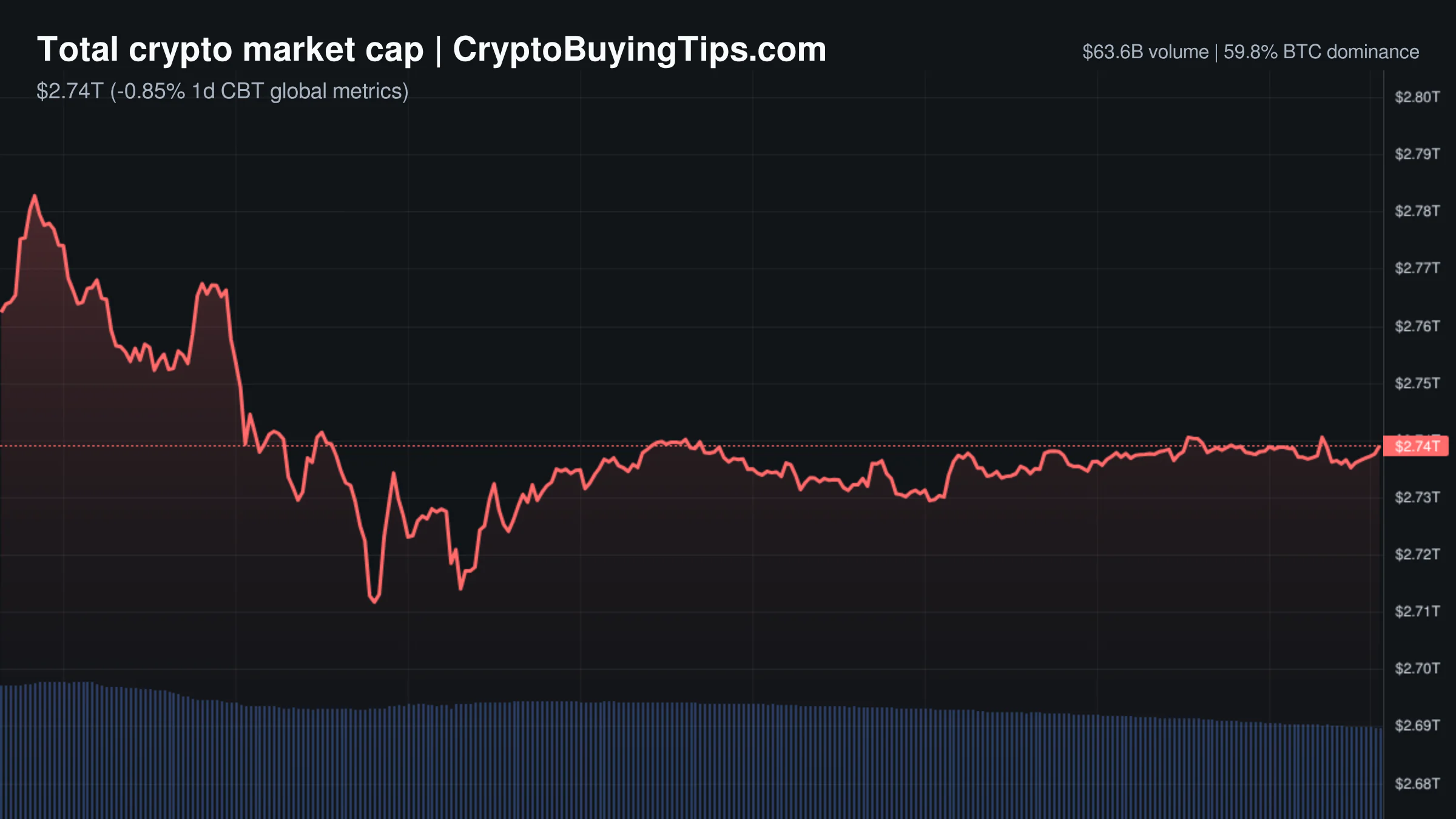
I'm not saying you should panic sell everything, but you should be realistic. We are seeing a divergence where trading volume is up nearly 9% while the total market cap is slightly down. This suggests a lot of churn and aggressive positioning in derivatives.
When you combine high derivative volume with a $330 million supply increase, you get volatility. I'm particularly cautious about the tokens with the highest venture capital concentration. If the "smart money" decides this week is the time to realize gains, retail investors will be the ones providing the exit liquidity.
I'll be watching the BTC dominance closely. As long as it stays near 59%, the "altcoin liquidity" isn't there to save these tokens from their own inflation schedules. Keep your eyes on the unlock calendars and don't let a "community" tweet convince you that basic economics don't apply.
Some links in this article may be affiliate links. We may earn a commission at no extra cost to you — this never influences our analysis or coverage.

Sigrid Voss
Crypto analyst and writer covering market trends, trading strategies, and blockchain technology.
More Articles
Crypto Market Overview | volume collapse amid macro pressure weighs on institutional flows | October 17, 2026
Market overview shows volume collapse amid macro pressure weighing on institutional flows; see how crypto is reacting to…

Speculators are ditching altcoins for tokenized Tesla stocks
Another day, another reason to question where all the money goes these days. Our signal scanner flagged a clear…
Crypto Market Overview | prices climb despite falling trading volume and stablecoin activity | October 16, 2026
Prices climb despite falling trading volume and stablecoin activity; see our market overview for context.

Wall Street is building its own rules while Congress argues
Wall Street seems to have decided waiting for Congress isn't worth the time. Major players like Mastercard are building…