

The $3 billion sword of damocles hanging over the binance hack
The news that a hacker may be sitting on assets worth an estimated $3B raises immediate questions about what happens when stolen crypto is sold. While the broader market is currently obsessed with the immediate carnage of the Binance hack, we think the real systemic risk is the silence. Most traders are watching the funds that have already left the building, but the real danger is the dormant pile that hasn't moved yet.
What actually happened
The scale of this event is difficult to overstate. Our news scoring system rated the reports of the $6.3B Binance hack as a 10/10 for novelty, which is our way of saying this isn't your standard "some employee lost a key" incident. We are looking at one of the largest coordinated thefts in the history of the asset class.
The immediate reaction was a scramble for the exits. As Binance began reopening withdrawals in phases, we saw a massive spike in volatility. Our news scoring system rated the subsequent $3.6B outflow from the exchange as a 9/10 for liquidity impact. That money hit the market fast, creating the initial shock that most people are still processing. But that was the loud part of the event. The quiet part is far more concerning.
How does what happens when stolen crypto is sold affect prices?
The market usually treats a hack as a one-time supply shock. The assets are stolen, they are dumped, the price dips, and everyone moves on to the next narrative. But the data from @WuBlockchain suggests a different pattern here. There is still roughly $3B in stolen assets sitting unmoved in hacker wallets.
This creates a latent liquidity risk. Unlike the $3.6B that already fled Binance, these dormant funds act as a sword of damocles. The hacker cannot simply dump $3B into a limit order without cratering the price, so they have to be strategic. This is where the real market risk lives.
When stolen crypto is sold in these volumes, it rarely happens on a single exchange. Criminals use a process called layering to break the link between the theft and the cash out. This involves chain hopping, where they convert assets across different blockchains to confuse trackers, or using mixers to pool funds with other users. We've seen this pattern before, particularly with North Korean operatives who we previously covered in our analysis of DeFi wallet risks.
The risk to the average holder isn't just the price drop. It is the uncertainty. Every time a large chunk of these dormant funds moves, the market will likely panic, assuming a massive dump is imminent. This creates a volatility loop that can shake out leveraged positions long before the assets even hit an exchange.
The technical risk to BTC and ETH
If we look at the current market structure, the setup is fragile. BTC dominance is sitting at 59.98%, meaning the market is heavily tilted toward Bitcoin while altcoins are being squeezed. This concentration makes the market more sensitive to large-scale movements in the flagship asset.
The most worrying metric right now is the gap between spot and derivatives volume. Current data shows derivatives volume at $403.29B, while spot volume is a mere $44.58B. The market is essentially a giant leveraged bet. In this environment, a sudden move from the hacker wallets could trigger a liquidation cascade. If the "smart money" is already on edge, a few hundred million dollars hitting a mixer can be the catalyst for a disorderly move lower.
We are also seeing a Fear & Greed Index of 36, which puts us firmly in "Fear" territory. When sentiment is this low, the market lacks the bid-side depth to absorb a sudden $3B supply shock without a significant price correction.
What we are watching next
We aren't expecting the hacker to dump everything tomorrow. That would be inefficient. Instead, we are watching for the "peel chain" method, where small amounts of crypto are sent to hundreds of different wallets to bypass KYC checks.
The real trigger will be the movement of the dormant $3B. If we see these wallets wake up, the current price stability is an illusion. For those tired of watching their assets sit on exchanges that can be drained by a single exploit, the move to self-custody wallet security is no longer optional. A hardware device like the Ledger Nano Gen5 removes the exchange risk entirely, which is the only way to stop worrying about who is hacking which CEX.
Our read is simple: the initial crash was the headline, but the dormant assets are the story. We will be tracking the hacker wallets and the derivatives volume closely. If the leverage continues to build while the stolen assets remain static, the eventual move will be violent.
Some links in this article may be affiliate links. We may earn a commission at no extra cost to you — this never influences our analysis or coverage.

Sigrid Voss
Crypto analyst and writer covering market trends, trading strategies, and blockchain technology.
More Articles
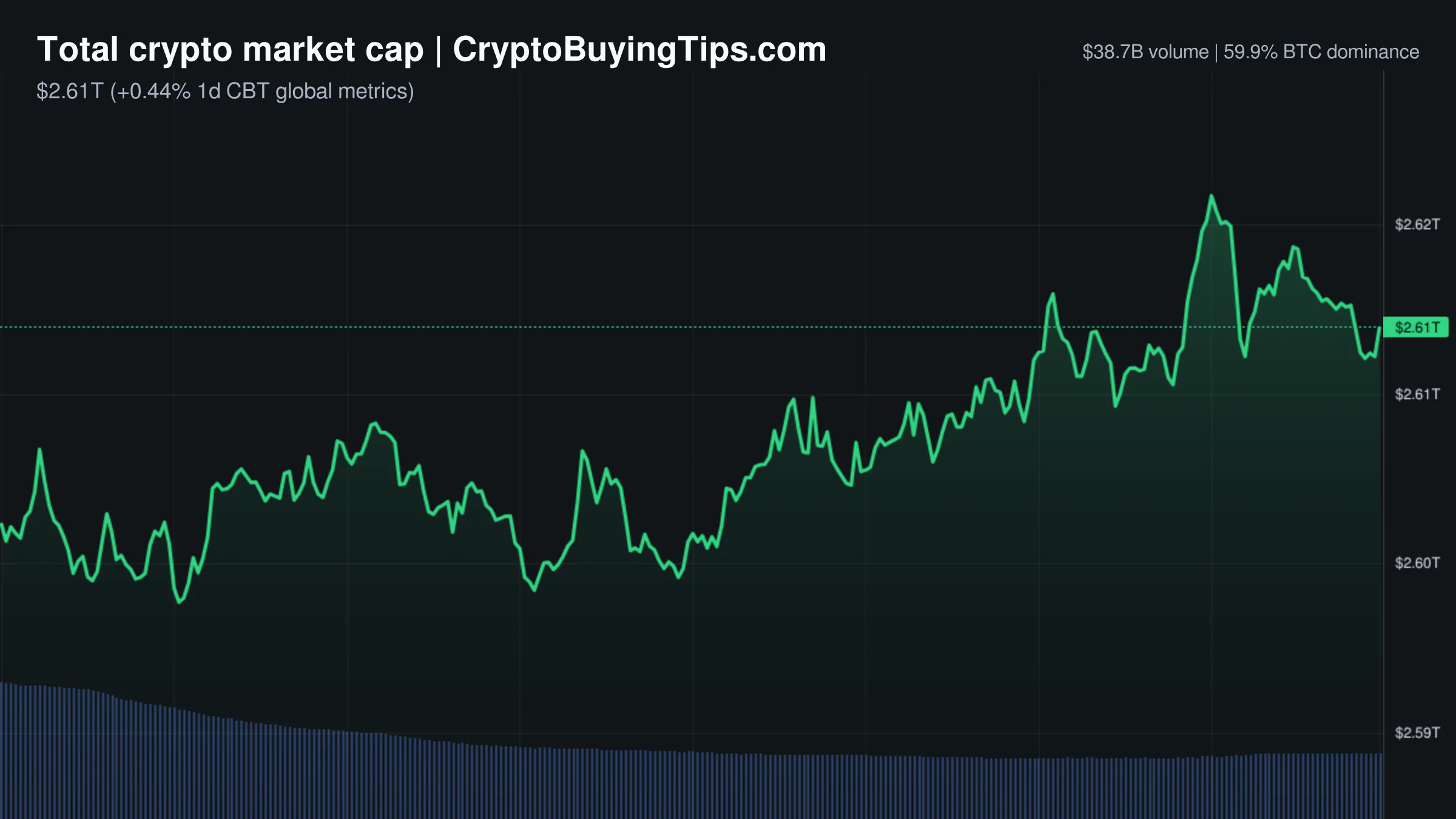
Crypto Market Overview | volume collapse amid systemic fear after major hack | November 1, 2026
Crypto market overview shows volume collapse amid systemic fear after major hack; see how liquidity vanished despite…

Ethereum gas is 0.04 Gwei. Here is why a cheap network is actually a bearish signal
A cheap transaction fee feels like a bargain, but our read suggests it's more accurately described as an empty auction…
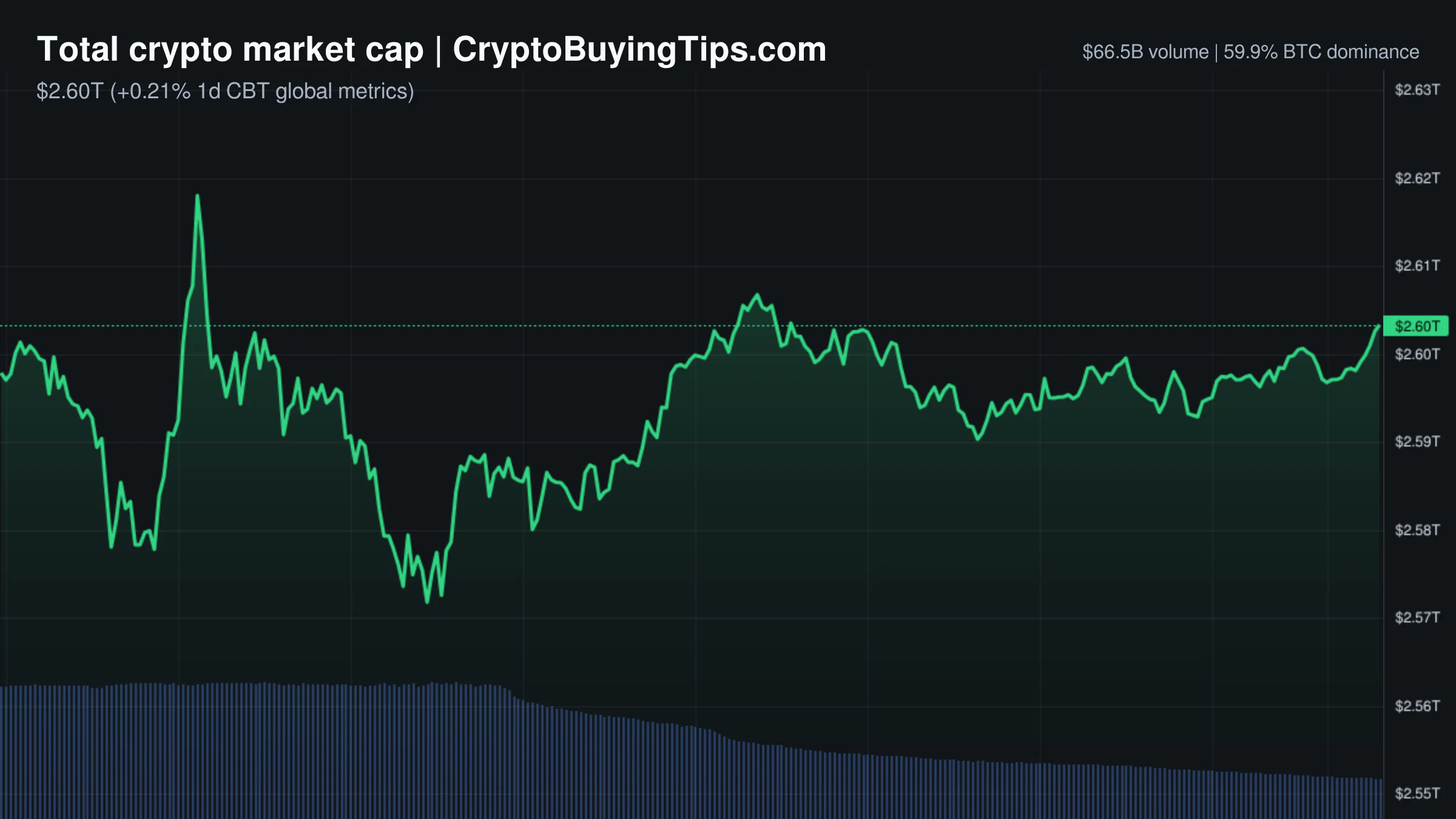
Crypto Market Overview | Liquidity drought amid record exchange breach concerns | October 31, 2026
Liquidity dries up as crypto trades sideways amid record exchange breach fears. See our market overview on BTC dominance…

The Binance panic is systemic, but our signal scanner flags a critical BTC floor
The market seems determined to test every single floor; our signal scanner suggests $76,600 remains the immediate line…