

The US CLARITY Act could be signed by June. Here is what it actually changes
I've spent the last few years watching the SEC treat the crypto market like a game of whack-a-mole. For a long time, the narrative was just "fight the regulators" or "move to Dubai." But there is a shift happening. Insiders like Mike Novogratz are signaling that the CLARITY Act could be finalized as early as May or June. If you're wondering what is the crypto clarity act and why it matters, it's basically the difference between playing a game where the rules are made up on the fly and playing a game with a printed rulebook.
What is the crypto clarity act and why it matters
Right now, the biggest headache in the US is the fight over whether a token is a security or a commodity. The SEC claims almost everything is a security, while the industry argues that once a token is decentralized, it isn't. This ambiguity is why so many projects avoid the US market entirely.
The CLARITY Act aims to create a legal framework that actually defines these categories. Instead of relying on a decades-old test from the 1940s, it would provide a clear path for tokens to be classified. In my experience, the "regulatory risk" we always talk about isn't actually about having rules, it's about not knowing what the rules are until you've already broken them.
Why this changes the game
If this act passes, we move from a regime of "regulation by enforcement" to actual legislation. This is a massive psychological shift for institutional money. Big hedge funds and pension funds don't mind rules, but they hate uncertainty.
I think we'll see three main effects:
First, the "security" label will stop being a weapon. If a project can prove it meets the Act's criteria for a digital commodity, the SEC loses its primary lever for suing them.
Second, it opens the door for more regulated products. We've seen the BTC and ETH ETFs, but a clear framework makes it much easier for SOL and other major assets to follow.
Third, it reduces the incentive for "regulatory arbitrage," where companies flee to offshore jurisdictions. I've followed the market since 2019, and I've seen too many great teams waste their energy on legal battles instead of building better tech.
The current market context
Looking at the data, the market is in a weird spot. The Fear & Greed Index is sitting at 45, which is pretty neutral. Bitcoin dominance is holding strong near 60%, and the Altcoin Season Index is only 18/100. We are firmly in a Bitcoin season.
Money is concentrated in the "safe" bet. This makes sense because when the macro environment is shaky and the legal status of altcoins is uncertain, people stick to BTC. If the CLARITY Act provides that missing legal bridge, it could be the catalyst that finally rotates capital back into the broader altcoin market.
My take on the risks
I'm not blindly bullish on this. Legislation in DC often comes with strings attached. I'm worried that in the rush to provide "clarity," the government might bake in surveillance requirements or reporting rules that kill the privacy aspect of crypto.
There is also the risk that the Act is too narrow. If it only helps the top five coins and leaves the rest of the ecosystem in a legal gray area, we haven't actually solved the problem. I'll be watching the final wording very closely to see if it actually protects decentralized protocols or just helps the big exchanges.
How to prepare
Regardless of what happens in DC, the trend is toward more oversight. That means the days of "wild west" trading are ending. If you're holding assets for the long term, the best move is to get them off exchanges.
I personally prefer using a hardware wallet to avoid the risk of exchange insolvency or sudden regulatory freezes. For anyone starting out, the Ledger Nano Gen5 is a great entry point because it's affordable and brings E Ink touchscreen tech to a basic signer. It's a lot better than staring at a tiny screen and hoping you're signing the right transaction.
I'll be keeping an eye on the legislative calendar through June. If the signature happens, expect a volatility spike as the market tries to price in a "regulated" era of crypto.
Some links in this article may be affiliate links. We may earn a commission at no extra cost to you — this never influences our analysis or coverage.

Sigrid Voss
Crypto analyst and writer covering market trends, trading strategies, and blockchain technology.
More Articles
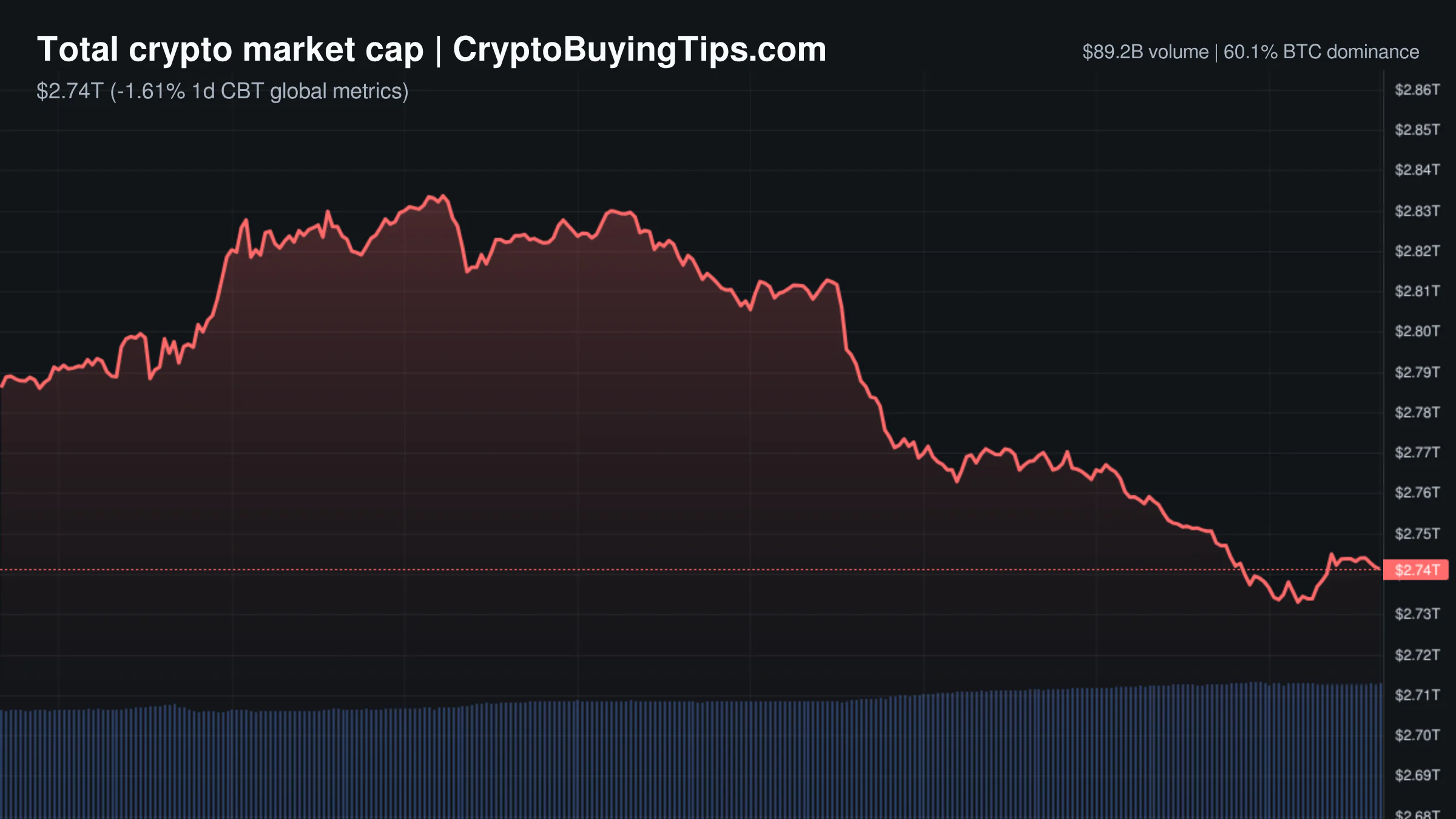
Crypto Market Overview | Leveraged bets surge amid regulatory clarity and institutional inflows | October 22, 2026
The market shows divergence between spot interest and leveraged bets amid regulatory clarity; see our overview here.

Volume is surging but prices are flat. Here is where the trigger is
Volume spikes while prices remain stubbornly flat; this divergence suggests an underlying battle between leveraged…
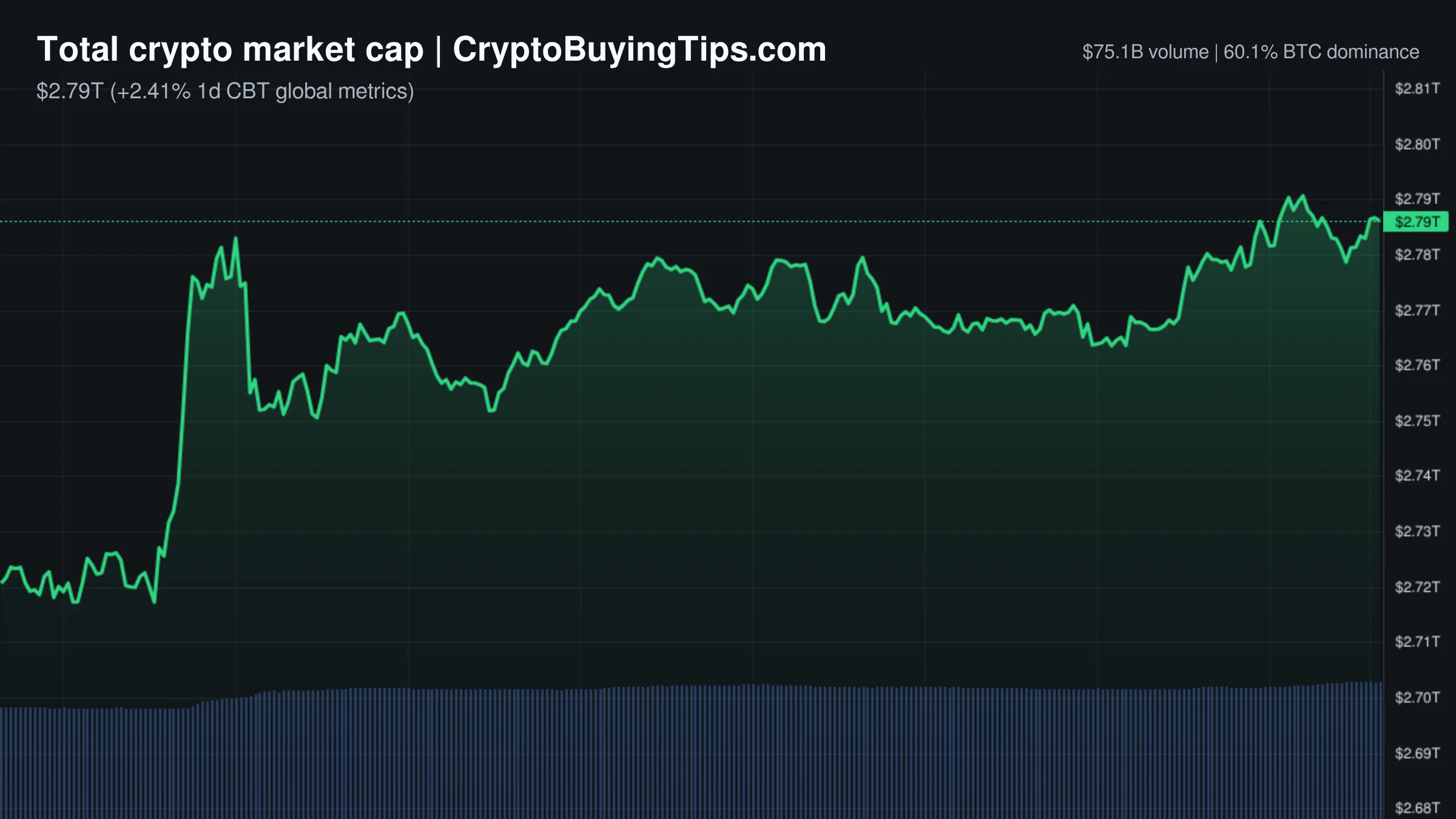
Crypto Market Overview | Leveraged speculation drives gains amid European regulatory uncertainty | October 21, 2026
Leveraged speculation drives crypto gains amid European regulatory uncertainty; see our market overview on BTC and ETH…

Compound is up 21% and DeFi volume is surging. The rotation is here
The market is behaving with all the excitement of an accountant's quarterly report, but DeFi primitives are showing…