

Arthur Hayes thinks $15 trillion in credit will push Bitcoin to $1 million
Most traders are currently staring at the 1-hour chart, obsessing over whether Bitcoin can hold $78,000. I think that's a mistake. While the Fear & Greed Index is sitting at a neutral 46, there is a much larger, systemic wave building in the background. Arthur Hayes is arguing that a massive credit expansion, specifically around $15.2 trillion, is about to flood the system. If you want to understand how does fed money printing affect crypto, you have to stop looking at the price and start looking at the liquidity.
The case for a million dollar Bitcoin
Hayes isn't just guessing here. He's pointing to the "Genius Act" and the structural way the US government handles its debt. When the Federal Reserve prints money to buy government bonds or encourages banks to expand credit, that money doesn't just sit in a vault. It flows into the most liquid, high-growth assets.
In my experience, Bitcoin has become the ultimate "liquidity sponge." When the dollar loses its value because there's too much of it, investors don't just buy gold. They buy the asset that has a fixed supply and a growing institutional adoption rate. If $15 trillion in new credit actually hits the market, we aren't just talking about a small rally. We are talking about a vertical move.
The data supports the idea that we are in a "Bitcoin Season," with BTC dominance hovering around 60%. This usually happens when the big money is positioning for a macro move rather than gambling on small-cap alts.
How does fed money printing affect crypto in the real world
To put this in plain English, when the Fed "prints," they are essentially lowering the cost of borrowing. This makes people feel wealthier and more speculative. I've watched this cycle since 2019, and the pattern is always the same. First, the liquidity hits the big banks. Then it hits the S&P 500 and Nasdaq. Finally, it spills over into crypto.
Right now, the S&P 500 is at $713.94 and the Nasdaq is at $664.02. Both are showing strength. This is the "risk-on" signal. When the TradFi markets are green and the Fed is signaling a looser monetary policy, Bitcoin usually acts as a leveraged bet on the devaluation of the dollar.
The problem is that most people wait for the price to hit a new all-time high before they buy. By then, the "printing" is already priced in. The real gains are made when the sentiment is neutral, like it is now, and the macro liquidity is just starting to shift.
The strongest counterargument
I'm not a permabull, and there is a real risk here. The biggest danger is a "liquidity trap." What happens if the Fed prints the money, but the banks are too scared to lend it? Or what if the US government faces a genuine debt crisis that causes a flight to the US dollar instead of a flight away from it?
There is also the leverage problem. The current market data shows a massive gap between spot volume (around $104B) and derivatives volume (over $440B). This means the market is heavily driven by people gambling with borrowed money. If we get a sudden shock, those long positions will get wiped out in minutes, regardless of what Arthur Hayes thinks about the long-term credit cycle.
Where I land
I think Hayes is right about the direction, but maybe too optimistic about the timeline. The $1 million target is a bold claim, but in a world where the monetary system is essentially a giant printing press, "impossible" numbers usually happen.
However, you can't just buy and hope. If you're planning to hold through these massive volatility swings, you need to get your assets off exchanges. I've seen too many people lose everything because they left their coins on a platform that went bust. For anyone actually planning to "HODL" for the long term, I recommend a Ledger Nano X. It's a solid choice because it has Bluetooth for easy phone management and supports over 15,000 coins, which is plenty if you're diversifying.
I'm watching the BTC dominance and the S&P 500 closely. If the Fed actually triggers this $15 trillion expansion, the current $78,000 price point will look like a bargain in a few years. But until then, I'm keeping a close eye on those derivatives levels. Leverage is a double-edged sword, and right now, the market is holding a very sharp one.
Related Tickers
Some links in this article may be affiliate links. We may earn a commission at no extra cost to you — this never influences our analysis or coverage.

Sigrid Voss
Crypto analyst and writer covering market trends, trading strategies, and blockchain technology.
More Articles
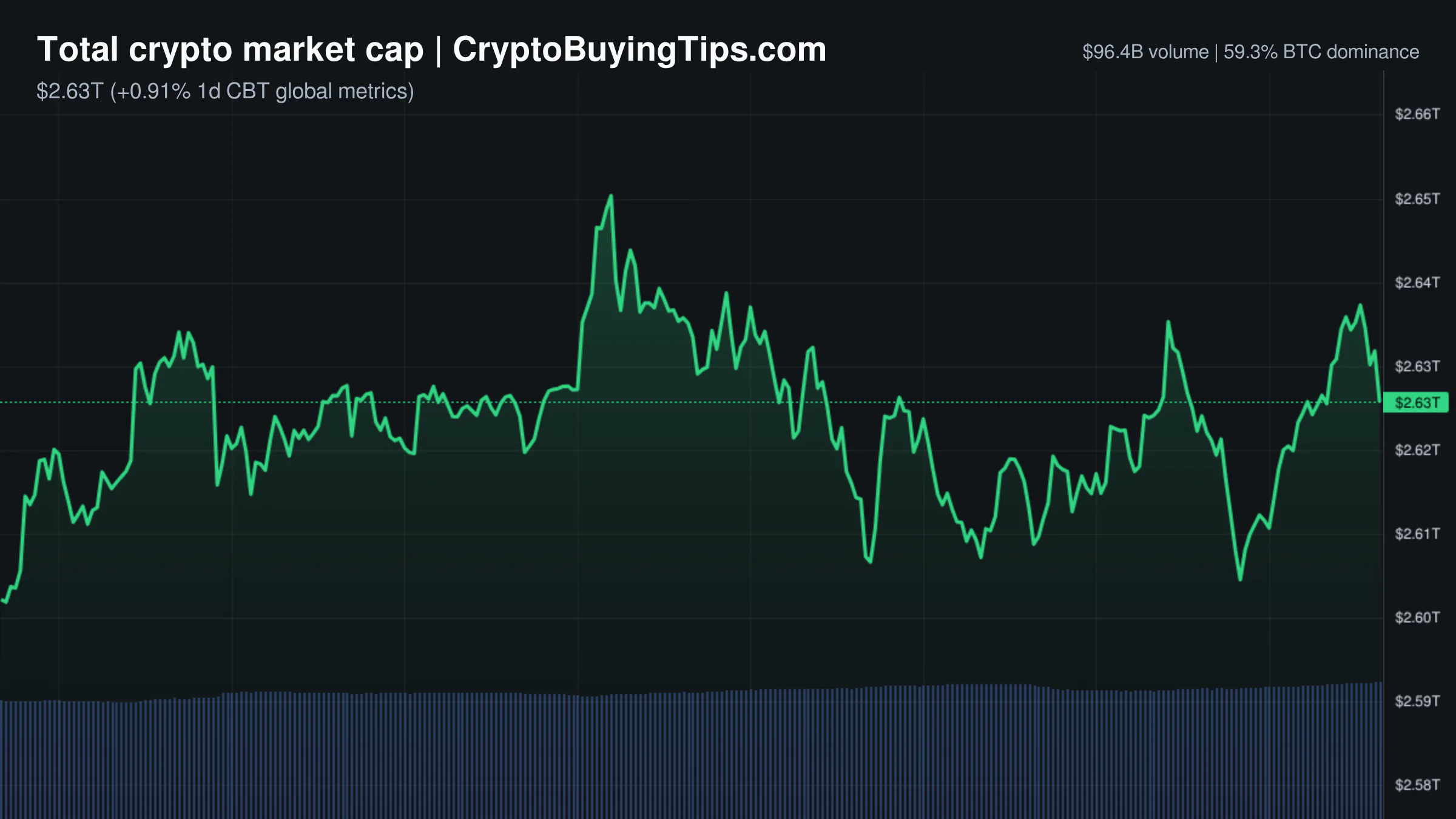
Crypto Market Overview | Leverage-driven rally amid strong ETF inflows as BTC targets 80k | August 24, 2026
Leverage-driven rally sees BTC near 80k amid strong ETF inflows; see our market overview on current crypto dynamics.

Derivatives volume is 8x higher than spot. Here is why that is a warning
The market's current price action seems to be driven by bets rather than cash; with derivatives volume eight times…
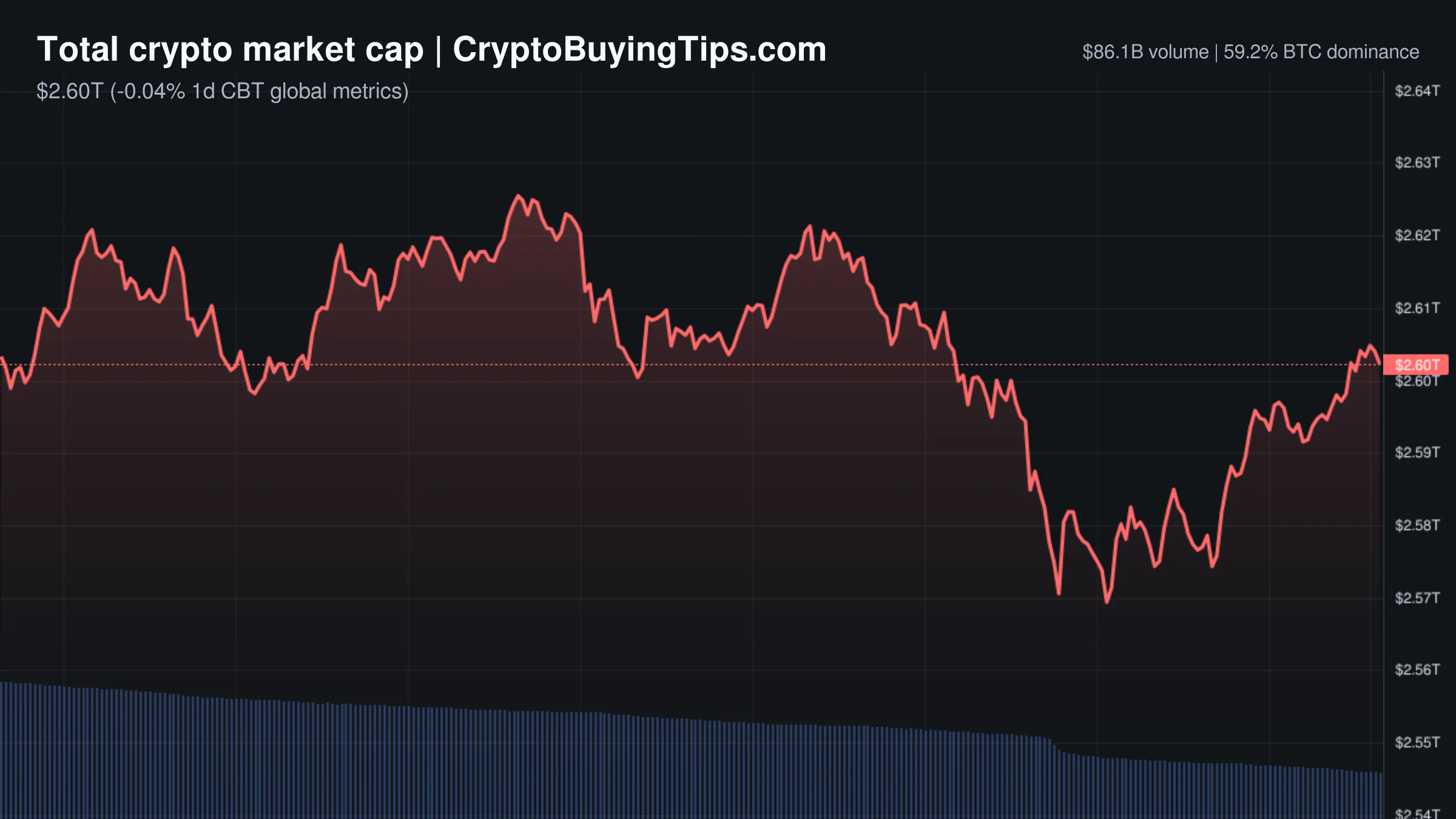
Crypto Market Overview | volume collapses as greed persists amid regulatory friction | August 23, 2026
Volume collapses as greed persists amid regulatory friction; see our market overview on crypto's current state and key…

Brussels is coming for DeFi vaults and the market is ignoring the risk
Brussels seems to think "decentralized" is just an aesthetic choice for now. Our read suggests MiCA regulation isn't…