

Binance is bleeding but Hyperliquid is ripping. The great CEX exit has begun
The market is currently in a state of 'Fear' (index at 38) following the systemic shock of the Binance hack, but our data shows a sharp divergence. Most assets are bleeding, but HYPE is ripping. For those asking why is hyperliquid hype price increasing while the total market cap drops, the answer is a rotation of capital away from centralized exchange risk and toward institutional DeFi. We previously covered Hyperliquid whales net short HYPE for more background.
The great CEX exit
The numbers are stark. Our market data tools show the total market cap fell by 4.46% in the last 24 hours. In that same window, Hyperliquid (HYPE) surged by 17.67%. This isn't a random pump or a retail fluke. It is a flight to safety, though "safety" in crypto is always a relative term.
Our news scoring system rated the Binance hack as a 10/10 for liquidity impact. A suspected $5.5 billion drain from wallets backing customer assets is the kind of event that makes traders rethink the phrase "not your keys, not your coins." When the largest exchange in the world has its reserves questioned, the "trust me" model of centralized finance breaks.
We've seen this pattern before. We previously covered Hyperliquid whales hedging BNB during previous periods of uncertainty. The professional traders aren't just selling; they are rotating. They are moving from a system where a single database error or a compromised multisig can erase billions to a system where the state is verifiable on-chain.
Why is hyperliquid hype price increasing during a crash?
The surge in HYPE price is a direct reaction to the failure of centralized trust. Hyperliquid is not just another DEX. It is an institutional-grade perpetuals platform that removes the counterparty risk of exchange insolvency.
As noted in our research, there is no Hyperliquid balance sheet to fail. The protocol uses a verifiable trading state and wallet authorization. If a CEX faces insolvency, your assets are subject to the legal whims of a jurisdiction you've likely never visited. On Hyperliquid, the mechanics are written in code.
This shift is accelerated by a narrative change. For years, the trade-off was simple: you used a CEX for speed and liquidity, or a DEX for security and slow execution. That gap has closed. Hyperliquid offers CEX-like execution without the risk of a CEO suddenly becoming a liability.
If the idea of leaving your funds on an exchange makes you twitchy, a Ledger Nano Gen5 is the standard way to actually own your keys. Combining hardware self-custody with non-custodial trading platforms is the only way to fully opt out of CEX risk.
The institutional catalyst
The timing of the HYPE rip isn't a coincidence. Our news scoring system flagged the partnership between Hyperliquid and ICE (the owner of the NYSE) as a high-impact event. The news that ICE intends to bring Hyperliquid-based perpetuals to the US provides a tangible catalyst.
Institutional money doesn't move because of a "vibes" shift. It moves when there is a regulated or semi-regulated bridge. The ICE connection suggests that the very entities that run the traditional financial world are looking at Hyperliquid as the blueprint for the future of derivatives.
This creates a powerful feedback loop. Retail traders see the institutional validation and buy in. Institutional traders see the liquidity growing and feel safer moving their capital. Meanwhile, the traditional CEXs are left trying to explain why billions of dollars in customer assets vanished.
What this changes for the market
This rotation signals a shift in what the market considers "institutional grade." For a long time, that meant a CEX with a fancy office and a few regulatory licenses. Now, it means verifiable on-chain mechanics and non-custodial architecture.
We should be realistic about the risks. Moving from CEX risk to DeFi risk doesn't mean the risk is zero. You trade insolvency risk for smart contract risk and oracle failure. But for a professional trader, a bug in a contract is often more acceptable than a black hole in a centralized balance sheet.
The macro context adds another layer of pressure. With the S&P 500 down 0.38% and the NASDAQ down 1.42%, risk-off sentiment is creeping into everything. In a risk-off environment, the most "risky" part of a crypto portfolio isn't the volatility of the token, but the custody of the asset.
We are watching for two things next. First, whether the HYPE surge holds as the Binance liquidity crisis plays out. Second, whether other "institutional DeFi" protocols see a similar rotation. If this is the start of a broader CEX exit, the current market dip is just the opening act.
Some links in this article may be affiliate links. We may earn a commission at no extra cost to you — this never influences our analysis or coverage.

Sigrid Voss
Crypto analyst and writer covering market trends, trading strategies, and blockchain technology.
More Articles
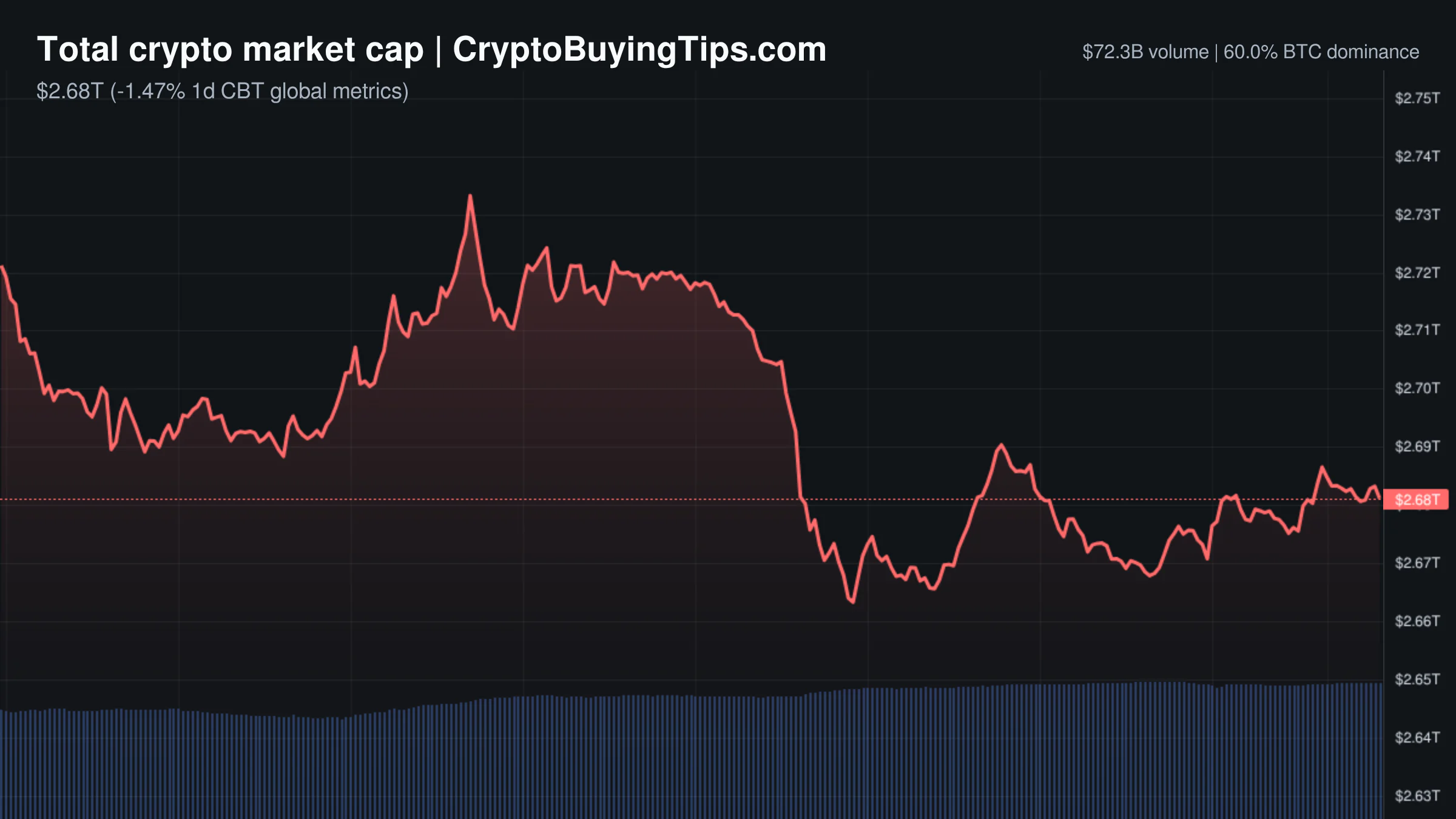
Crypto Market Overview | Derivatives volume spikes while spot assets decline amid institutional friction | October 29, 2026
Derivatives volume spikes while spot assets decline amid institutional friction, showing leveraged bets drive crypto…

AI can now crash Bitcoin nodes. The institutional narrative just hit a wall
The grand narrative of institutional adoption seems slightly less robust when viewed through a machine's lens;…
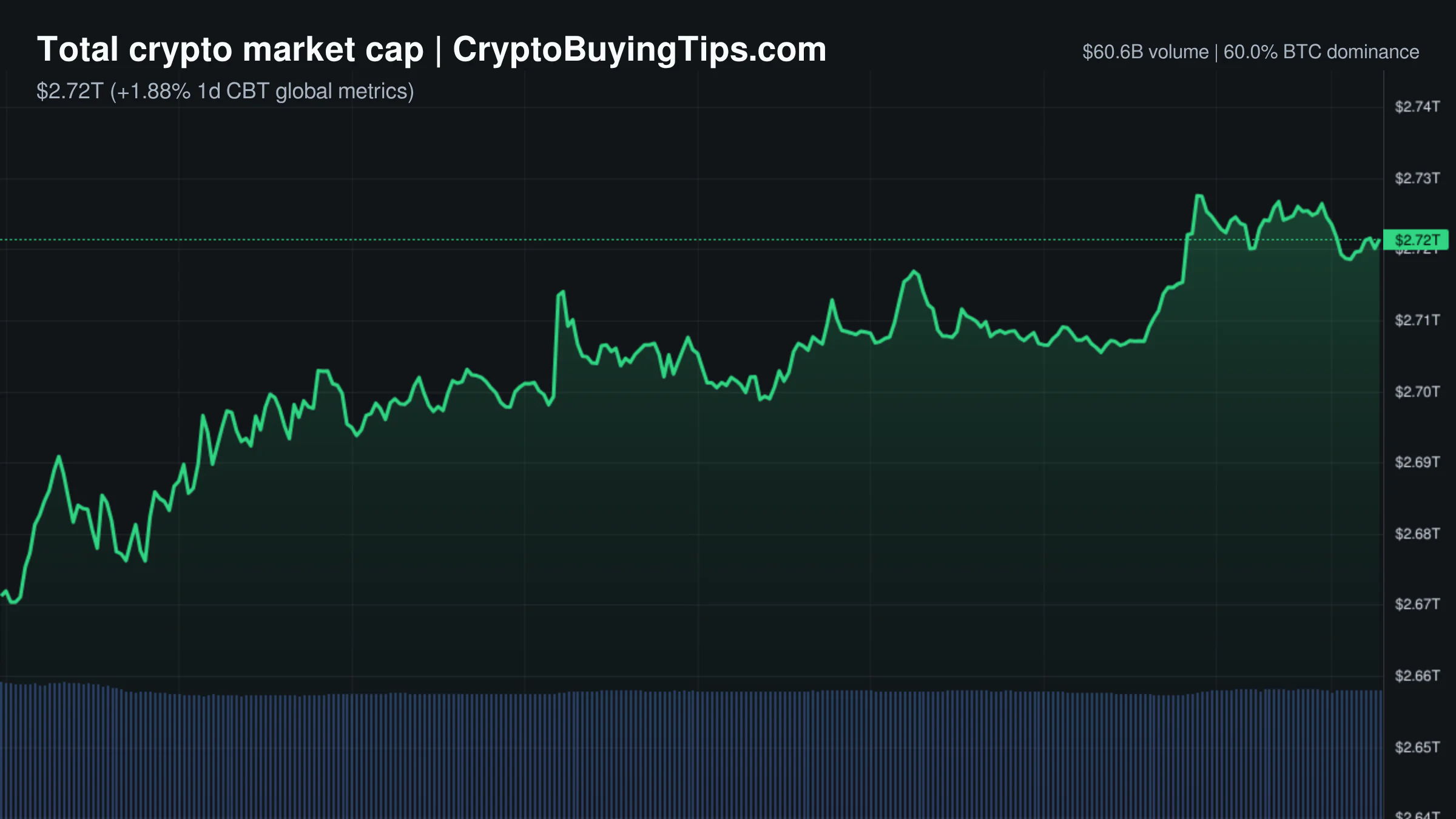
Crypto Market Overview | derivatives volume dwarfs spot activity amid institutional rails expansion | October 28, 2026
Derivatives volume dwarfs spot activity in today's crypto market overview; see BTC and ETH action amid institutional…

Bitcoin dominance is hitting 60%. Here is what that means for your alts
Bitcoin's share of the market hits 60%, which means less money for everything else. Our read suggests that rising…