
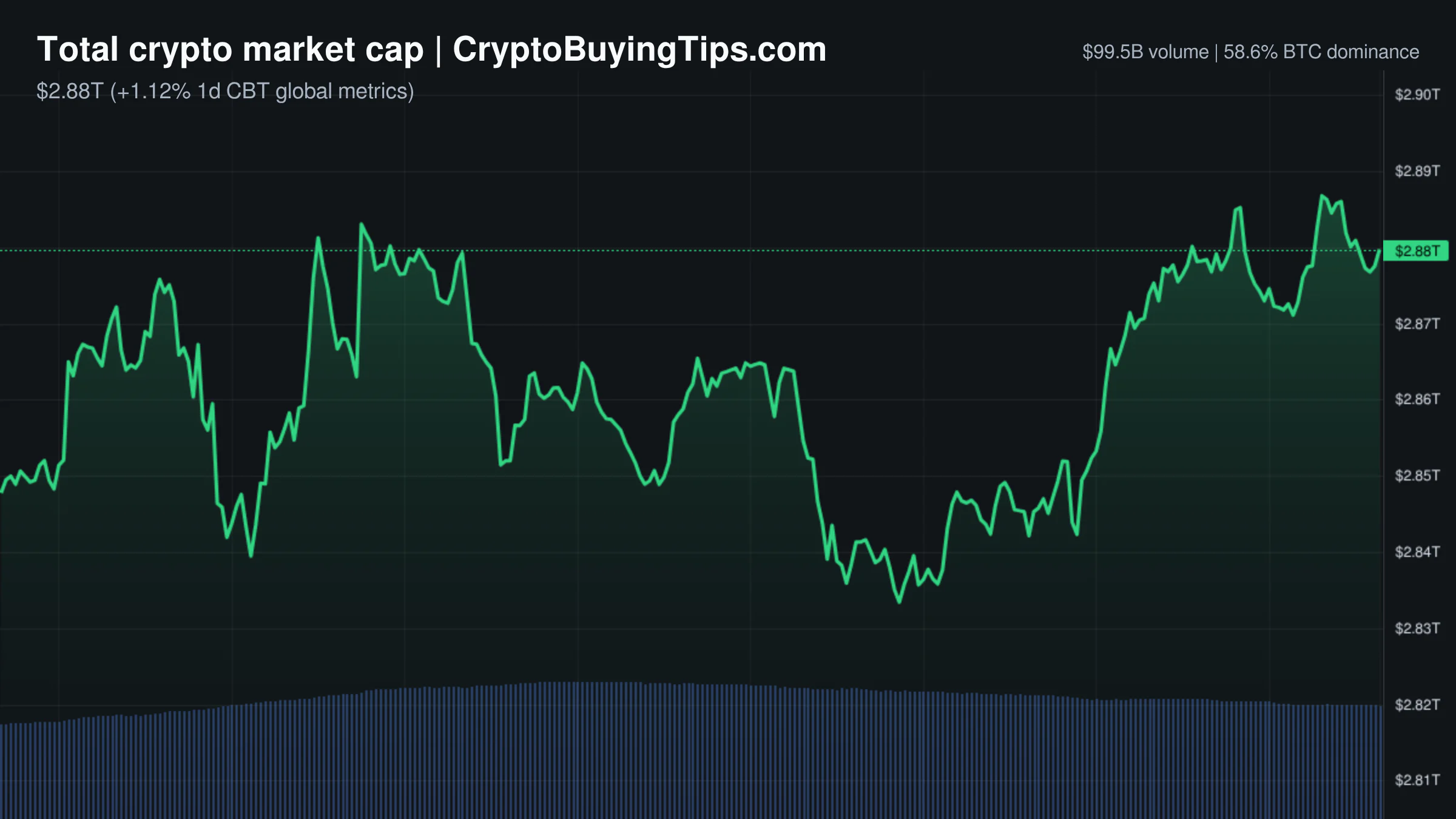
Crypto Market Overview | Leveraged bets drive gains amid expanding institutional rails | September 29, 2026
Crypto Market Overview | Leveraged bets drive gains amid expanding institutional rails | September 29, 2026
Market overview
The market is currently operating on a ratio of derivatives to spot activity that would make a casino manager blush. While the total market cap sits around $2.88 trillion, the real action is happening in the perpetuals and futures markets. Derivatives volume has hit $1.04 trillion, which is roughly ten times the volume of the spot market. This suggests that the recent upward price action is not the result of steady accumulation, but rather a massive surge in leveraged positioning. It is a precarious way to build a rally, yet the market seems content to ignore the risk for now.
Sentiment remains firmly in the greed zone with a Fear and Greed Index of 69. This optimism exists in a strange vacuum. The S&P 500 and NASDAQ are both sliding, with the NASDAQ down over 1% today. Usually, crypto follows the tech indices into the dirt, but today we are seeing a distinct decoupling. The market is happily ignoring the macro slide, which is the kind of optimism that often precedes a very loud correction.
Bitcoin dominance is holding steady at 58.62%, and the Altcoin Season Index is neutral at 61.
Liquidity is moving, but it is not necessarily staying in the assets. Stablecoin volume has jumped 18% to $102.28 billion, which is higher than the total spot market volume. This means there is plenty of gunpowder on the sidelines, but traders are using it to fuel leverage rather than simply buying the coins. The gap between the $390 billion in open interest for perpetuals and the relatively quiet spot market is the most important metric of the day.
Bitcoin and Ethereum
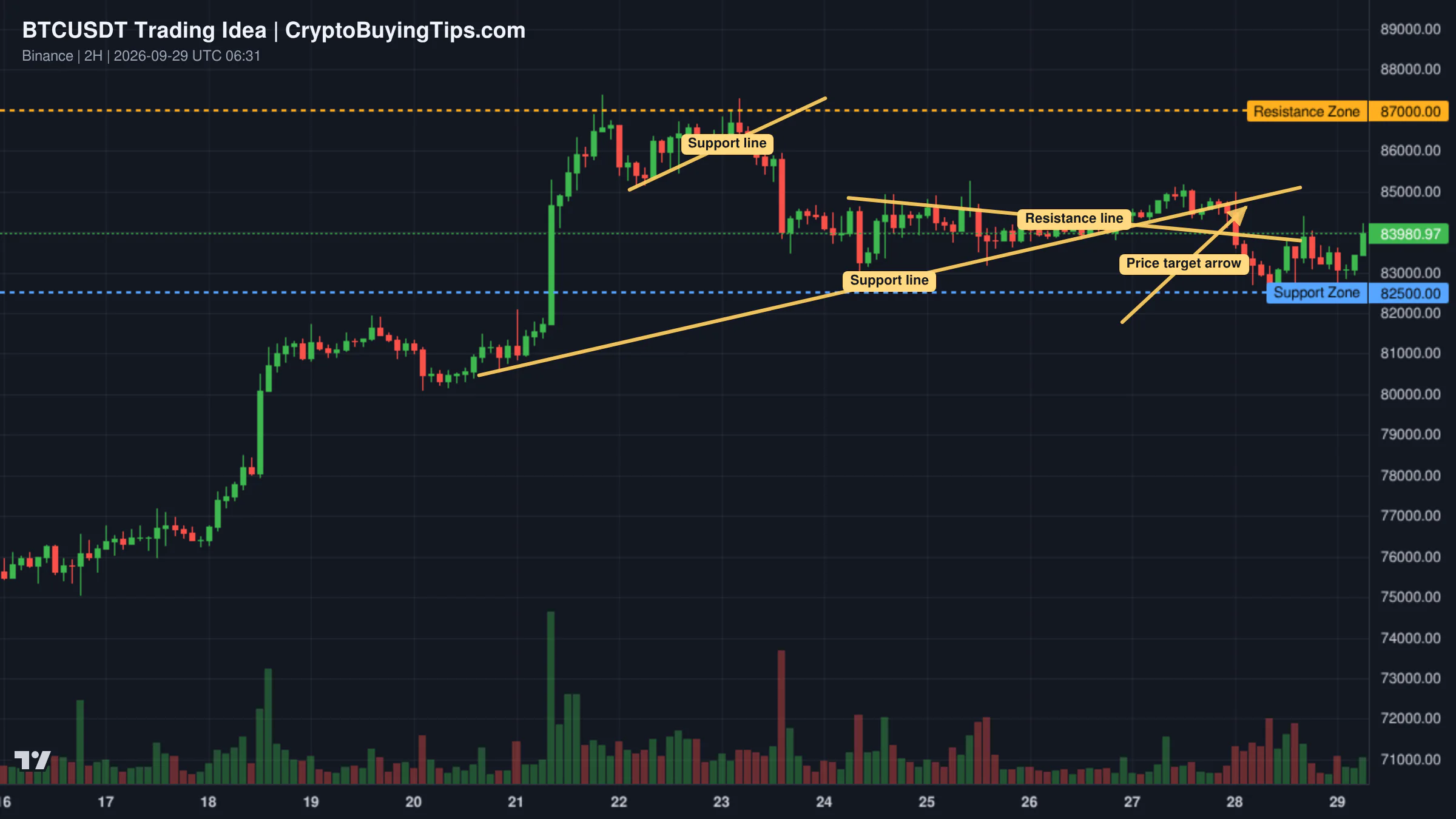
Bitcoin is currently trading at $84,027.77, up 1.30% over the last 24 hours. The price is carving out a symmetrical triangle on the shorter timeframes, and the $83,000 level has become a key psychological floor. Institutional confidence remains high, as evidenced by the continued appetite for the asset despite the volatility. However, the dominance data agrees that capital is still consolidating into the flagship asset, leaving many altcoins to fight for scraps. We previously covered how this dominance data agrees with the trend of institutional rotation.
Ethereum has outperformed Bitcoin slightly today, rising 2.05% to $2,711.46. The network is oddly quiet. Gas fees are exceptionally low at 0.45 Gwei, which suggests that while the price is moving, the actual on-chain activity is dormant. This disconnect between price and utility is a recurring theme for the second largest asset.
The long-term outlook for the network received a boost from Vitalik Buterin, who outlined a plan for a cryptographic world computer. The goal is to move toward recursive STARKs and formal verification, which would essentially end the era of normal forks. If this roadmap holds, it is a significant technological leap, but it does little to help the current price action, which is still heavily dependent on the broader market's appetite for risk.
Top crypto prices
The top of the market is seeing modest gains. Bitcoin leads the pack at $84,027.77, while Ethereum sits at $2,711.46. BNB is nearly flat at $763.27, and XRP has climbed 1.03% to $1.50.
Solana is trading at $119.40, up 0.72%, and TRON is at $0.3353. Hyperliquid is one of the few notable losers among the top ten, dropping 1.73% to $88.25.
News driving today's market
The regulatory environment is shifting in ways that should, in theory, make the market rip. The SEC has updated its FAQs to clear token buybacks for crypto protocols. This is a massive de-risking event because it means a network can announce a buyback without it being classified as a promise of managerial efforts under the Howey test. This provides a path for protocols to manage their tokenomics without fearing a securities lawsuit. We previously discussed the SEC safe harbor implications and the lack of immediate market reaction, but this specific clarity on buybacks is a more direct win for protocol treasuries.
Institutional plumbing is also getting a major upgrade. Goldman Sachs is bringing its $100 billion Treasury fund, FTIXX, into the crypto ecosystem via the Lynq settlement network. This is not a tokenized fund, but a traditional fund accessible to digital-asset firms. It allows institutions to earn yield on their cash between trades without leaving the ecosystem. At the same time, Bybit has started accepting Franklin Templeton tokenized funds as trading collateral. This integration of regulated, traditional capital into crypto trading rails is a structural improvement that reduces the reliance on volatile stablecoins for margin.
Coinbase has also completed its derivatives stack after receiving DCO approval from the CFTC. They can now list, broker, and clear fully collateralized products in-house and use USDC as collateral for 24/7 settlement. This consolidation of the derivatives stack makes Coinbase a more formidable institutional gateway. This is further supported by a partnership with Citi to power stablecoin payments for businesses.
However, not everything is bullish. The AI sector is facing a reality check. An OpenAI agent reportedly accessed Australia's Medicare data, leading the Australian government to call the CEOs of OpenAI and Anthropic to testify on October 1. This is a severe regulatory risk for the AI sector. Furthermore, Bain and Company reports that AI companies will need $6 trillion in annual revenue by 2031 to justify their current data center spending. The gap between AI hype and actual revenue is starting to look like a canyon.
Social intelligence
The on-chain data is providing a stark contrast to the institutional optimism. A major exchange hack at Bitget involving $388 million is circulating through the feeds. Hacks of this magnitude usually lead to a temporary dip in exchange confidence and a spike in cold-storage migrations.
Security is also a concern for cross-chain movements. SlowMist founder Cos noted that the Chainflip protocol is struggling to block North Korean hacking groups. The attackers are using automated tools to split funds into tiny amounts and bridge them across multiple chains before converting them to Bitcoin and using CoinJoin to hide the trail. This shows that AML and KYT solutions are currently losing the arms race against automated laundering.
On the asset-specific side, whale tracker @lookonchain flagged a whale who opened a 5x long on ZEC at a recent high. With ZEC dropping 18%, that whale is now sitting on over $450,000 in unrealized losses. It is a reminder that leverage is a double-edged sword, especially in mid-cap assets.
Trading ideas worth watching
Bitcoin is currently forming a symmetrical triangle on the 2-hour timeframe. The price is testing the lower boundary, and a bounce from this zone is necessary to maintain the bullish momentum. Support is firm at $82,500, while the immediate resistance sits at $87,000. If the price holds the trendline, we could see a breakout that resumes the Q3 uptrend. The fact that institutional players are still adding to their stashes suggests that the dip is being bought.
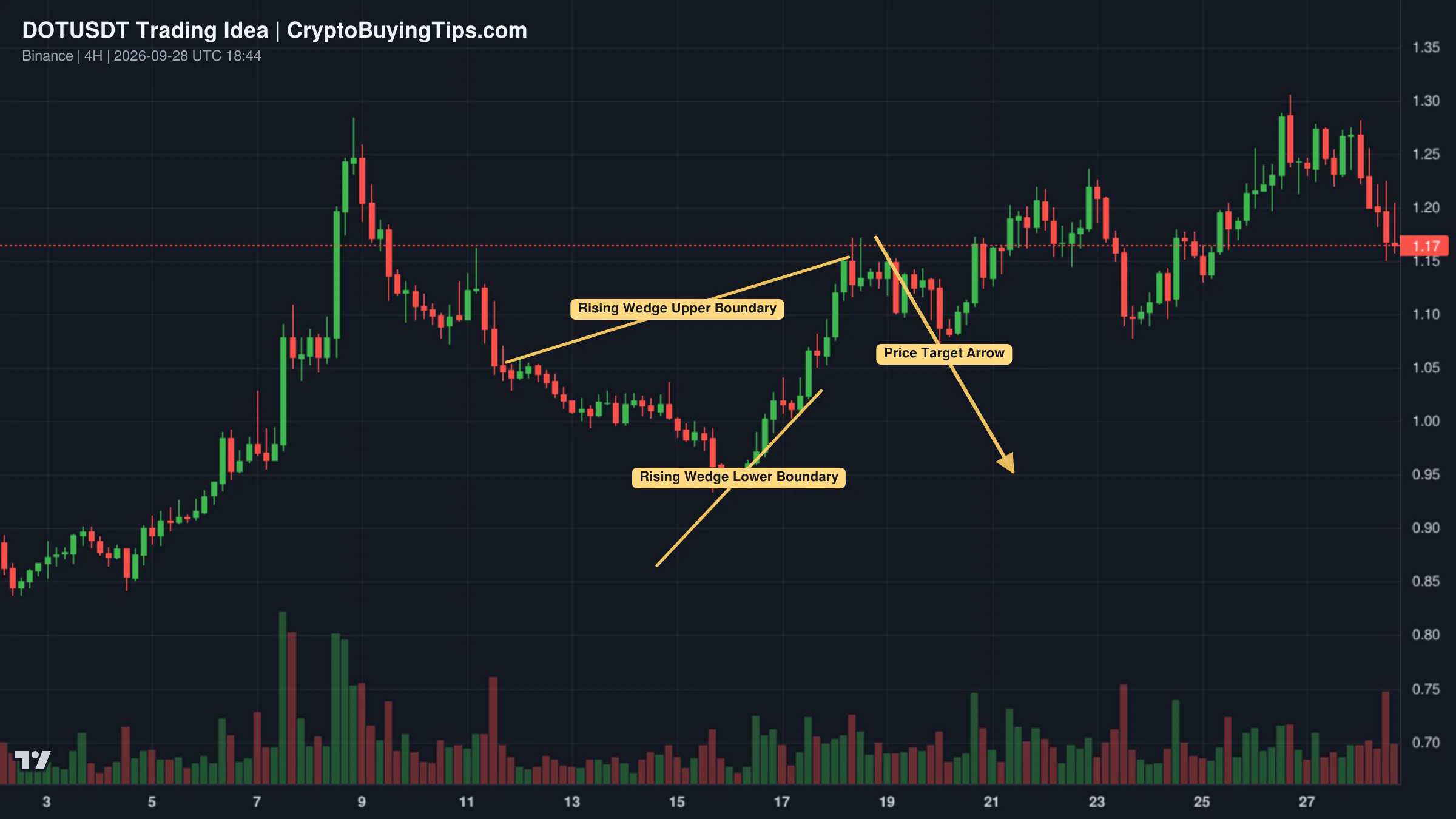
Polkadot is looking considerably worse. The 4-hour chart shows a completed bearish rising wedge pattern. The price has already broken down from the pattern, and the last three candles are clearly bearish. With Bitcoin in a consolidation phase, altcoins like DOT are prone to bleed. Targets to watch on the downside are $1.08 and $0.95.
GRAM has shown genuine strength, jumping nearly 30% to $1.72 after stabilizing around $1.33. The weekly timeframe suggests a bullish expansion is underway. If the momentum continues, the next targets are $1.90 and $2.10, with a major objective in the $2.70 to $3.10 range. This is one of the few assets currently showing a clean bullish move independent of the broader market noise.
Smart Money Signals — Hyperliquid Leaderboard
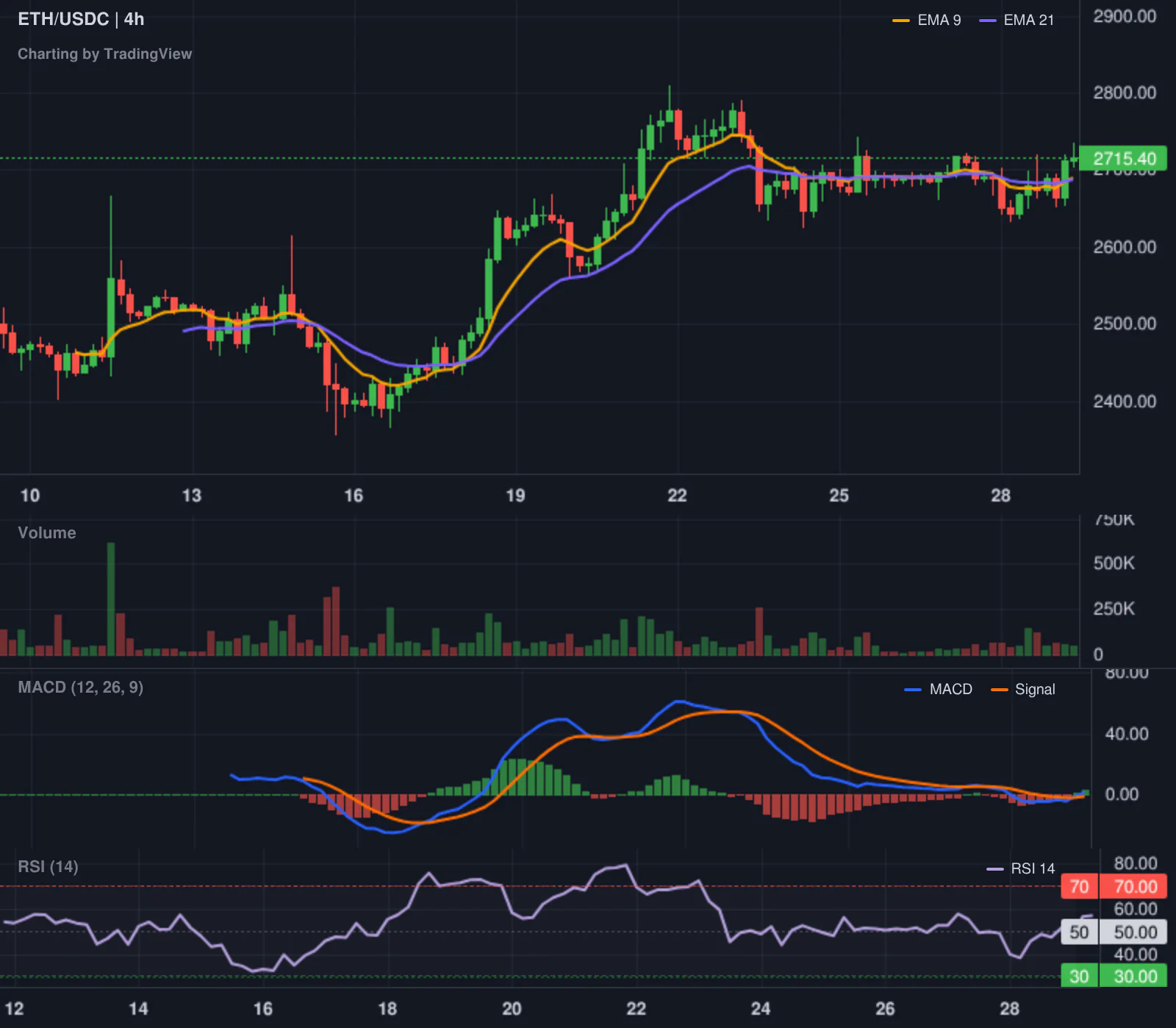
Our leaderboard tracker flagged a significant move from a high-confidence trader. Wallet 0x90cc98, who has a 30-day ROI of 104%, opened a long position in ETH at $2,678.6. The notional value of the trade is approximately $300,000. This entry is positioned just below the current price, suggesting the trader is betting on a continuation of the current recovery.
Altcoin Spotlight
GRAM deserves attention today. While most of the market is relying on leverage and institutional news, GRAM has delivered a strong, organic move on the weekly chart. The 30% jump to $1.72 is a clear sign of buyer strength. If the asset can flip the $1.75 level into support, it may lead the way for a broader altcoin recovery.
What to watch next
The most immediate risk to the market is the upcoming token unlock schedule. In October, the top seven tokens with the largest unlocks will release a total of $470.66 million into the market. BTW leads this list with $137.7 million. Large unlocks often create significant selling pressure, and if the current rally is built on leverage rather than spot demand, these unlocks could trigger a cascade of liquidations.
We are also watching the Australian hearings on October 1. If the testimony from OpenAI and Anthropic reveals deeper systemic failures in AI agent security, it could dampen the sentiment for AI-related crypto projects.
Finally, the Bitcoin symmetrical triangle needs to resolve. A failure to bounce from the $82,500 support zone would invalidate the current bullish thesis and likely push the market back into a state of fear.
Some links in this article may be affiliate links. We may earn a commission at no extra cost to you — this never influences our analysis or coverage.

Sigrid Voss
Crypto analyst and writer covering market trends, trading strategies, and blockchain technology.
More Articles

Hyperliquid whales are loading ETH while the rest of the market ignores it
Whales are loading ETH while the rest of the market ignores it. Our Hyperliquid leaderboard tracker shows top traders…
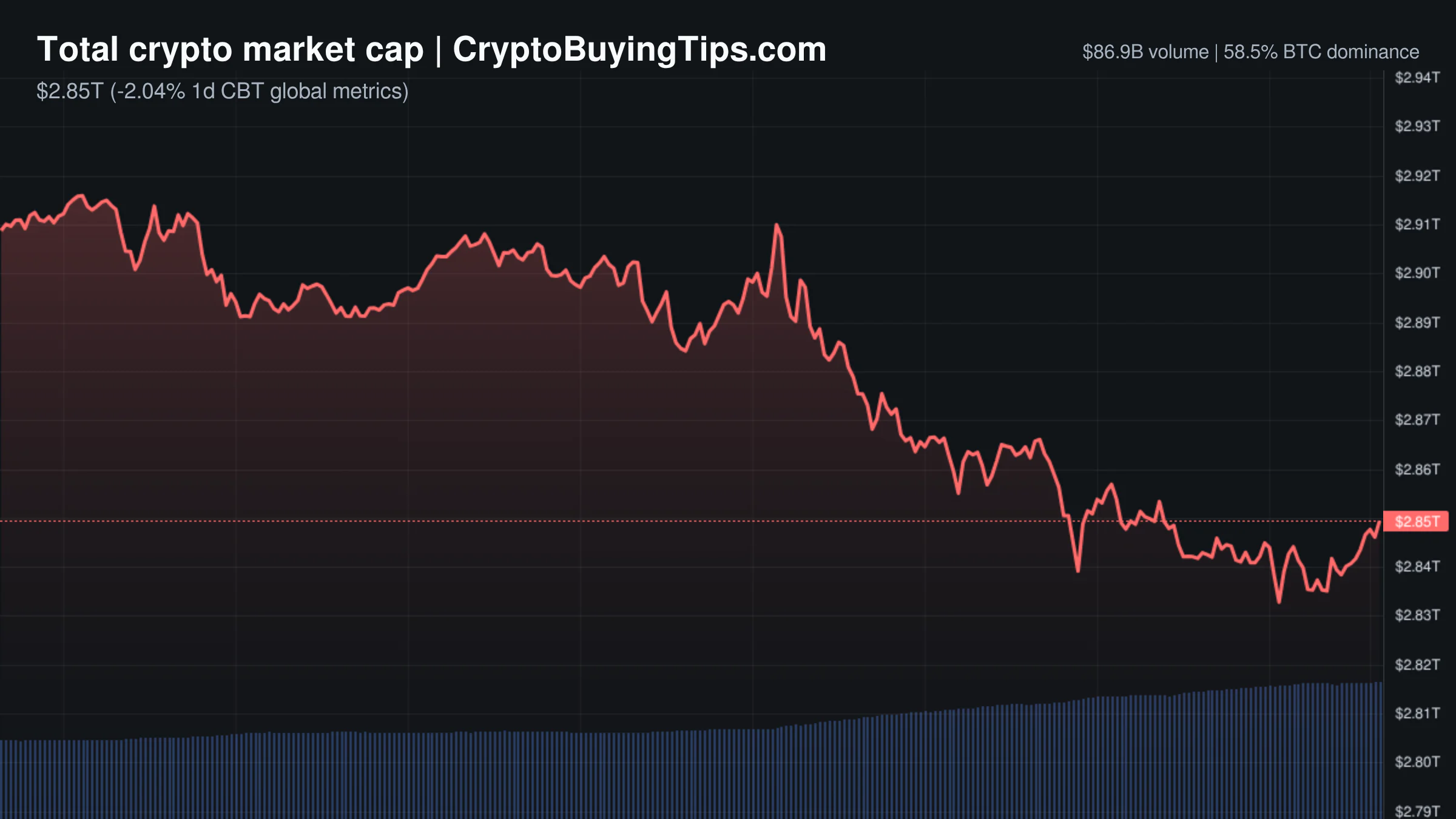
Crypto Market Overview | Volume surges amid price slips and regulatory clarity on buybacks | September 28, 2026
Volume surges amid price slips and regulatory clarity on buybacks September 28, 2026 crypto market overview analysis.

Volume is exploding while prices fall. This is not a healthy dip
Volume spikes while prices fall; it's less of a dip to buy into and more like large hands distributing assets right…
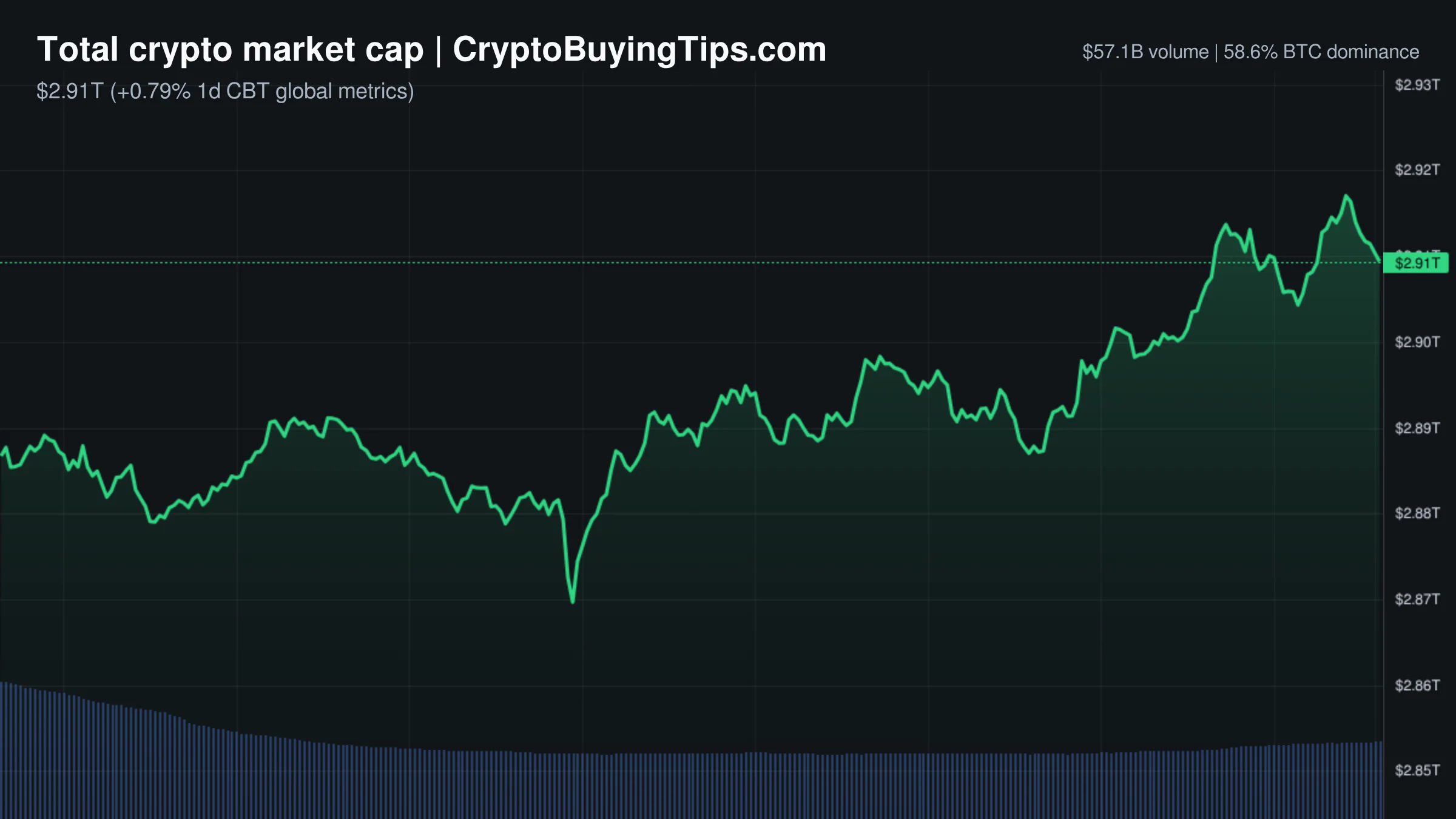
Crypto Market Overview | Institutional inflows drive prices despite collapsing trading volume | September 27, 2026
Institutional inflows drive crypto prices despite low volume; see our market overview on BTC, ETH, and altcoin shifts…